
Understanding the Rhinoplasty Operation

The Medical and Surgical Blueprint of Nose Reshaping Surgery
Rhinoplasty—commonly referred to as a “nose job”—is a highly sophisticated surgical discipline that alters the bone, cartilage, and soft tissue framework of the nose. While many patients recognize its power to transform facial aesthetics, fewer understand the exact medical steps that occur inside a high-tech operating theatre.
At Microcare ENT Hospital & Research Institute, Hyderabad, we believe that transparency builds patient confidence. This scientifically grounded guide breaks down the precise structural phases of a modern rhinoplasty operation, mapping your journey from the initial diagnostic design to final healing and airflow optimization.
India's Top Rhinoplasty Surgeon

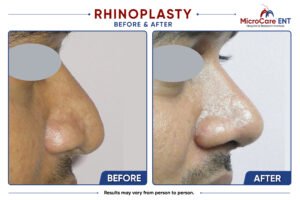
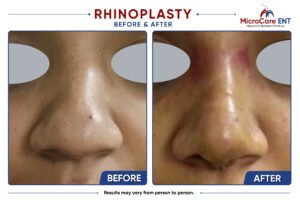
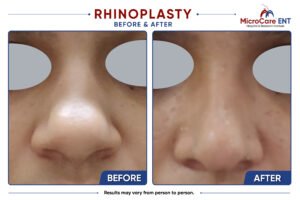
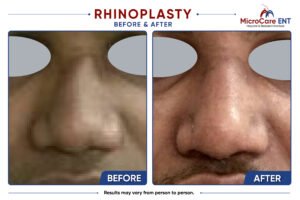
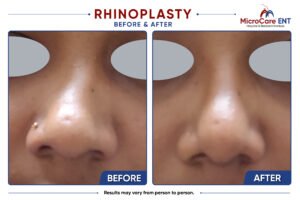
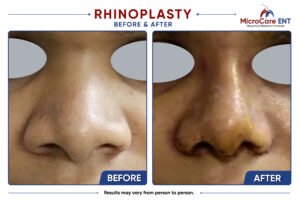
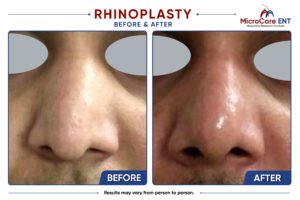
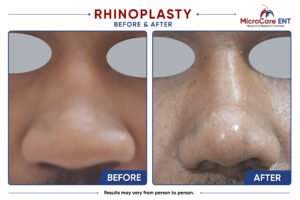
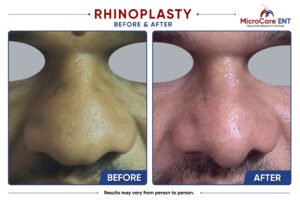
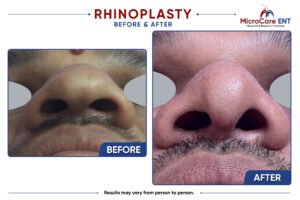
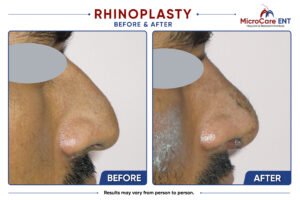
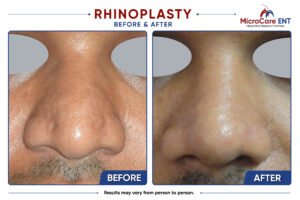
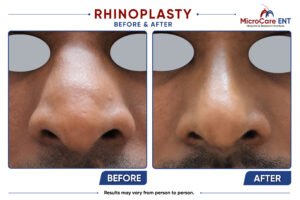
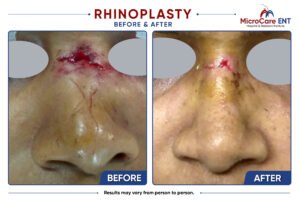
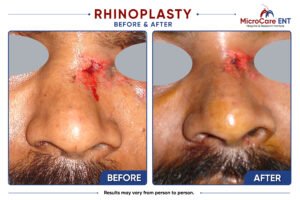
What Is a Modern Rhinoplasty Operation?
The Engineering Behind Nasal Architecture
A rhinoplasty is not merely a superficial “nose reduction.” It is a structural reconstruction engineered to establish a permanent balance between external facial harmony and internal respiratory physics.
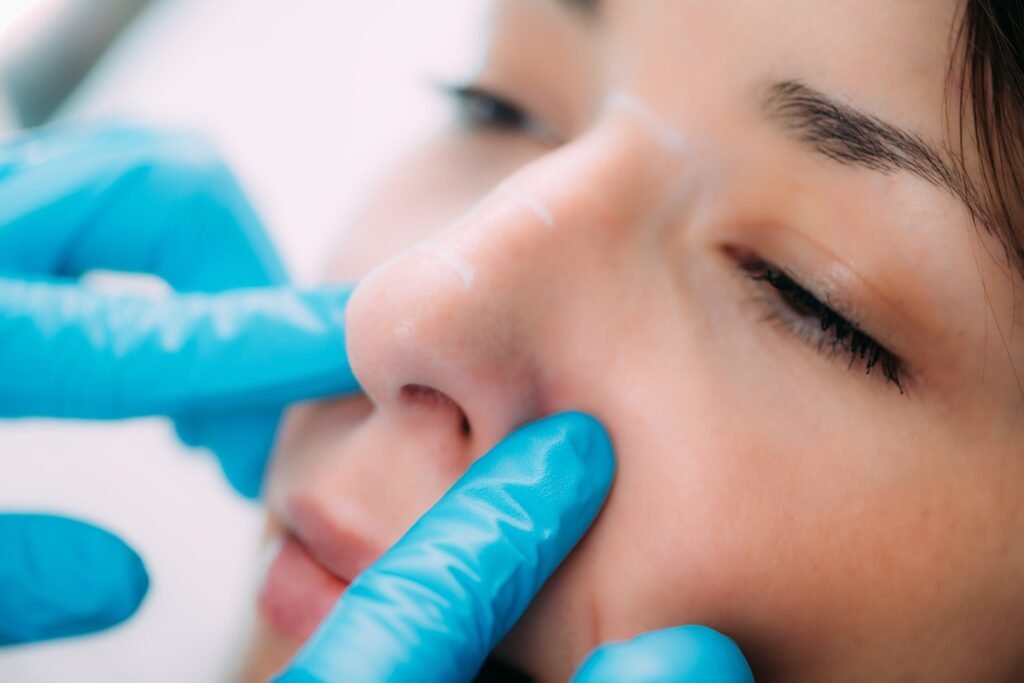
At our Centre for Advanced Rhinoplasty, every operation is customized to achieve clear clinical outcomes:
- Aesthetic Proportionality: Aligning the nose with the mathematically ideal facial angles of your specific heritage.
- Structural Framework Restoration: Lifting low bridges, smoothing dorsal humps, and refining bulbous or sagging tips.
- Airway Reconstruction: Reversing functional defects such as internal nasal valve collapse and complex septal deviations.

The Surgical Blueprint: What Happens During the Operation?
Every procedure follows a rigorous, multi-step surgical protocol designed to maximize safety and guarantee long-term framework stability.
- Advanced Anesthesia: Continuous vital monitoring under general sedation
- Surgical Access: Open (columellar) vs. Closed (endonasal) micro-incision
- Bridge/Tip Sculpting: Autologous cartilage grafting and hump reduction
- Airway Correction: Integrated septoplasty & inferior turbinoplasty
- Micro-Suture Closure: Layered, tension-free closure of structural planes
- Rigid Splinting: External stabilization to minimize edema
Step 1: Hospital-Grade Anesthesia Support
To ensure absolute patient comfort and precise airway protection, rhinoplasty is performed under general anesthesia. At our NABH-compliant surgical center, senior anesthesiologists continuously monitor your vitals using advanced cardiac and respiratory telemetry arrays throughout the entire duration of the procedure.
Step 2: Securing Surgical Access (Open vs. Closed)
The choice of incision depends entirely on the complexity of your internal anatomy:
- Closed Rhinoplasty (Endonasal Approach): All incisions are placed discreetly inside the mucosal lining of the nostrils. This leaves zero external scars and is ideal for straightforward bridge leveling.
- Open Rhinoplasty (External Approach): A tiny, microscopic inverted-V incision is made across the columella (the skin bridge between the nostrils). This provides the surgeon with direct, clear visualization of the cartilaginous framework, which is essential for complex tip reshaping and revision rhinoplasty.
Step 3: Sculpting and Reshaping the Nasal Framework
Once access is secured, the surgeon alters the bone and cartilage structure. Modern rhinoplasty has evolved from aggressive tissue removal to structural preservation:
- Dorsal Hump Management: Excess bone and cartilage are shaved down with microscopic precision to smooth the profile.
- Tip Projection Engineering: The lower lateral cartilages are precisely re-shaped and supported using autologous cartilage grafts (taken from your septum, ear, or rib) to lift a drooping tip.
- Bridge Elevation: For flat or depressed profiles, natural grafts are meticulously placed to restore elegant bridge height.
Step 4: Functional Airway Correction (Septorhinoplasty)
If you suffer from chronic congestion, snoring, or sinus pressure, the internal respiratory plumbing is treated next:
- Septoplasty: The crooked internal central wall (septum) is aligned to the midline.
- Nasal Valve Repair: Weak side walls are reinforced with spreader grafts to prevent them from caving inward during deep inhalation.
- Inferior Turbinoplasty: Enlarged, swollen tissues inside the passages are reduced to maximize daily airflow velocity.
Step 5: Micro-Suture Wound Closure
After verifying perfect facial symmetry and open airway passages, the nasal skin envelope is gently redraped. The incisions are meticulously closed using ultra-fine, biological sutures to guarantee a flat, invisible healing line.
Step 6: Rigid External Splinting
A customized, lightweight external splint is applied to the nasal bridge. This splint acts as a protective shield, keeps the re-aligned bones perfectly secure, and applies uniform pressure to minimize post-operative swelling.
How Long Does the Operation Take?
The duration of your procedure is determined by the amount of structural re-engineering required:
- Primary Rhinoplasty: Typically takes 1.5 to 2.5 hours, focusing on initial aesthetic alignment and basic septal adjustments.
- Functional Septorhinoplasty: Takes 2.5 to 3.5 hours due to the added complexity of internal nasal valve reconstruction.
- Revision / Secondary Reconstructions: Can extend from 3.5 to 5 hours, as navigating through dense scar tissue and harvesting rib grafts demands extreme microsurgical care.
The Post-Operative Healing Journey
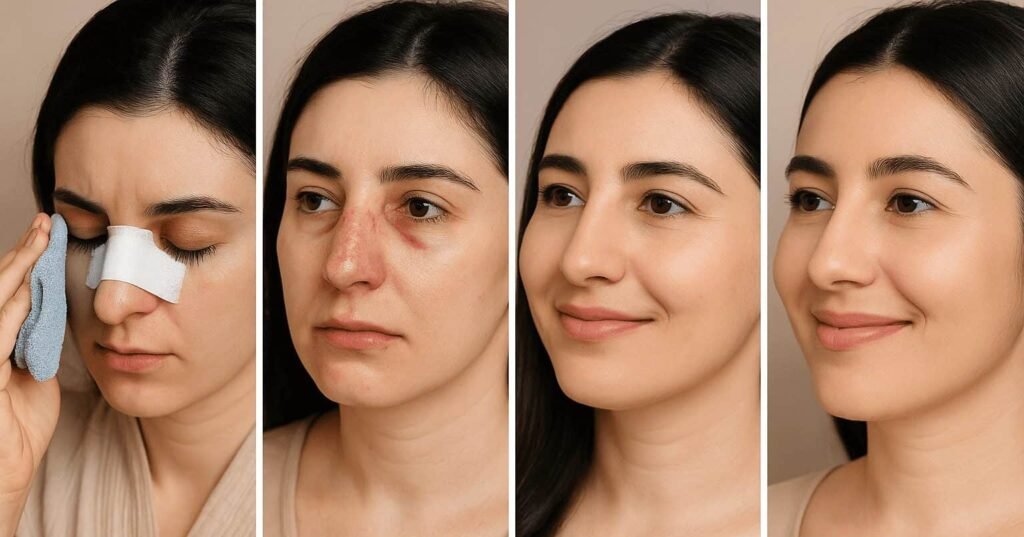
Healing after a structural nose surgery is a gradual process where the skin progressively contracts over your new, refined framework:
- Week 1 (The Splint Removal): Initial swelling and internal stuffiness fade. The protective splint and external sutures are safely removed on Day 7 at Microcare ENT Hospital.
- Weeks 2–3 (The Social Return): Over 80% of visible bruising disappears. Most patients comfortably return to their full office routines, university classes, and daily social interactions.
- Months 3–6 (The Refinement Phase): Residual internal tissue swelling resolves. Your breathing becomes significantly deeper, clearer, and more effortless as the contours of the bridge tighten.
- Months 9–12 (Final Stabilization): The underlying cartilage grafts fully integrate with your anatomy, locking in your permanent, natural profile definition.

Dr. Sriprakash Vinnakota
MS ENT, HEAD & NECK
CHIEF RHINOPLASTY SURGEON
26+ years of Experience
The ENT Advantage: Why Specialized Expertise Matters in Rhinoplasty
A successful rhinoplasty must achieve a delicate equilibrium between form and function. Because the nose is primarily a complex respiratory organ, the specialized training of an ENT (Otolaryngology) Surgeon provides a distinct advantage in ensuring long-term surgical success.
A successful rhinoplasty must achieve a delicate equilibrium between form and function. Because the nose is primarily a complex respiratory organ, the specialized training of an ENT (Otolaryngology) Surgeon provides a distinct advantage in ensuring long-term surgical success.
At Microcare ENT, Center for Advanced Rhinoplasty & Functional Nose Surgery, our surgical philosophy is rooted in the following four pillars of ENT expertise:
Why Choose an ENT Hospital Setup for Your Operation?
A rhinoplasty changes the internal aerodynamic pathways of your body. Choosing an ENT-led, research-driven hospital environment like Microcare guarantees that your cosmetic transformation is anchored by advanced respiratory science.

With over 26 years of surgical mastery, our chief surgeon, Dr. Sriprakash Vinnakota, ensures that the internal engineering of your nose is never sacrificed for superficial looks. We deliver noses that are structurally strong, natural to the touch, and designed to look beautiful while breathing perfectly for a lifetime.
1. Board-Certified ENT & Super Specialised Expertise
Under the leadership of Dr. Sriprakash Vinnakota, our team brings over 26 years of clinical experience to every procedure. We are not just cosmetic surgeons; we are ENT, Head & Neck specialists who understand the deep-seated relationship between nasal form and respiratory function.
2. Dual-Focus Approach: Functional & Aesthetic Harmony
We reject the “one-size-fits-all” model. Every rhinoplasty at Microcare ENT is a customized Septorhinoplasty, ensuring that as we refine your nasal bridge or tip, we simultaneously optimize your airway. We specialize in achieving Natural-Looking Results that never appear “operated on.”
3. Advanced Surgical Technology
We utilize 2026’s gold-standard medical technologies to ensure faster recovery and higher precision:
- Endoscopic Assistance: For clear visualization of internal nasal structures.
- Piezoelectric (Ultrasonic) Tools: To reshape nasal bones with minimal trauma, reducing post-operative bruising and swelling.
- Modern Level-3 Modular OTs: Ensuring a sterile, safe, and controlled surgical environment.
4. Ethical & Patient-Centric Care
At an Advanced Super Speciality level, we adhere to the highest ethical standards. Our protocols include:
- Transparent Consultations: We provide honest assessments of what can be achieved, prioritizing your safety over surgical volume.
- Structured Post-Operative Follow-ups: Comprehensive long-term care to monitor your healing progress for up to a year after surgery.
- Affordable Excellence: Providing world-class super-speciality care with transparent pricing and ethical treatment paths.
Frequently Asked Questions (FAQs): Understanding Rhinoplasty
At Microcare ENT, Centre for Advanced Rhinoplasty & Functional Nose Surgery, we believe informed patients achieve the best surgical outcomes. Below are the most common queries regarding nasal reshaping and functional recovery.
1. Is a rhinoplasty operation painful?
Most patients describe the recovery as a feeling of moderate facial pressure and deep congestion—similar to a heavy head cold—rather than sharp, intense pain. This discomfort is easily and safely controlled using our personalized post-operative pain-management medications.
2. Can insurance cover a rhinoplasty operation?
Most patients describe the recovery as a feeling of moderate facial pressure and deep congestion—similar to a heavy head cold—rather than sharp, intense pain. This discomfort is easily and safely controlled using our personalized post-operative pain-management medications.
3. What is the difference between open and closed rhinoplasty?
Most patients describe the recovery as a feeling of moderate facial pressure and deep congestion—similar to a heavy head cold—rather than sharp, intense pain. This discomfort is easily and safely controlled using our personalized post-operative pain-management medications.
4.Will my nose feel stiff or unnatural after the operation?
During the initial 3 to 6 months of healing, the nose will feel firm due to normal surgical swelling and the integration of structural support grafts. As the tissues mature, the nose softens, regaining a completely flexible and natural feel to the touch.
5. How long do I need to wait to exercise or wear heavy glasses after the surgery?
You can resume light walking within 2 weeks, but strenuous gym workouts, heavy lifting, and contact sports must be avoided for 4 to 6 weeks to prevent accidental impacts. Heavy eyeglasses should not rest directly on the nasal bridge for the first 4 weeks; our team will show you how to securely tape your frames during this phase.
Watch our Related Videos
Explore Our Related Blogs
Conclusion: Achieving Precision in Rhinoplasty
Rhinoplasty is a sophisticated medical intervention that demands a delicate equilibrium between surgical precision, anatomical science, and aesthetic artistry. Whether the primary objective is the restoration of respiratory function or the refinement of nasal symmetry, the success of the procedure is fundamentally rooted in expert clinical evaluation and specialized surgical skill.
In 2026, the global standard for nasal surgery emphasizes a “function-first” philosophy. Choosing an Centre for Advanced Rhinoplasty & Functional Nose Surgery like Microcare ENT ensures that your surgery is governed by the highest benchmarks of safety and accuracy. Under the guidance of Dr. Sriprakash Vinnakota and our senior surgical team, every rhinoplasty is approached with an ethical commitment to long-term health and natural anatomical harmony.
By integrating 26+ years of clinical expertise with 2026’s most advanced surgical technologies, we ensure that your journey toward a more confident profile is supported by world-class medical care. At Microcare ENT, we don’t just reshape noses; we restore quality of life through surgical excellence.