
See the whole structure. Correct it precisely.
Open rhinoplasty uses a small incision across the columella, the strip between the nostrils, so the surgeon can see the bone and cartilage directly. It is the approach of choice for crooked noses, detailed tip work, revisions and breathing problems that need structural repair.
Medically reviewed by Prof. Dr. Sriprakash Vinnakota, MBBS, MS (ENT, Head & Neck), Chief Rhinoplasty Surgeon, Centre for Advanced ENT, Head & Neck Surgery, MicroCare ENT Hospital & Research Institute.
- Incision
- Small, on the columella
- Best for
- Structural work
- Splint removed
- About day 7
- Office or college
- 7 to 10 days
- Glasses
- Off the nose 4 to 6 weeks
- Final shape
- 6 to 12 months
What is open rhinoplasty?
In open rhinoplasty, a small incision is made across the columella and the skin is gently lifted, giving the surgeon a direct view of the bone and cartilage underneath. Everything else is done through incisions inside the nostrils.
A complete view
Asymmetries that are hard to see through the nostrils can be found and corrected.
Structural control
Ideal for complex grafting, tip reshaping and severe deviation.
Airway repair
Well suited to breathing problems and revision surgery.
Before you decide, read Prof. Dr. Vinnakota's book Your Best Nose, which answers 100 common rhinoplasty myths.
When is open rhinoplasty recommended?
Open rhinoplasty is chosen when the framework of the nose needs real rebuilding, not just surface changes:
A severely crooked nose
Bone and cartilage have both shifted; direct access lets the whole bridge be straightened.
Read morePost-traumatic reconstruction
Fractured bones are reset and collapsed support is rebuilt.
Read moreSupport under thick skin
Thick skin needs a strong framework underneath, built with robust grafts.
Detailed tip reshaping
Bulbous, drooping or uneven tips are shaped with fine sutures and tip grafts.
Read moreSecond surgery
Scar tissue and altered anatomy are easier to correct with a full view.
Read moreFunctional septorhinoplasty
A deviated septum is corrected while the outside of the nose is balanced.
Read moreMajor asymmetry
Spreader and strut grafts balance the two sides and help prevent later collapse.
We assess first
The right approach is decided only after examining your nose and airway.
Patient results
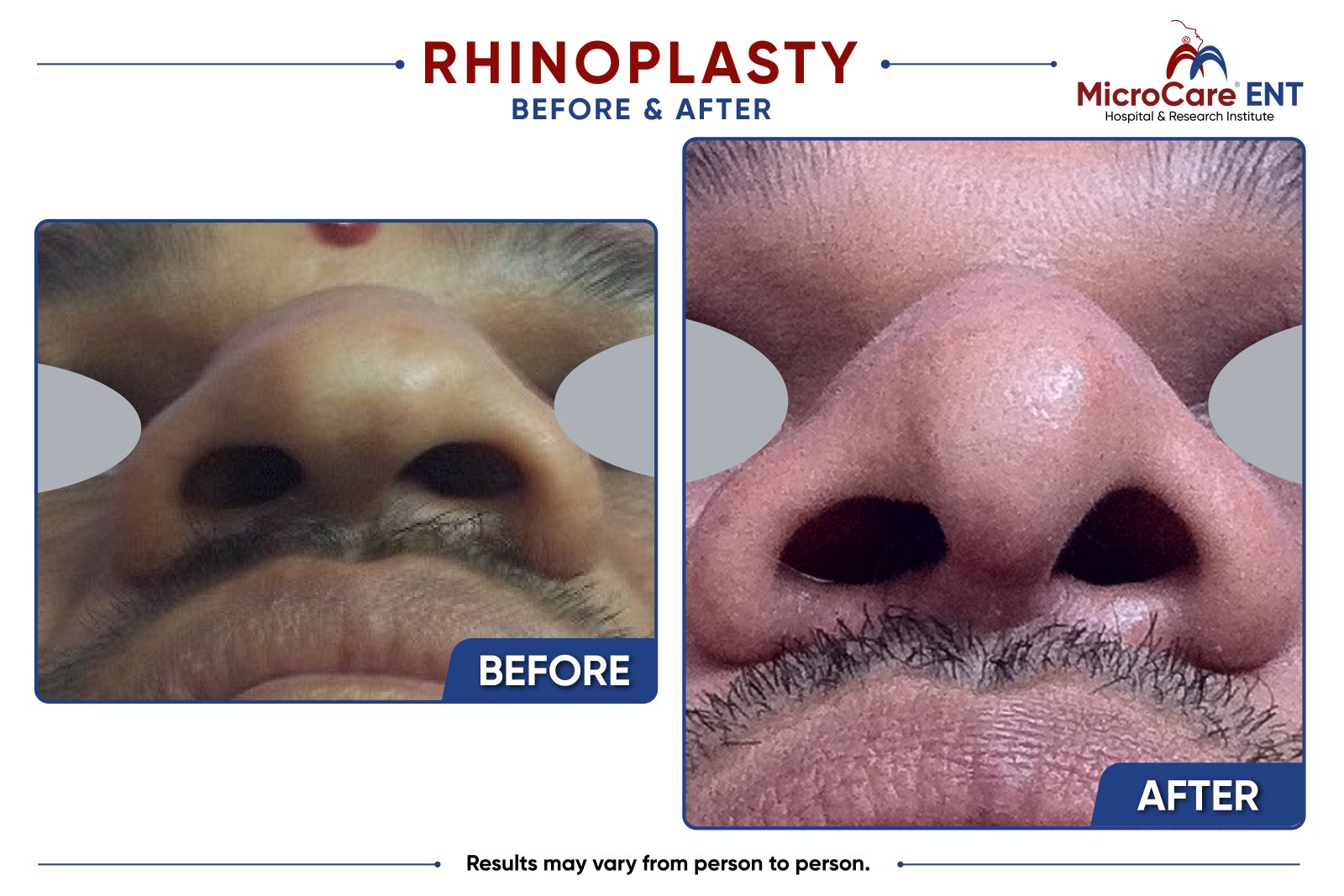
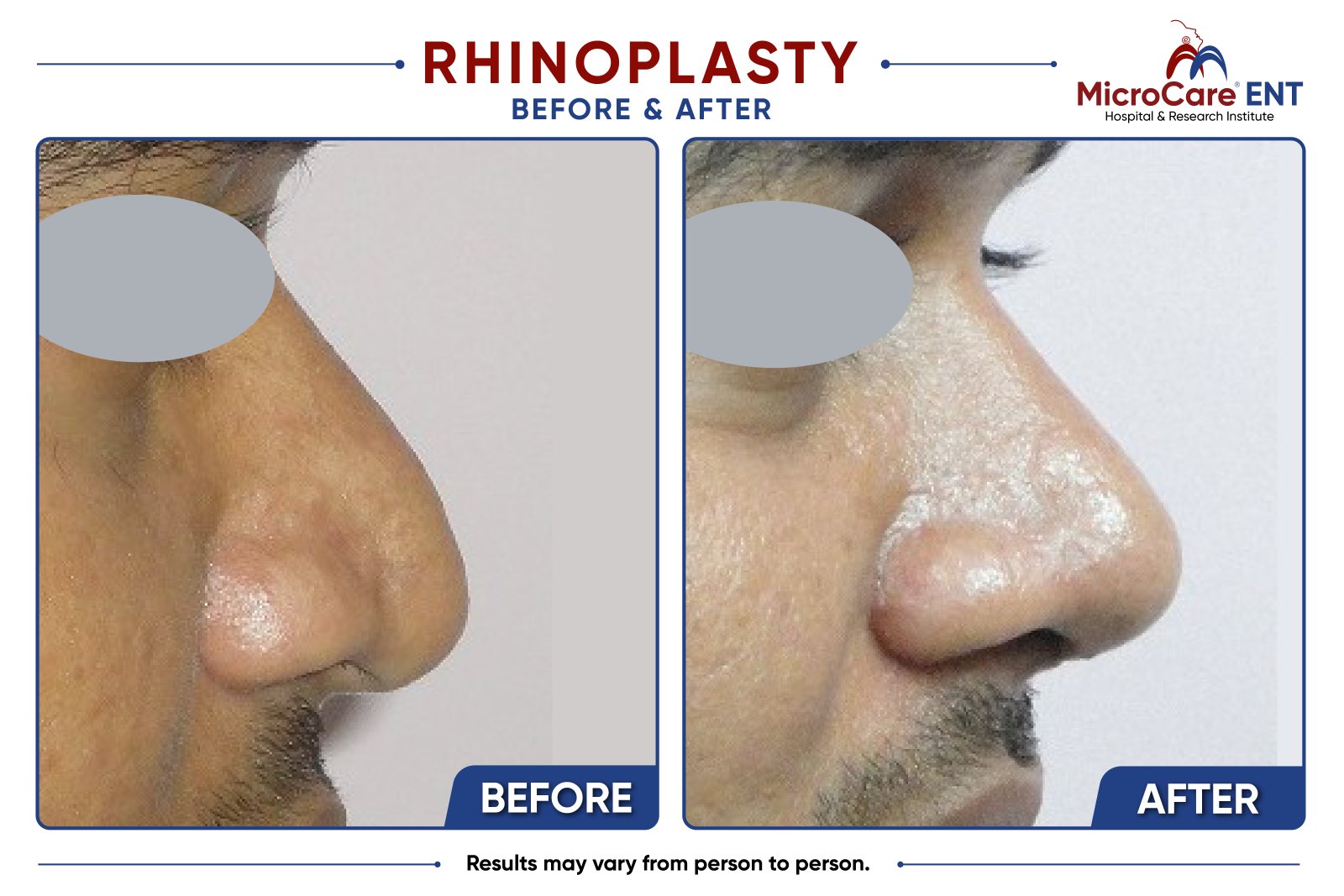
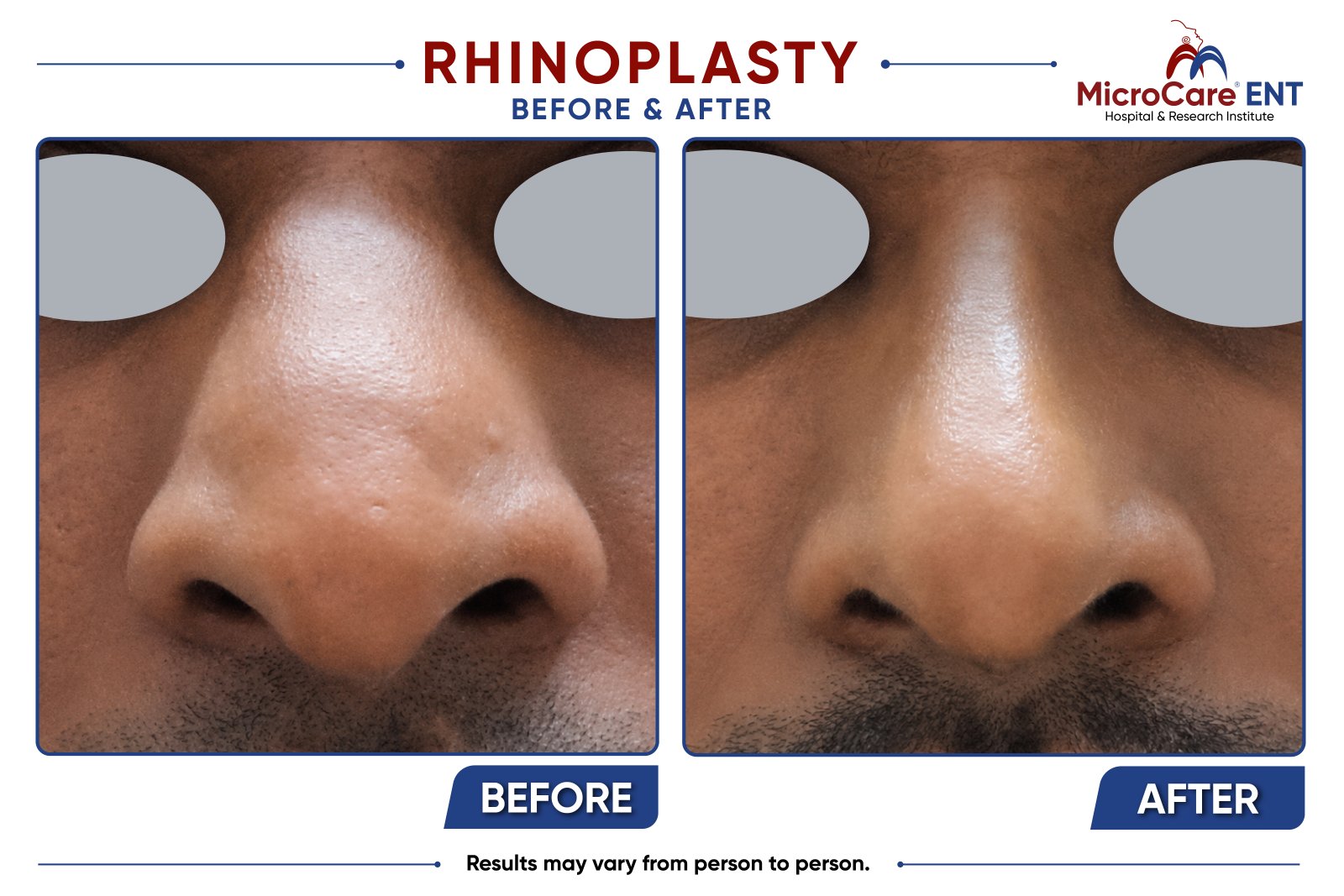
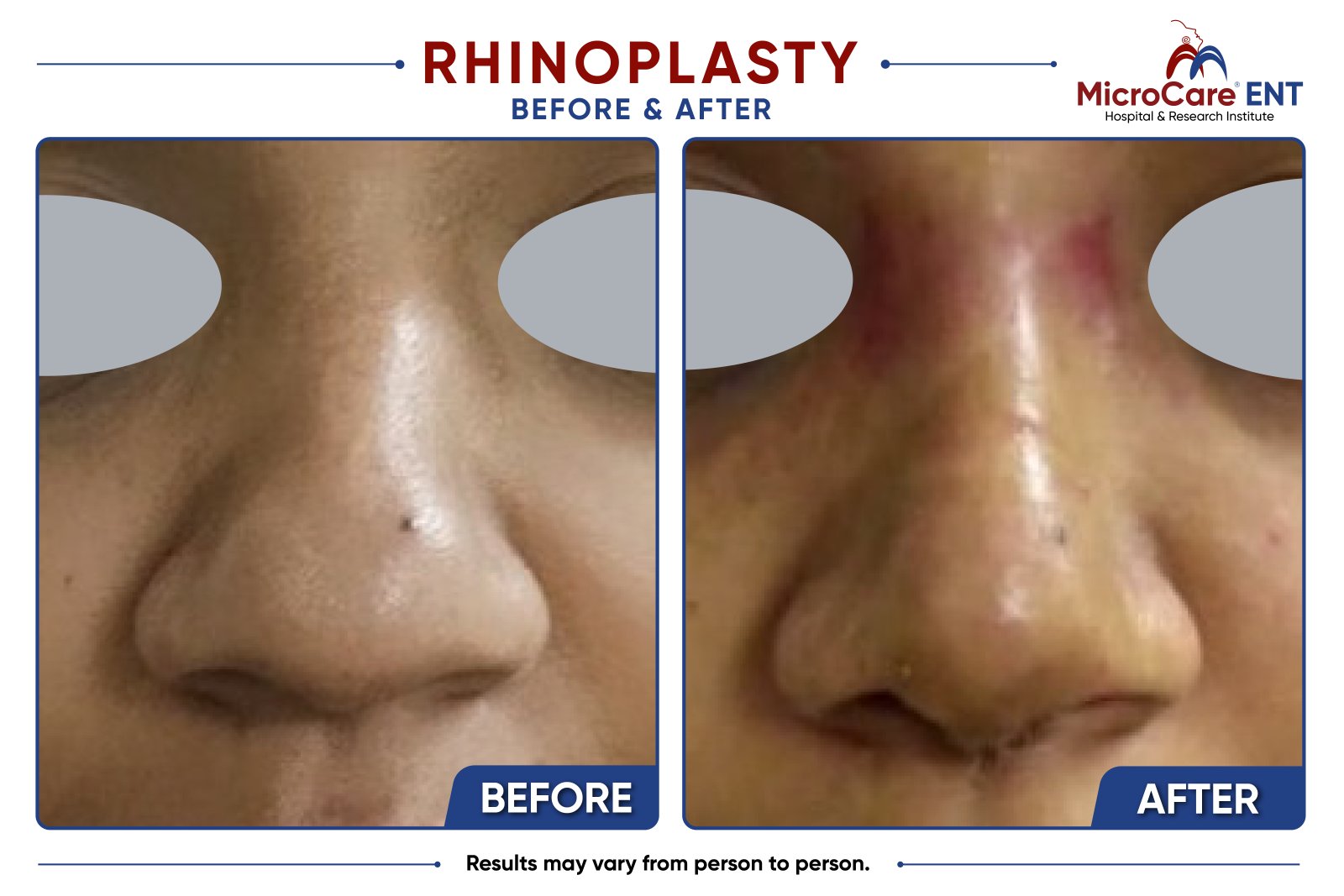
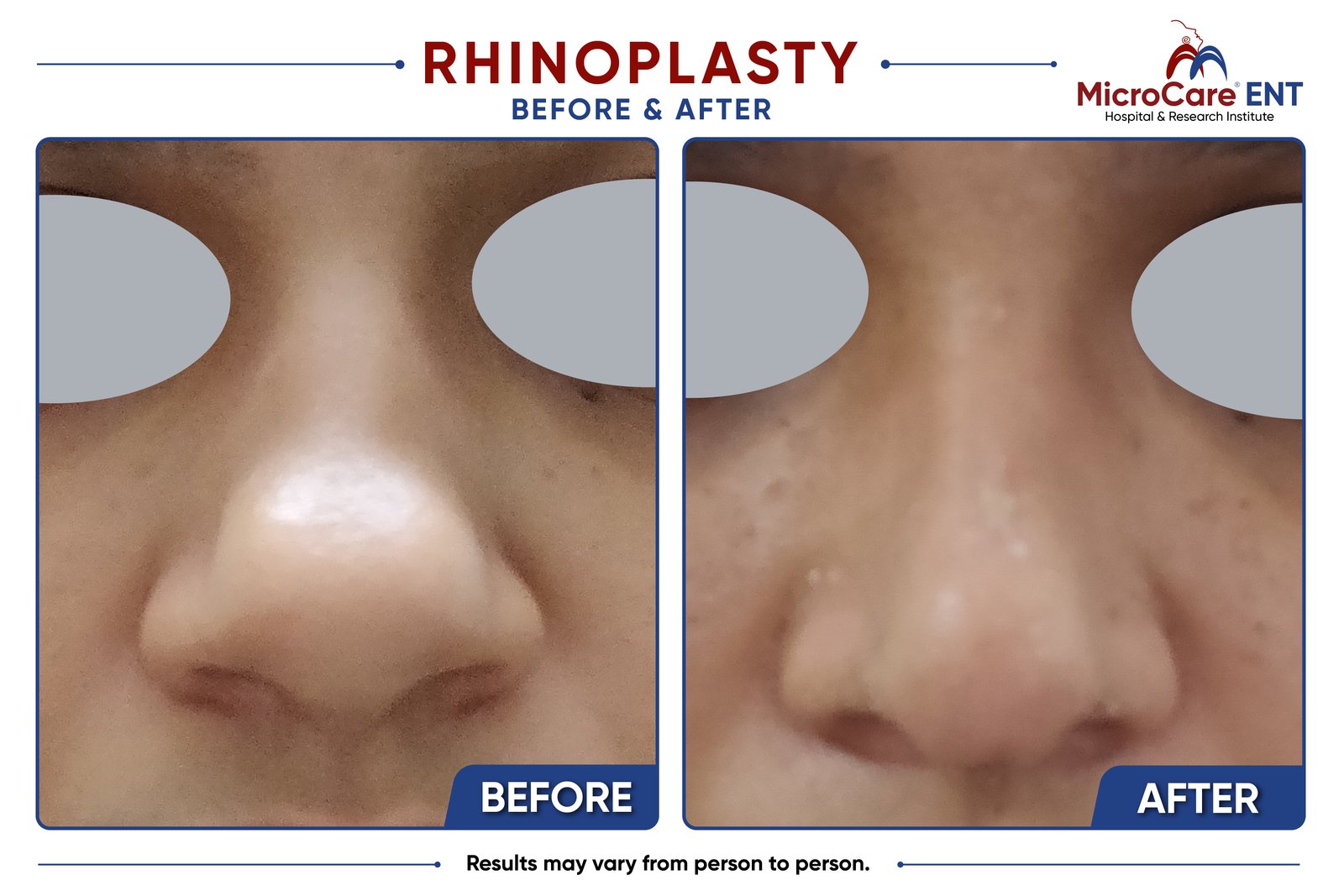
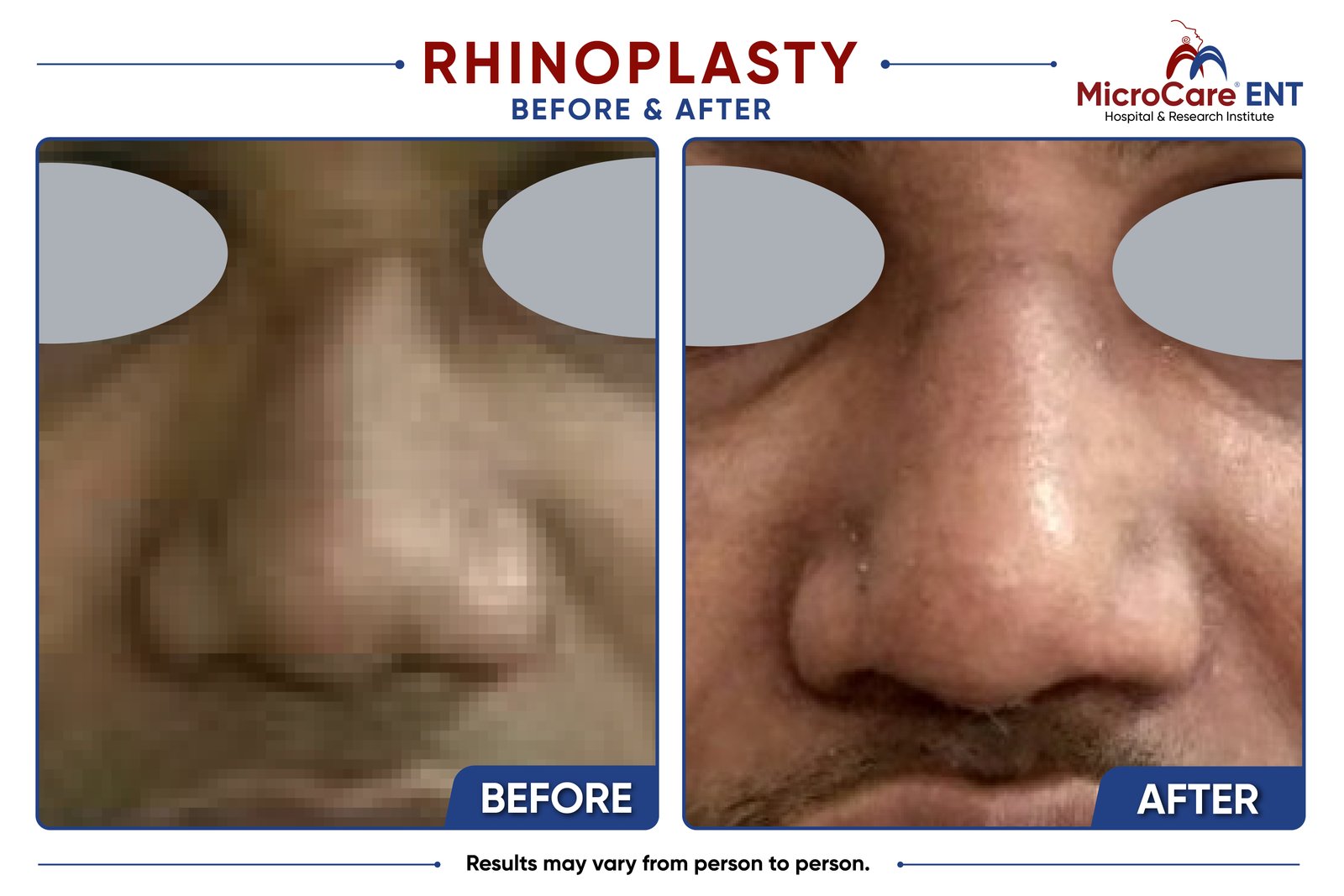
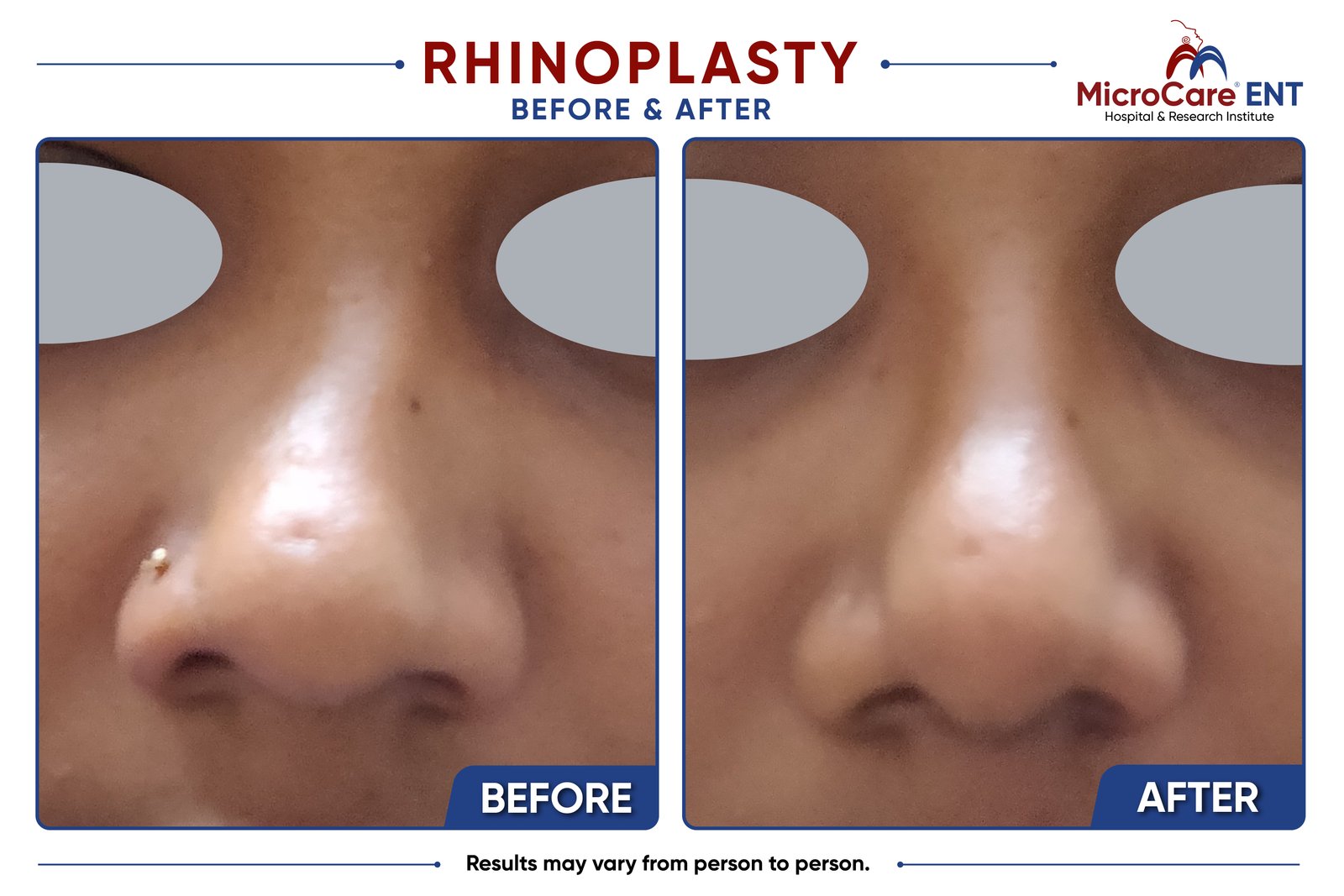
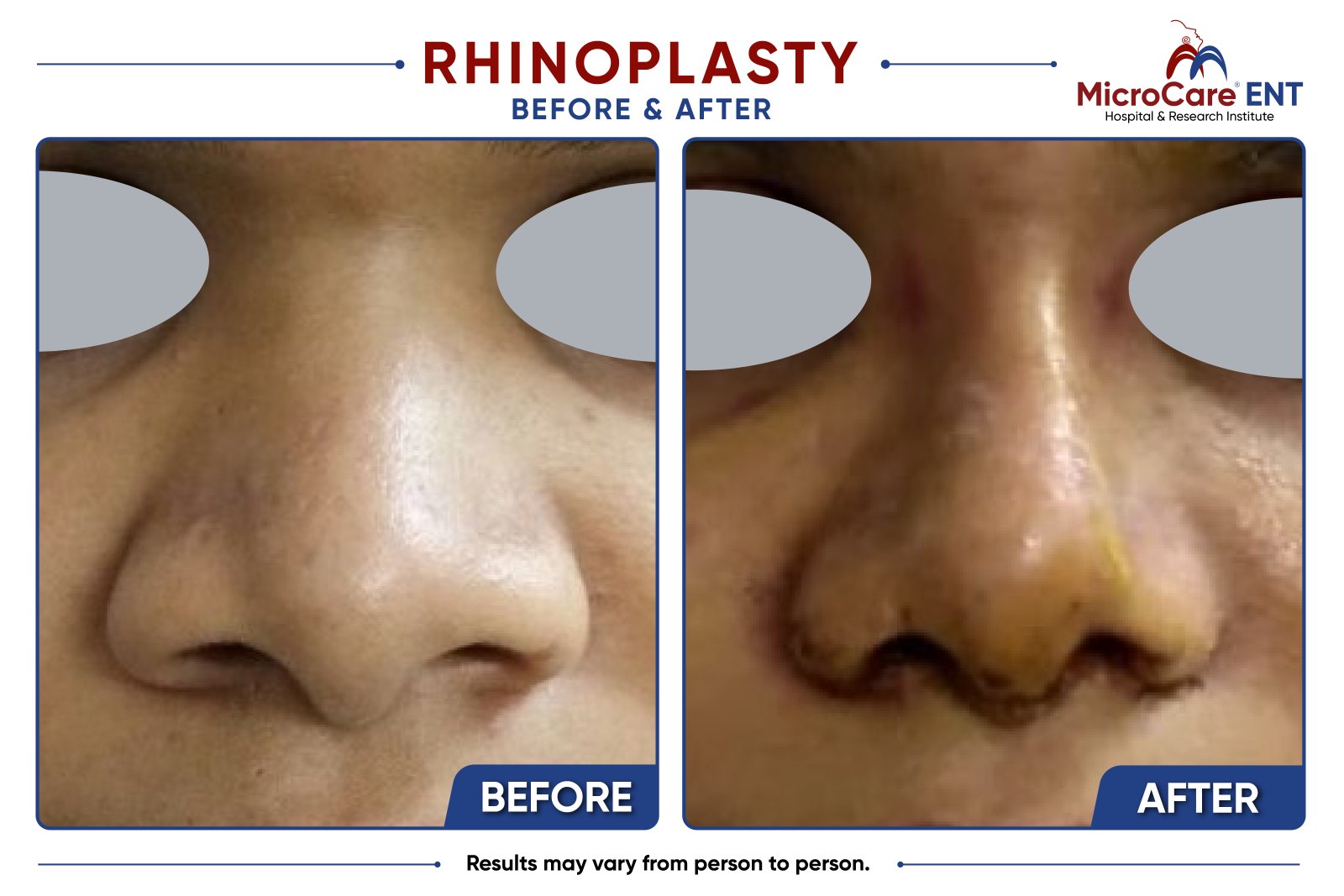
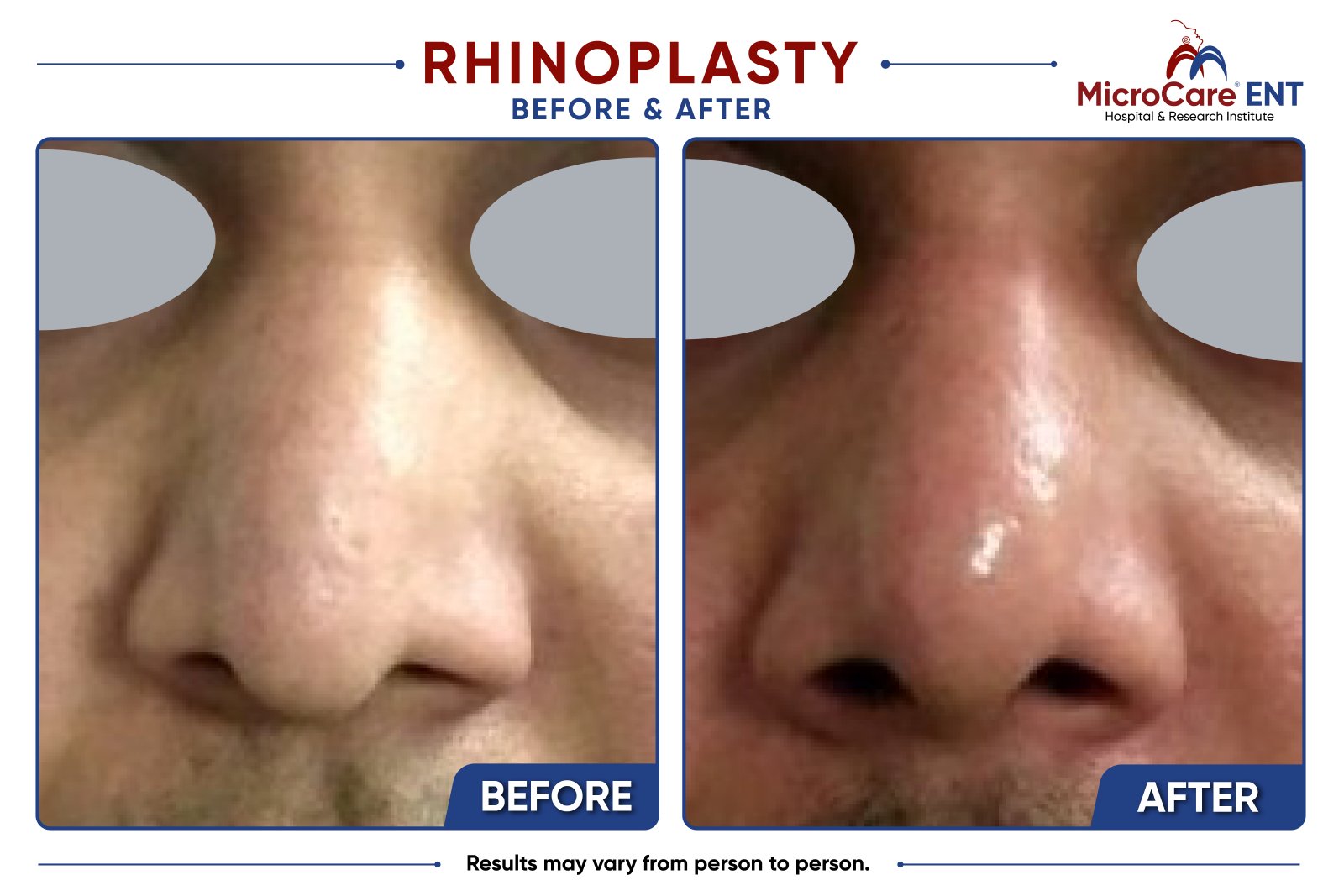
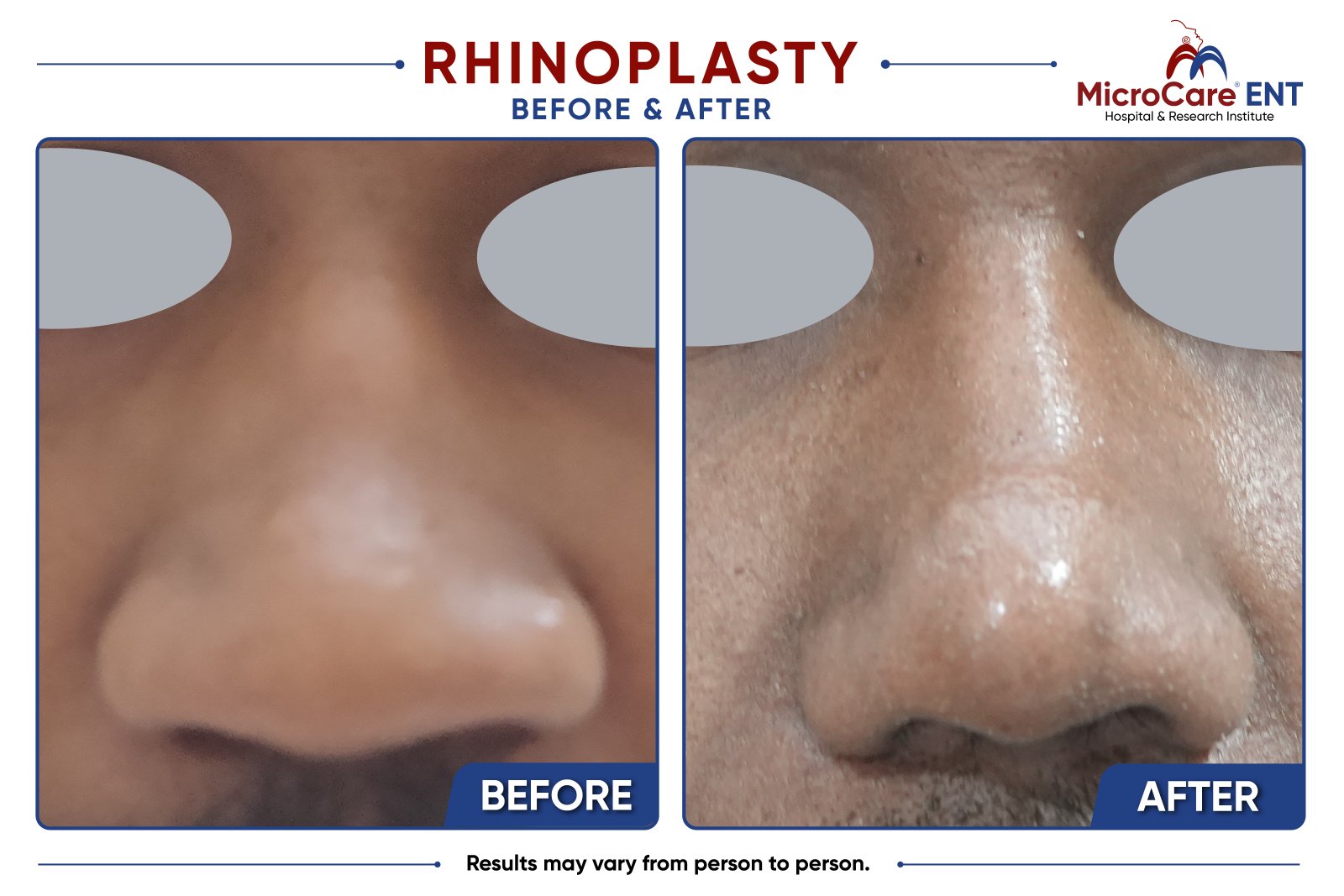
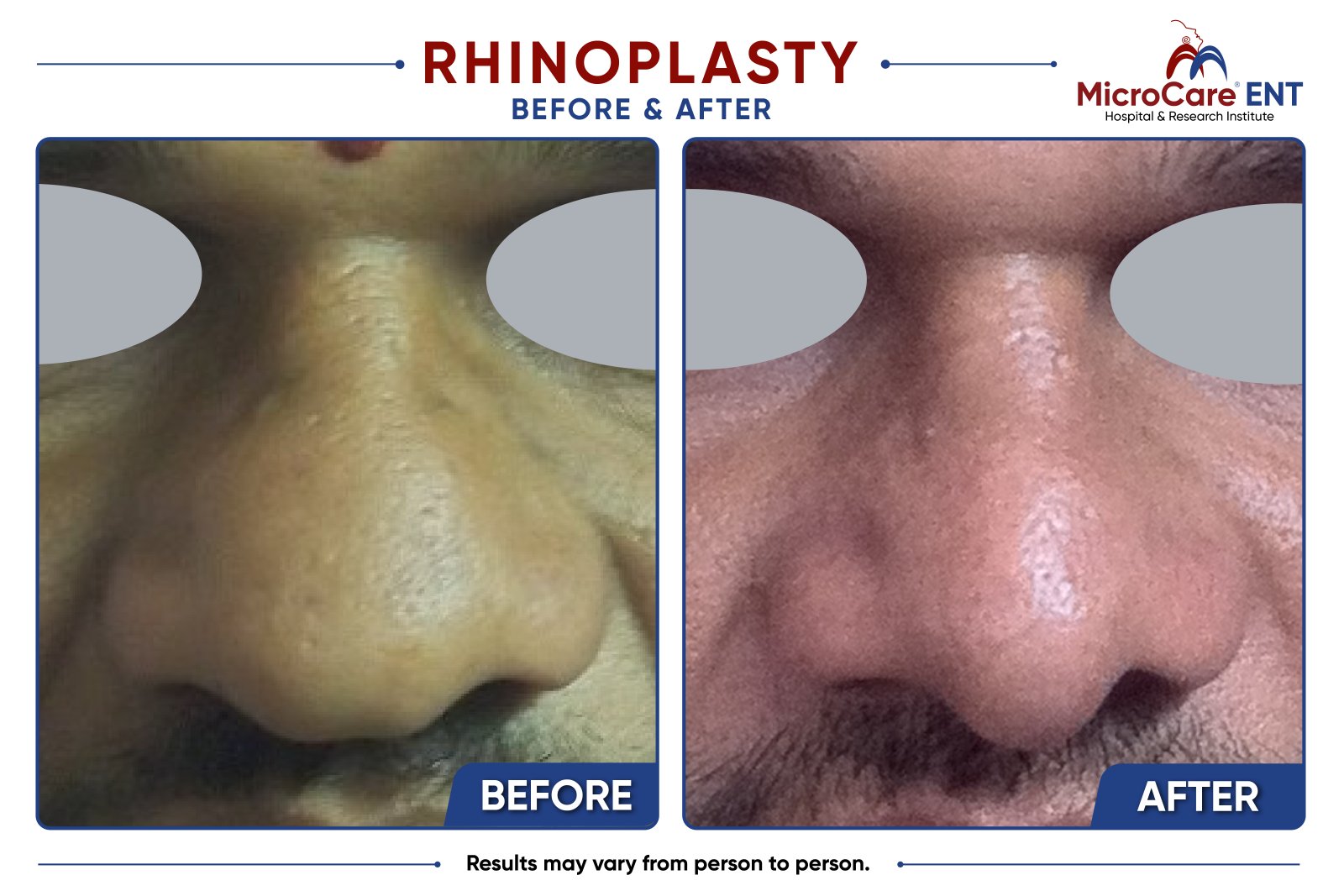
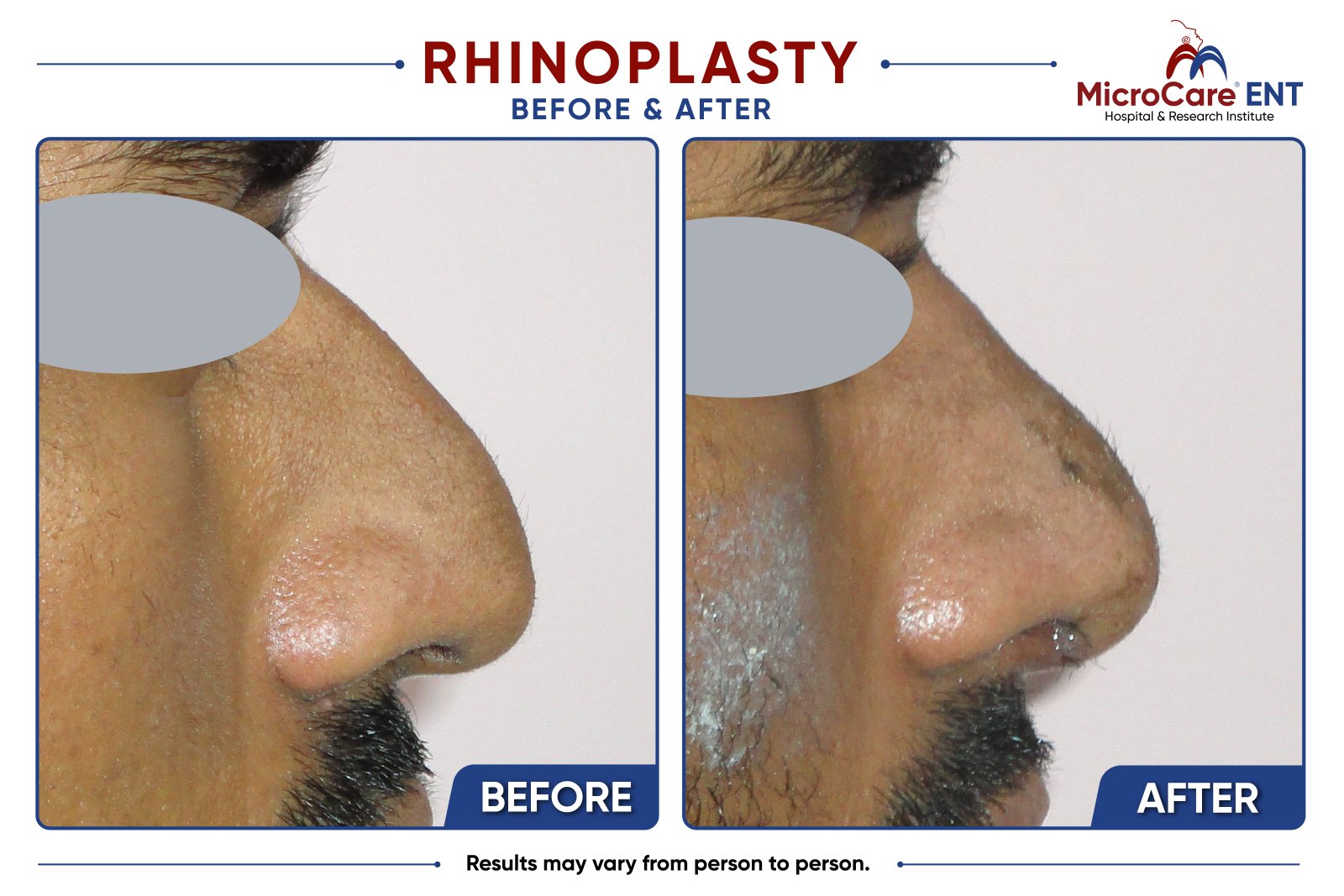
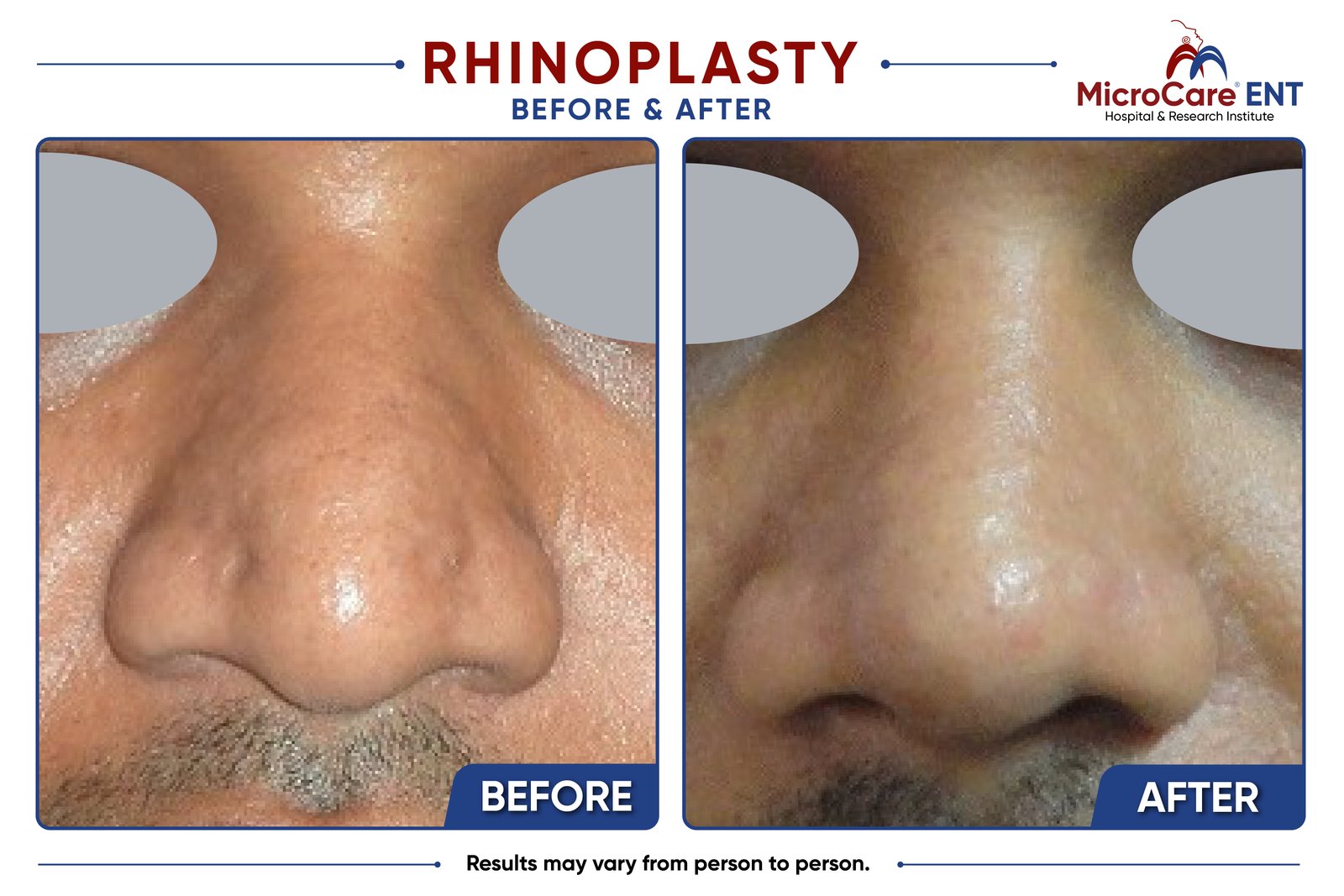
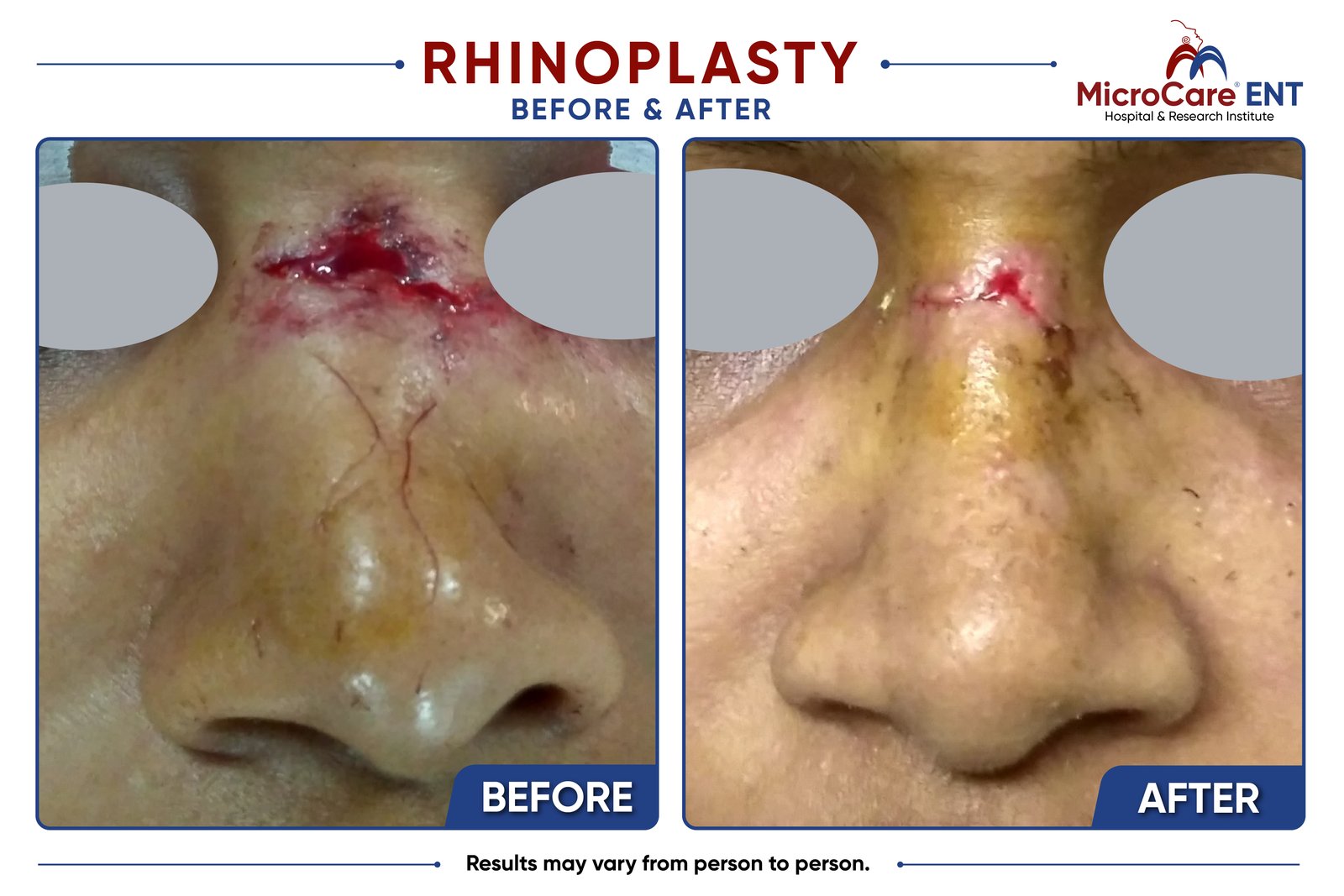
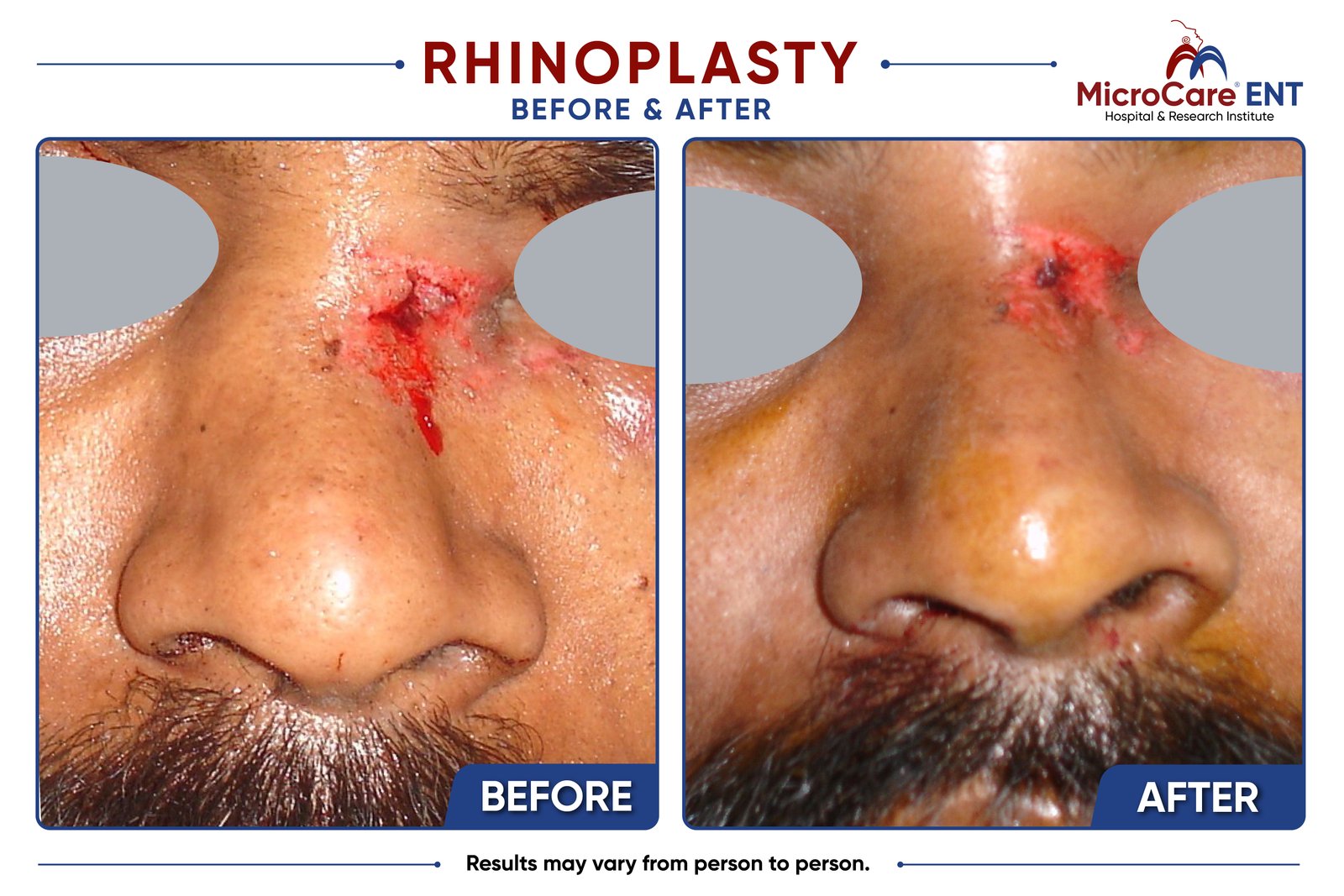
Photographs of patients of MicroCare ENT, shown with their consent. Every nose is different and individual results vary. See all before and after pictures.
Open or closed rhinoplasty?
The right approach depends on your anatomy, any previous surgery and your breathing.

| Open rhinoplasty | Closed rhinoplasty | |
|---|---|---|
| Incision | A small, discreet incision on the columella | None outside; all inside the nostrils |
| View | Direct view of the framework | Limited to access through the nostrils |
| Best for | Complex, revision and injury cases | Mild to moderate refinements |
| Grafts | Precise placement | Harder for complex grafting |
| Early swelling | Slightly more in the first 2 weeks | Usually settles a little faster |
| Symmetry | Better suited to crooked or uneven noses | Suits simple bridge reduction |
Which one is right for you?
We decide after assessing three things: how well your nose breathes, your skin thickness and graft needs, and your aesthetic goals. See how the rhinoplasty operation works.
Can open rhinoplasty improve breathing?
Yes. Combined with septal correction, as a functional septorhinoplasty, it can relieve long-standing breathing problems.

Deviated septum
Open access allows correction of the front (caudal) septum, often the hidden cause of persistent blockage.
Valve collapse
Spreader grafts act like internal supports to widen the airway.
Post-traumatic damage
Crushed or shifted structures are rebuilt.
Pinched nostrils
Alar batten grafts support the sides of the nostrils.
Recovery after open rhinoplasty
Early recovery is slightly more involved than after closed rhinoplasty, and follows a clear plan.
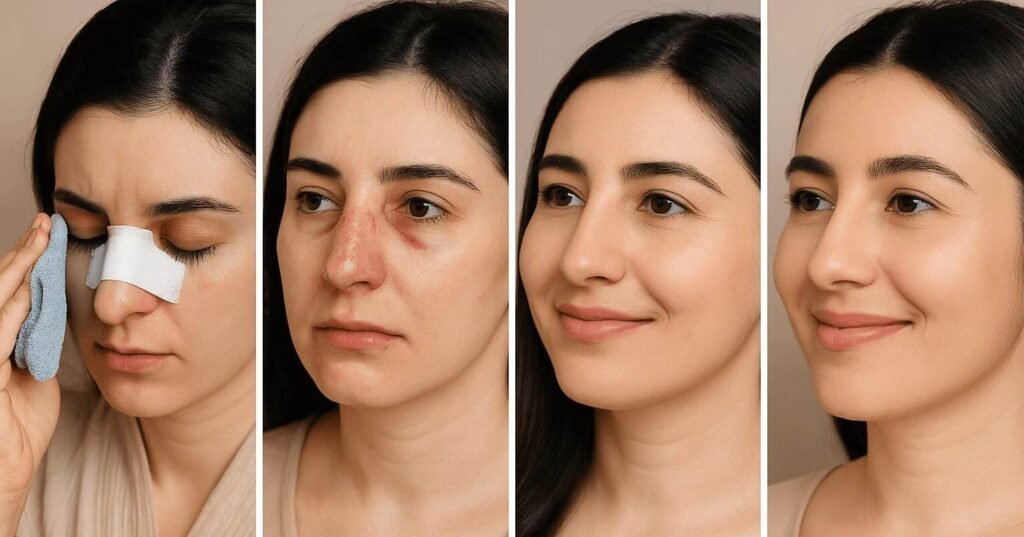
- A splint and tape protect the new structure
- Swelling and some bruising around the eyes are normal
- Rest at home; avoid bending and heavy lifting
- Splint and internal supports removed at the hospital
- Most return to office or college within 7 to 10 days
- Tip swelling gradually goes down
- Temporary numbness of the tip or upper lip usually resolves
- Tissues settle around the new framework
- The columella scar fades to a faint line
- Thick skin can take 12 to 18 months
Will the scar be noticeable?
The columella scar is rarely a long-term concern, because of three details:
- Its shape: an inverted-V or stair-step incision breaks up the line so it reflects less light.
- Its position: at the narrowest point of the columella, where it sits in natural shadow.
- Fine stitches: very fine sutures help the skin heal flat and even.
Open rhinoplasty cost in Hyderabad
An accurate quote needs an examination and airway assessment. It depends on:
- Structural complexity, such as a crooked nose or collapsed bridge.
- Grafts: rib or ear cartilage adds to the cost.
- Breathing correction of the septum or valves.
- A first operation or a revision.
- Hospital care: anaesthesia monitoring, operation theatre and nursing after surgery.
Is open rhinoplasty safe?
In experienced hands, open rhinoplasty is a safe, well-established operation, and the direct view helps the surgeon work precisely. Our safety measures include:
- Screening before surgery, including blood tests and an airway assessment.
- Continuous monitoring by senior anaesthesiologists in a hospital operation theatre.
- Strict sterile protocols.
- Structural grafting to help prevent valve collapse.
- Monitored for bleeding or any reaction
- The incision and internal splints are reviewed
- Graft stability and breathing are checked
Why choose MicroCare ENT

Function-first, ENT-led
Led by Prof. Dr. Sriprakash Vinnakota, with more than 26 years of experience. Every case starts with an internal evaluation, and septal or turbinate problems are treated alongside the shape.
Structural grafting
Your own cartilage is used as a supporting framework, to help prevent a pinched look or a drooping tip.
Modern technology
Facial analysis for planning, piezoelectric instruments for bone, and HD endoscopy for the airway.
Natural, balanced results
A nose in harmony with your chin, forehead and cheekbones, with follow-up for up to one year.
What your consultation includes
- Facial harmony analysis of your forehead, cheekbones and chin.
- Airway evaluation with HD endoscopy.
- Assessment of bone and cartilage to decide on grafting.
- A discussion of likely outcomes, using facial mapping.
- A customised surgical plan.

Prof. Dr. Sriprakash Vinnakota
MS (ENT, Head & Neck) · Chief Rhinoplasty Surgeon, Centre for Advanced ENT, Head & Neck Surgery, MicroCare ENT Hospital & Research Institute
More than 26 years in ENT surgery, with endoscopic sinus surgery training at the University of Graz, Austria, and rhinoplasty training at Marien Hospital, Stuttgart, under Prof. Dr. Wolfgang Gubisch.
Frequently asked questions
Is open rhinoplasty better than closed?
Neither is better for everyone. Open rhinoplasty suits structural work, revisions, complex tips and breathing problems. Closed rhinoplasty suits smaller changes to the bridge or a hump, and gives a slightly quicker social recovery. Your surgeon recommends the approach after examining you.
What is structural rhinoplasty?
Instead of removing cartilage to make the nose smaller, structural rhinoplasty reinforces it with grafts such as spreader grafts and columellar struts, so the nose keeps its shape and the airway stays open. It is especially useful with thick skin.
Can open rhinoplasty fix a pinched tip?
Often, yes. A pinched tip usually comes from too much cartilage being removed in earlier surgery. Open access lets the surgeon rebuild support with alar rim, batten or tip grafts from your own cartilage, improving both the shape and the airflow at the nostrils.
How does piezoelectric surgery help?
Piezoelectric instruments use ultrasonic vibration to reshape bone precisely, instead of a hammer and chisel. This can reduce bruising and swelling around the eyes.
Why is an ENT-led approach safer for breathing?
ENT surgeons pay close attention to the internal nasal valve, septum and turbinates, so the nose is not made to look better at the cost of breathing worse.
What is the inverted-V incision?
It is the small, shaped incision made across the columella in open rhinoplasty. The angled shape breaks up the scar line so it blends with the natural contours and usually fades to a faint line.
When is rib cartilage used?
Rib cartilage is used for revisions or a severely collapsed (saddle) nose, when there is not enough septal cartilage. Placing these larger grafts precisely usually needs the open approach.
How does thick skin affect the result?
Thick skin takes longer to shrink onto the new framework, so the final definition can take 12 to 18 months rather than 6 to 12.
Can I wear glasses after surgery?
Not resting on your nose at first. For 4 to 6 weeks, tape your glasses to your forehead or use a support so they do not press on the bridge.
Will my sense of smell be affected?
A temporary reduction for a few weeks, while the lining is swollen, is common. Permanent loss of smell is rare.
Is open rhinoplasty covered by health insurance?
Purely cosmetic surgery is not covered. The functional part, such as septoplasty or turbinate reduction, may be claimable when it is medically necessary.
See also revision rhinoplasty, septorhinoplasty and our FAQs.
Begin with a conversation
Meet Prof. Dr. Sriprakash Vinnakota for a full assessment and to find out whether open or closed rhinoplasty suits you. Leave your name and number and we will open WhatsApp with your details filled in, or call +91 94949 40725.