
Refine your profile at the tip.
A bulbous, drooping or uneven tip can change how your whole face looks, especially when you smile. Tip correction reshapes and supports the tip cartilages, so the result looks natural and the airway stays open.
Medically reviewed by Prof. Dr. Sriprakash Vinnakota, MBBS, MS (ENT, Head & Neck), Chief Rhinoplasty Surgeon, Centre for Advanced ENT, Head & Neck Surgery, MicroCare ENT Hospital & Research Institute.
- Operation time
- 1.5 to 3 hours
- Stay
- Day care
- Bone work
- None
- Splint removed
- Day 7
- Social activities
- 7 to 10 days
- Final definition
- 6 to 12 months
What is a nose tip deformity?
A tip deformity is a tip whose shape, projection, angle, width or symmetry is out of balance. It can come from the way the cartilages formed, an injury or earlier surgery.
The tip matters beyond appearance. It shapes your profile and your smile, and the cartilages that form it also support the nasal valve, the narrowest part of the airway.
Before you decide, read Prof. Dr. Vinnakota's book Your Best Nose, which answers 100 common rhinoplasty myths.
Types of tip deformity we correct
A tip that plunges
The tip falls, especially when you smile, making the nose look longer or hooked. A columellar strut graft acts as a scaffold to lift and hold it.
Bulbous or boxy tip
Rounded, undefined cartilages make the tip look heavy. A conservative cephalic trim and dome sutures slim it.
Bifid or asymmetric tip
A groove between the tip cartilages, uneven nostrils or a leaning tip. The cartilages are realigned and balanced.
Too far out or too flat
An over-projected tip is set back; a flat tip is built up with tip grafts.
Pinched or collapsed tip
Aggressive earlier surgery can leave a pinched tip. Revision rebuilds support and the airway with cartilage grafts.
Revision rhinoplastyTip and bridge together
When the bridge also needs work, the tip is refined as part of a full rhinoplasty.
Cosmetic rhinoplastyPatient results
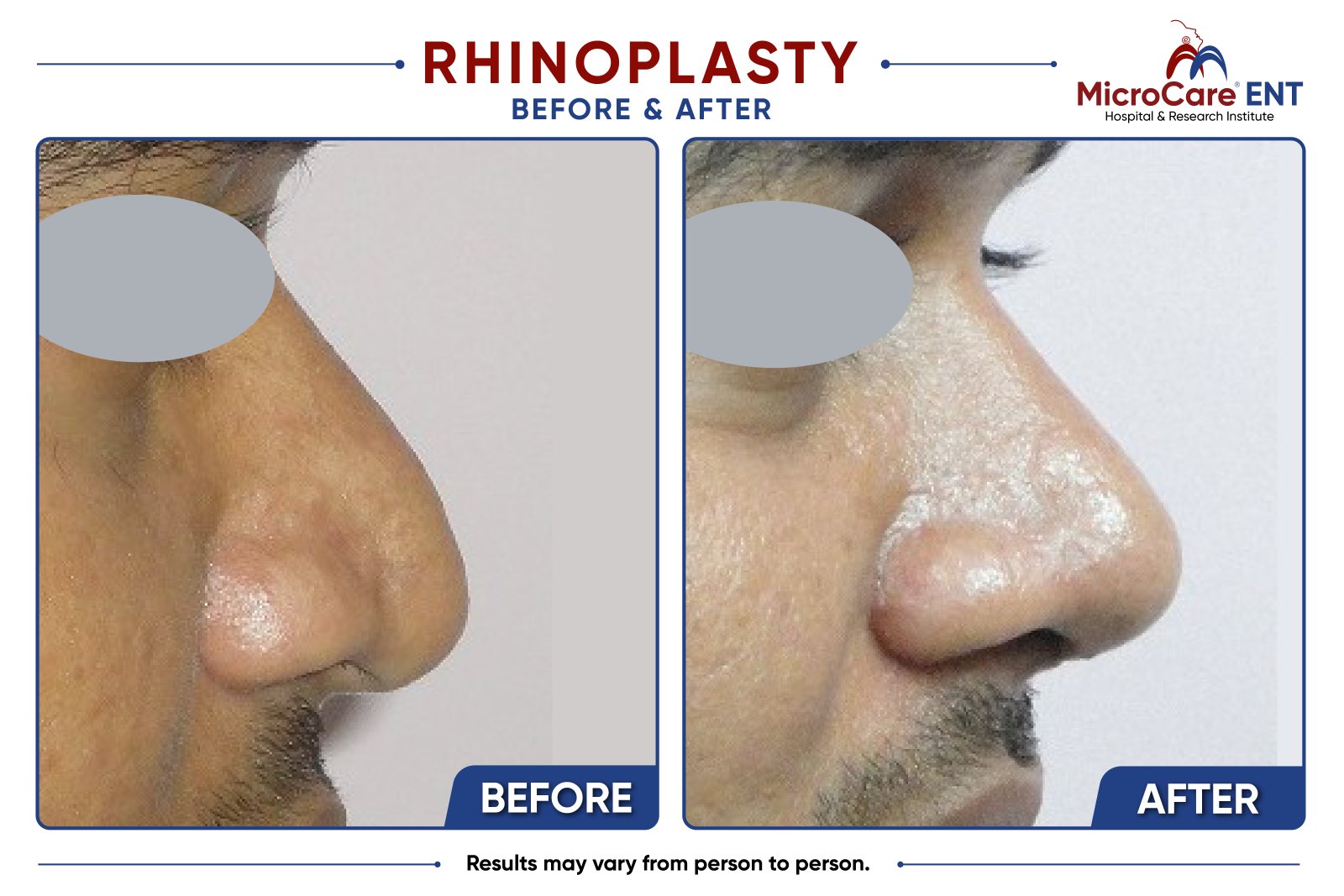
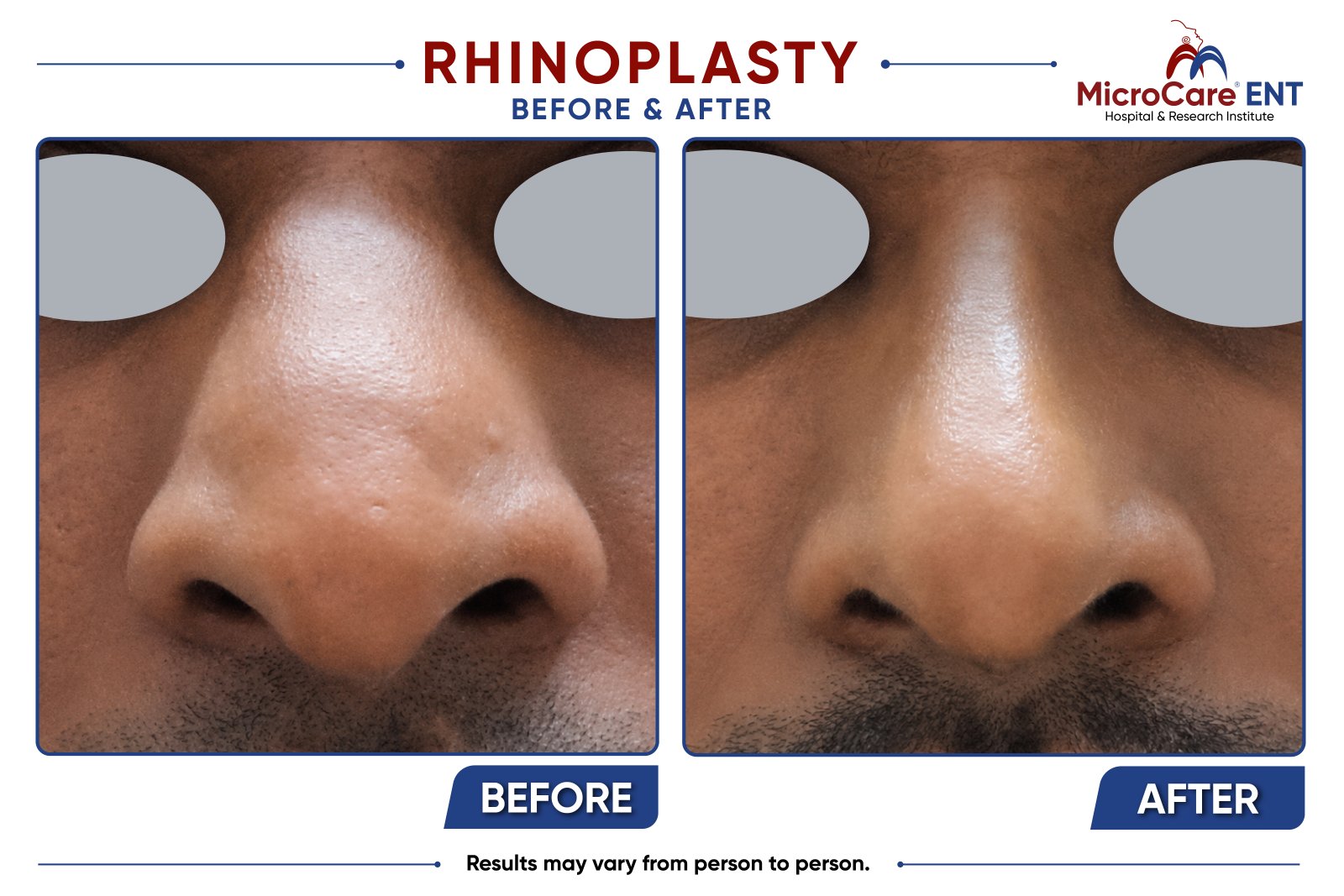
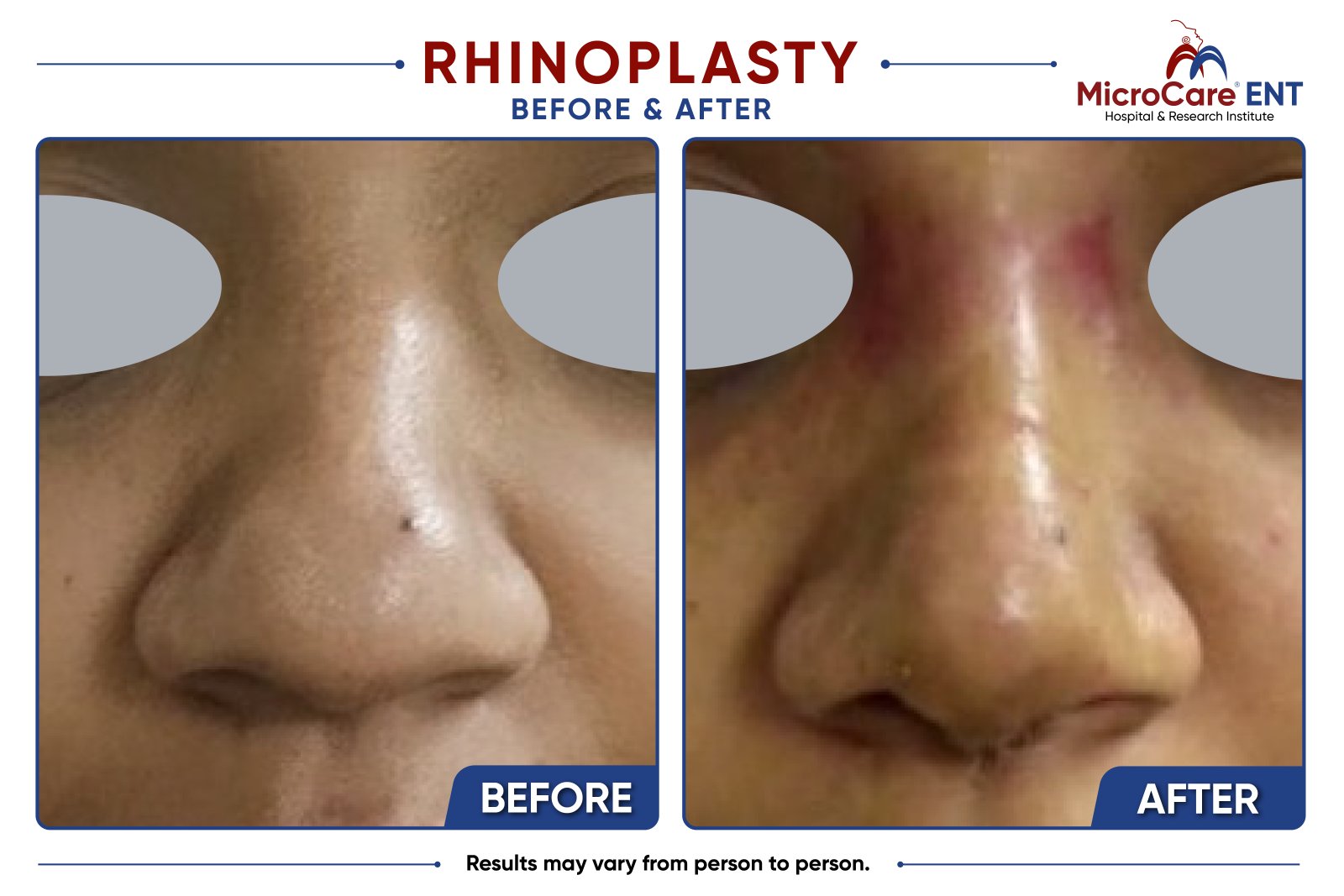
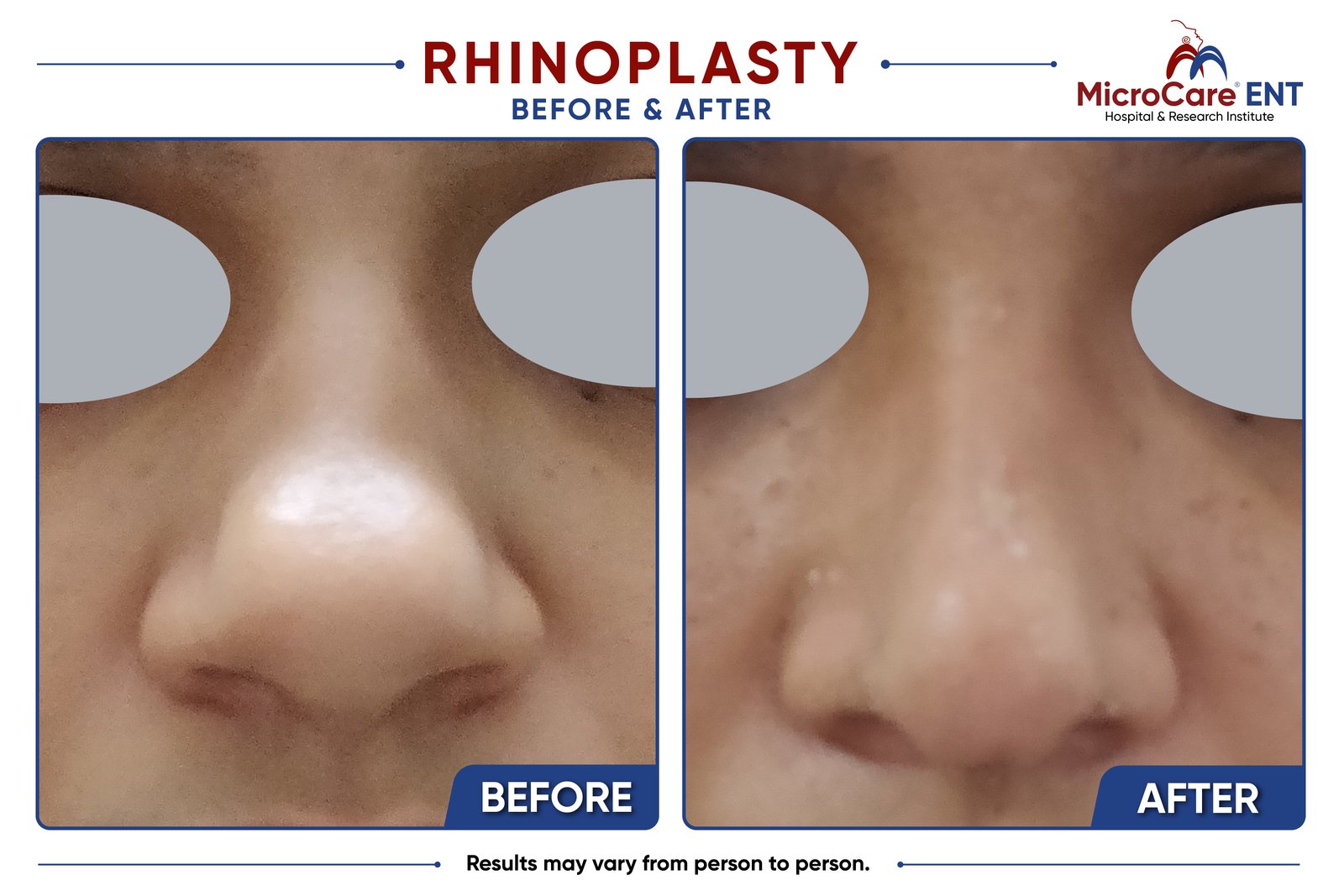
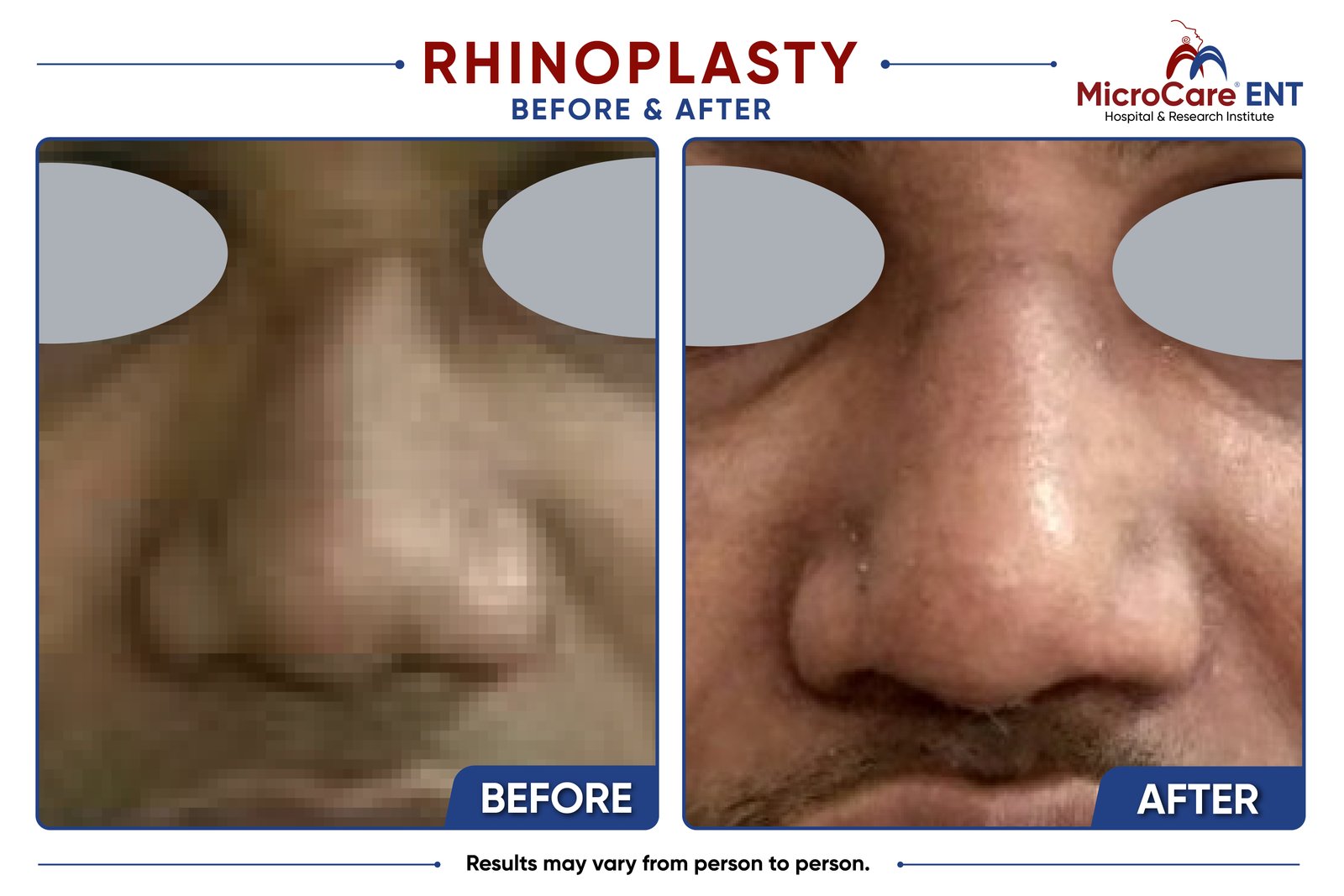
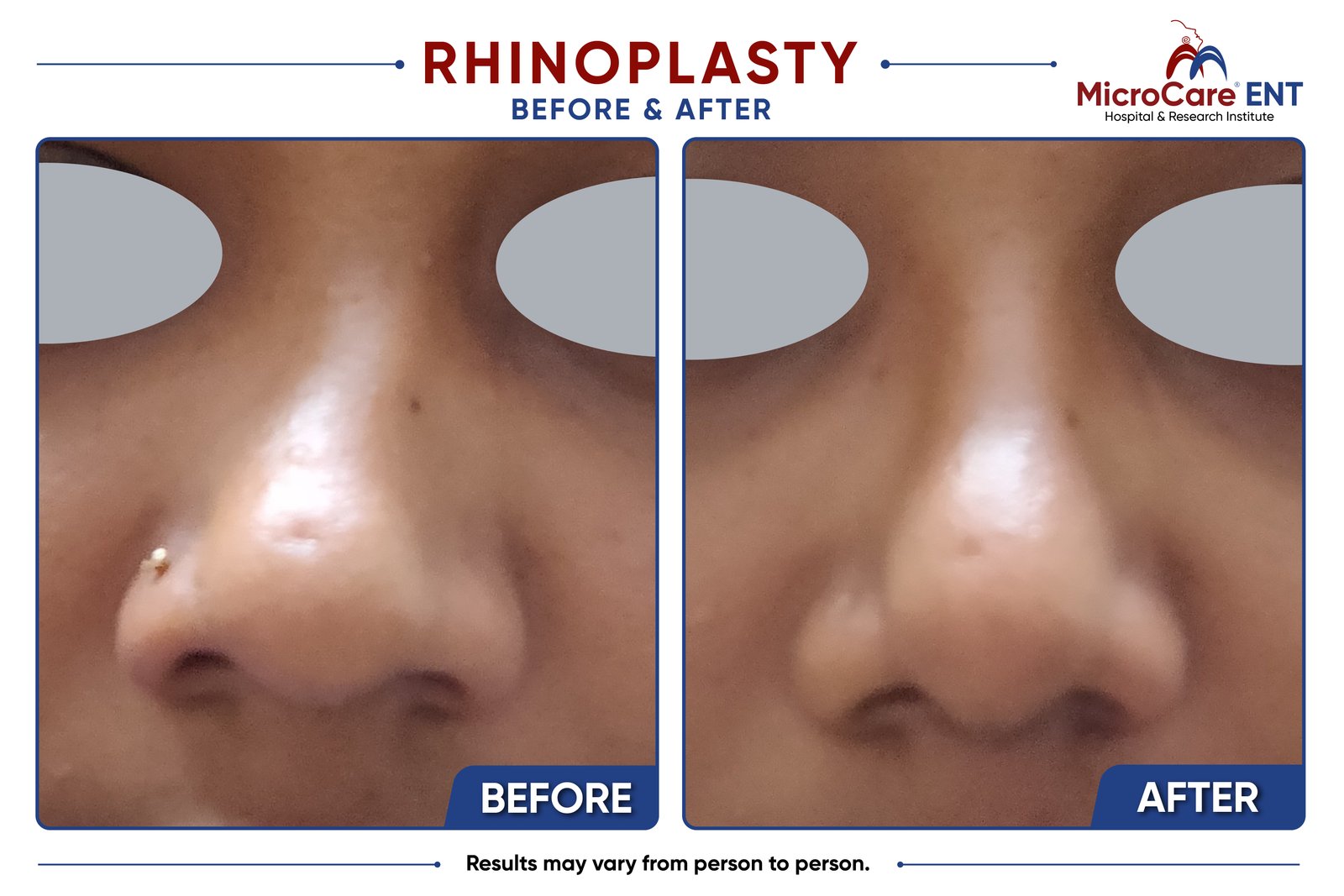
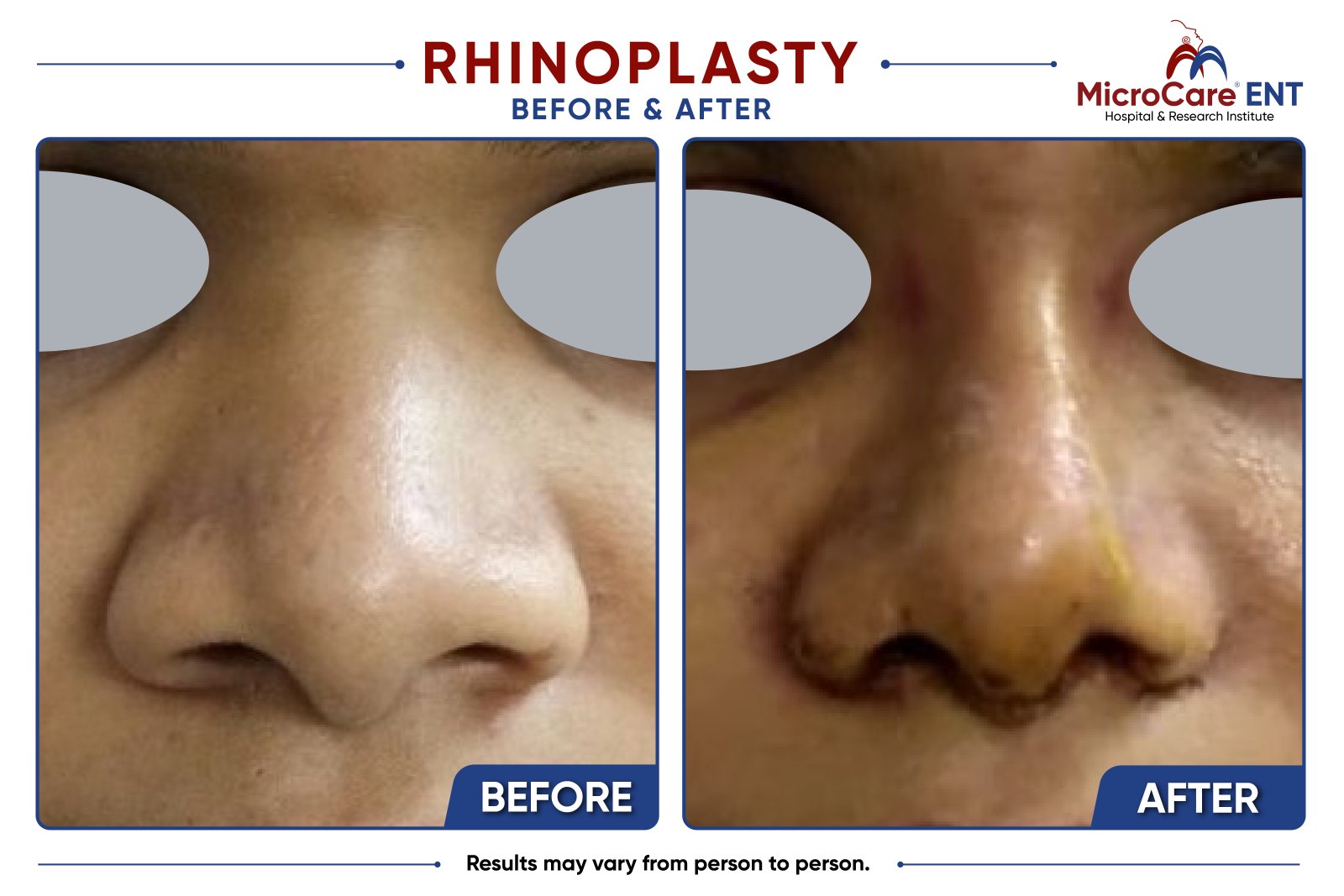
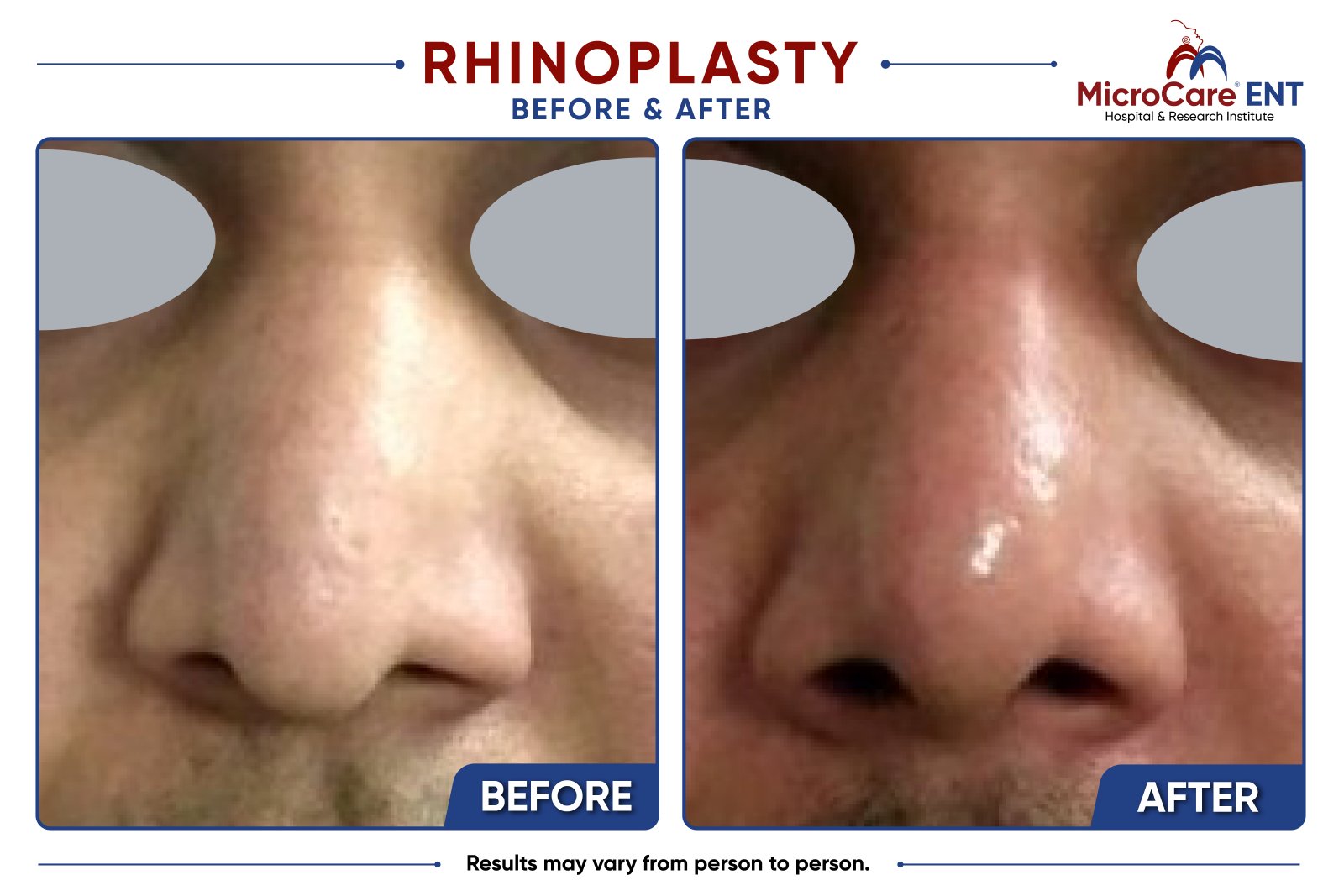
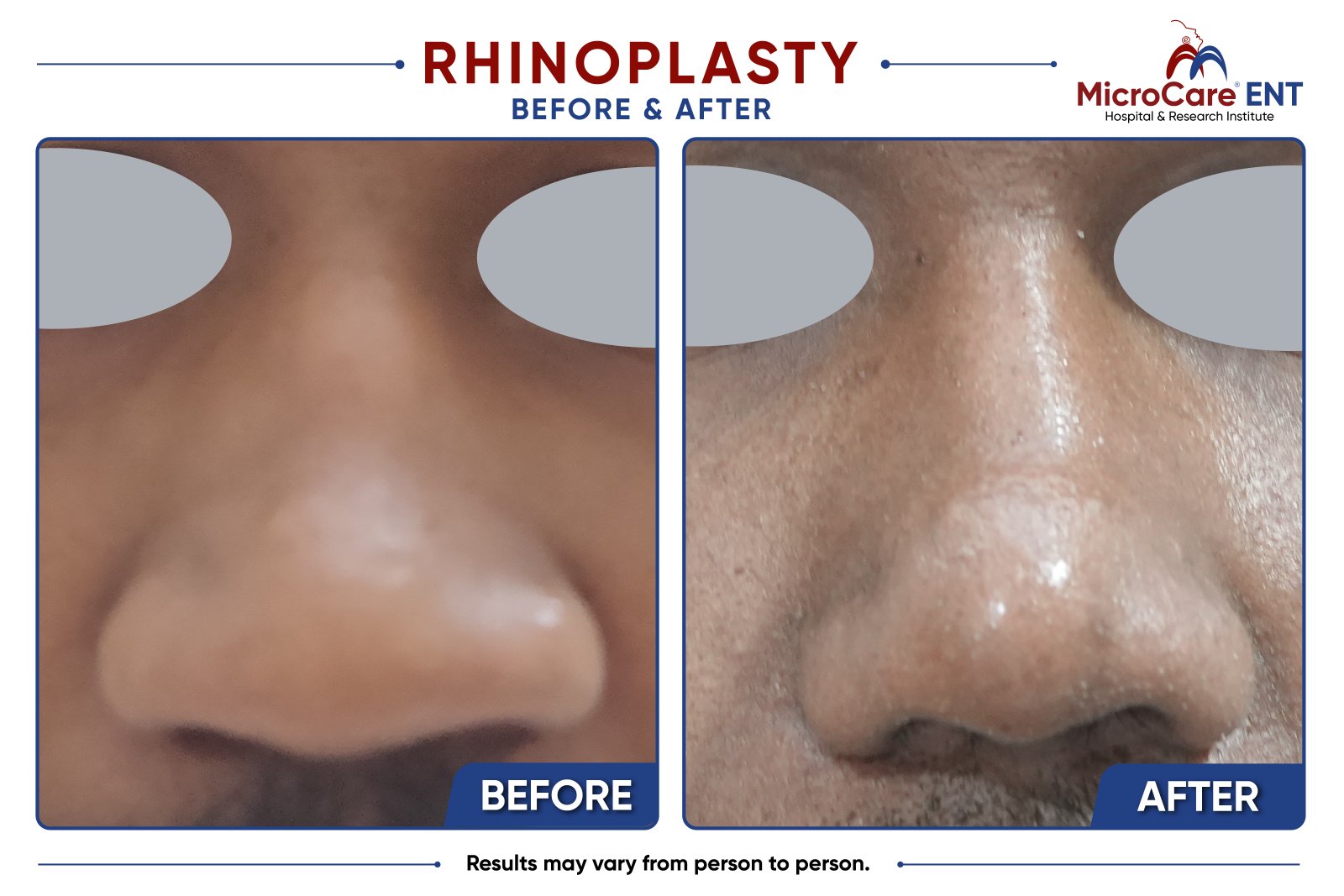
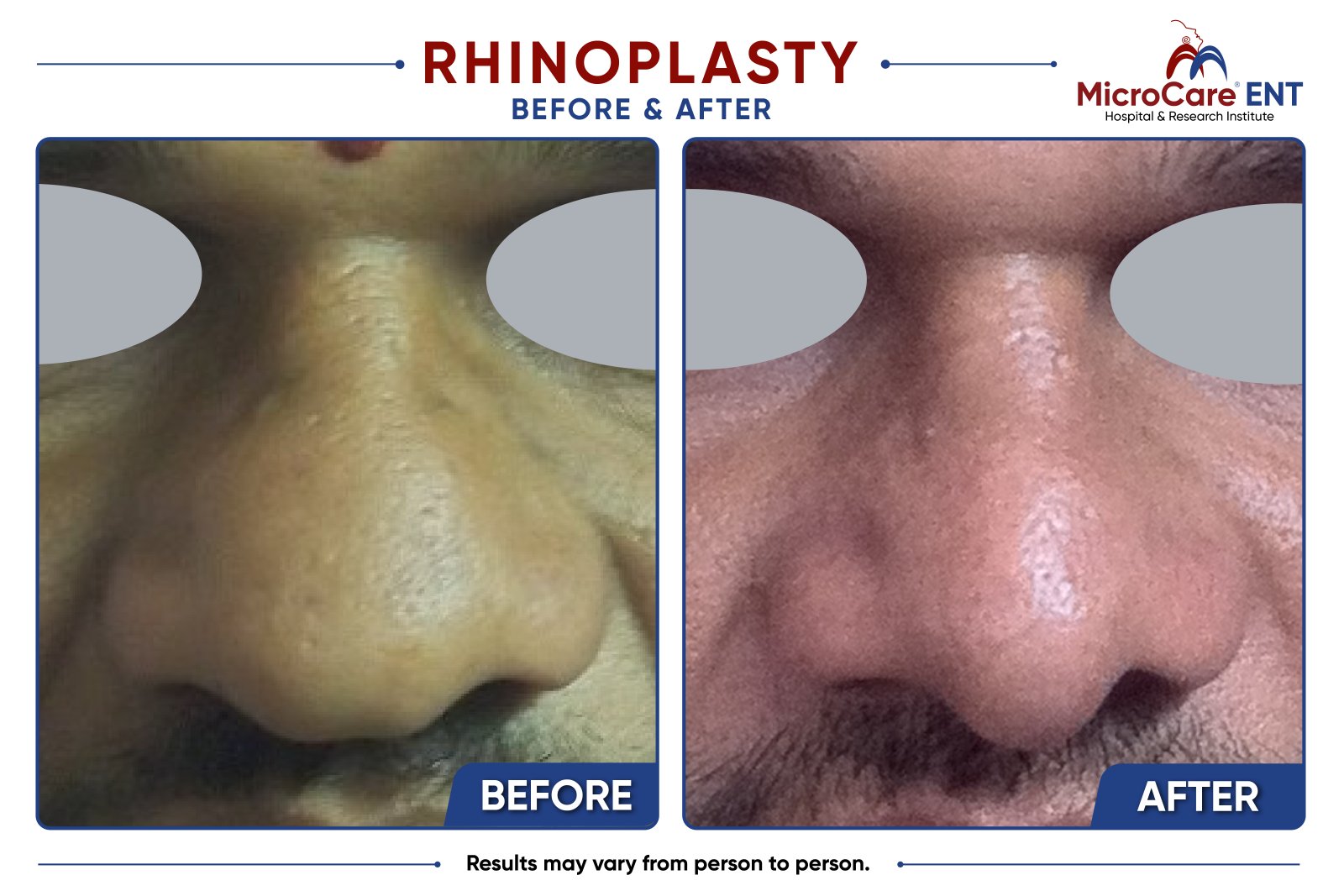
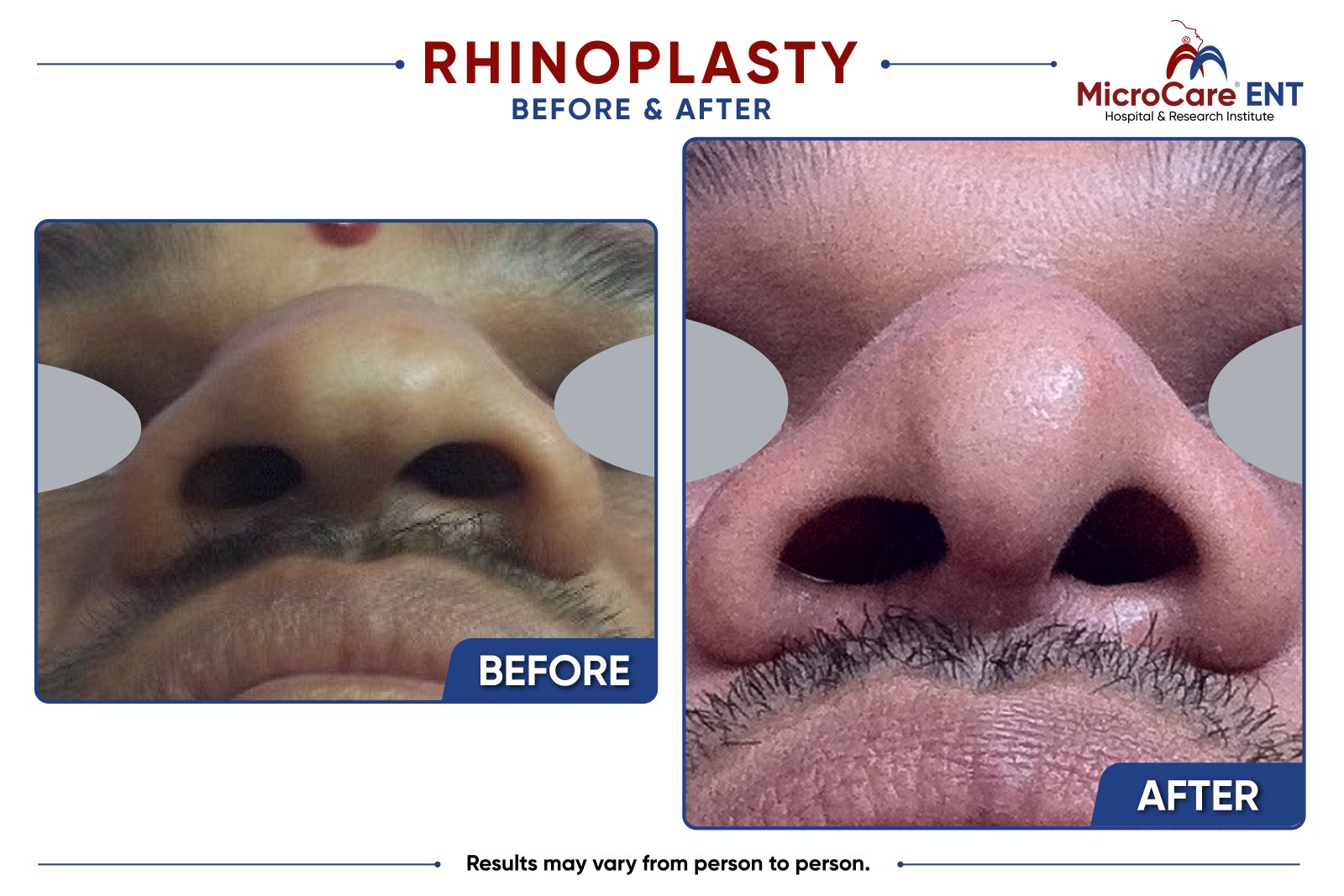
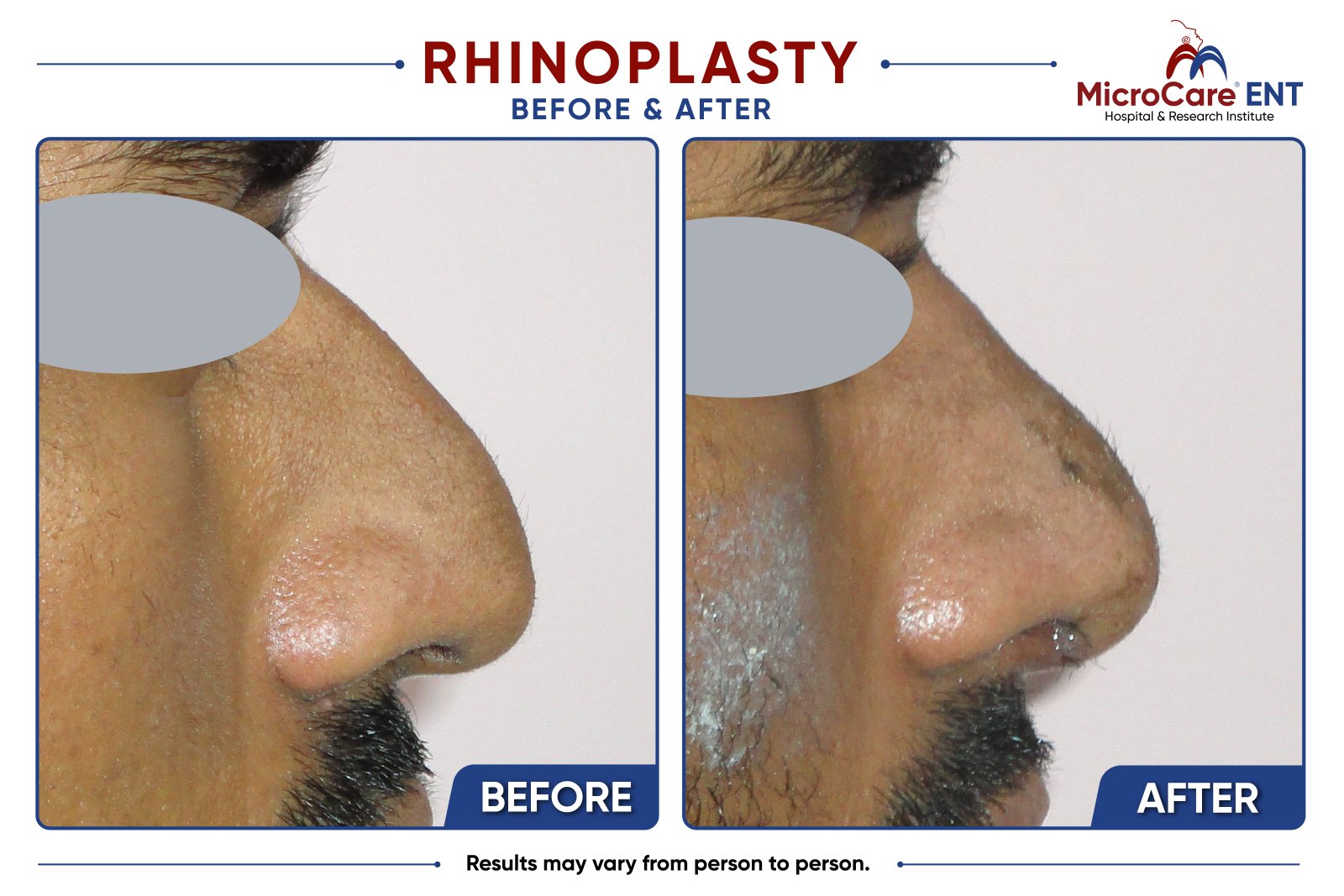
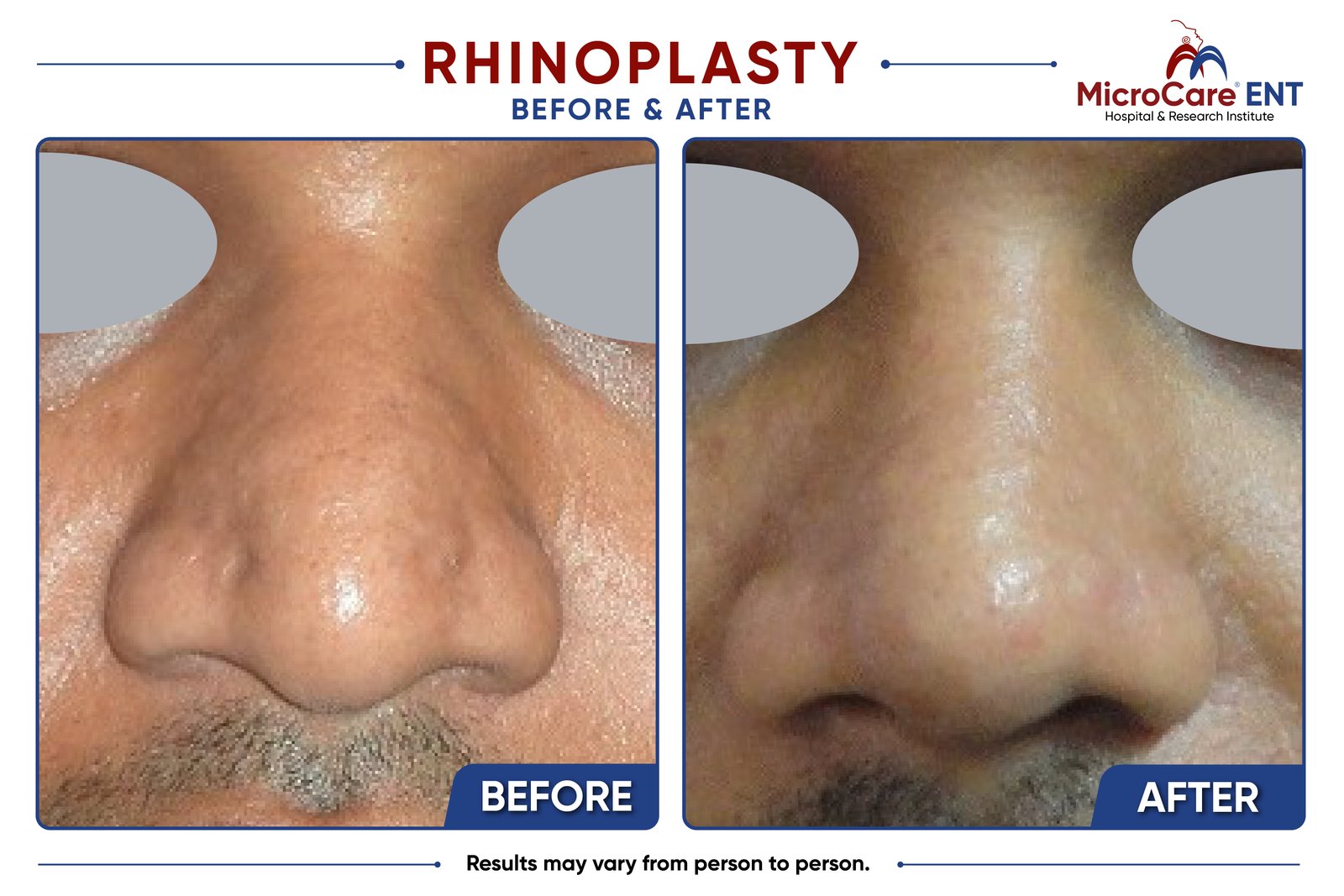
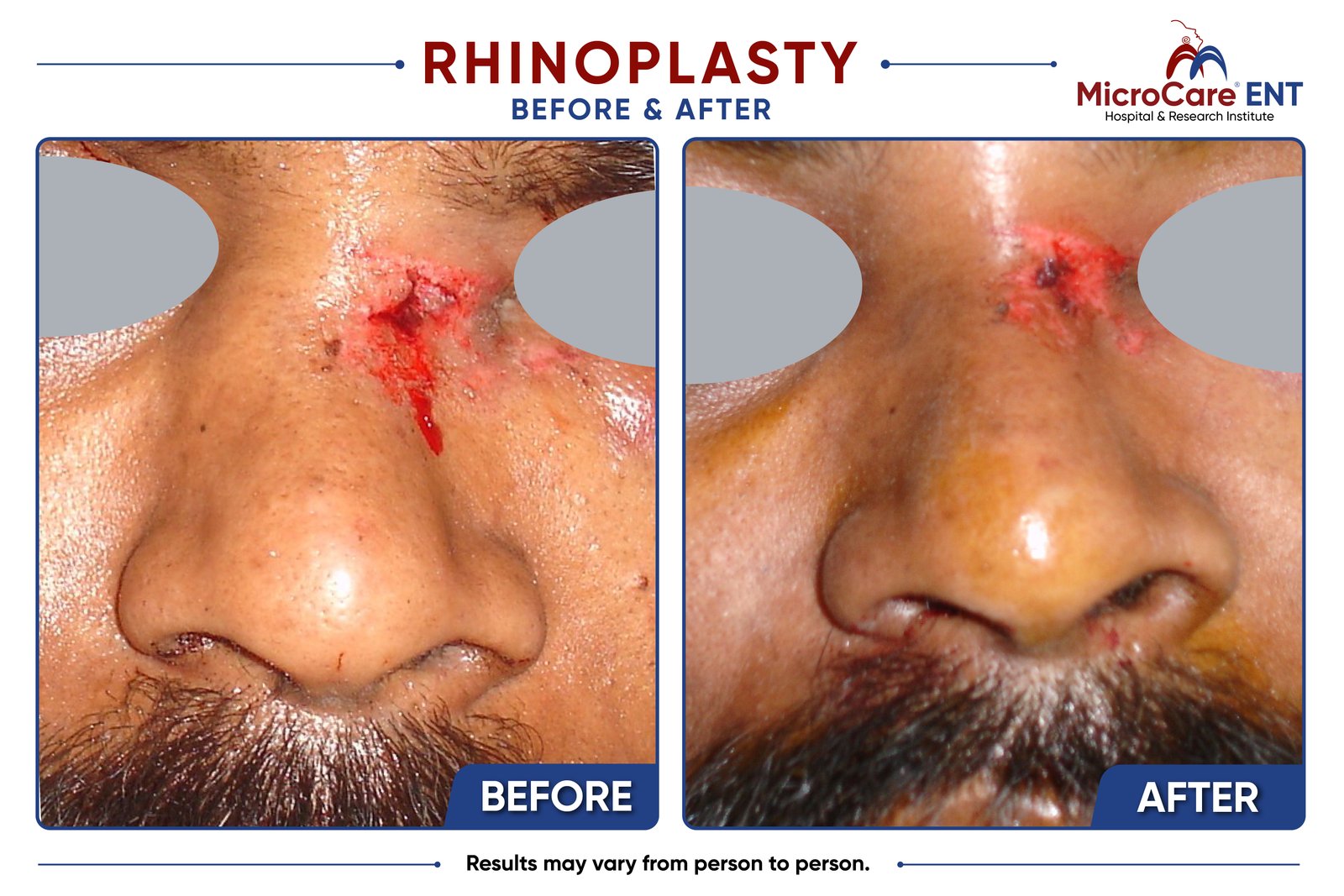
Photographs of patients of MicroCare ENT, shown with their consent. Every nose is different and individual results vary. See all before and after pictures.
Why tip correction is complex
The tip is held up by small, delicate lower lateral cartilages, and it acts as the gateway to the airway. Small changes here make a visible difference, so precision matters.

Removing too much
Taking away too much cartilage can collapse the internal valve, give a sharp, operated or over-upturned look, and let the tip droop with age.
Structure, not removal
We keep as much cartilage as possible, fold and shape it with fine sutures, and add support with your own septal or ear cartilage, planned to protect or improve the airway.
Are you a candidate for tip-plasty?
- Your tip drops when you smile or talk.
- It looks bulbous, boxy or undefined.
- It sticks out too far or looks flat.
- It is uneven or tilted.
- Your nostrils collapse or feel tight when you breathe in deeply.
- Your tip changed after an injury.
- You are unhappy with a pinched or over-upturned tip after earlier surgery.
The surgical journey
- Clinical assessmentWe assess the strength of your cartilage, your facial proportions (forehead, lips and chin) and your airway.
- Photographic planningYour nasal angles are mapped digitally, at rest and when you smile.
- Structural tip refinementThe cartilages are shaped with sutures, trimmed only conservatively, and supported with columellar strut, shield or alar rim grafts from your own septal cartilage.
- Functional supportThe internal nasal valve is reinforced so breathing is protected.
Tip-plasty or full rhinoplasty?
| Tip-plasty | Full rhinoplasty | |
|---|---|---|
| Focus | Tip, nostrils and columella | Bridge, bones, width and tip |
| Bone work | No | Yes |
| Scope | Targeted and structural | Comprehensive |
| Social recovery | About 7 to 10 days, little bruising | About 10 to 14 days, bruising common |
| Anaesthesia | Usually general; local with sedation in selected cases | Usually general |
Your recovery timeline
Recovery is usually quicker than after a full rhinoplasty, because the nasal bones are not touched.
- Mild swelling, little or no bruising
- Splint and stitches removed by day 7
- Back to work and social life from 7 to 10 days
- Swelling settles quickly
- Light exercise can usually resume
- Firmness and minor tip swelling fade
- The tip is the last area to settle
- Final tip definition appears
- Up to 18 months with thick skin
Aftercare tips
- Sleep with your head raised on two pillows for the first 3 nights.
- Avoid heavy glasses or sunglasses resting on your nose for 3 weeks.
- Protect the tip from the sun with sunscreen.
- Attend every follow-up visit.
Nose tip correction cost in Hyderabad
Your quote depends on:
- How complex the tip problem is.
- Whether grafts are needed, and from where.
- A first operation or a revision.
- Any breathing correction, such as the septum or valves, done at the same time.
Why choose MicroCare ENT

Functional and cosmetic expertise
Led by Prof. Dr. Sriprakash Vinnakota, an ENT surgeon with more than 26 years of experience, so the tip is refined without compromising breathing.
Structural rhinoplasty
A supported framework built from your own tissue, rather than a quick reduction.
Revision experience
Experience rebuilding tips after earlier surgery elsewhere, using ear or rib cartilage when needed.
Honest, patient-centred care
Realistic advice, transparent quotes and follow-up for up to one year, in an NABH-accredited hospital.

Prof. Dr. Sriprakash Vinnakota
MS (ENT, Head & Neck) · Chief Rhinoplasty Surgeon, Centre for Advanced ENT, Head & Neck Surgery, MicroCare ENT Hospital & Research Institute
More than 26 years in ENT surgery, with endoscopic sinus surgery training at the University of Graz, Austria, and rhinoplasty training at Marien Hospital, Stuttgart, under Prof. Dr. Wolfgang Gubisch.
Frequently asked questions
Is tip correction different from a full rhinoplasty?
Yes. Tip-plasty works only on the lower third of the nose: the tip, nostrils and columella. The nasal bones are not touched, so there is usually less bruising and a quicker recovery than a full rhinoplasty.
Will my nose look artificial?
The aim is natural refinement. Your tip is planned in proportion to your face, reshaped mainly with sutures rather than removal, and checked for how it moves when you smile.
Is tip surgery painful?
Most people feel congestion, mild soreness and tightness for 2 to 3 days rather than sharp pain. We avoid painful nasal packing, and many patients need pain relief for only the first couple of days.
How long does the swelling last?
You will usually feel ready to be seen socially at around 10 days. Most of the swelling settles by 3 to 6 weeks, and the last subtle swelling at the tip fades over 3 to 12 months, or up to 18 months with thick skin. Keeping salt low and avoiding heavy lifting for 3 to 4 weeks helps.
Can tip surgery make my breathing worse?
When done with structural support, it should not, and it can improve breathing. Alar rim grafts and internal valve support keep the airway open, and your septum and turbinates are checked before surgery.
Can a tip be corrected after previous surgery?
Yes. Revision tip surgery treats a pinched tip, a pollybeak, an over-upturned (pig-snout) tip, asymmetry or notching, using grafts from your ear or rib and restoring the airway. We usually recommend waiting at least 12 months after the first operation.
Why does structural planning matter?
The tip supports the skin over it, forms part of the internal nasal valve and has to match the bridge. Planning all three together keeps the tip stable and the airway open over time.
See also cosmetic rhinoplasty, broad nose correction and our FAQs.
Get a preliminary tip analysis
Send us a photo of your nose on WhatsApp for a preliminary analysis, or book a consultation with Prof. Dr. Sriprakash Vinnakota. Leave your name and number and we will open WhatsApp with your details filled in, or call +91 94949 40725.