
The structure behind breathing and beauty.
Your nose balances two jobs: moving air efficiently and giving your face its symmetry. Knowing how it is built helps you understand why one nose looks or breathes the way it does, and how rhinoplasty can change its shape while protecting, or improving, your breathing.
Medically reviewed by Prof. Dr. Sriprakash Vinnakota, MBBS, MS (ENT, Head & Neck), Chief Rhinoplasty Surgeon, Centre for Advanced ENT, Head & Neck Surgery, MicroCare ENT Hospital & Research Institute.
- Outer zones
- Three thirds
- Septum
- Cartilage and bone
- Turbinates
- Three pairs
- Narrowest point
- Nasal valve
- Grafts from
- Septum, ear, rib
- Assessment
- Nasal endoscopy
Why nasal anatomy matters
The nose is not just a feature on your face. It is a working organ, and every part of its shape affects how it works. It has three main jobs:
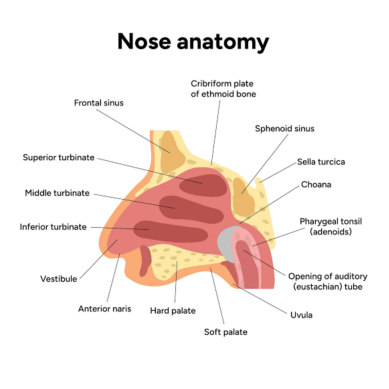
Prepares the air
It filters, warms and moistens the air before it reaches your lungs.
Regulates airflow
Its gentle resistance to airflow helps the lungs expand fully and take in oxygen.
Smell and voice
It holds the nerves of smell and adds resonance to your voice.
External anatomy: the visible landmarks
These are the parts that shape your profile, and the main focus of cosmetic change.

Nasal dorsum
The bridge runs from between the eyes to the tip. Its upper third is bone and its middle third is the upper lateral cartilage. A hump, a dip or a crooked bridge is shaped here.
Nasal tip
The paired lower lateral (alar) cartilages set the shape of the tip. If they are weak, bulky or uneven, the tip can look bulbous or droop, especially when you smile.
Nostrils and alar base
The nostrils are the entrance to the airway, and their sides (the alae) are dense fibrofatty tissue. Wide or flared nostrils are narrowed carefully so the airway entrance is not restricted.
Columella
The narrow strip of tissue between the nostrils, at the lower edge of the septum. It supports how far the tip projects and keeps it stable.
Internal anatomy: the engines of breathing
You cannot see these structures, but they decide how well you breathe every day.
Nasal septum
The septum splits the nose into two airways. The front is quadrangular cartilage and the back joins the ethmoid and vomer bones. When it bends, it can cause mouth breathing, snoring, sinus blockage and poor sleep.
SeptorhinoplastyNasal turbinates
Three pairs of bony shelves, superior, middle and inferior, covered in lining rich in blood vessels. The inferior turbinates swell and shrink to control moisture. Allergies or structural problems can enlarge them permanently.
Nasal valve
The narrowest part of the airway, formed by the septum, the lower edge of the upper lateral cartilage and the nasal floor. If it is weak, it collapses inwards when you breathe in, especially during exercise or sleep.
Functional rhinoplasty
Before you decide, read Prof. Dr. Vinnakota's book Your Best Nose, which answers 100 common rhinoplasty myths.
Patient results
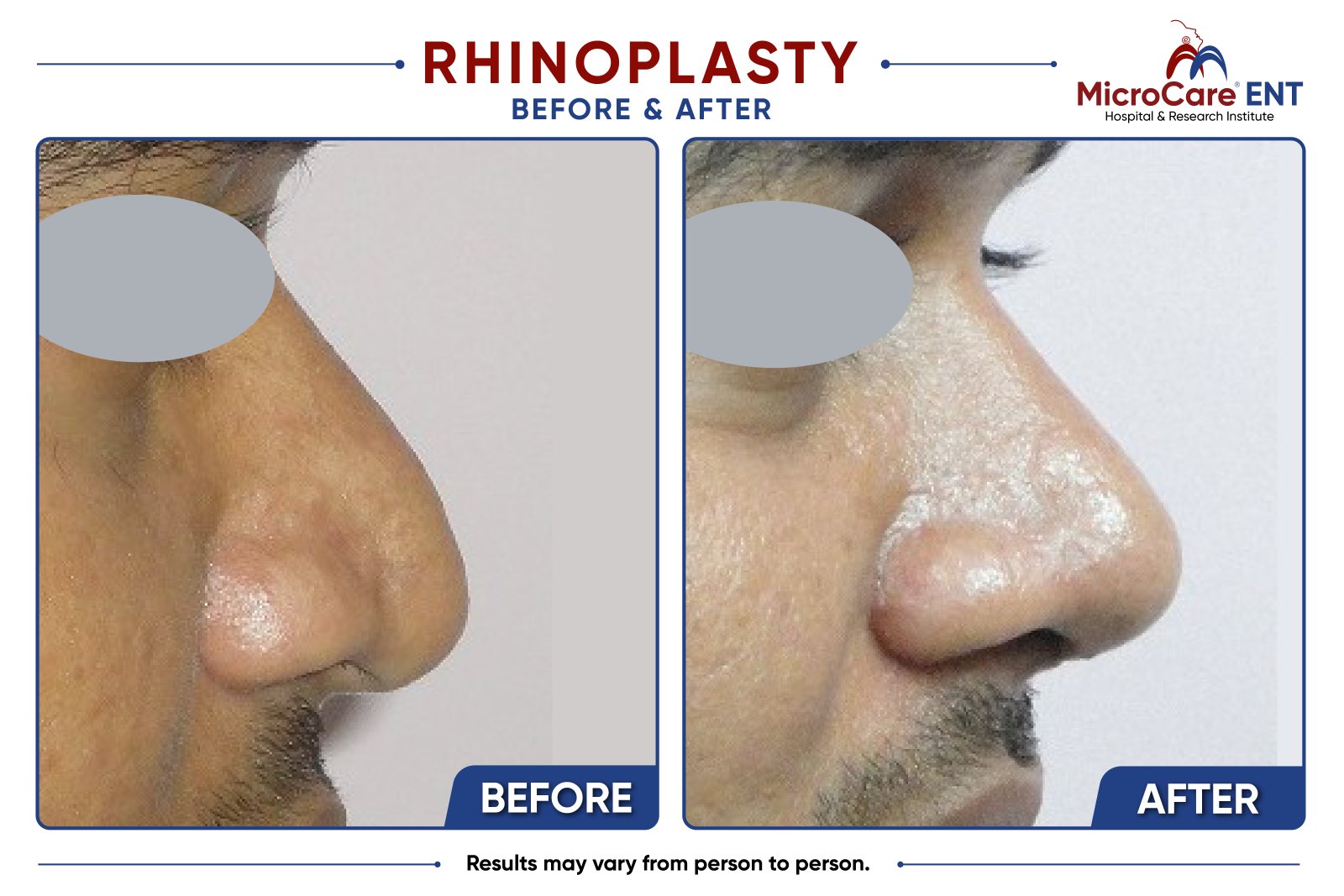
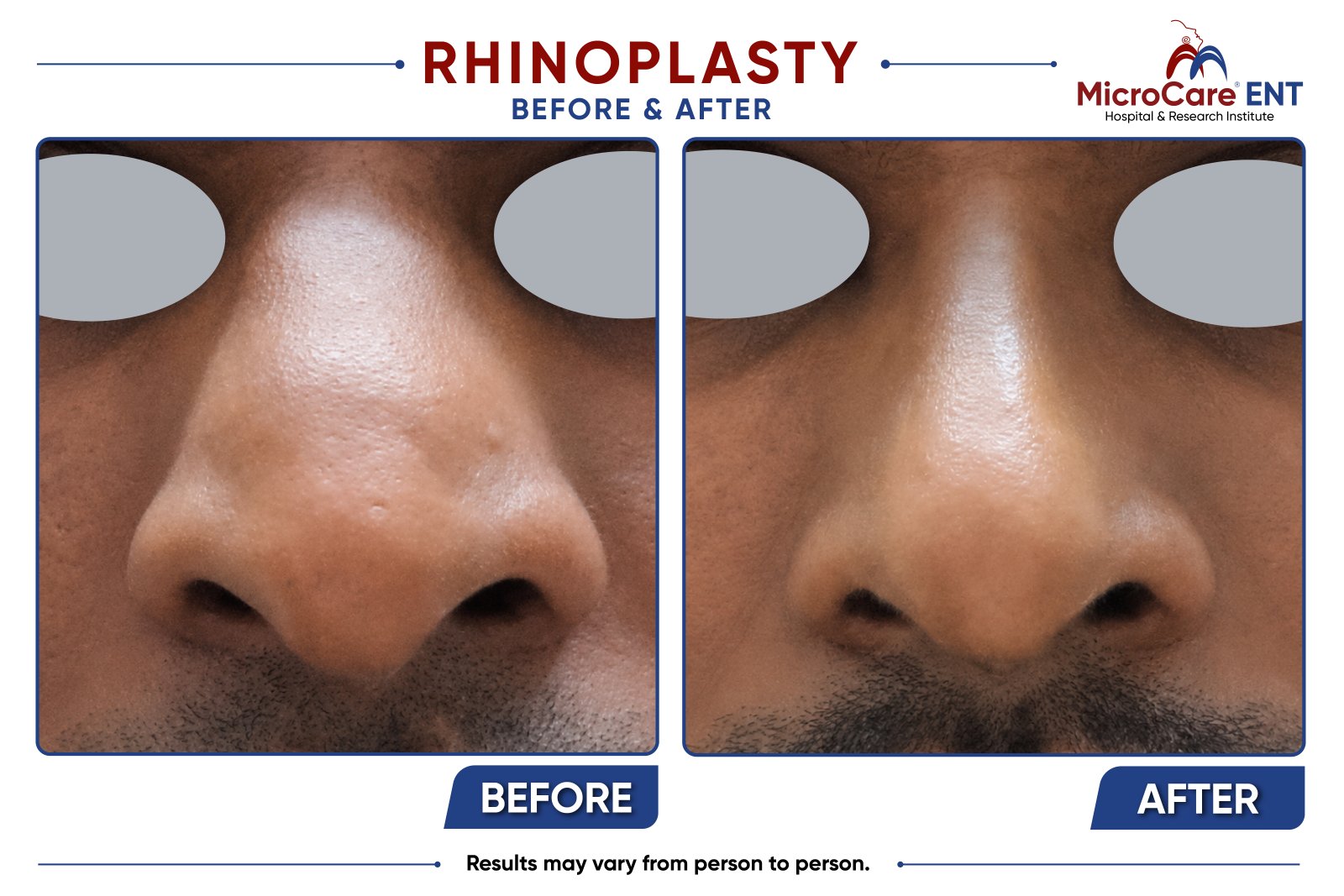
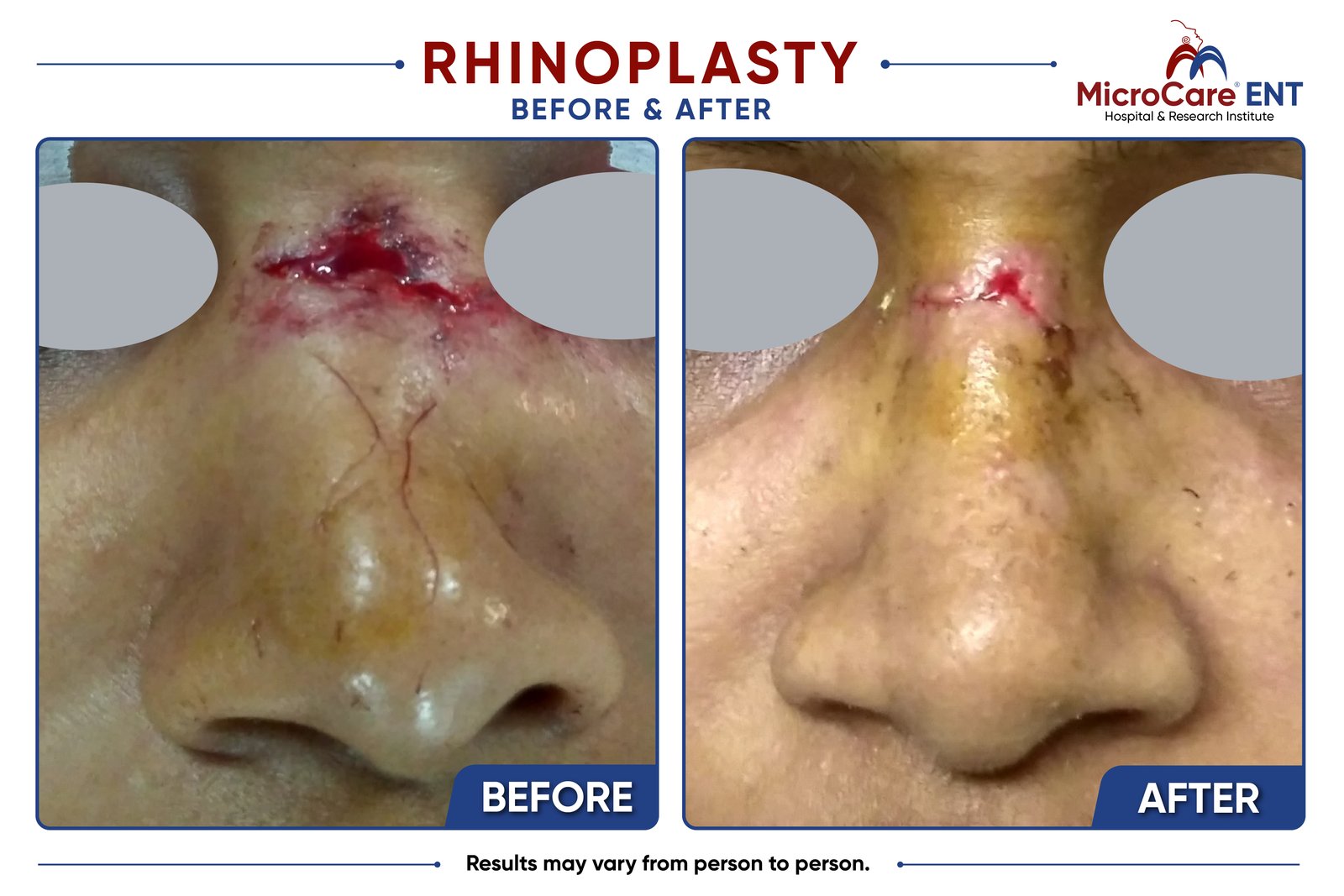
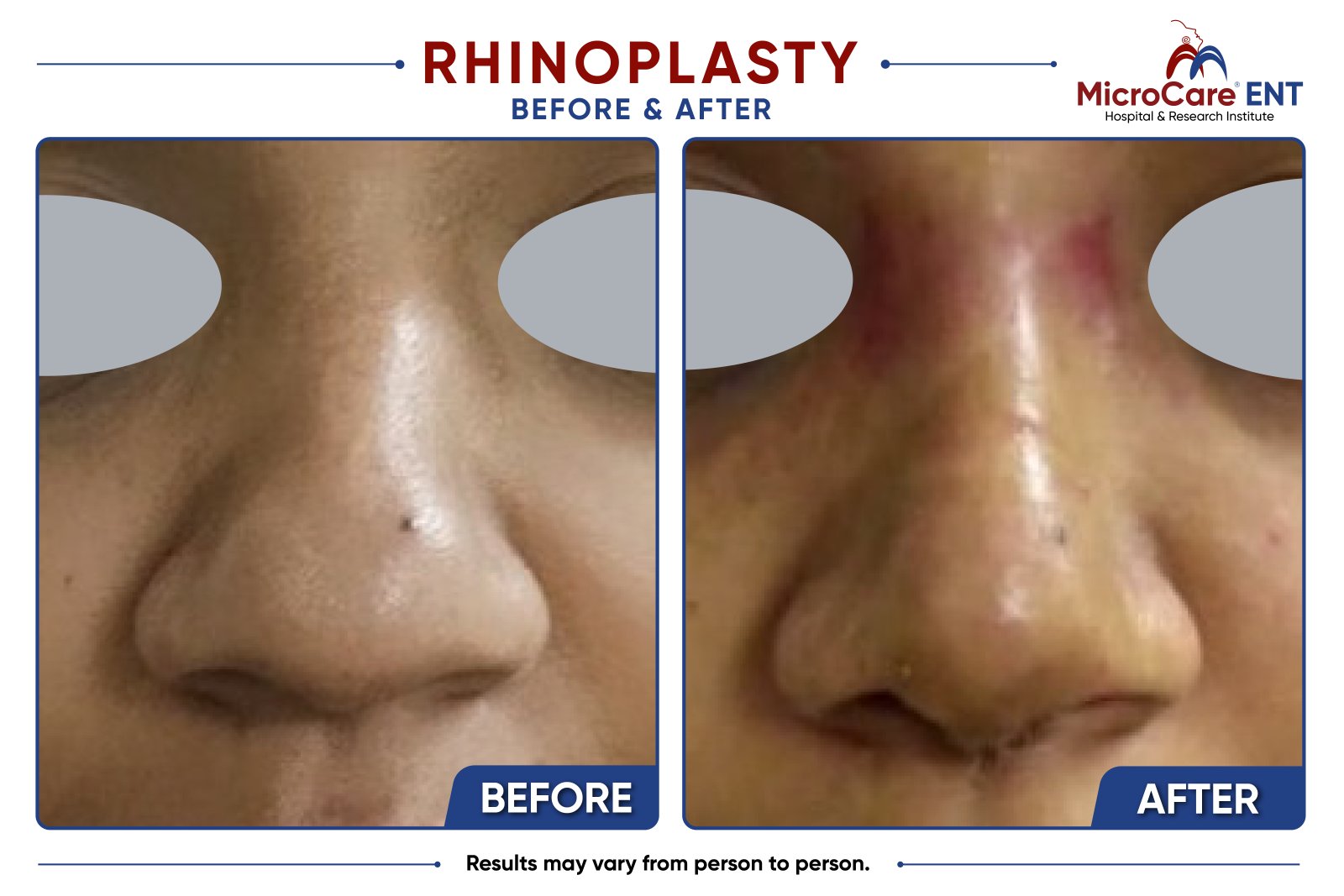
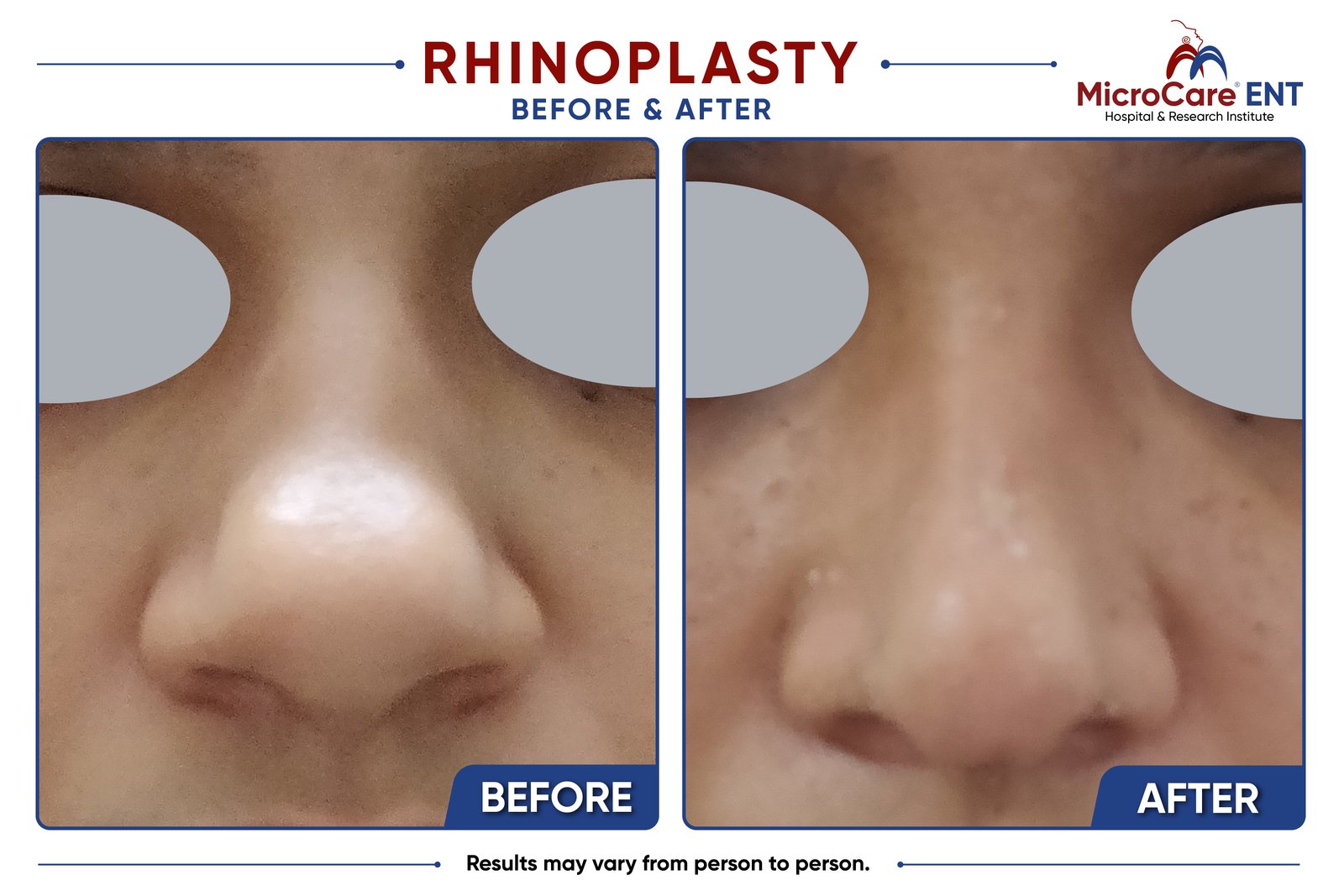
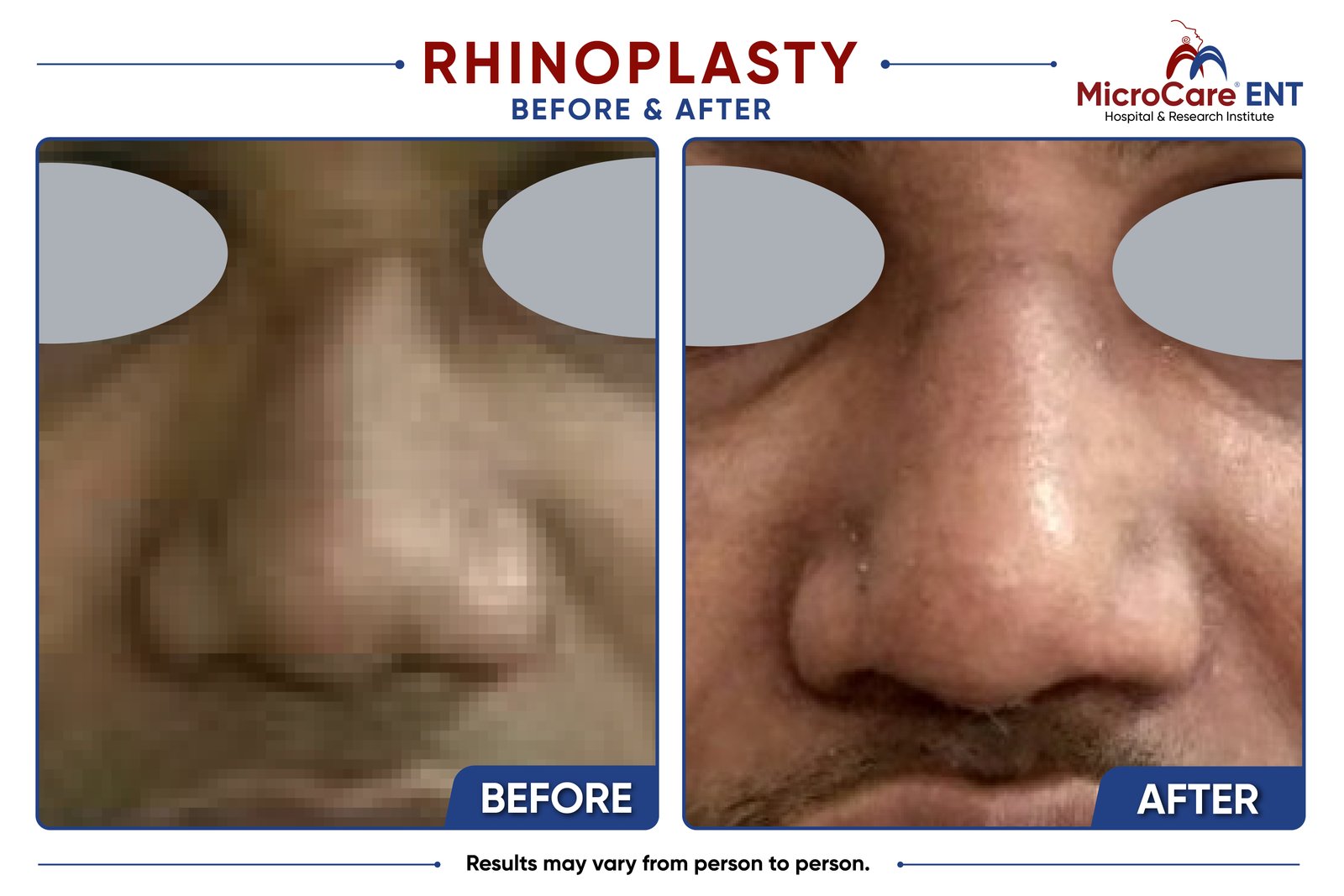
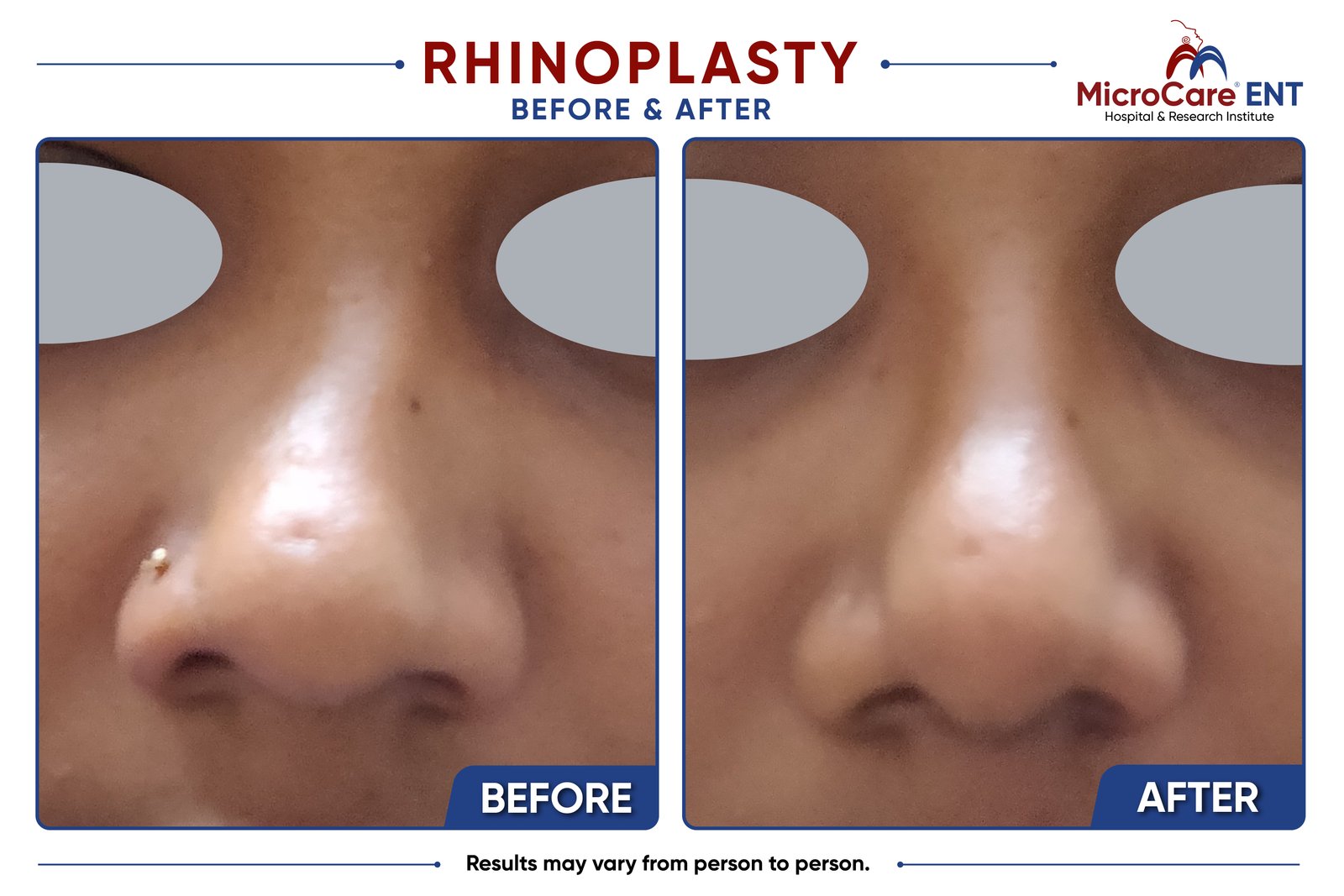
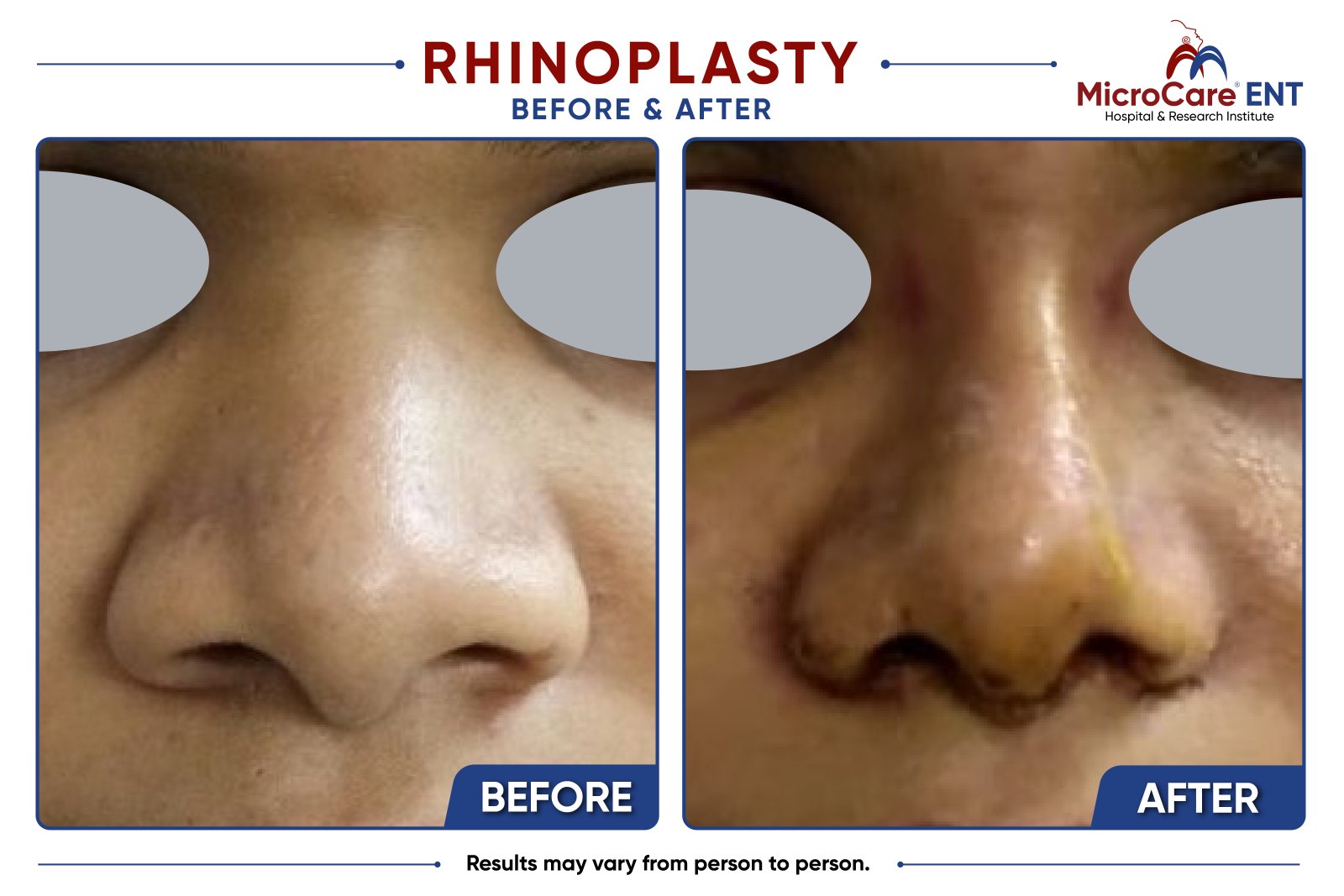
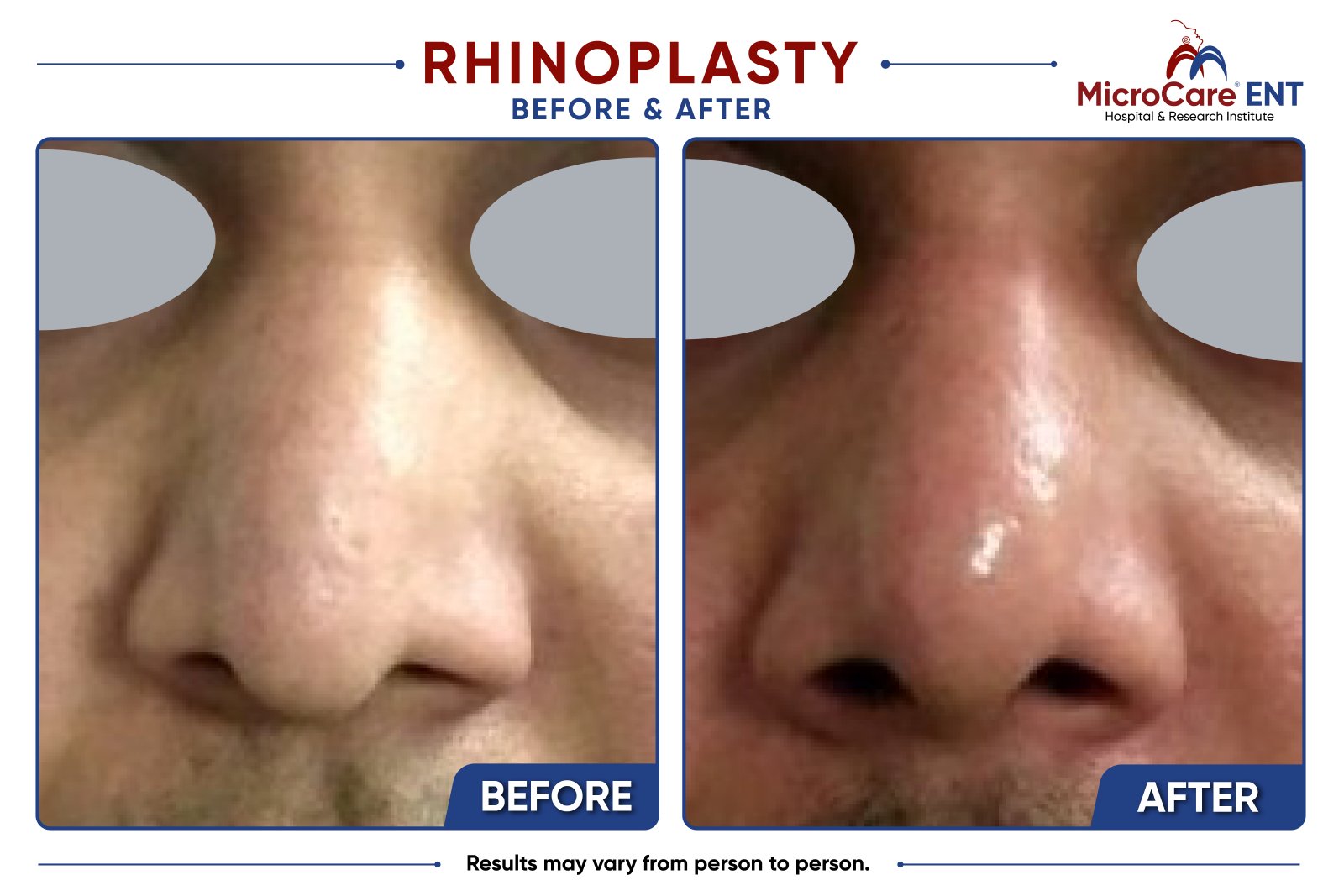
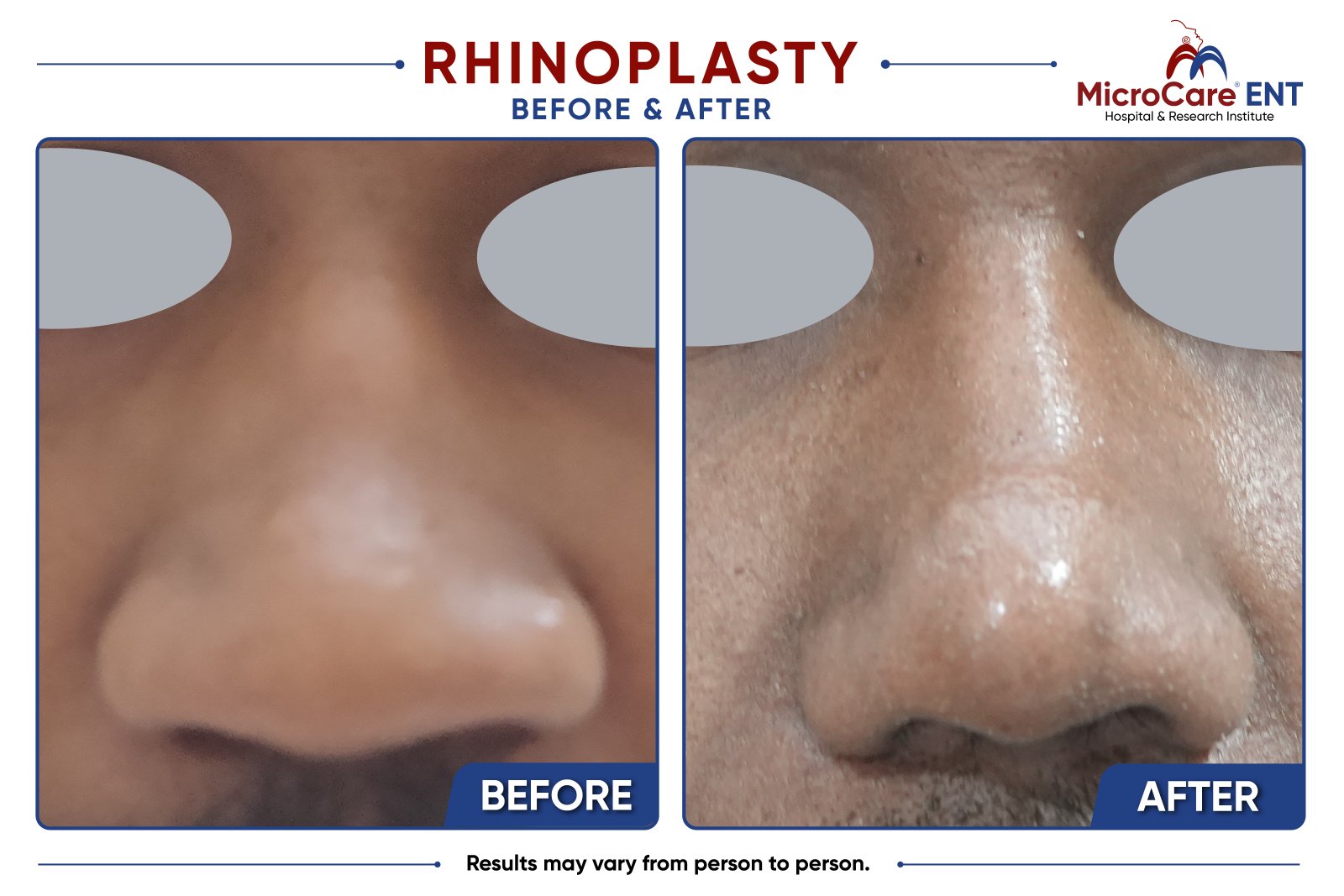
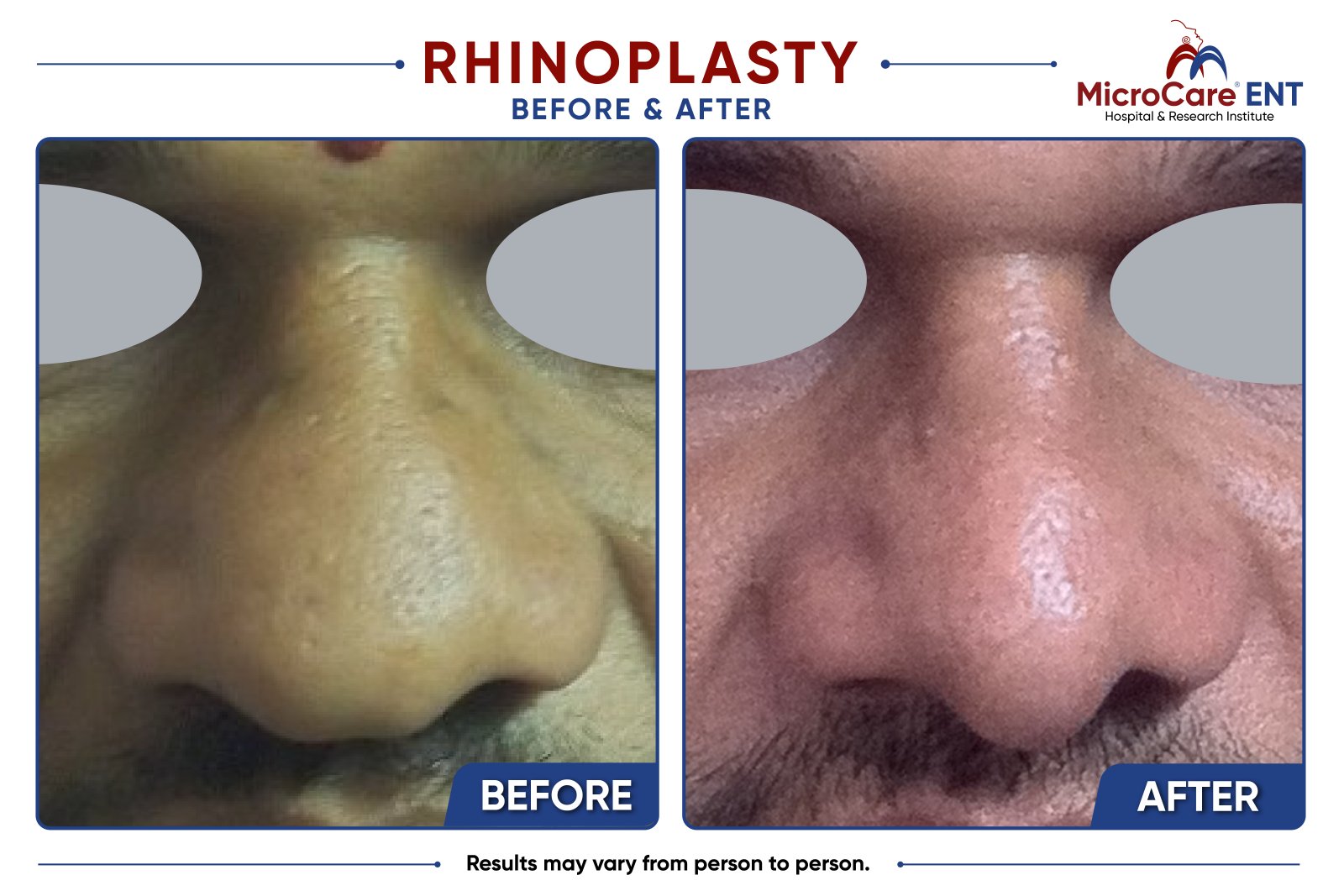
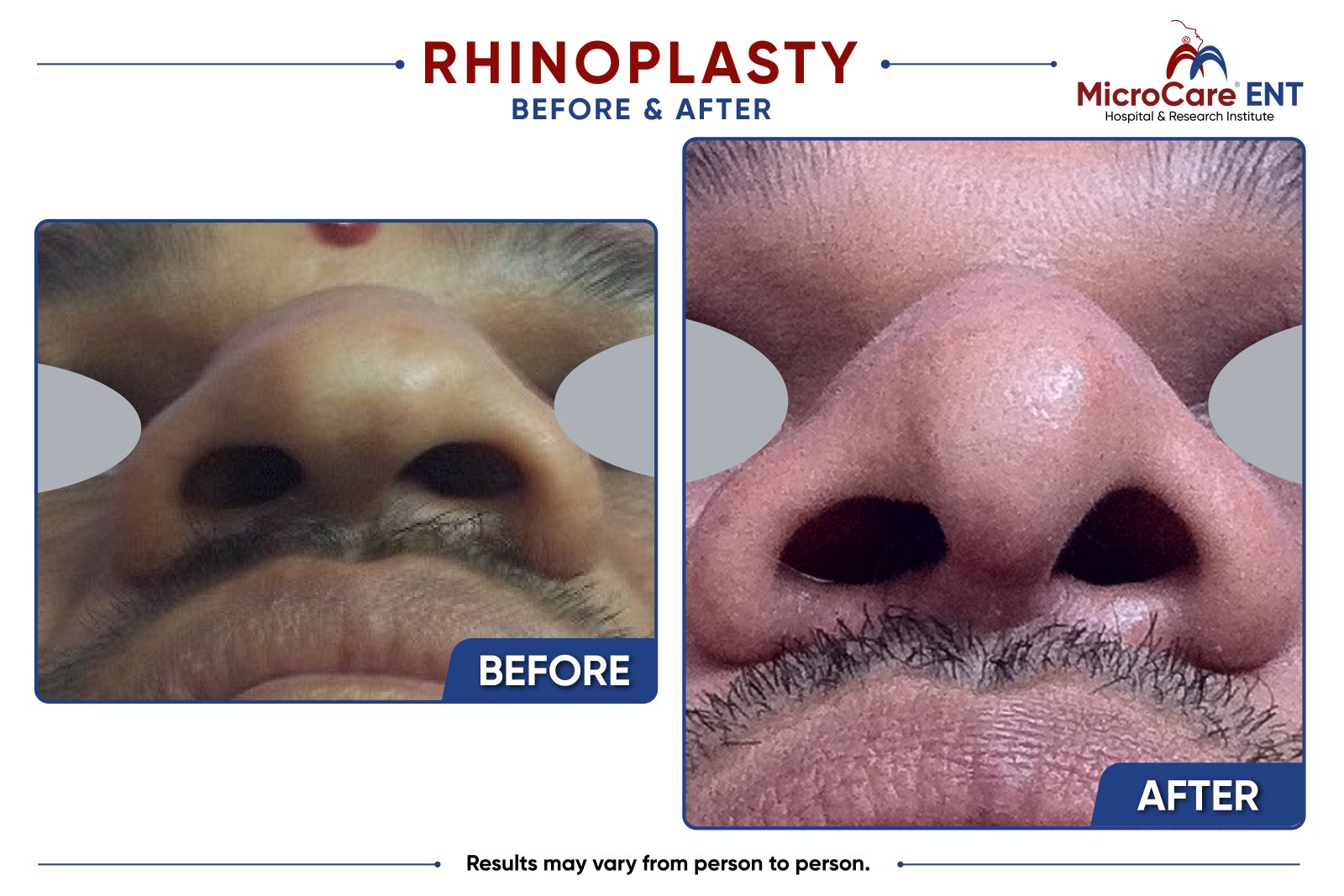
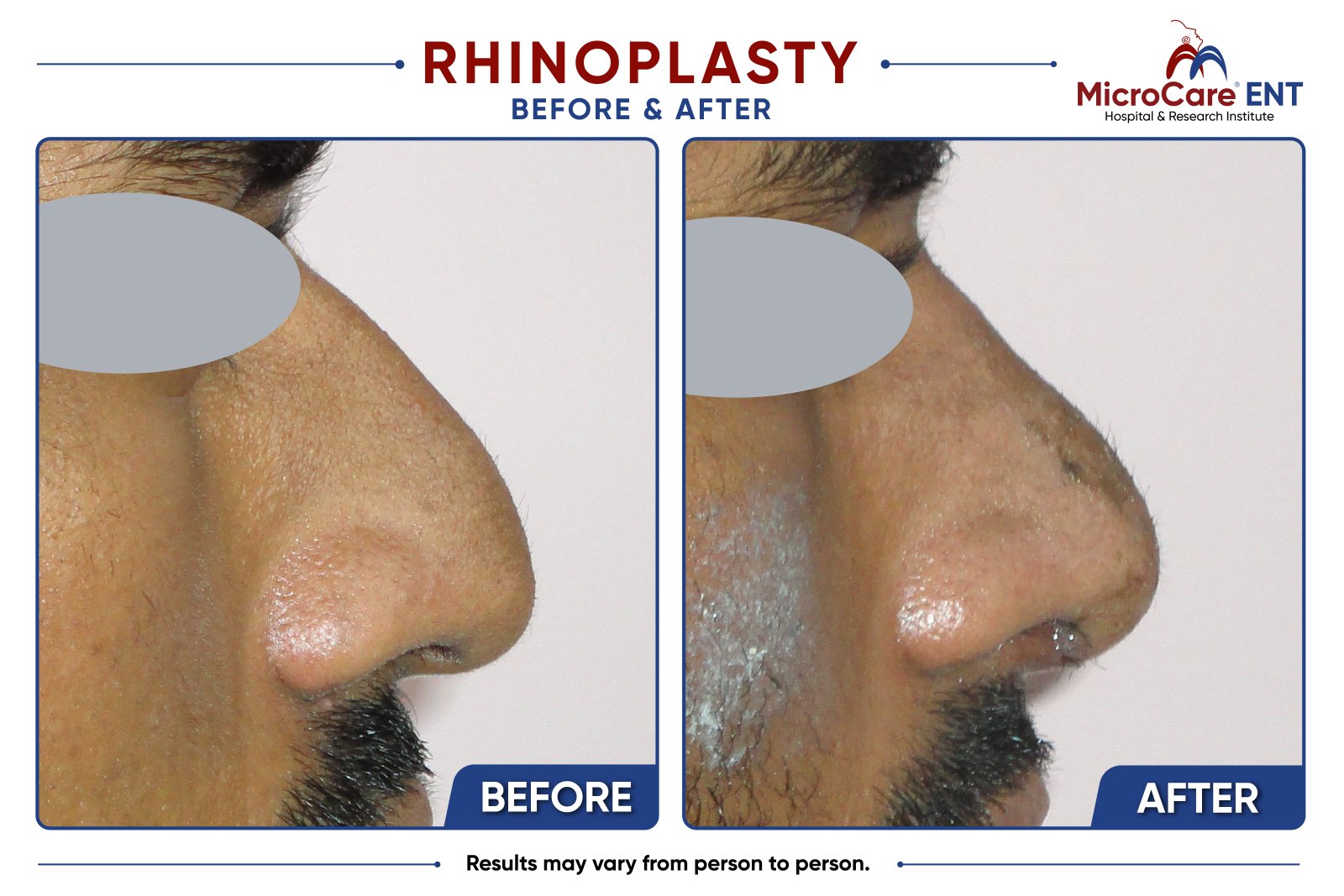
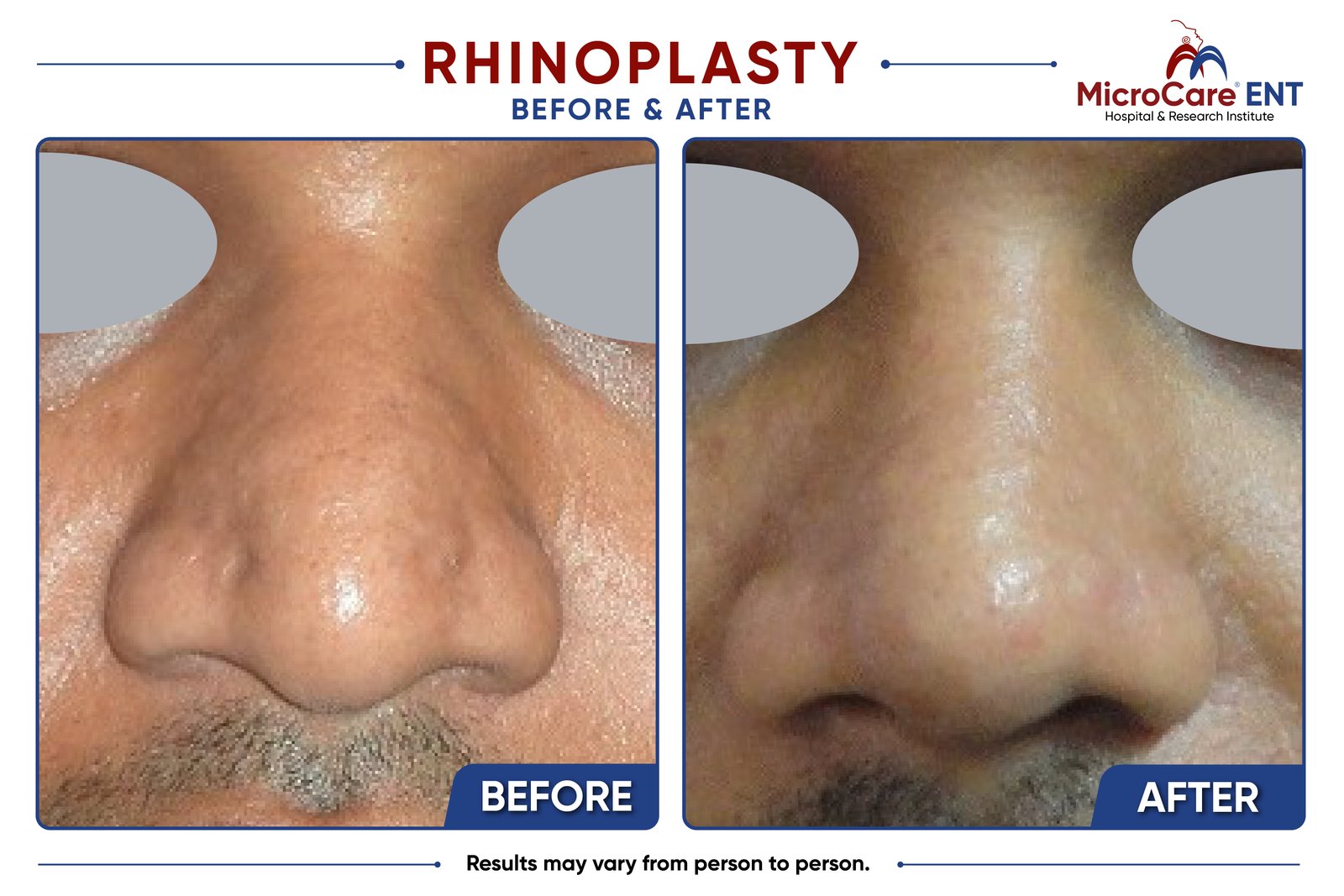
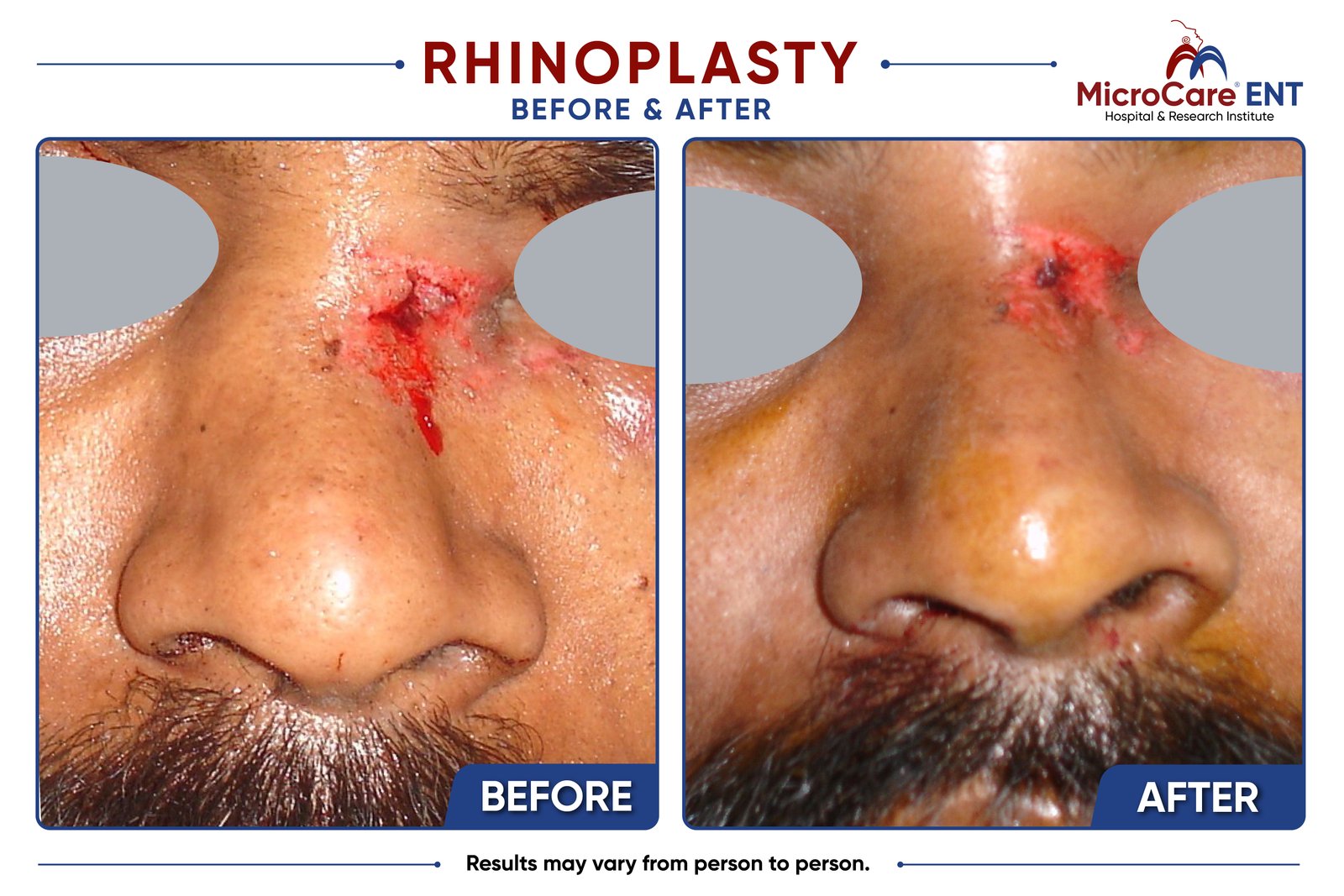
Photographs of patients of MicroCare ENT, shown with their consent. Every nose is different and individual results vary. See all before and after pictures.
How anatomy guides a successful rhinoplasty
- Preserve the structureRather than removing cartilage, the framework is rebuilt and reinforced with grafts from your own septum, ear or rib.
- Secure the airwayWhen a hump is removed, spreader grafts keep the internal valves open so they do not collapse later.
- Clear the passagesA deviated septum or enlarged turbinates can be corrected in the same operation.
Why an ENT-led approach matters
The nose is both an airway and a facial feature. ENT surgeons are trained in both, so changes to its shape are planned around how it works.

ENT, head and neck specialists
Led by Prof. Dr. Sriprakash Vinnakota, with more than 26 years of experience in the anatomy of the upper airway.
Breathing and appearance together
Every plan considers both the shape of the nose and the airway inside it.
Modern surgical technology
Endoscopic assistance, piezoelectric instruments that can reduce bruising and swelling, and modular operation theatres.
Honest, patient-centred care
Realistic advice about what can be achieved, transparent pricing and follow-up for up to one year.

Prof. Dr. Sriprakash Vinnakota
MS (ENT, Head & Neck) · Chief Rhinoplasty Surgeon, Centre for Advanced ENT, Head & Neck Surgery, MicroCare ENT Hospital & Research Institute
More than 26 years in ENT surgery, with endoscopic sinus surgery training at the University of Graz, Austria, and rhinoplasty training at Marien Hospital, Stuttgart, under Prof. Dr. Wolfgang Gubisch.
Frequently asked questions
What is a deviated septum?
The septum is the wall of cartilage and bone that divides the nose into two airways. When it bends to one side, it narrows one or both airways, which can cause mouth breathing, snoring, sinus blockage and poor sleep. It is straightened with septoplasty.
What are the turbinates, and should they be removed?
The turbinates are three pairs of shelves on the side walls of the nose that warm, filter and moisten the air. They are never removed completely. If the inferior turbinates are permanently enlarged, they can be carefully reduced so air flows freely while they keep doing their job.
What is nasal valve collapse?
The nasal valve is the narrowest part of the airway. If its cartilage support is weak, the sides of the nose pull inwards when you breathe in, especially during exercise or sleep. Cartilage grafts can strengthen it.
Can rhinoplasty change my appearance and improve my breathing together?
Yes. Because the outer shape and the inner airway share the same framework, they can be planned together. A deviated septum or enlarged turbinates can be corrected in the same operation as cosmetic changes.
Why does my surgeon use my own cartilage?
Removing too much cartilage can weaken the nose and narrow the airway over time. Grafts from your own septum, ear or rib rebuild and reinforce the framework instead.
See also what is rhinoplasty, the rhinoplasty operation and our FAQs.
Discover the blueprint behind your nose
Book a breathing and facial harmony assessment, or send your photos on WhatsApp for an initial review. Leave your name and number and we will open WhatsApp with your details filled in, or call +91 94949 40725.