
A straighter nose, built to stay straight.
A crooked nose is rarely just a surface problem. It usually means the bones, the cartilage and the septum inside have all moved off the midline of your face, and it often affects your breathing too. We correct the whole framework, so the nose looks straighter, breathes better and stays stable.
Medically reviewed by Prof. Dr. Sriprakash Vinnakota, MBBS, MS (ENT, Head & Neck), Chief Rhinoplasty Surgeon, Centre for Advanced ENT, Head & Neck Surgery, MicroCare ENT Hospital & Research Institute.
- Usual operation
- Septorhinoplasty
- Corrects
- Bone, cartilage, septum
- Splint removed
- Day 7
- Desk work
- 7 to 10 days
- Heavy exercise
- After 4 to 6 weeks
- Final shape
- 6 to 12 months
What is a crooked nose?
A crooked nose is a nose whose framework has moved away from the midline of the face. The bend can be in one zone or several:
Bony vault
The nasal bones and the bone beside them are pushed to one side, tilting the top of the bridge.
Cartilage vault
The upper lateral cartilages shift or collapse, making the sides of the nose look pinched or uneven.
The tip
Displaced lower lateral cartilages make the tip point away from the midline.
The septum
The cartilage or bone of the septum bends, pulling the outside of the nose with it and blocking the airway.
SeptorhinoplastyTypes of deviation and their symptoms
C-shaped
A single curve, with the bridge bowing to one side.
S-shaped
The upper and lower parts of the nose bend in opposite directions.
After injury
Bones and cartilage displaced by a fracture or blow to the nose.
Post-accident nose deformityAfter surgery
Asymmetry after an earlier rhinoplasty, from cartilage memory or weakened support.
Revision rhinoplastyThese deviations commonly cause:
- Visible asymmetry that breaks the central line of the face.
- A blocked nose, often at the internal nasal valve.
- Laboured breathing and breathing through the mouth.
- Snoring or disturbed sleep from restricted airflow.
- Repeated sinus infections and facial pressure from poor drainage.
Before you decide, read Prof. Dr. Vinnakota's book Your Best Nose, which answers 100 common rhinoplasty myths.
What causes a crooked nose?

Injury
Road accidents, sports and childhood falls can fracture the nasal bones or collapse the cartilage. A blood clot or infection in the septum after injury can destroy cartilage and lead to a twisted or saddle nose. Even a birth-related injury can make the nose grow unevenly during puberty.
Septal disease
Inflammatory conditions such as granulomatosis with polyangiitis or relapsing polychondritis, and long-standing infection, can weaken or perforate the septum so it loses its support.
Earlier rhinoplasty
Removing too much cartilage, scar tissue, cartilage memory or poor tip support can pull the nose off-centre, and an operation focused only on appearance may have overlooked the nasal valve.
Patient results
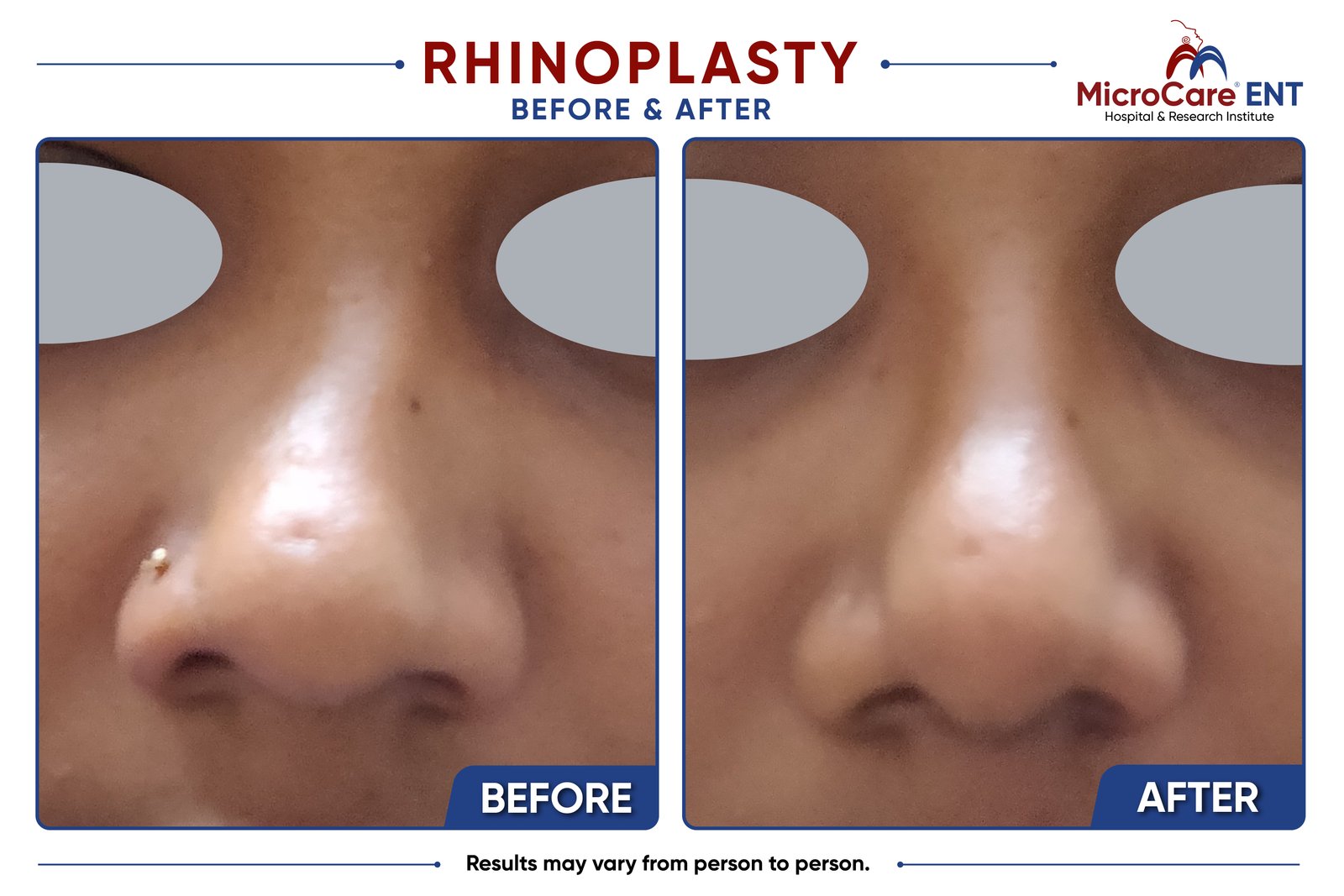
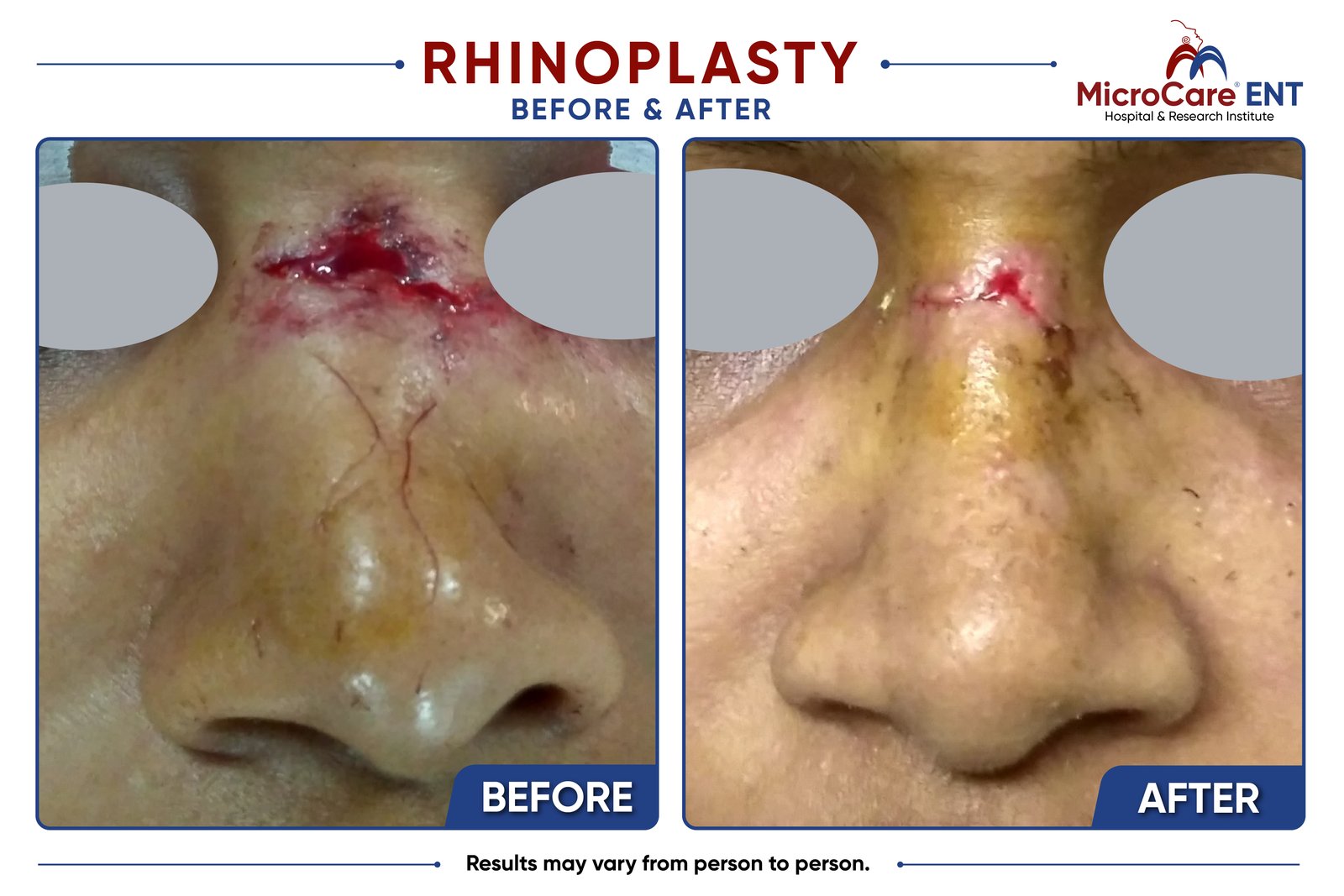
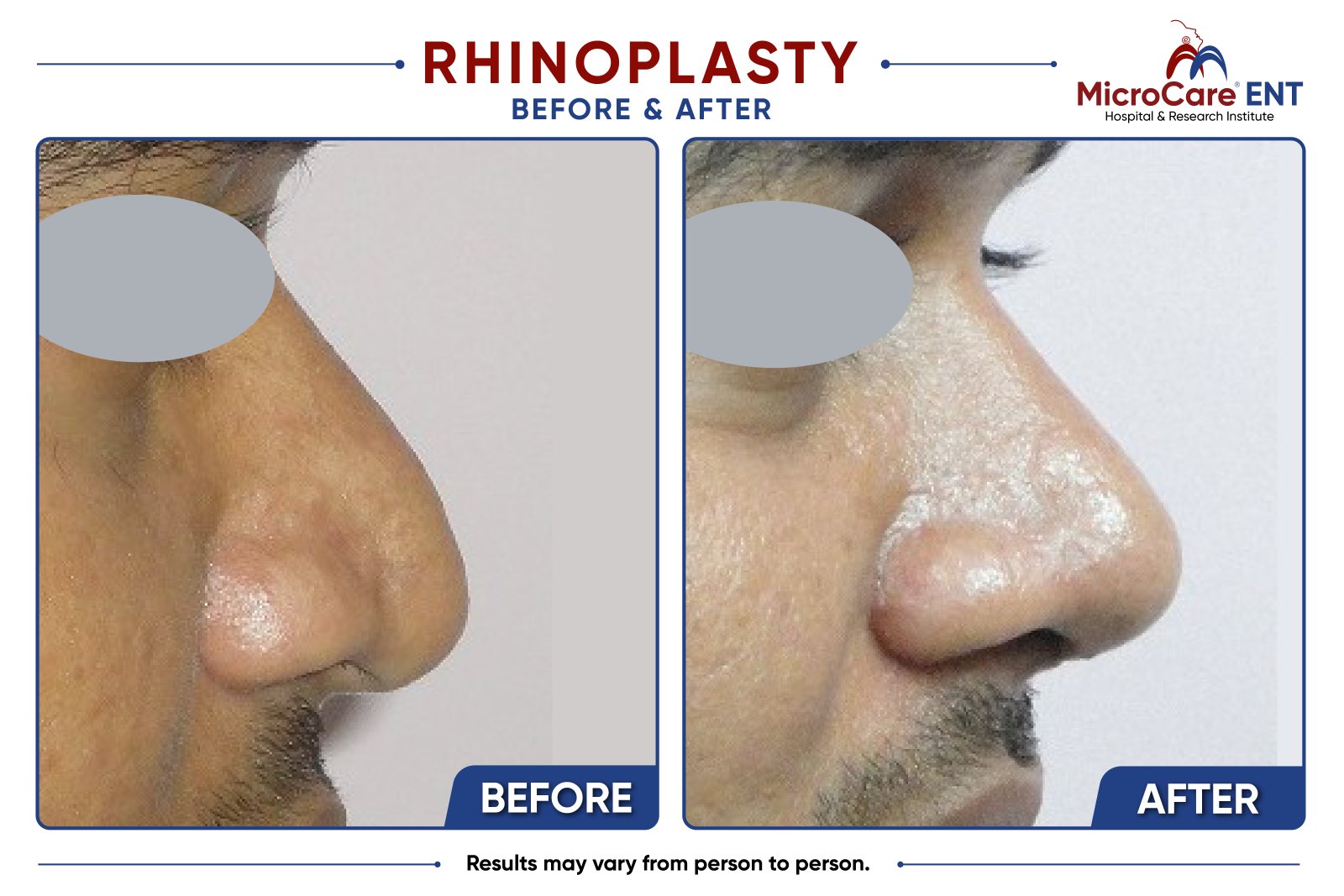
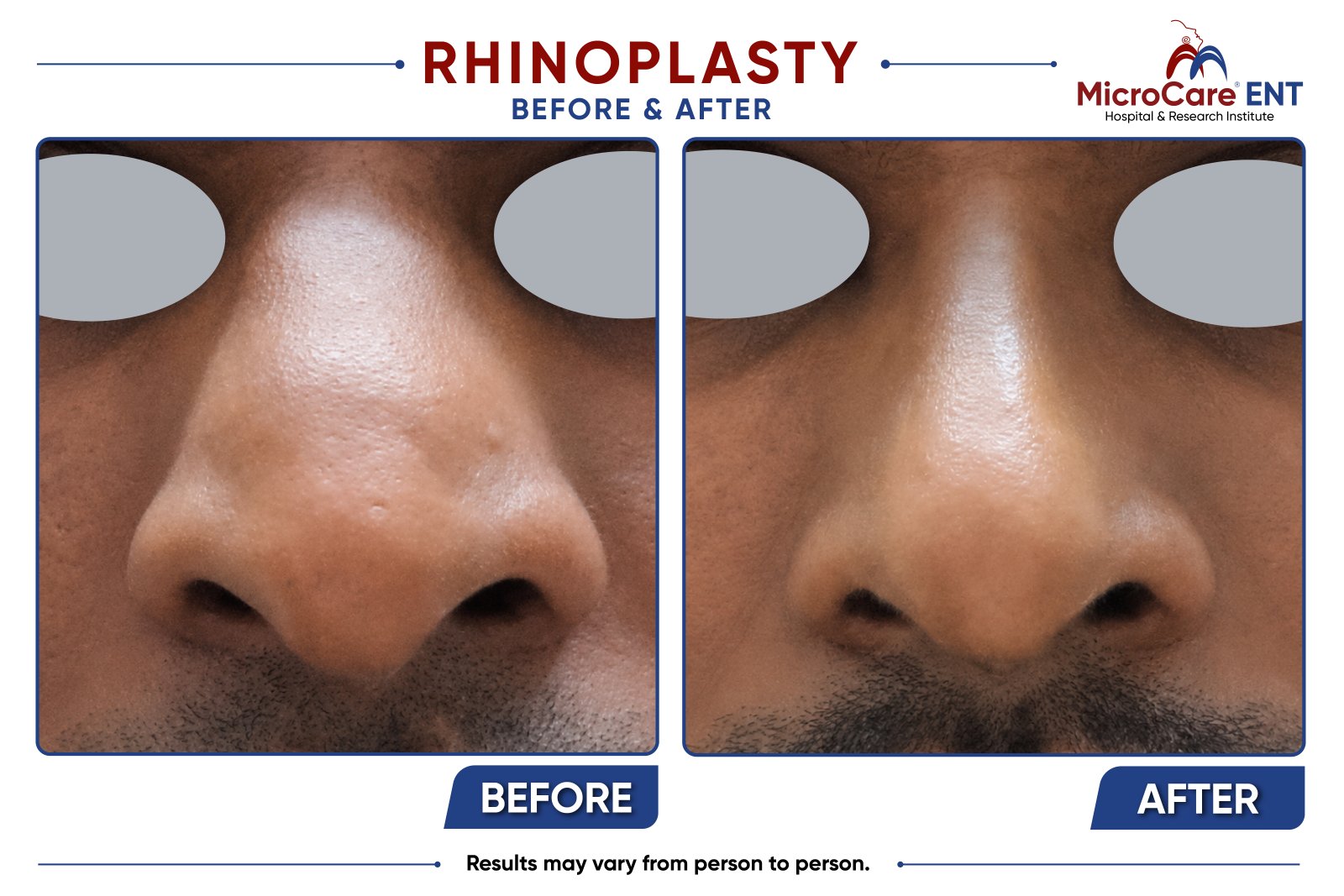
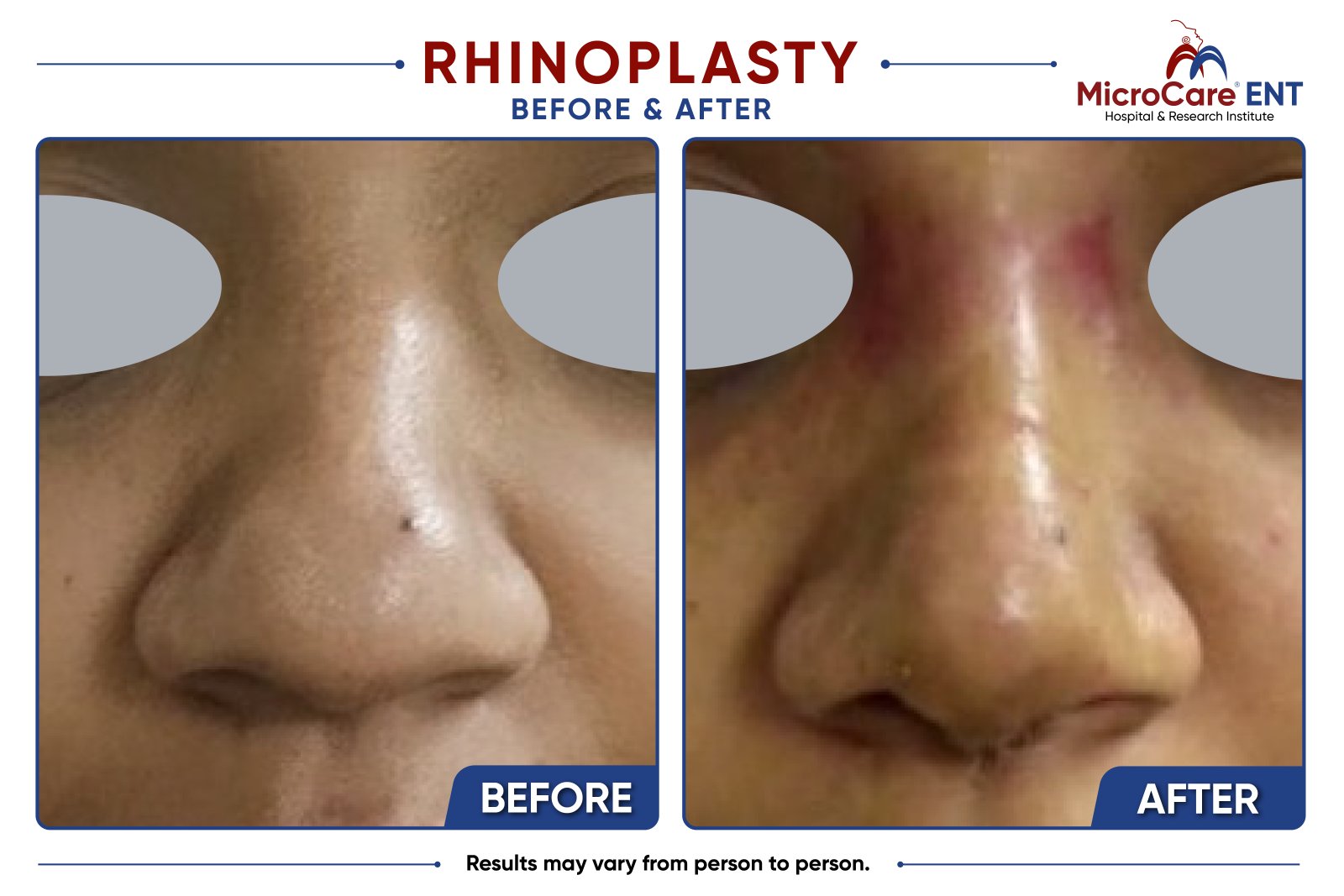
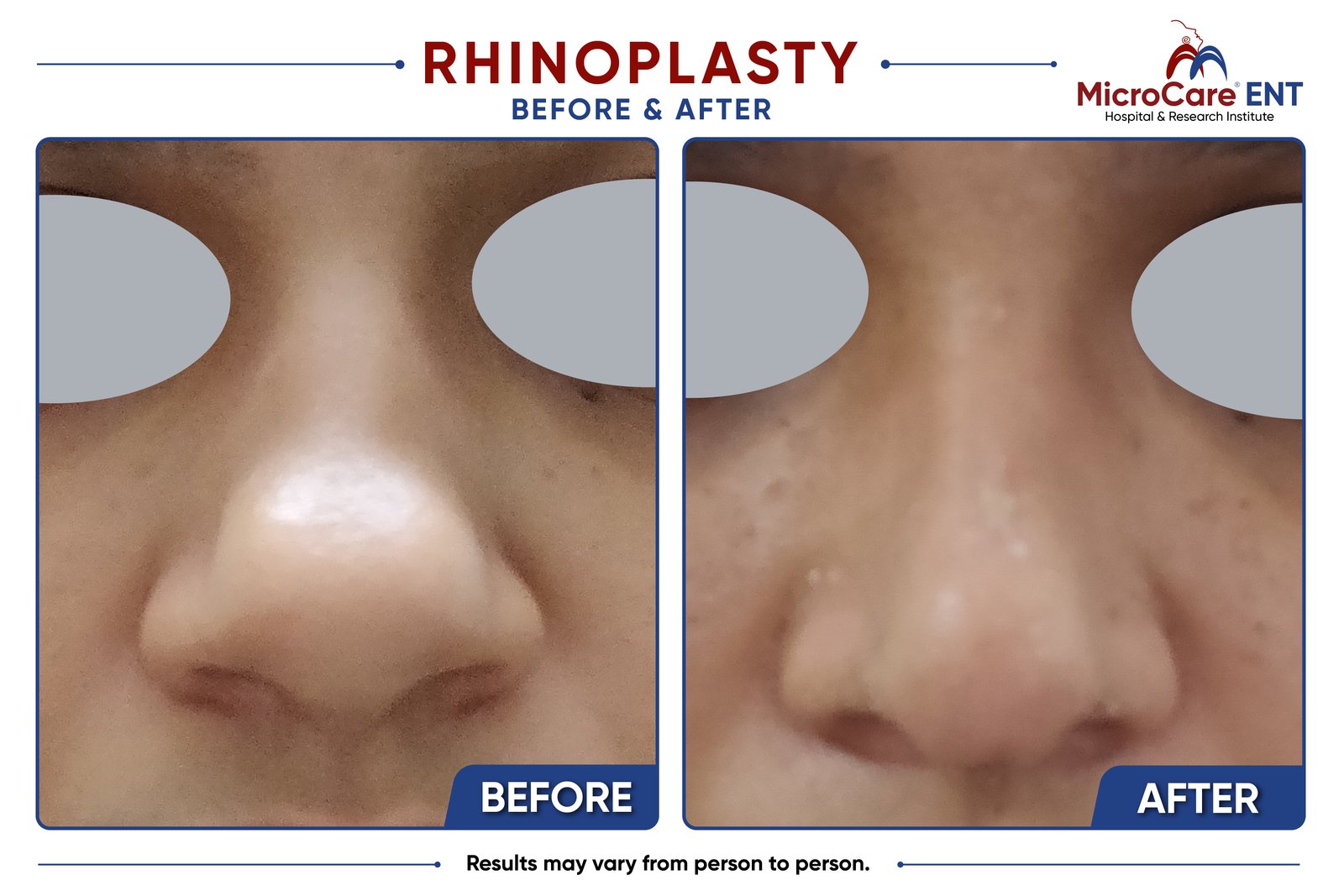
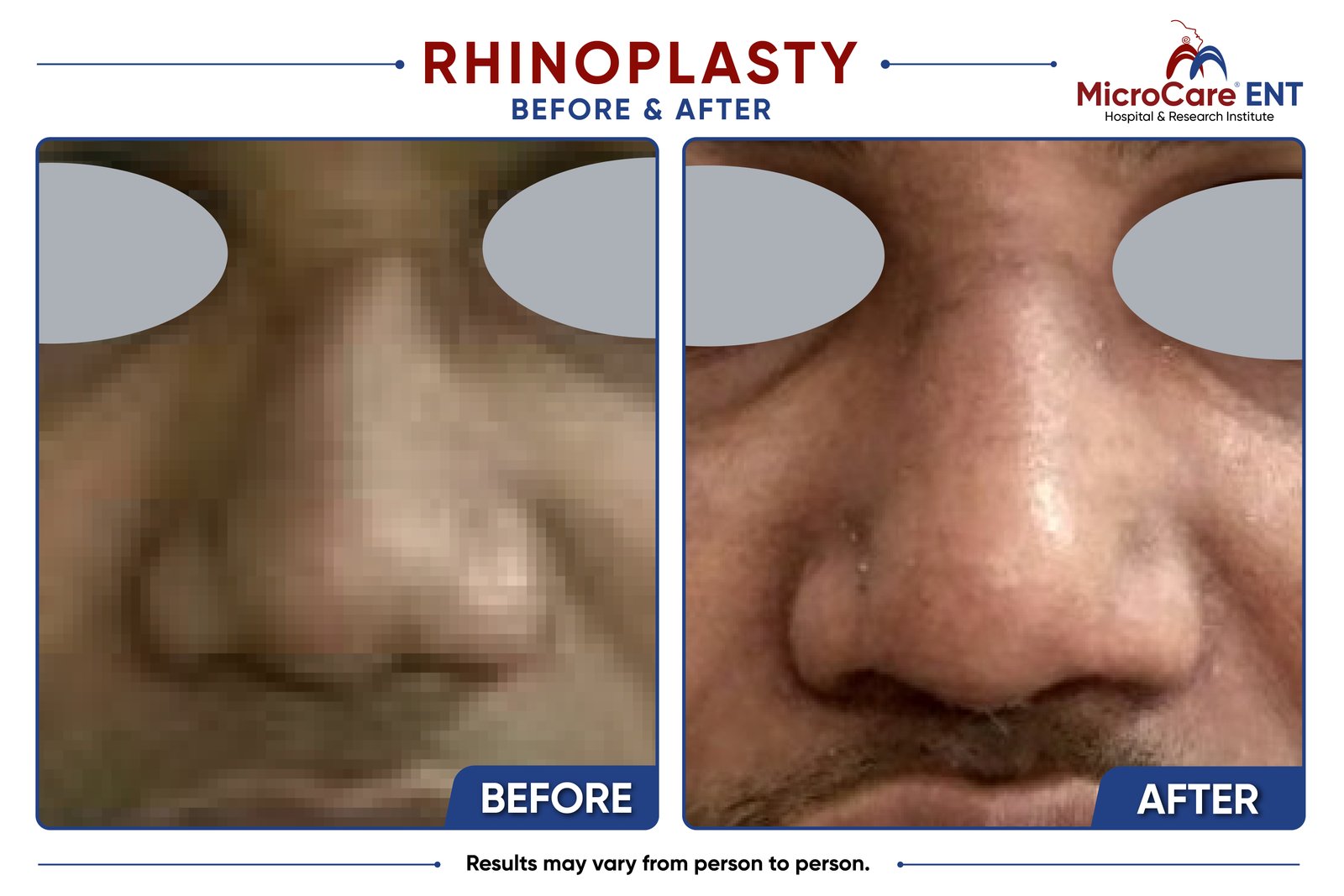
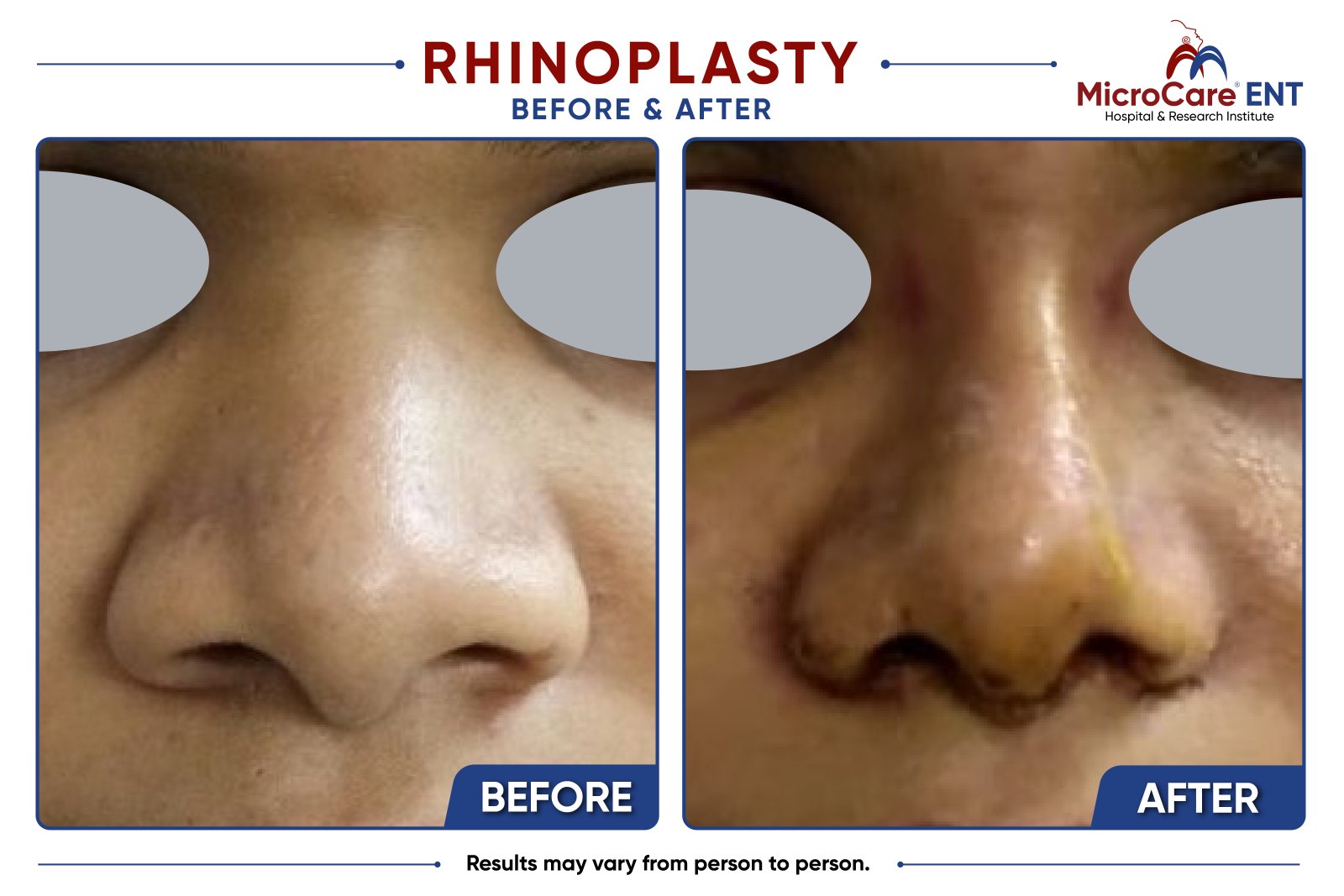
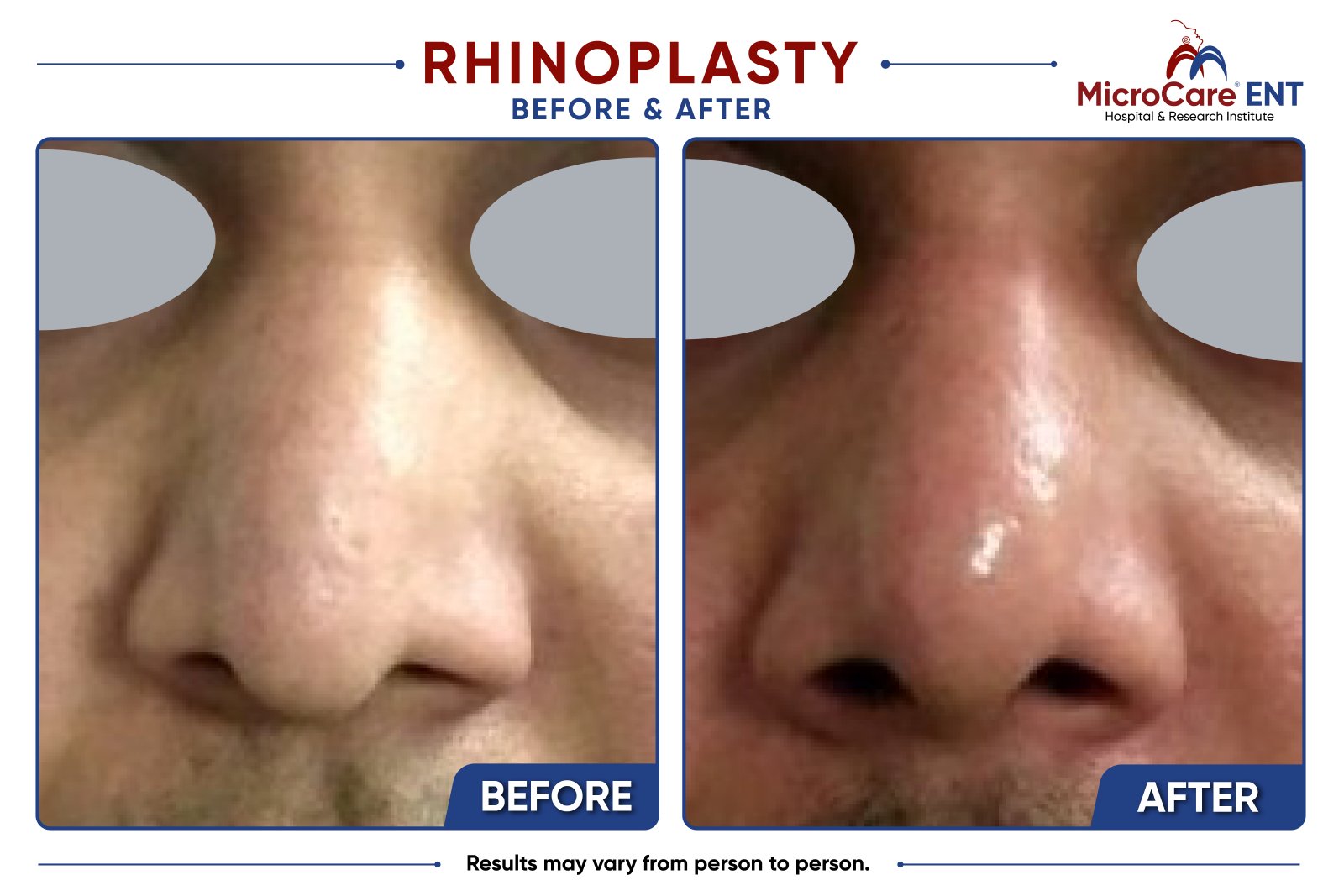
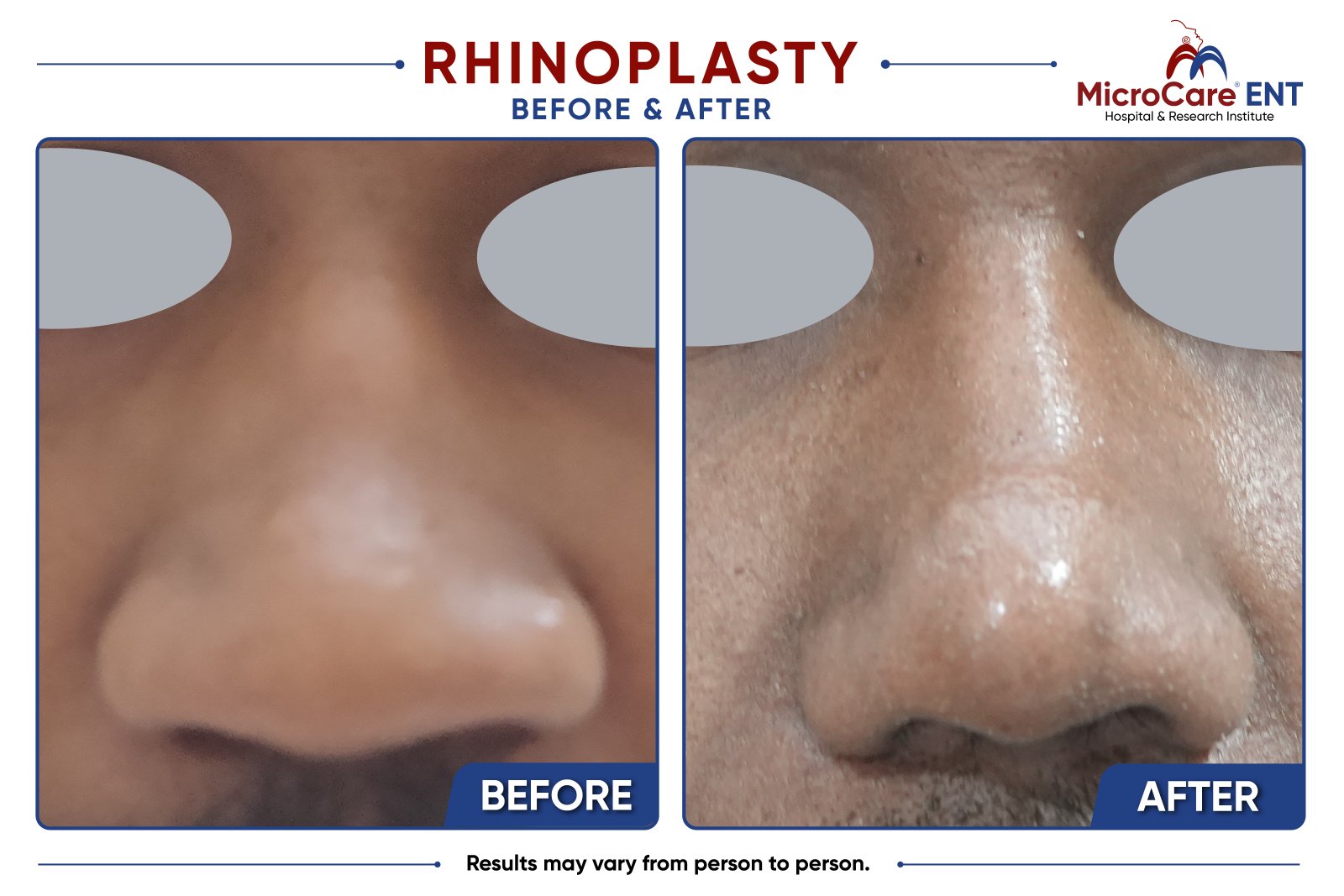
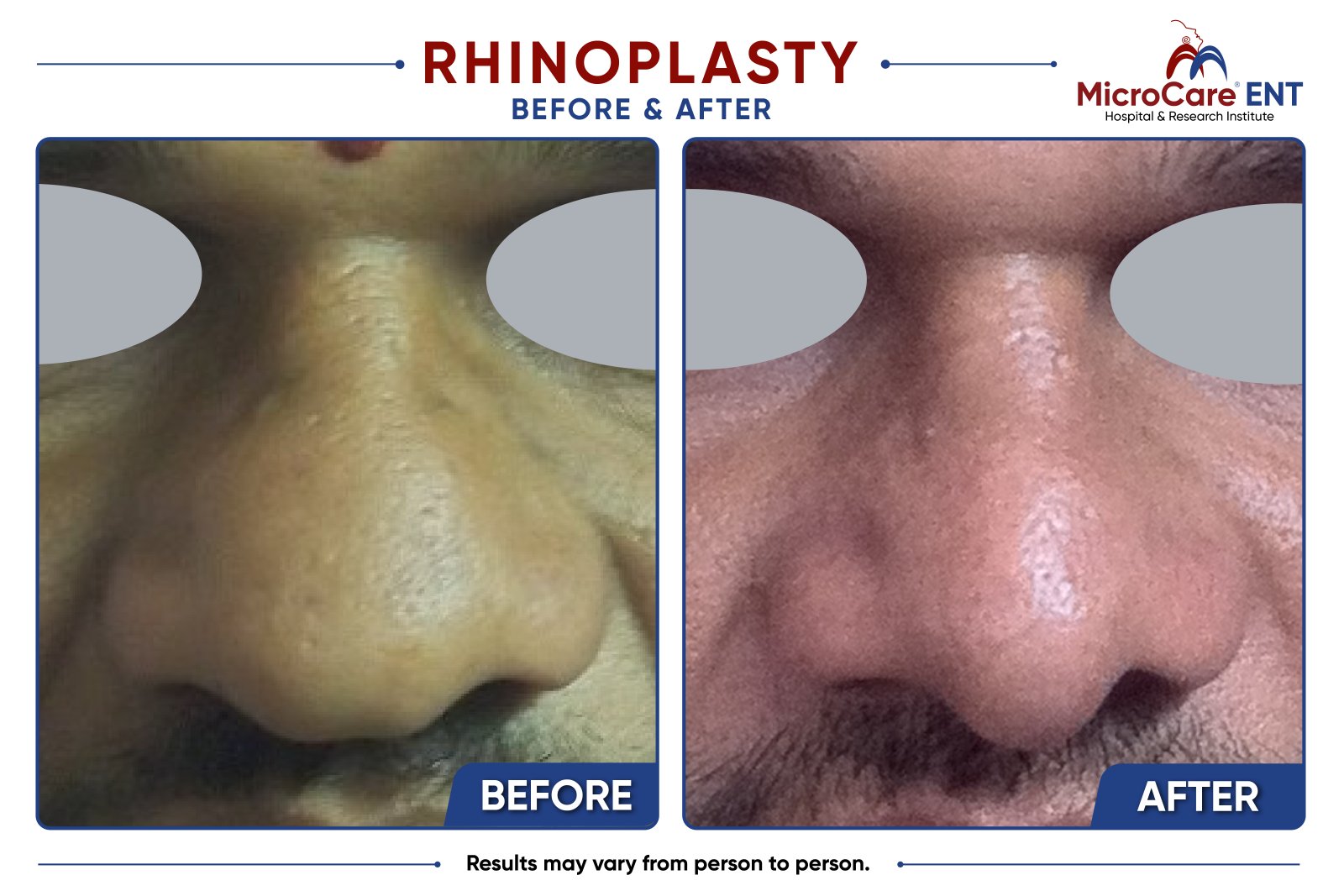
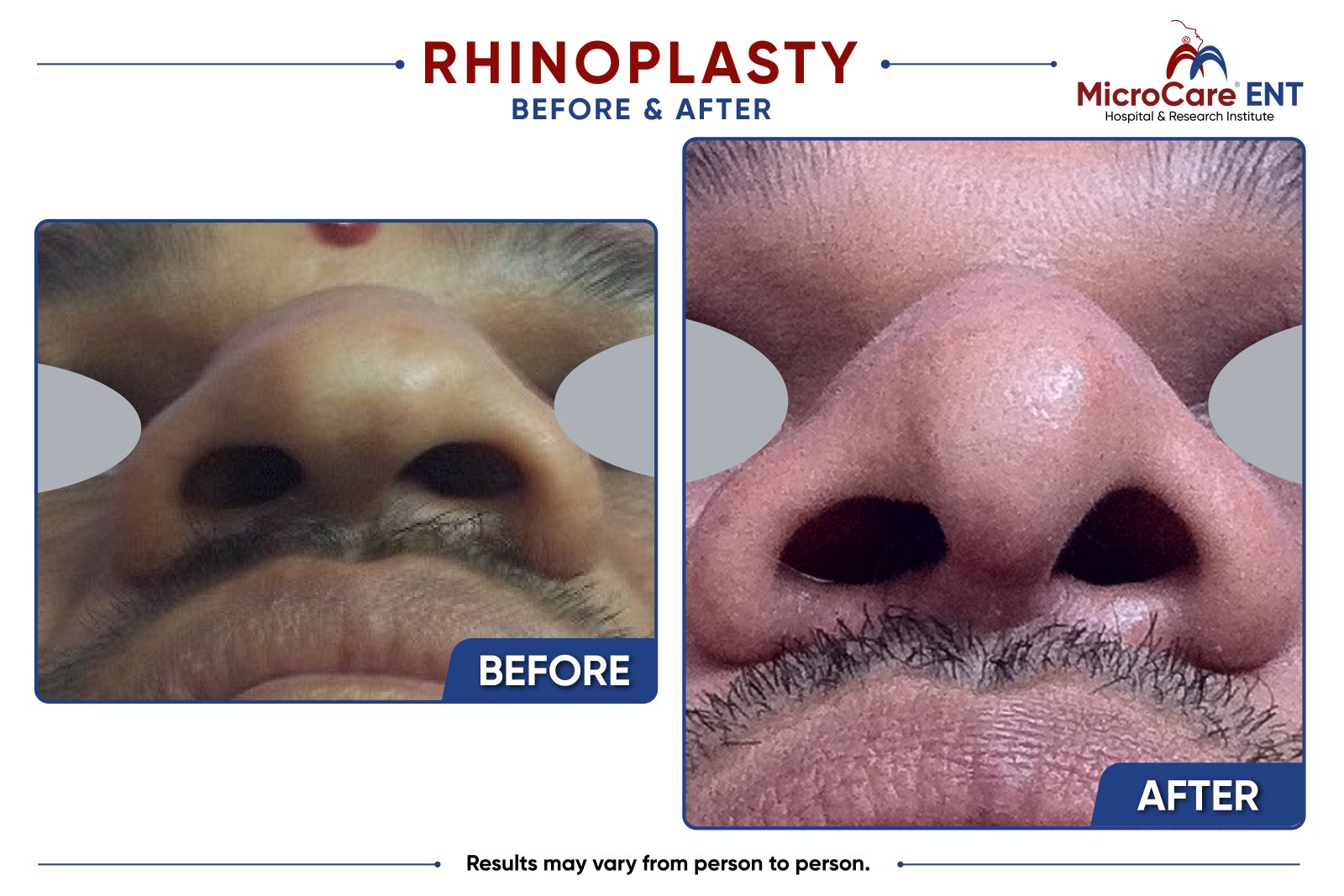
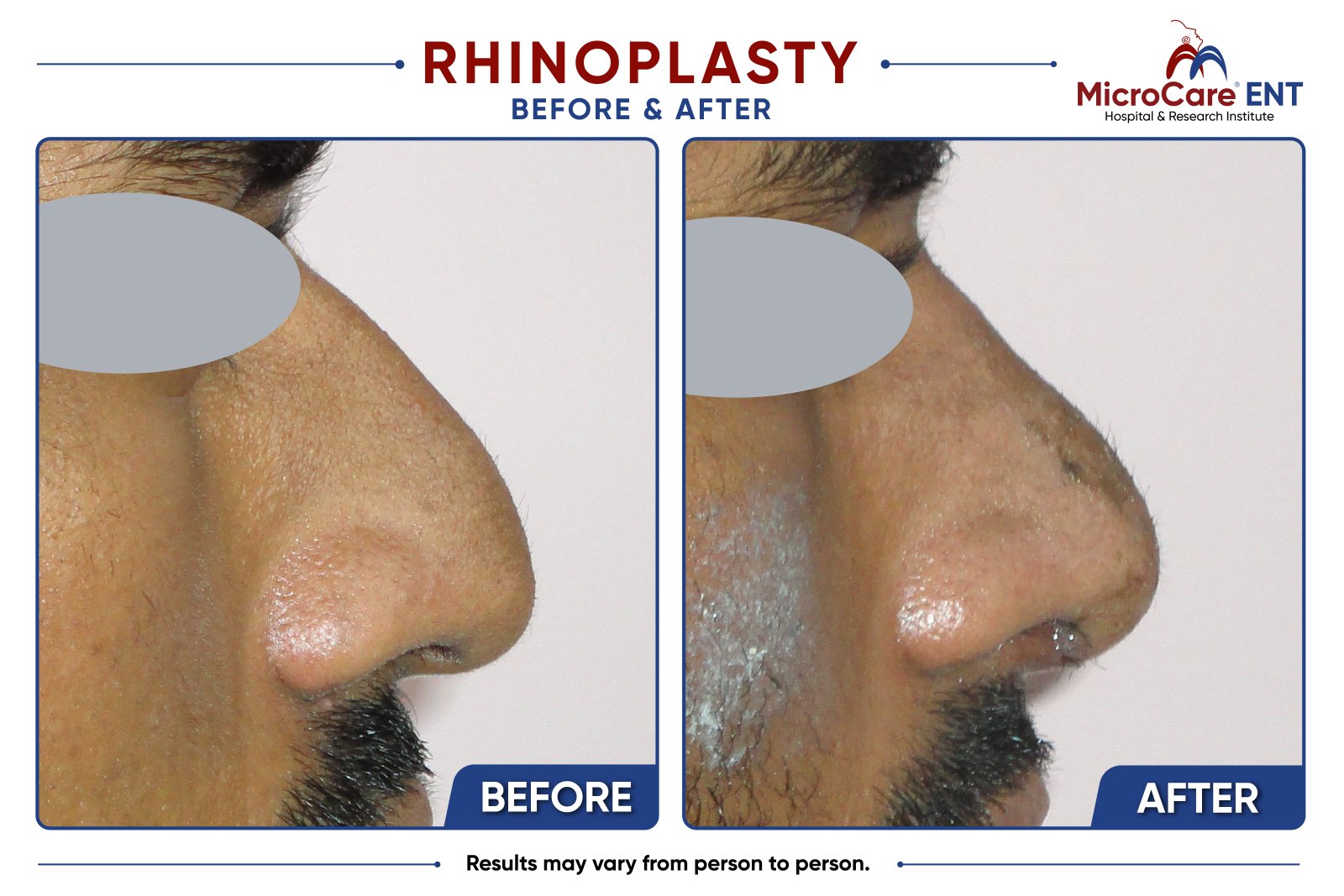
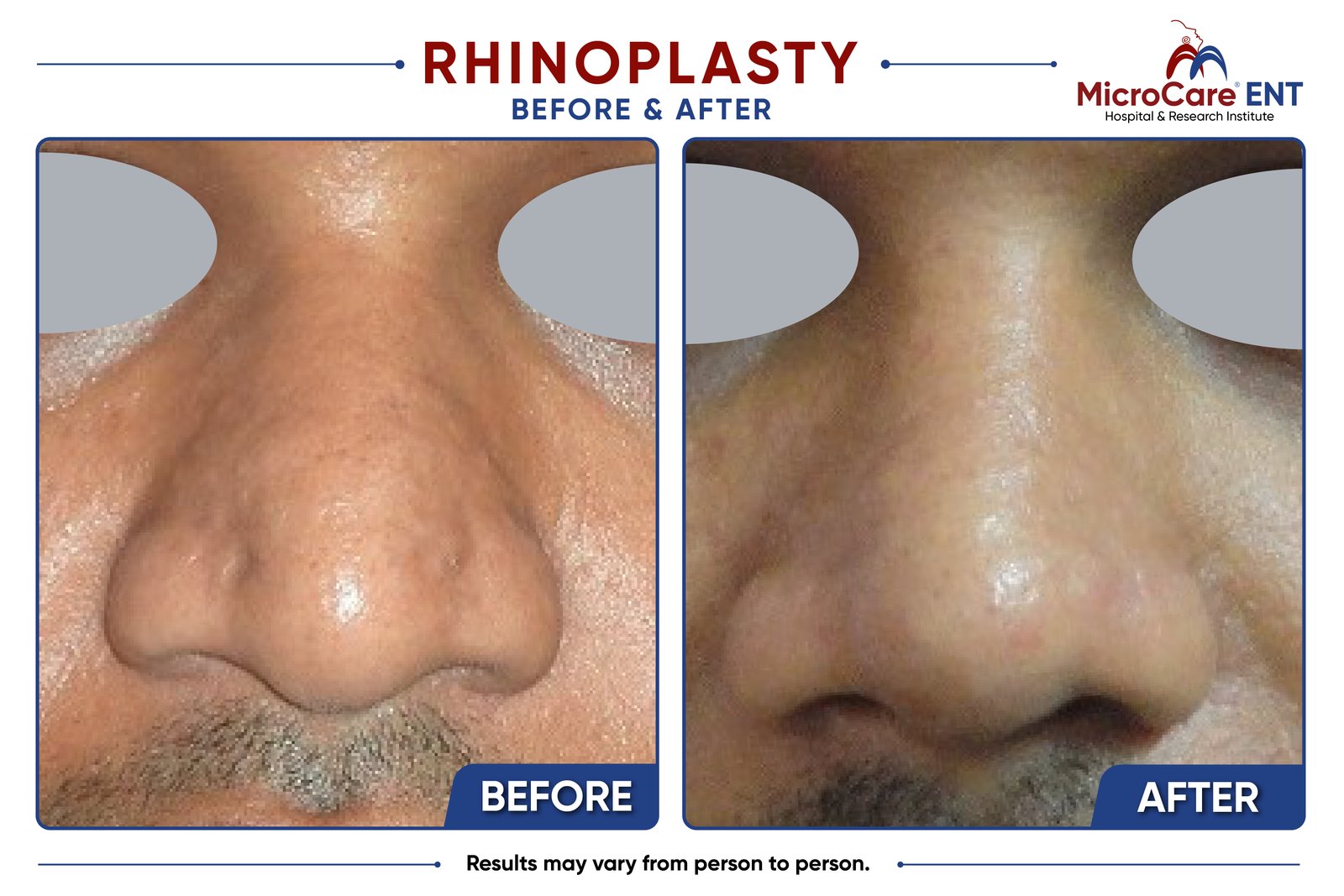
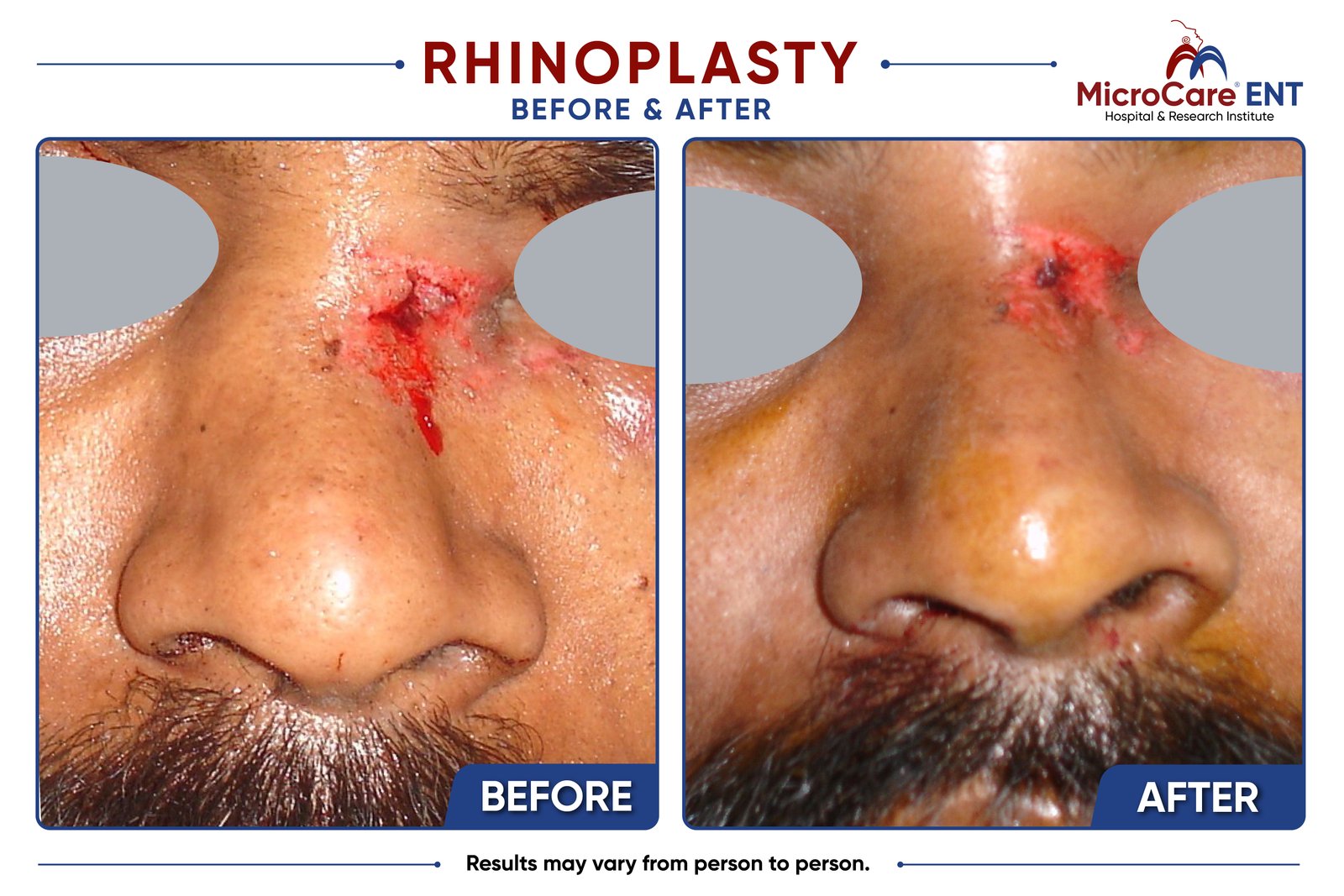
Photographs of patients of MicroCare ENT, shown with their consent. Every nose is different and individual results vary. See all before and after pictures.
Why crooked nose correction is complex
Cartilage has a memory. Unless every part of the bend is corrected and supported, the tension in the tissues can slowly pull the nose back towards its old position. That is why correction needs both ENT and rhinoplasty expertise, and usually involves:
- Realigning the bonesControlled bone cuts (osteotomies) reset the nasal bones in the midline.
- Rebuilding the septumA simple septoplasty is often not enough; the L-shaped support of the septum must be made straight and vertical.
- Repairing the nasal valvesNarrowed or collapsed valves are widened and reinforced.
- Cartilage graftingSpreader grafts, struts and specialised sutures hold the new position.
- Balancing the appearanceA smooth, even line from the brows to the tip.
The MicroCare protocol
Every correction follows three stages: assessment, planning and surgery.
- Analysis of your facial proportions and nasal angles
- HD endoscopy of the valves and back of the septum
- Acoustic rhinometry to measure airflow
- Photographs from several angles
- Is the bend in bone, cartilage or both?
- How much of your own cartilage is available for grafts?
- Do the nostrils collapse when you breathe in?
- Extracorporeal septoplasty for severe bends: the septum is straightened outside the nose and replaced
- Osteotomies to reset the bones
- Spreader, batten and septal extension grafts for support
Who is a candidate?
- A visible bend, C-shaped, S-shaped or tilted, that affects your facial balance.
- Breathing difficulty on one or both sides, including from septal spurs or enlarged turbinates.
- A pinched, narrow feeling from a tight internal valve.
- Snoring or poor sleep linked to a blocked nose.
- A past injury that has left the bones permanently displaced.
- A previous rhinoplasty with collapse, a deviated tip or worse breathing.
Benefits of correcting a crooked nose
A straighter nose
The bone and cartilage are brought back towards the midline.
Easier breathing
Septal deviation and enlarged turbinates are corrected.
Nostrils stay open
Spreader and batten grafts stop the sides collapsing as you breathe in.
Facial harmony
The nose is balanced with your forehead, cheeks, lips and chin.
Lasting results
Grafts and sutures help resist the pull of cartilage memory.
Better nights
Less mouth breathing, dry throat and snoring.
Recovery: what to expect
- An external splint, and sometimes internal splints, support the nose
- A blocked feeling is normal
- Splint removed after about a week
- Swelling peaks at 48 to 72 hours
- Most bruising settles by 10 to 14 days
- Desk work from 7 to 10 days
- Airflow keeps improving
- Light activity from about 2 weeks
- Heavy exercise after 4 to 6 weeks
- The skin settles over the new framework
- Grafts reach full strength by about one year
Cost and insurance
Every quote is individual. It depends on:
- How severe the deviation is, and how many zones are involved.
- Whether septal or valve reconstruction is needed.
- A first operation or a revision, and whether ear or rib grafts are needed.
Why choose MicroCare ENT
Correcting a crooked nose needs a surgeon who understands both the airway inside and the shape outside.

ENT and rhinology specialists
Led by Prof. Dr. Sriprakash Vinnakota, with more than 26 years of experience in the nasal airway.
Planned from data
Endoscopy and acoustic rhinometry are done before surgery, so the plan is based on how your nose actually works.
The whole nose, in three dimensions
Valves, septum and bony vault are corrected together, with grafts and sutures chosen to reduce drift after surgery.
Revisions and complex cases
Experience rebuilding noses after earlier surgery, using your own ear or rib cartilage, with follow-up for up to one year.
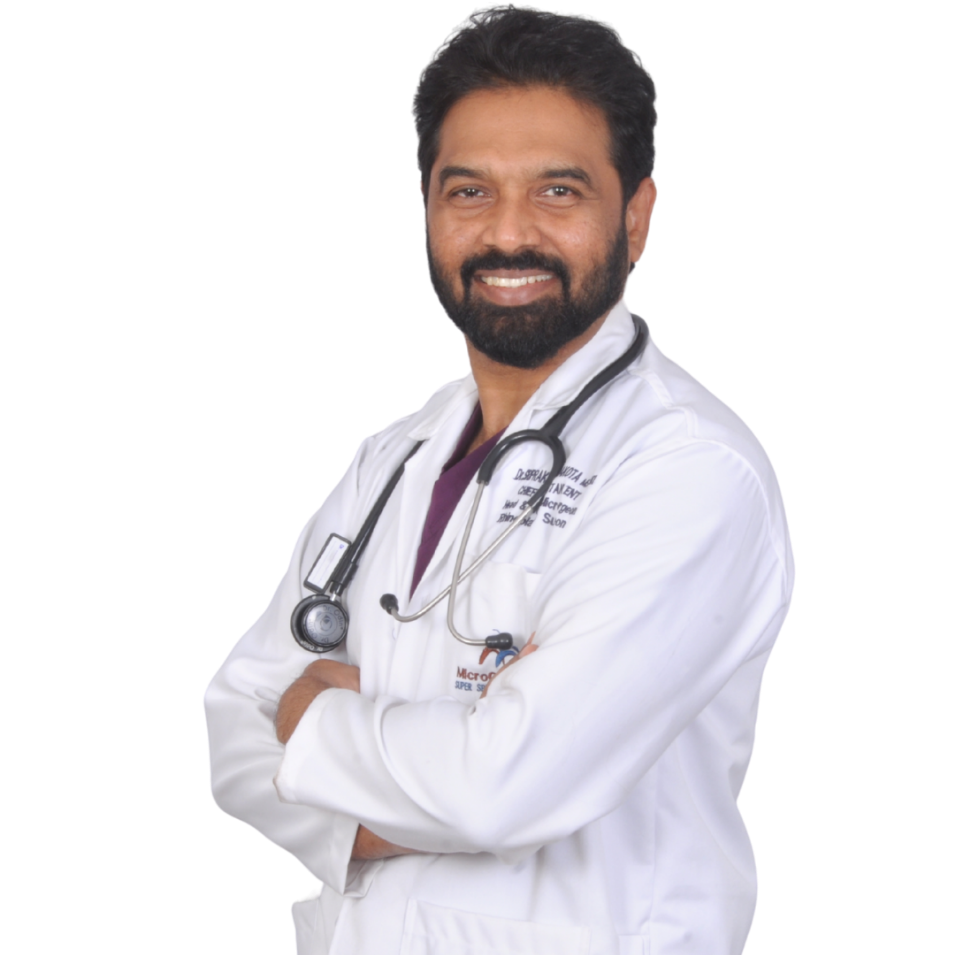
Prof. Dr. Sriprakash Vinnakota
MS (ENT, Head & Neck) · Chief Rhinoplasty Surgeon, Centre for Advanced ENT, Head & Neck Surgery, MicroCare ENT Hospital & Research Institute
More than 26 years in ENT surgery, with endoscopic sinus surgery training at the University of Graz, Austria, and rhinoplasty training at Marien Hospital, Stuttgart, under Prof. Dr. Wolfgang Gubisch.
Frequently asked questions
What is a crooked nose?
A crooked nose sits off the midline of the face. The bend can be in the bones at the top, the cartilage in the middle, the tip or the septum inside, and it is often linked to a deviated septum and breathing problems.
Can a crooked nose cause breathing problems?
Yes. A deviated septum and a narrowed nasal valve can block one or both sides, leading to mouth breathing, snoring and poor airflow.
What causes a crooked nose?
The most common cause is injury, from road accidents, sports or childhood falls. Others include a birth-related injury, inflammatory diseases that weaken the septum, earlier nose surgery and loss of support with age.
How is a crooked nose corrected?
Usually with septorhinoplasty: the septum is straightened, the nasal bones are reset with fine bone cuts (osteotomies), and cartilage grafts and valve repair keep the nose straight and open. The exact plan depends on where and how severe the bend is.
Will I need a septoplasty as well?
Often, yes, because a deviated septum is the most common hidden cause of a crooked nose. Whether you need it is confirmed at your evaluation and endoscopy.
Can a crooked nose be fixed after a previous rhinoplasty?
Yes. Revision surgery rebuilds the weakened structure, often with cartilage from the ear or rib, to make the nose straighter and more stable.
Will my nose be perfectly straight?
The aim is a clear, visible improvement in alignment and breathing. Complete straightness may not be possible in severe or revision cases, because cartilage has a memory and every face has some natural asymmetry.
What is the recovery and downtime?
The splint stays on for about 7 days. Most bruising settles in 1 to 2 weeks, desk work resumes in 7 to 10 days and light activity at about 2 weeks. Heavy exercise is avoided for 4 to 6 weeks.
When will I see the final result?
You will see an improvement when the splint comes off, and most swelling settles by 4 to 6 weeks. The final shape develops over 6 to 12 months. Breathing often improves earlier.
Can it help with snoring?
If a blocked nose is contributing to your snoring, correcting it may help. Snoring can have other causes, which are assessed separately.
What are the risks?
Temporary swelling, bruising and congestion are expected. Less common risks include bleeding, infection, scarring, some remaining asymmetry and the need for a revision. We discuss these with you in detail before surgery.
How much does it cost, and is it covered by insurance?
The cost depends on the severity, whether septal or valve work is needed, whether it is a first operation or a revision, and what grafts are needed. The functional part may be covered by insurance when the blockage is documented; cosmetic refinements are self-paid.
See also functional rhinoplasty, septorhinoplasty and our FAQs.
Schedule your crooked nose evaluation
For a visible bend, breathing difficulty, a past injury or an unsatisfactory earlier rhinoplasty. Leave your name and number and we will open WhatsApp with your details filled in, or call +91 94949 40725.