
Refine your nose. Keep your identity.
Ethnic rhinoplasty refines the nose in harmony with your own face and heritage, for patients of South Asian, Middle Eastern, East Asian and African descent. It strengthens soft structures with your own cartilage, works with thicker skin and protects your breathing, so the result looks natural, not Westernised.
Medically reviewed by Prof. Dr. Sriprakash Vinnakota, MBBS, MS (ENT, Head & Neck), Chief Rhinoplasty Surgeon, Centre for Advanced ENT, Head & Neck Surgery, MicroCare ENT Hospital & Research Institute.
- Approach
- Identity-preserving
- Grafts
- Your own cartilage
- Splint removed
- Day 7
- Back to work
- Weeks 2 to 3
- Final definition
- 6 to 18 months
- Breathing
- Protected or improved
What is ethnic rhinoplasty?
Ethnic rhinoplasty is nose surgery planned around the features that make your face your own. Instead of applying one standard "ideal" nose, it refines the bridge, tip and nostrils so they sit in balance with your eyes, cheeks, lips and jaw.
We call it non-Westernised nasal refinement. The goals are:
- Facial harmony: a nose in proportion to the rest of your face.
- Heritage preserved: refined features that still look like you and your family.
- Stronger support: soft structures reinforced with your own tissue.
- Better breathing: airflow protected or improved at the same time.
Before you decide, read Prof. Dr. Vinnakota's book Your Best Nose, which answers 100 common rhinoplasty myths.
Are you a good candidate?
Ethnic rhinoplasty may suit you if you have:
- A broad or flat bridge that lacks definition from the front or side.
- A rounded or under-projected tip that droops when you smile.
- Wide or flared nostrils that look out of balance with your face.
- Thick nasal skin that hides the shape of the cartilage underneath.
- Breathing problems, snoring or sinus blockage alongside cosmetic concerns.
Structural challenges we address
Definition through thicker skin
Thinning the skin aggressively can cause scarring inside. Instead, cartilage grafts build a stronger framework so the tip and bridge show through with natural definition.
A narrower, defined bridge
Small, controlled bone cuts (osteotomies) bring the nasal bones closer to the midline without narrowing the airway inside.
Tip support, not removal
Rather than cutting cartilage away, the tip is shaped with sutures and support grafts such as a septal extension graft, often as part of a septorhinoplasty.
Alar base reduction
Small wedge excisions where the nostril meets the cheek narrow wide nostrils, with the scars hidden in the natural crease.
Why ethnic rhinoplasty needs ENT expertise
Softer, thinner support
Nasal cartilage in many ethnic noses is softer, thinner or smaller, so it needs reinforcing techniques rather than reduction.
Breathing comes first
A wider nasal base affects how air passes the turbinates and valves. Changes are planned so they do not cause breathing problems later.
Your own tissue
When the septum cannot supply enough cartilage, grafts are taken from your ear or rib.
Patient results
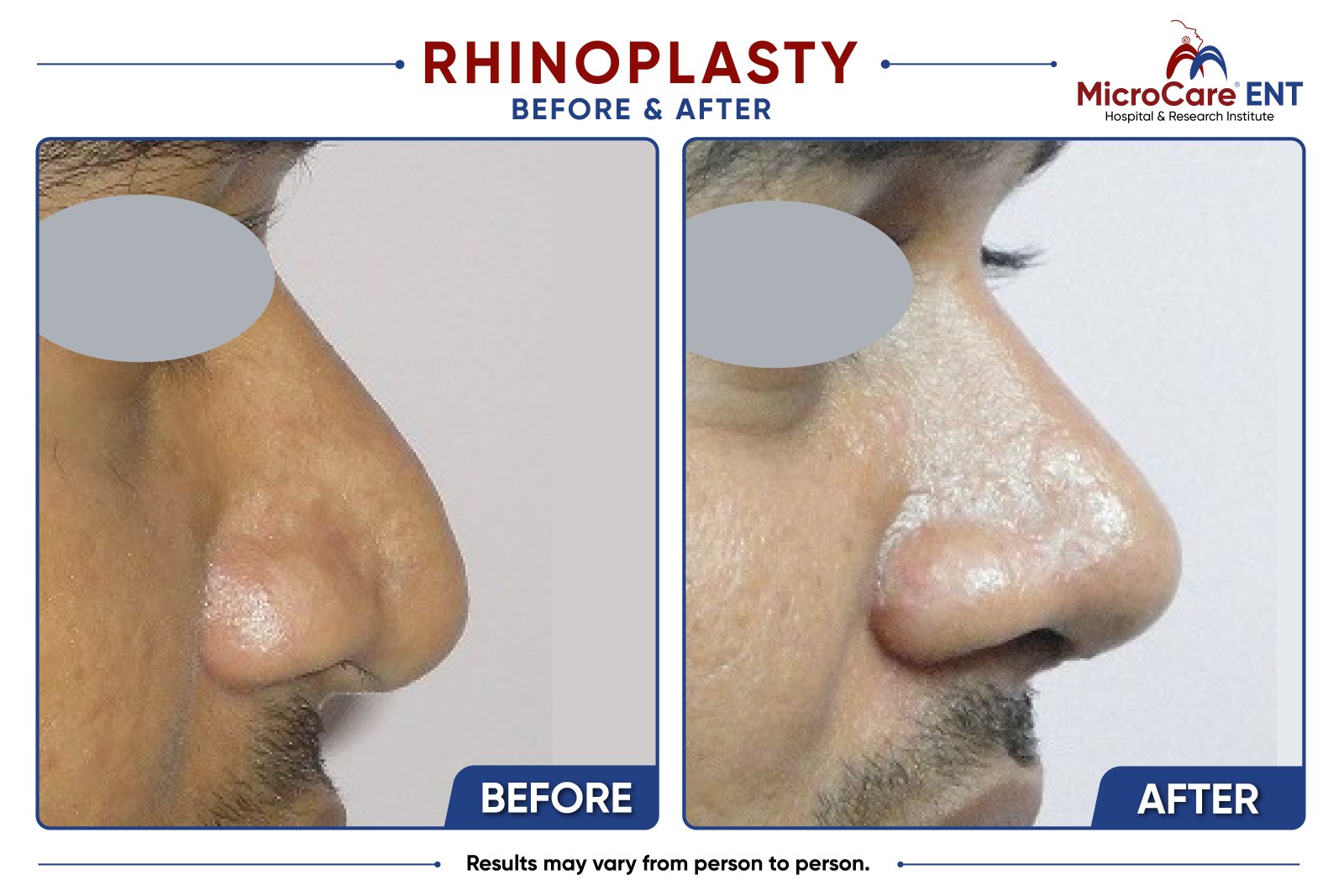
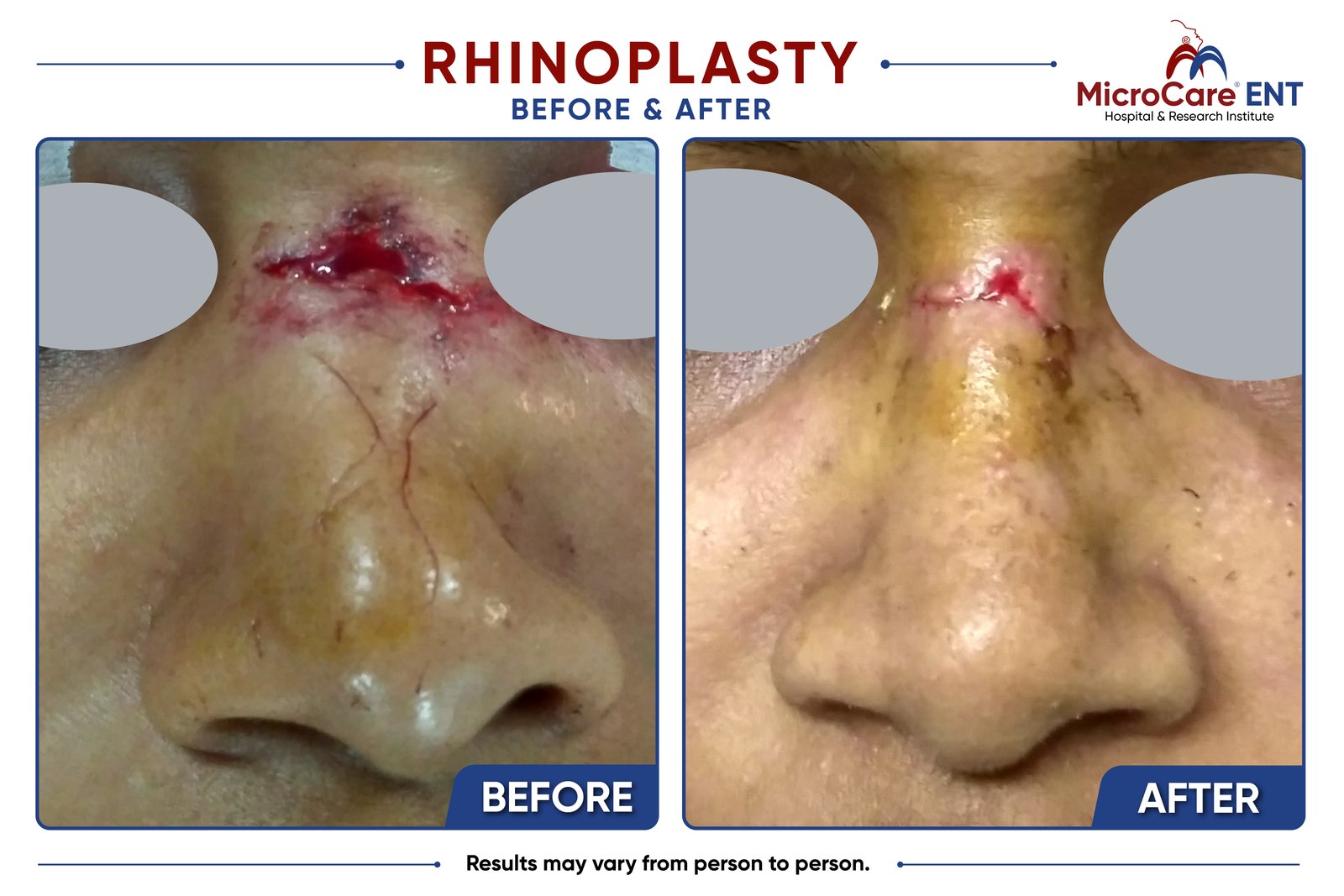
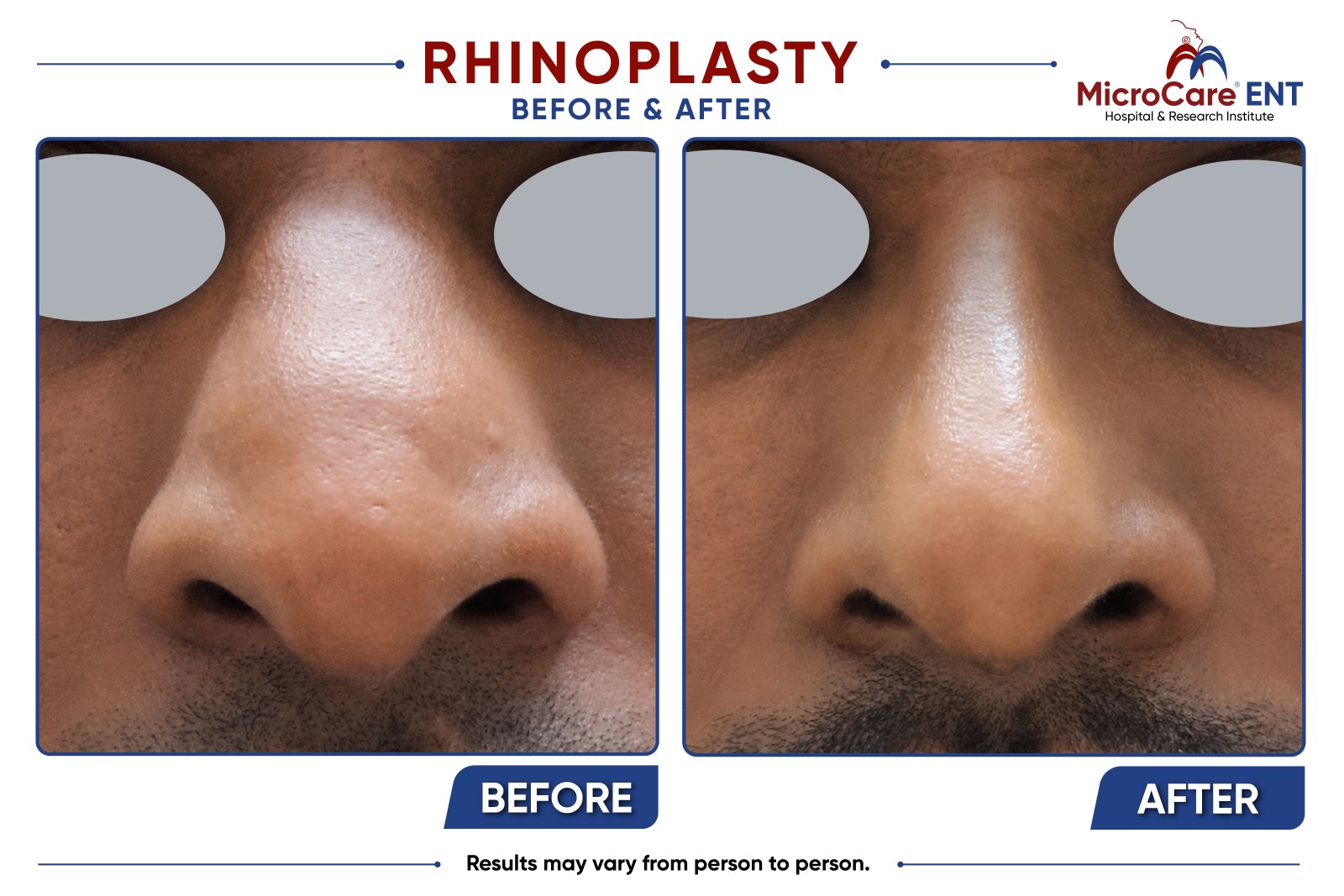
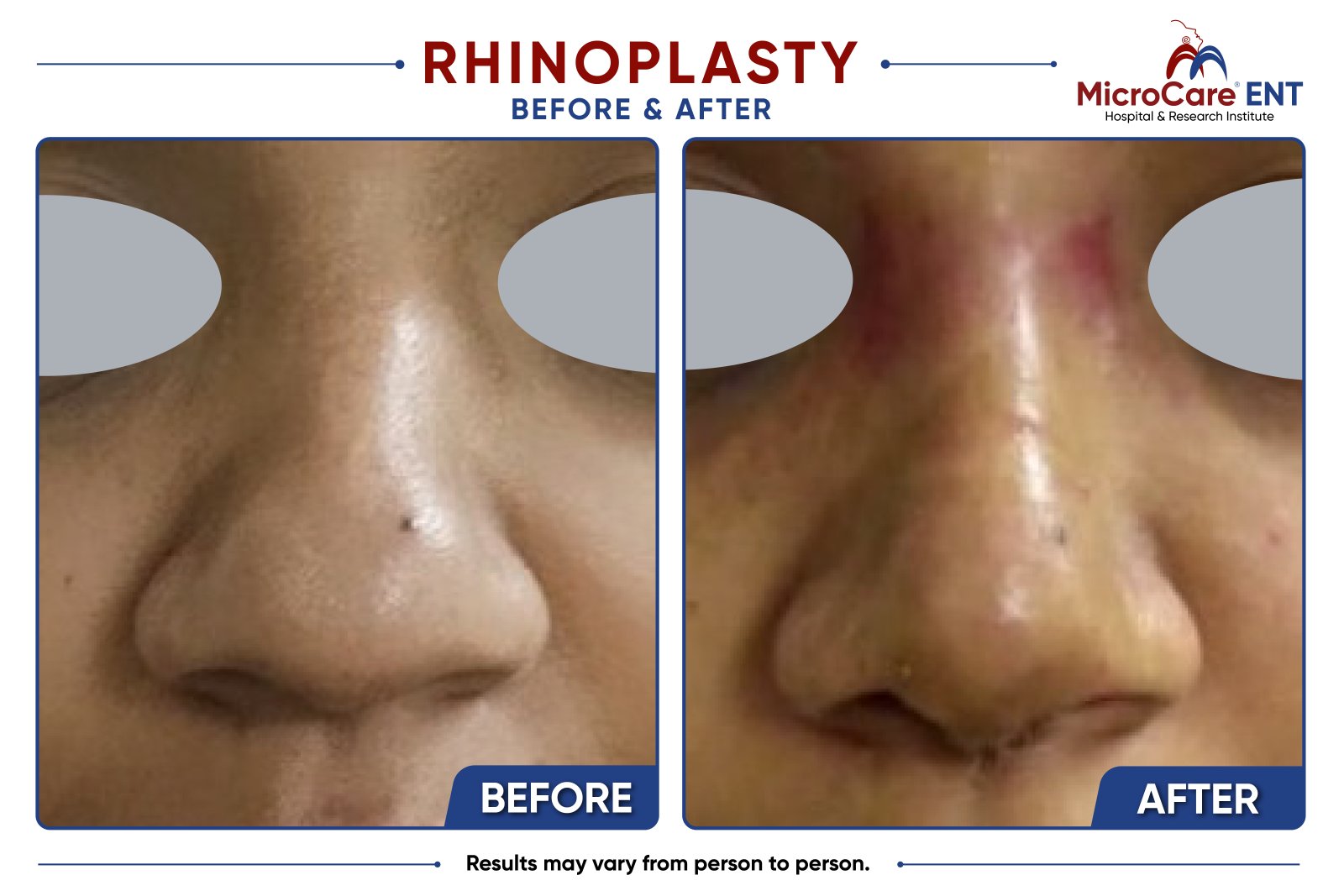
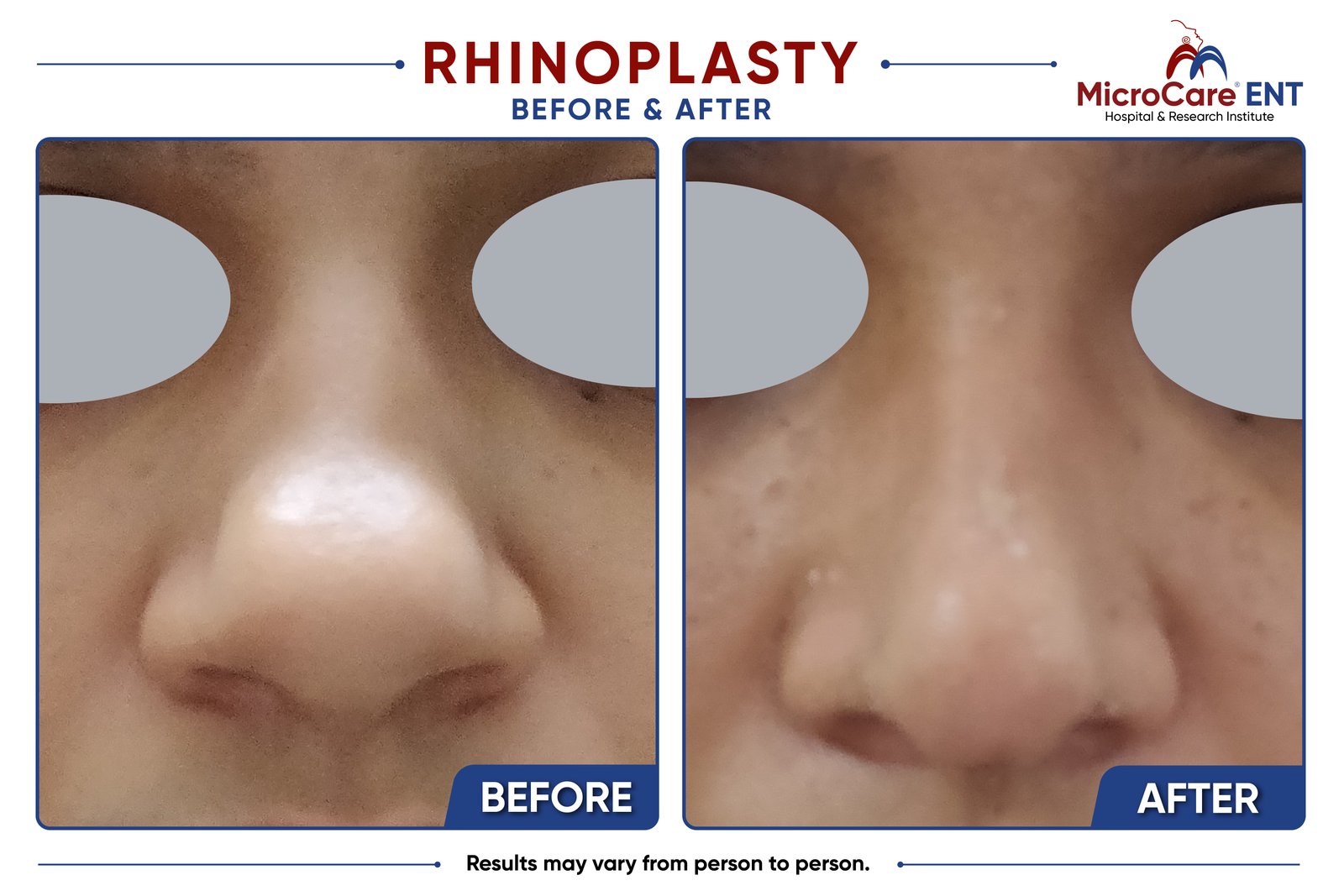
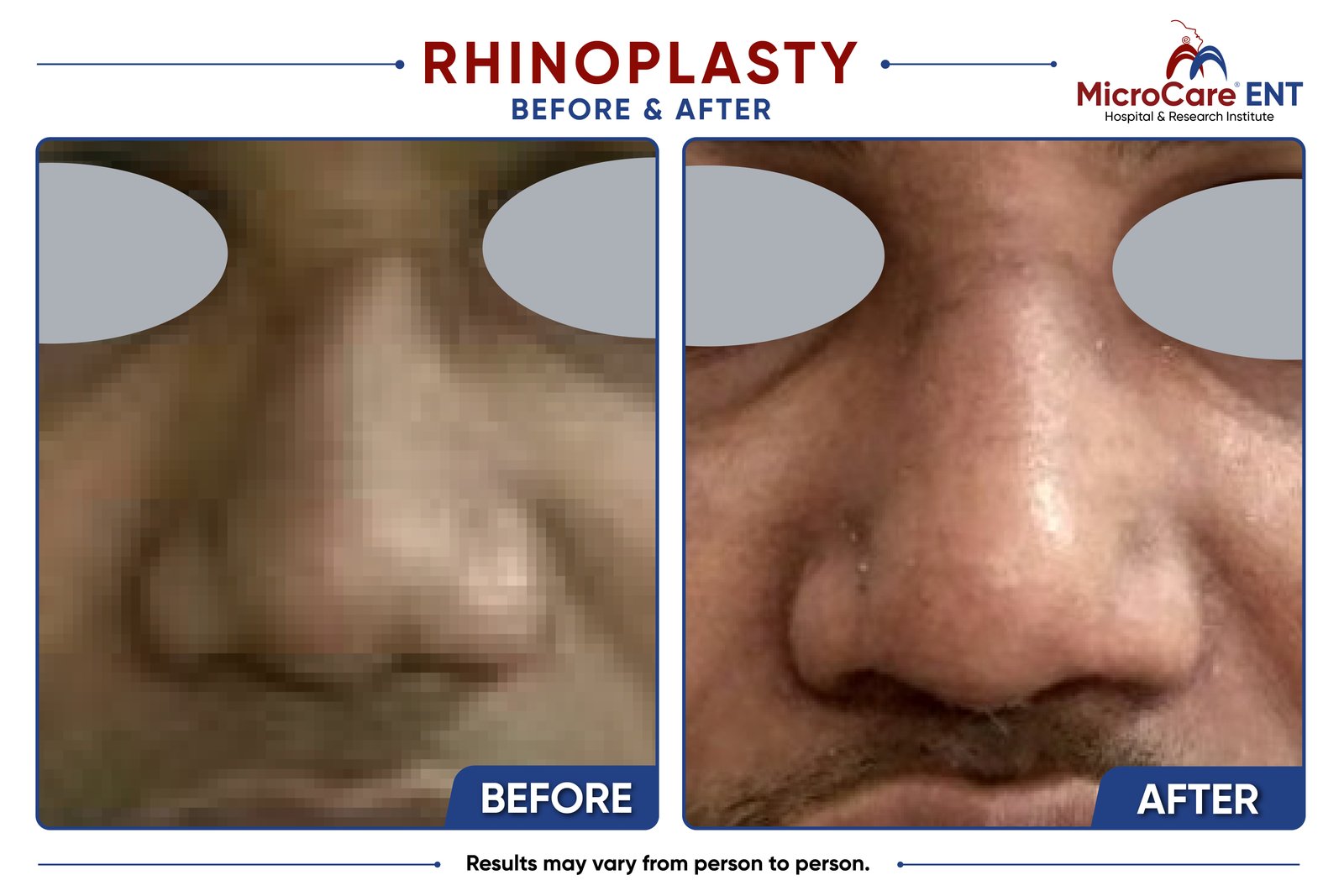
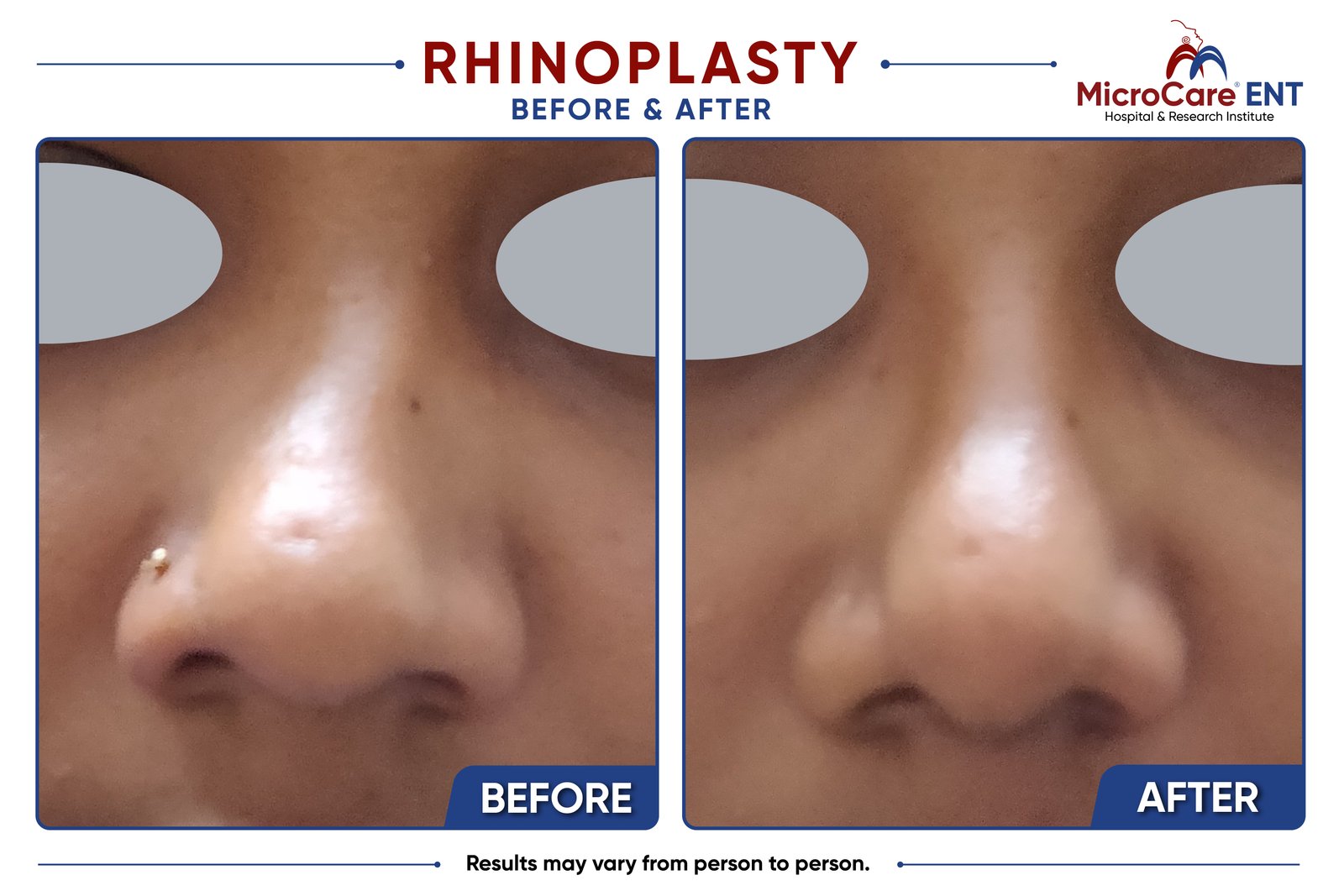
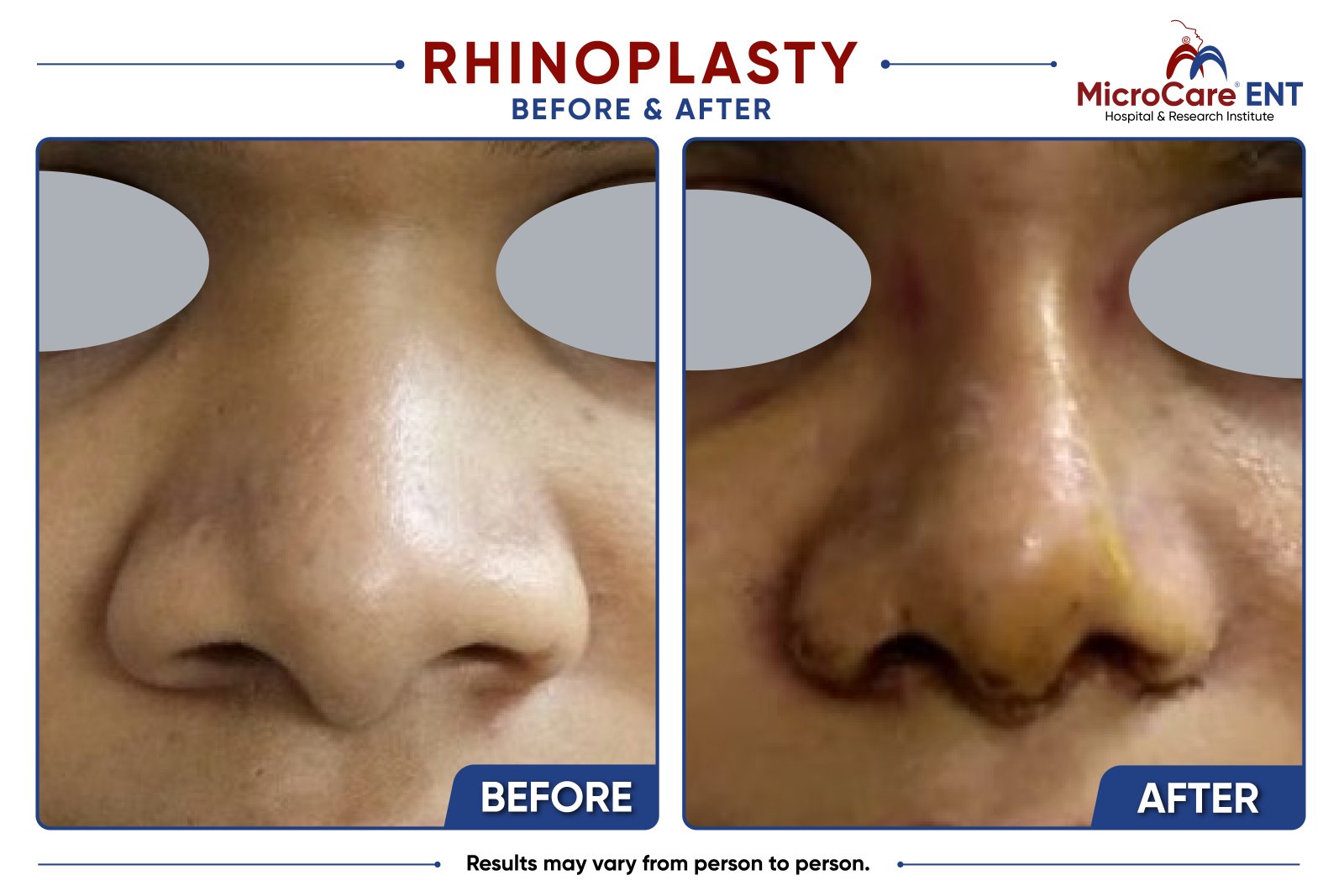
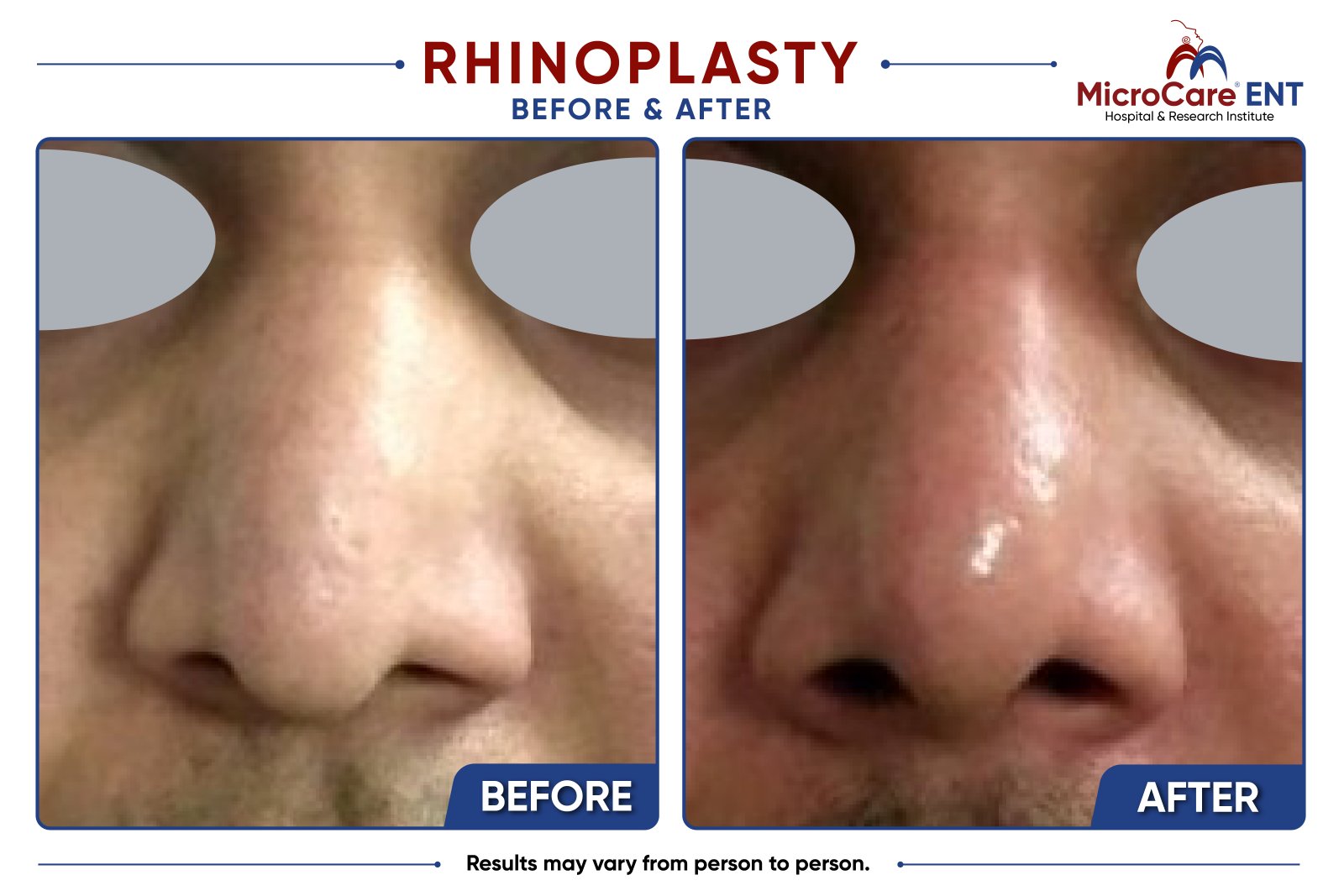
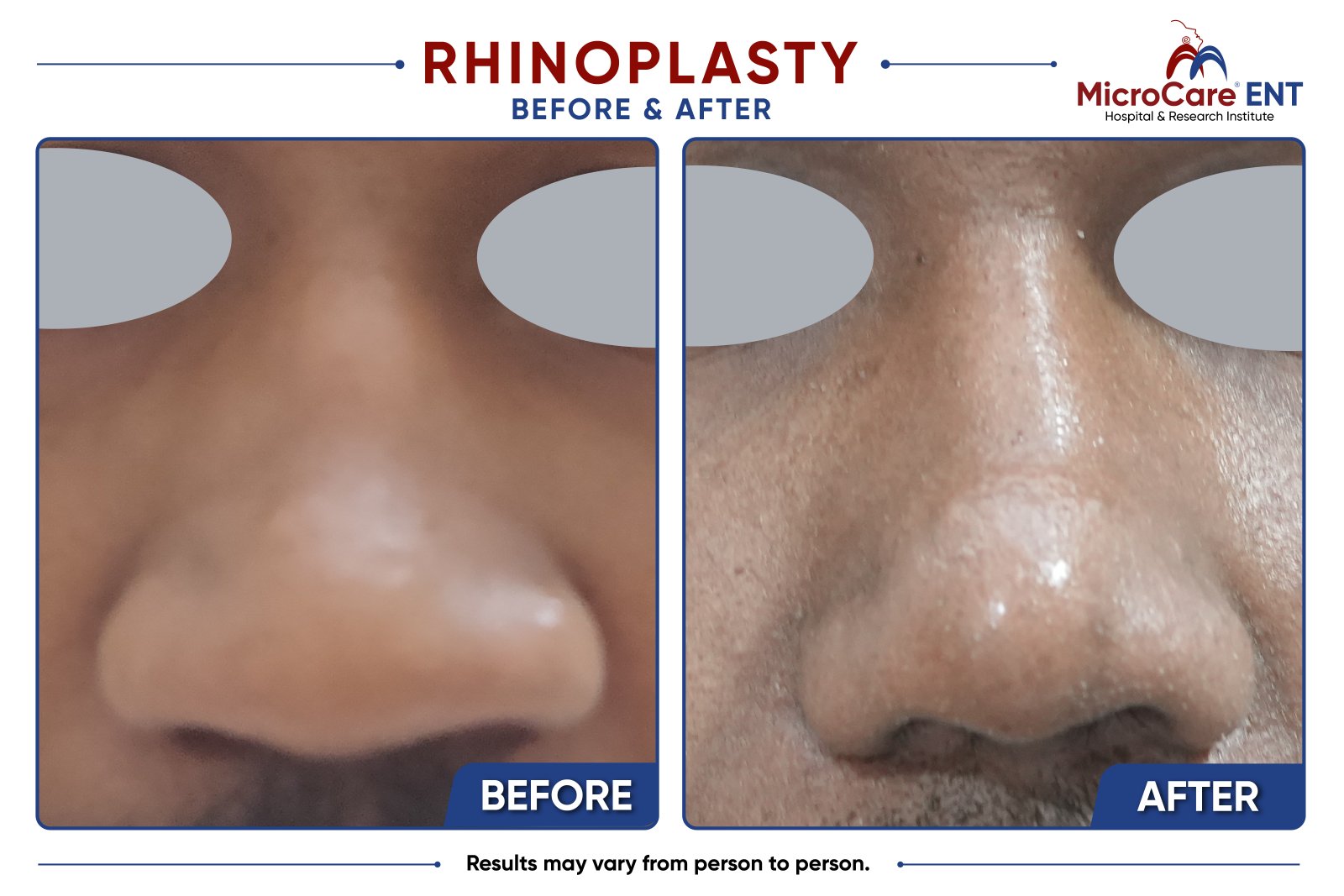
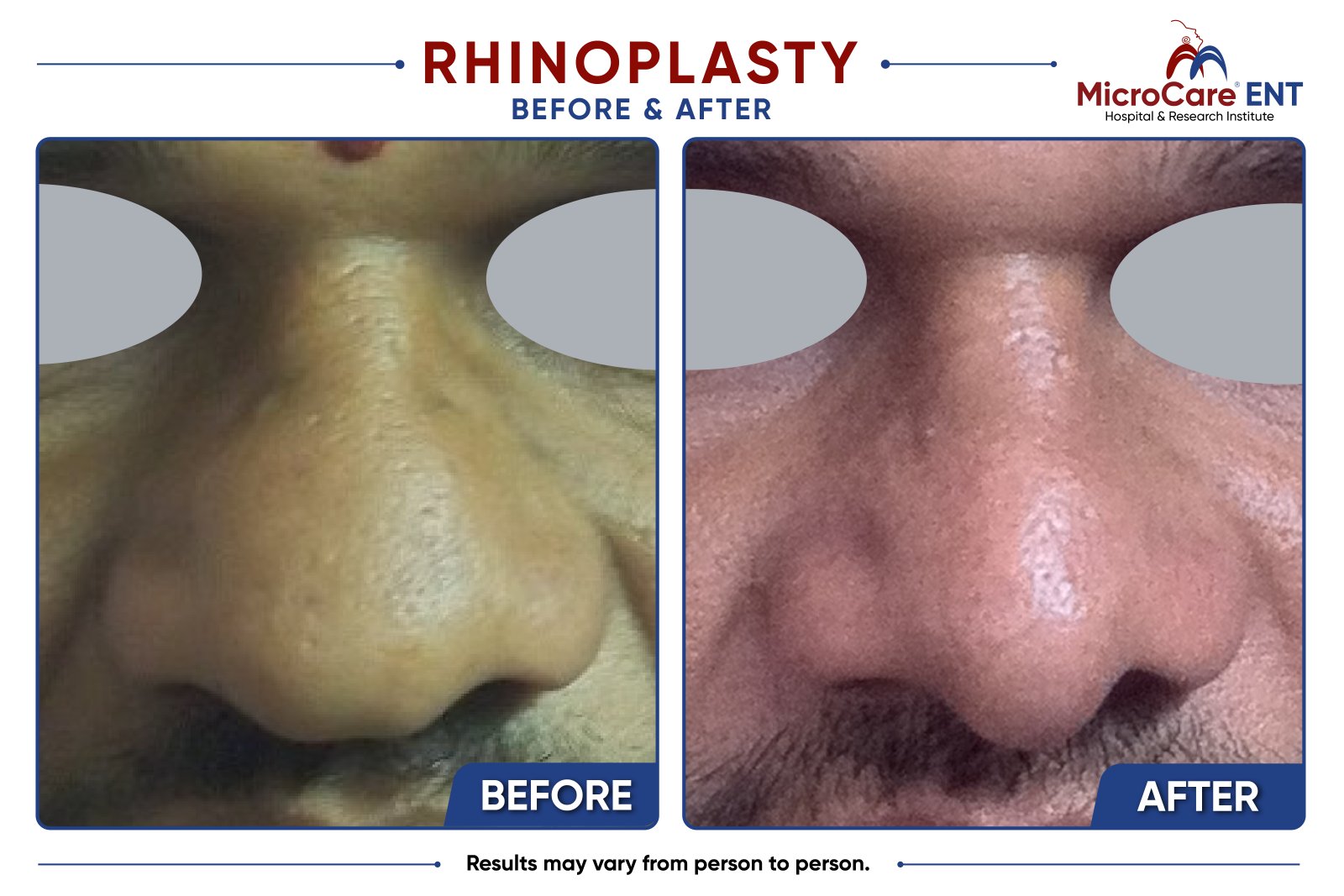
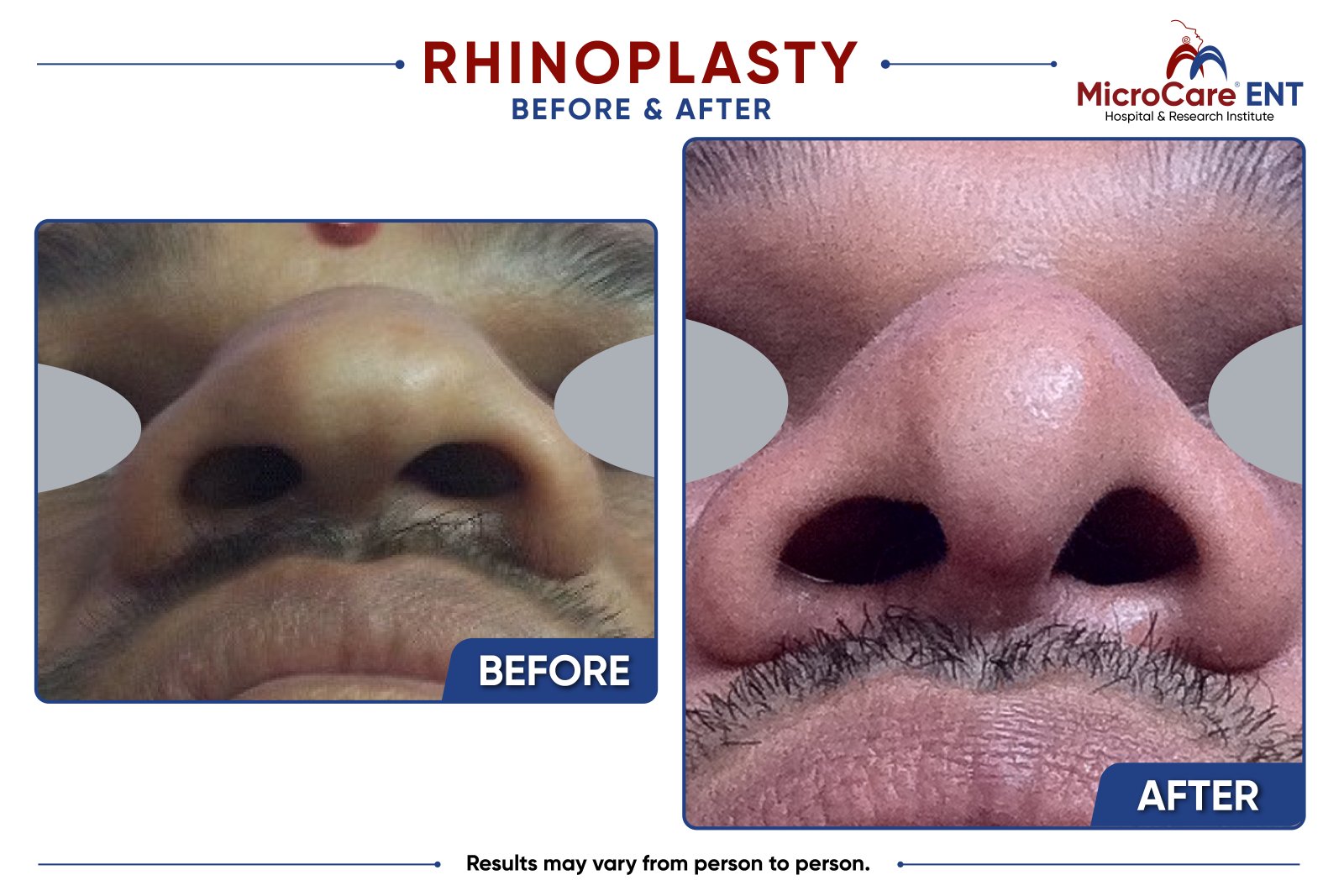
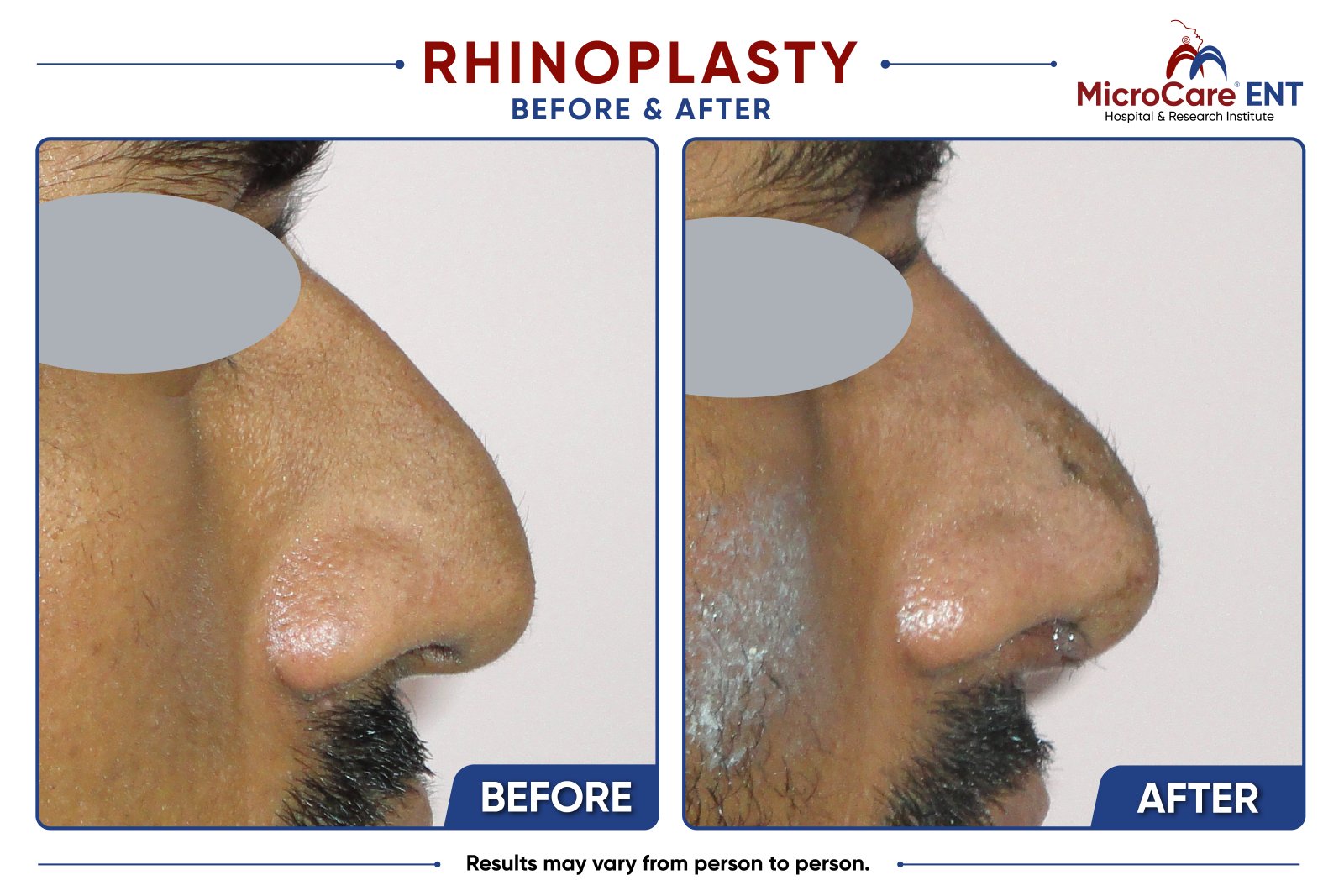
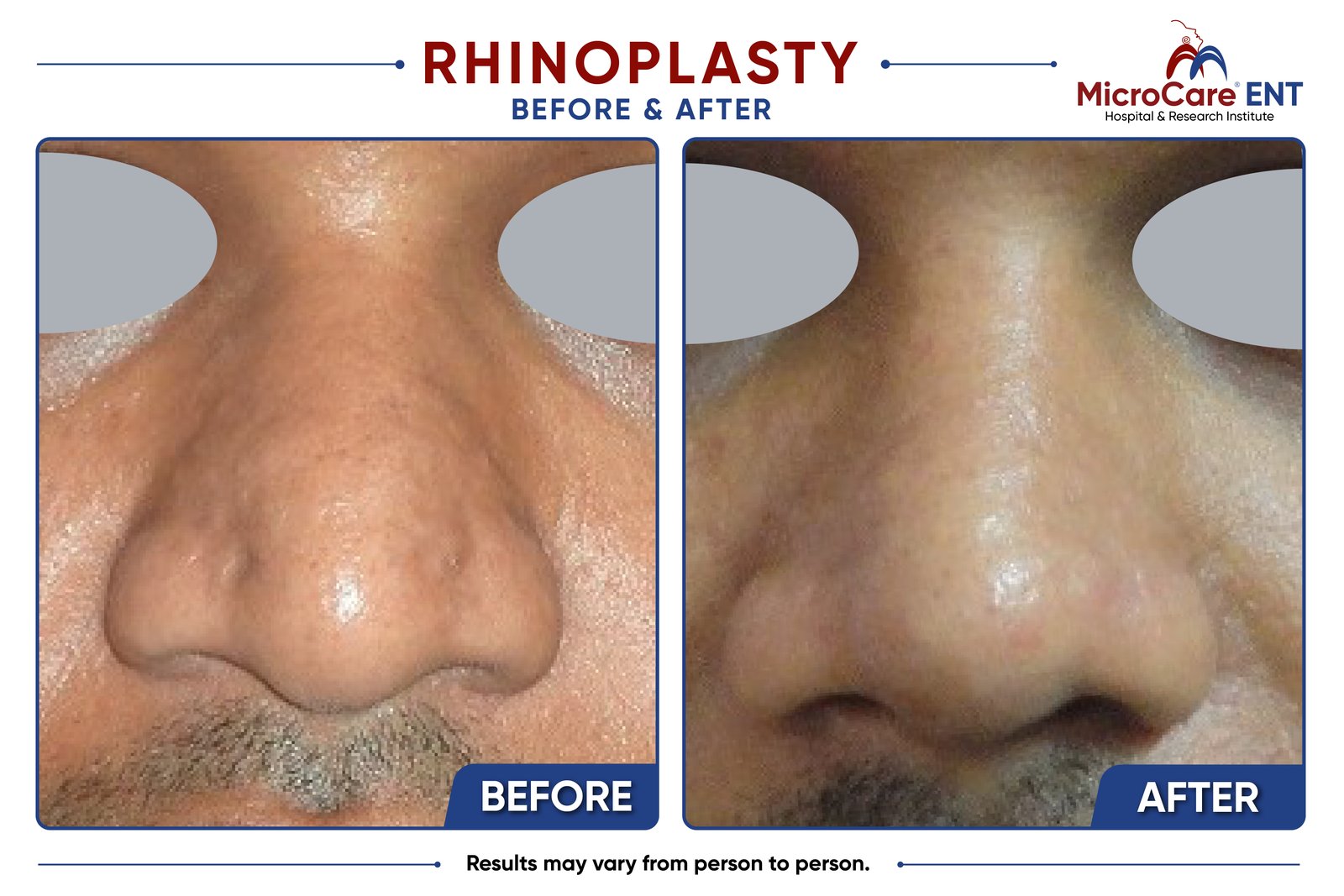
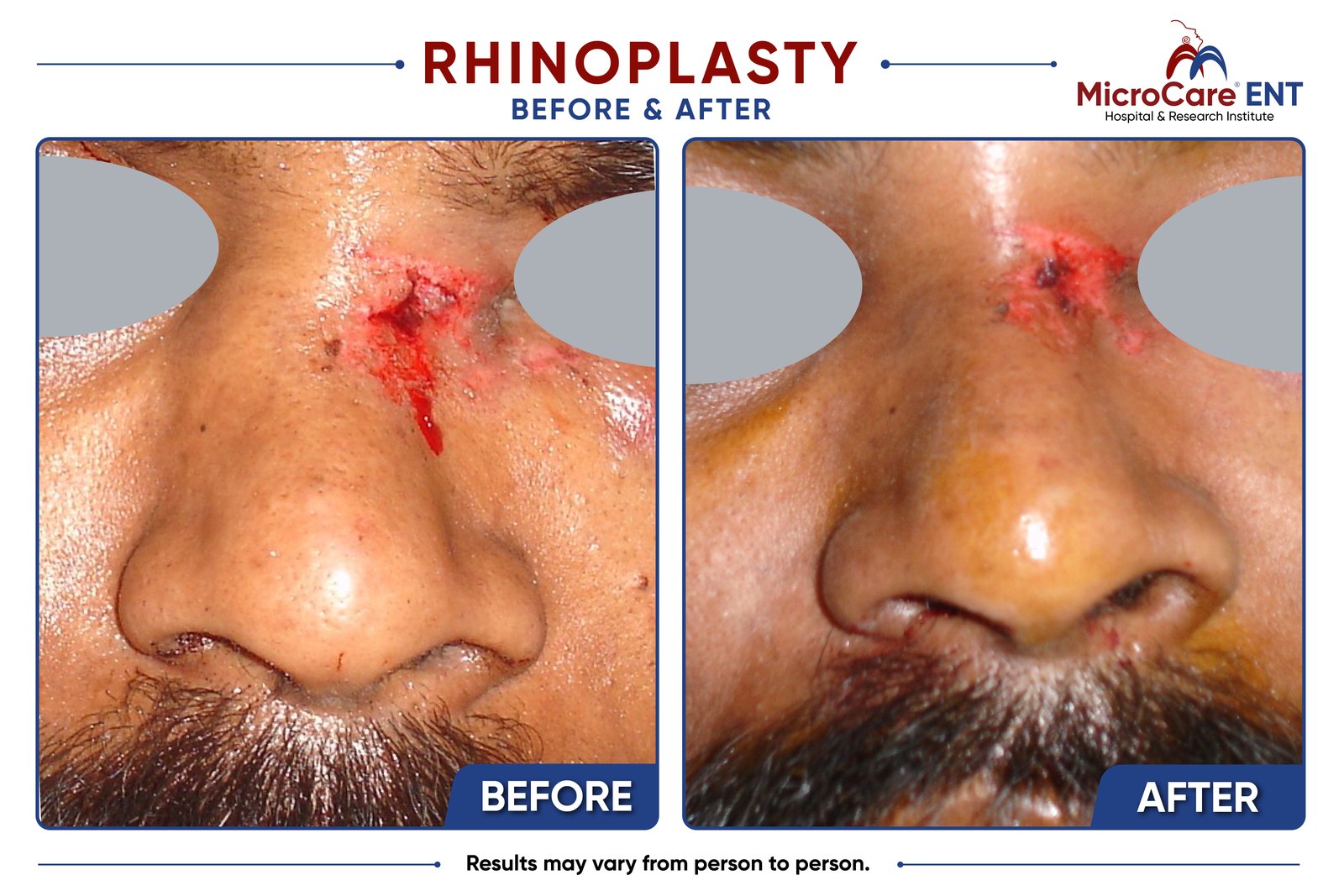
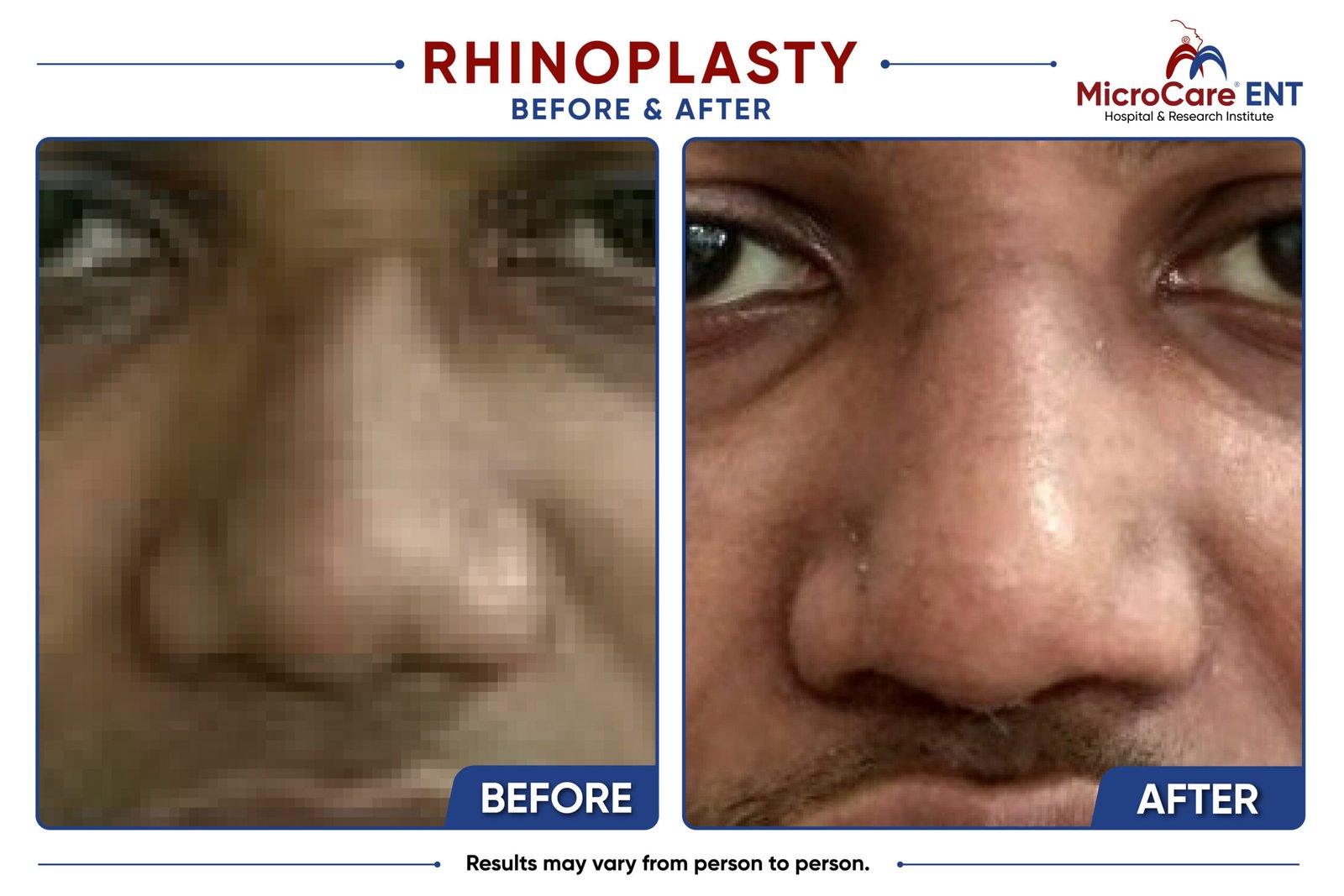
Photographs of patients of MicroCare ENT, shown with their consent. Every nose is different and individual results vary. See all before and after pictures.
Surgical approach: open or closed
All incisions inside the nose
Suits smaller changes, such as levelling the bridge or minor tip work. There is no external scar and early recovery can be slightly quicker.
A small incision across the columella
Suits complex reconstruction, tip reshaping and revisions. The surgeon can see the framework directly and place grafts precisely.
Read more about how the rhinoplasty operation works.
Diagnostics before your surgery
Every plan starts with a detailed look at both the outside and the inside of your nose.

HD nasal endoscopy
A fibre-optic camera examines the valves, septum and turbinates, finding causes of mouth breathing or sinus blockage that can be corrected in the same operation.
CT imaging
Low-dose, multi-planar CT scans show bone and cartilage in three dimensions, helping plan grafts precisely.
Facial analysis
Measurements of the relationships between your forehead, eyes, lips and jaw guide the bridge height and tip angle, instead of a Western template.
Recovery and healing milestones
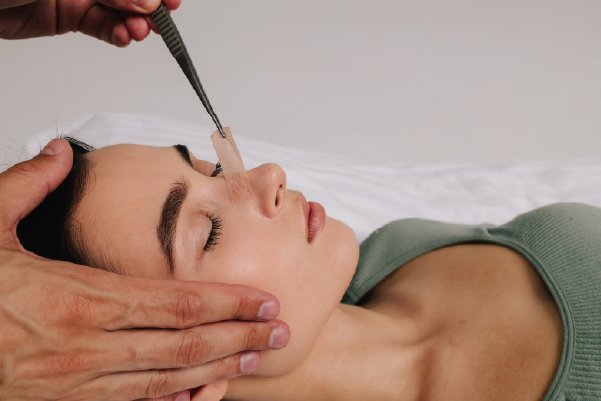
- An external splint protects the new framework
- Mild swelling around the mid-face is normal
- Splint removed at the hospital on day 7
- Most bruising fades
- Return to work or college
- The early thick swelling goes down
- The new bridge height becomes visible
- The skin adapts to the new framework
- Definition can keep improving for up to 18 months
Ethnic rhinoplasty cost in Hyderabad
Every quote is individual. It depends on:
- How much cartilage reconstruction and grafting is needed, and from where.
- Whether a septoplasty is needed for a deviated septum.
- Whether it is a first operation or a complex revision.
Why choose MicroCare ENT
ENT, head and neck specialists
Led by Prof. Dr. Sriprakash Vinnakota, with more than 26 years of surgical experience.
Identity preserved
Natural results that suit your face, without an artificial, over-upturned look.
Hospital-grade safety
Surgery in our NABH-accredited hospital's modular operation theatres, with a full-time anaesthesia team.
Form and function together
The nose is a breathing organ, so every change to its shape is planned to protect long-term breathing.

Prof. Dr. Sriprakash Vinnakota
MS (ENT, Head & Neck) · Chief Rhinoplasty Surgeon, Centre for Advanced ENT, Head & Neck Surgery, MicroCare ENT Hospital & Research Institute
More than 26 years in ENT surgery, with endoscopic sinus surgery training at the University of Graz, Austria, and rhinoplasty training at Marien Hospital, Stuttgart, under Prof. Dr. Wolfgang Gubisch.
Frequently asked questions
Will ethnic rhinoplasty make my nose look Western?
No. The aim is a nose that suits your own face and heritage. We refine the bridge, tip and nostrils in proportion to your eyes, lips and jaw rather than copying a Western template.
Is there a higher risk of scarring or keloids with darker skin?
Skin with more melanin can heal more actively, so we take extra care. Incisions are placed in natural shadows and closed finely without tension, and you receive an aftercare plan that includes silicone gel and sun protection.
My septum is small or weak. Where will the cartilage come from?
Ear cartilage, taken through a hidden incision behind the ear, is often used to shape the tip. Rib cartilage is used when the bridge needs significant building up or in complex revisions. Using your own cartilage avoids the extrusion and infection problems that can occur with silicone implants.
Will I need open or closed rhinoplasty?
Closed rhinoplasty, with all incisions inside the nose, suits smaller changes to the bridge or tip. Open rhinoplasty, with a small incision across the columella, gives the precision needed for grafting, tip reshaping and revisions. Your surgeon recommends the approach after examining you.
How long until I see the final result?
The splint comes off on day 7 and most people return to work or college by weeks 2 to 3. Thicker skin takes longer to settle, so definition keeps improving over 6 to 12 months and sometimes up to 18 months.
Does insurance cover ethnic rhinoplasty?
Cosmetic changes are self-paid. If you also have a documented breathing problem, such as a deviated septum or valve collapse, the functional part may be eligible for insurance or TPA cover, and our hospital desk helps with the paperwork.
See also cosmetic rhinoplasty, functional rhinoplasty and our FAQs.
Schedule your facial analysis
Leave your name and number and we will open WhatsApp with your details filled in. You can also call +91 94949 40725.