
Rhinoplasty in India.
India has become a leading destination for nose surgery, with experienced ENT and facial plastic surgeons, modern hospitals and diagnostics. Rhinoplasty here is used to correct breathing problems, improve facial balance and rebuild the nose after injury. This guide explains your options and how to plan surgery at MicroCare ENT in Hyderabad, whether you live nearby or are travelling from another city or country.
Medically reviewed by Prof. Dr. Sriprakash Vinnakota, MBBS, MS (ENT, Head & Neck), Chief Rhinoplasty Surgeon, Centre for Advanced ENT, Head & Neck Surgery, MicroCare ENT Hospital & Research Institute.
- Location
- KPHB, Hyderabad
- Approach
- Open or closed
- Splint & stitches out
- Day 7
- Fit to fly
- Day 8 to 10
- Back to work
- 2 to 3 weeks
- Final result
- 9 to 12 months
What is rhinoplasty?
Rhinoplasty reshapes the framework of bone and cartilage that gives the nose its shape and holds the airway open. It is structural work: tissue is repositioned, sculpted and, where needed, supported with grafts, to balance the face and the breathing together. It is used in three main ways:
Aesthetic balance
Lowering a hump on the bridge, narrowing a broad bridge or lifting a drooping tip.
Airway reconstruction
Correcting birth defects, straightening a twisted nose and opening blocked passages.
Repair after trauma
Realigning broken nasal bones and torn cartilage after accidents or sports injuries.
Post-accident nose deformityBefore you decide, read Prof. Dr. Vinnakota's book Your Best Nose, which answers 100 common rhinoplasty myths.
Types of rhinoplasty available
- Primary rhinoplastyA first operation on a nose with healthy, untouched tissue and cartilage.
- Functional rhinoplasty and septorhinoplastyImproves breathing by repairing the inside of the nose, and straightens the outside in the same operation.
- Cosmetic rhinoplastyAn elective operation to refine proportions, narrow a broad base or lift a drooping tip.
- Revision rhinoplastyCorrects the appearance or breathing after earlier surgery, often with ear or rib cartilage grafts.
- Ethnic rhinoplastyRefines the bridge, nostril flare or tip while keeping features true to your heritage.
- Functional rhinoplastyFocused on the airway: septum, valves and turbinates.
Patient results
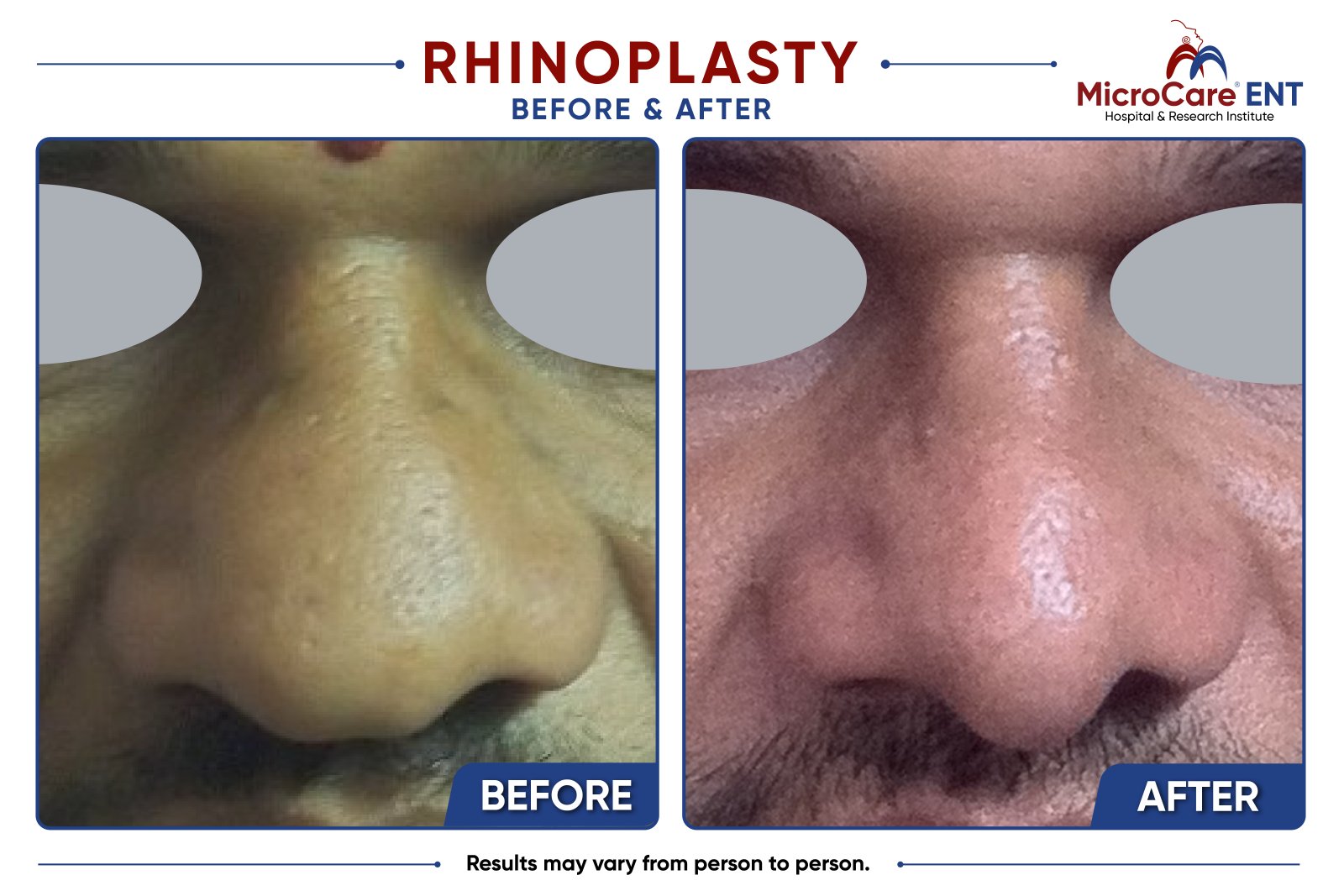
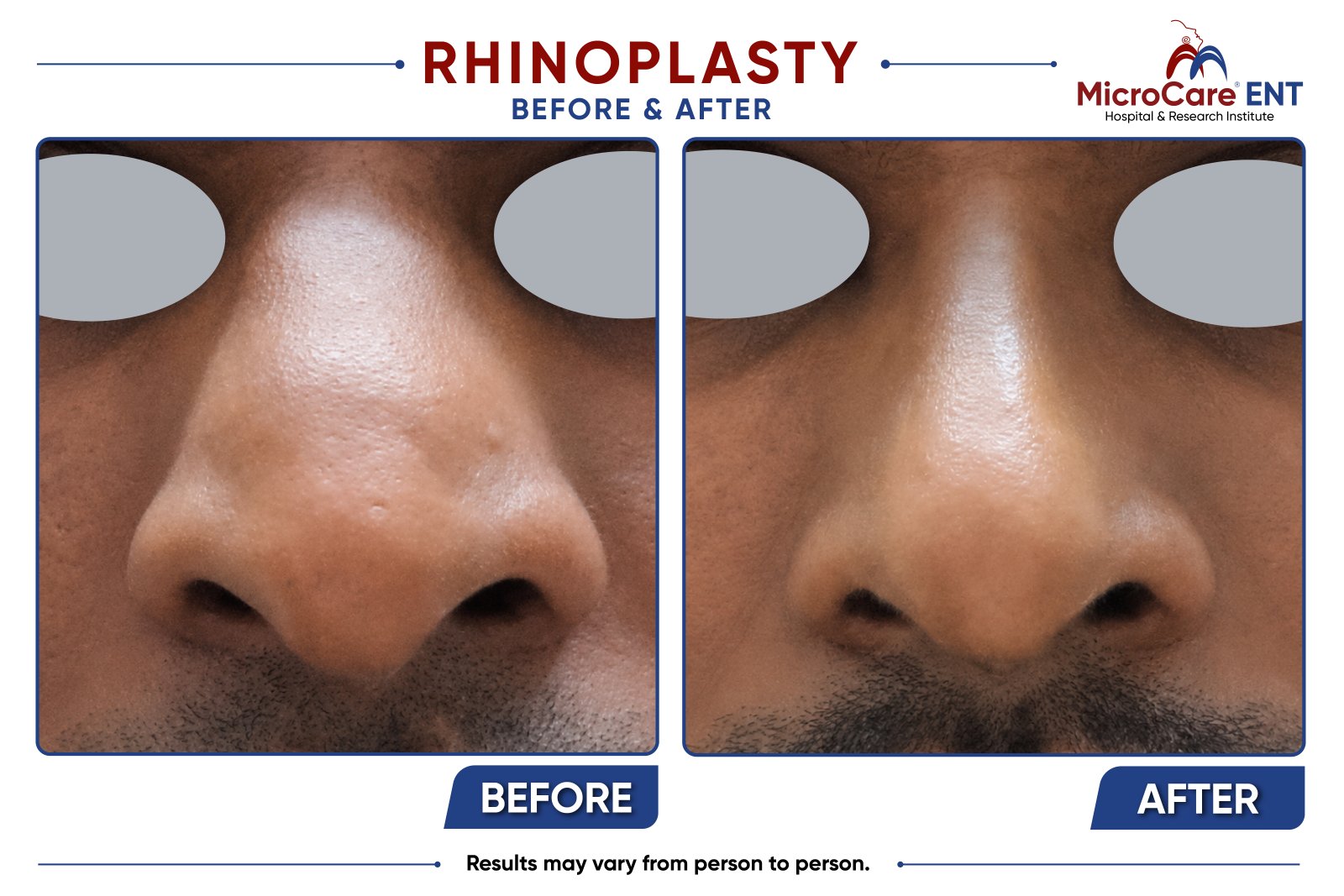
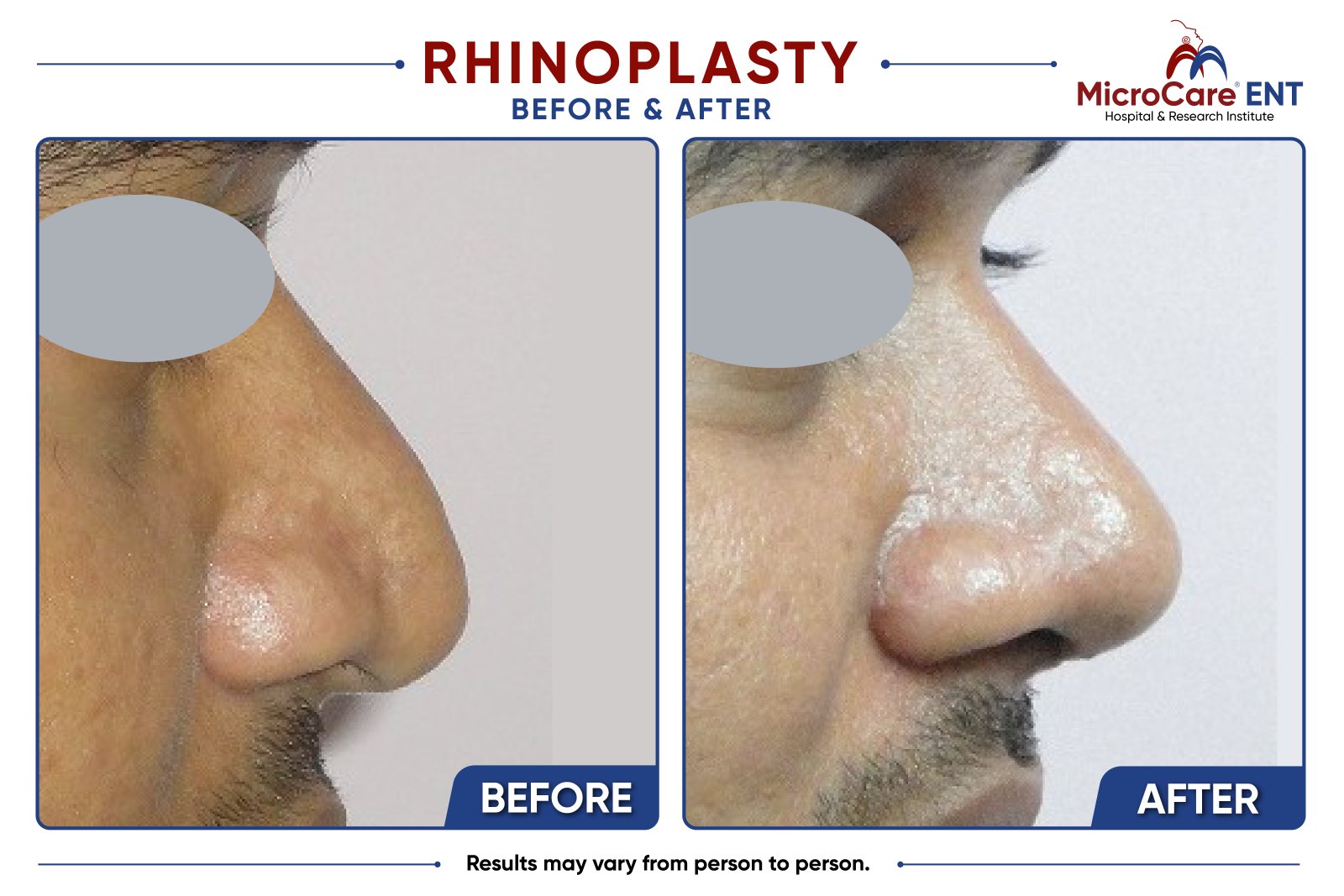
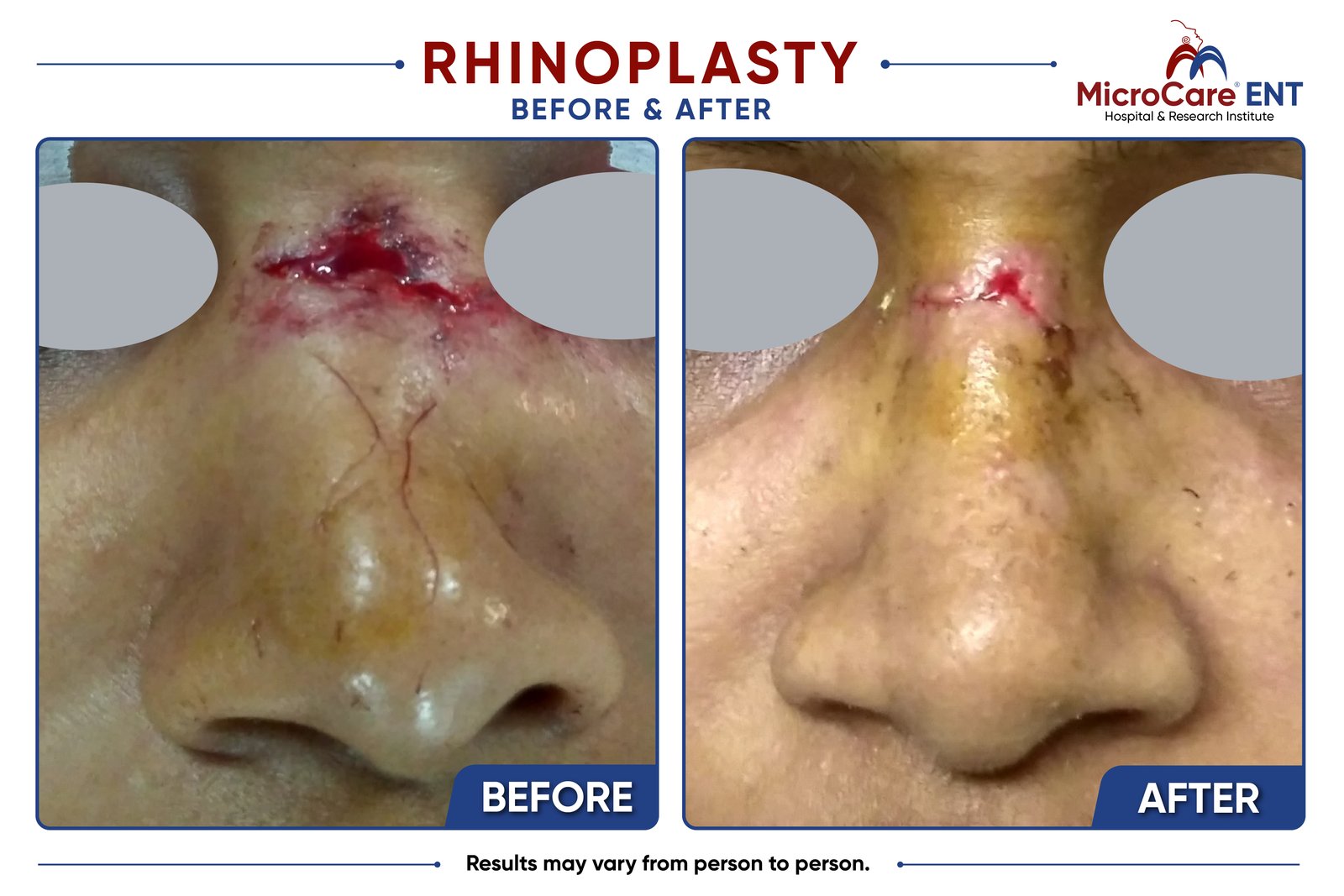
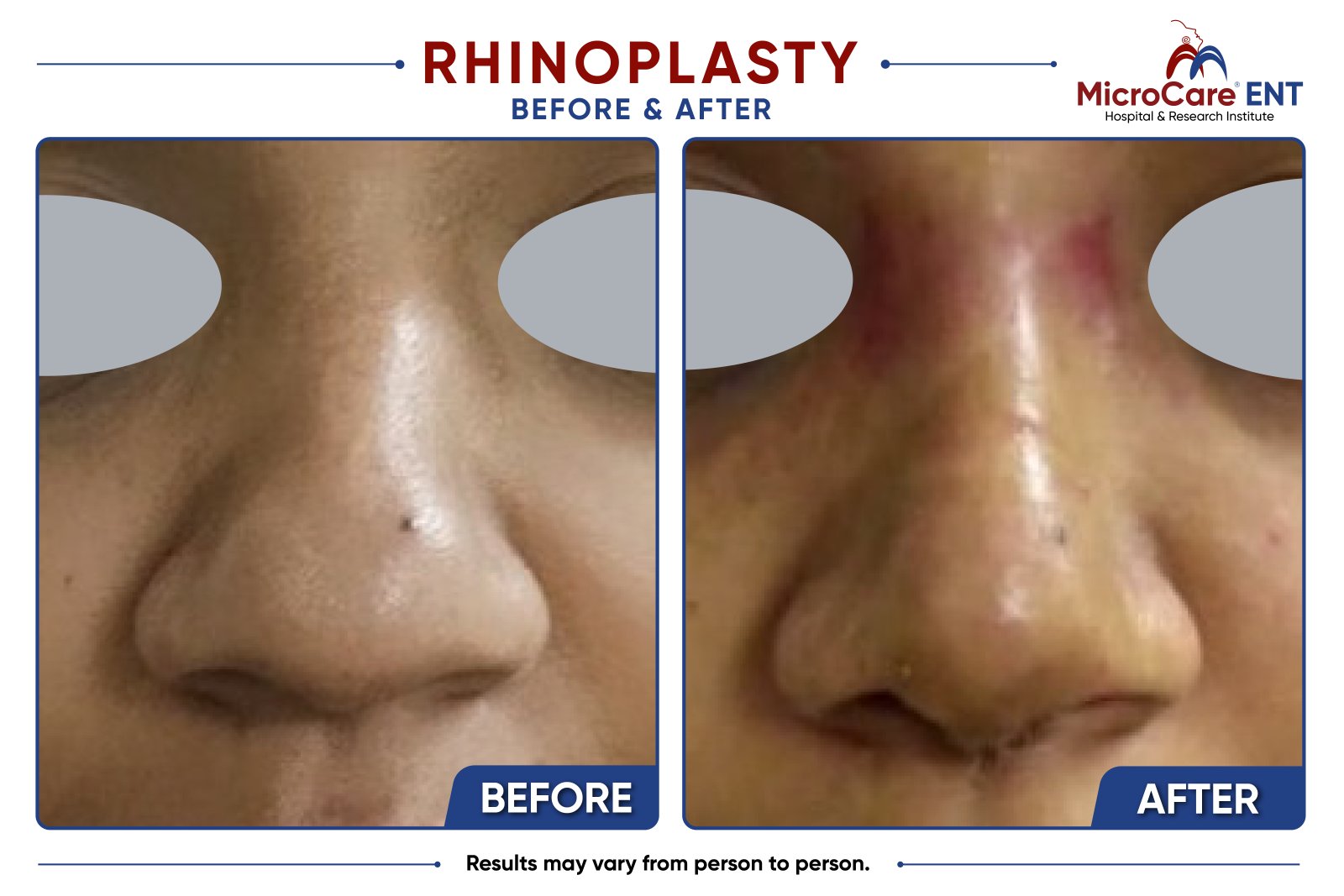
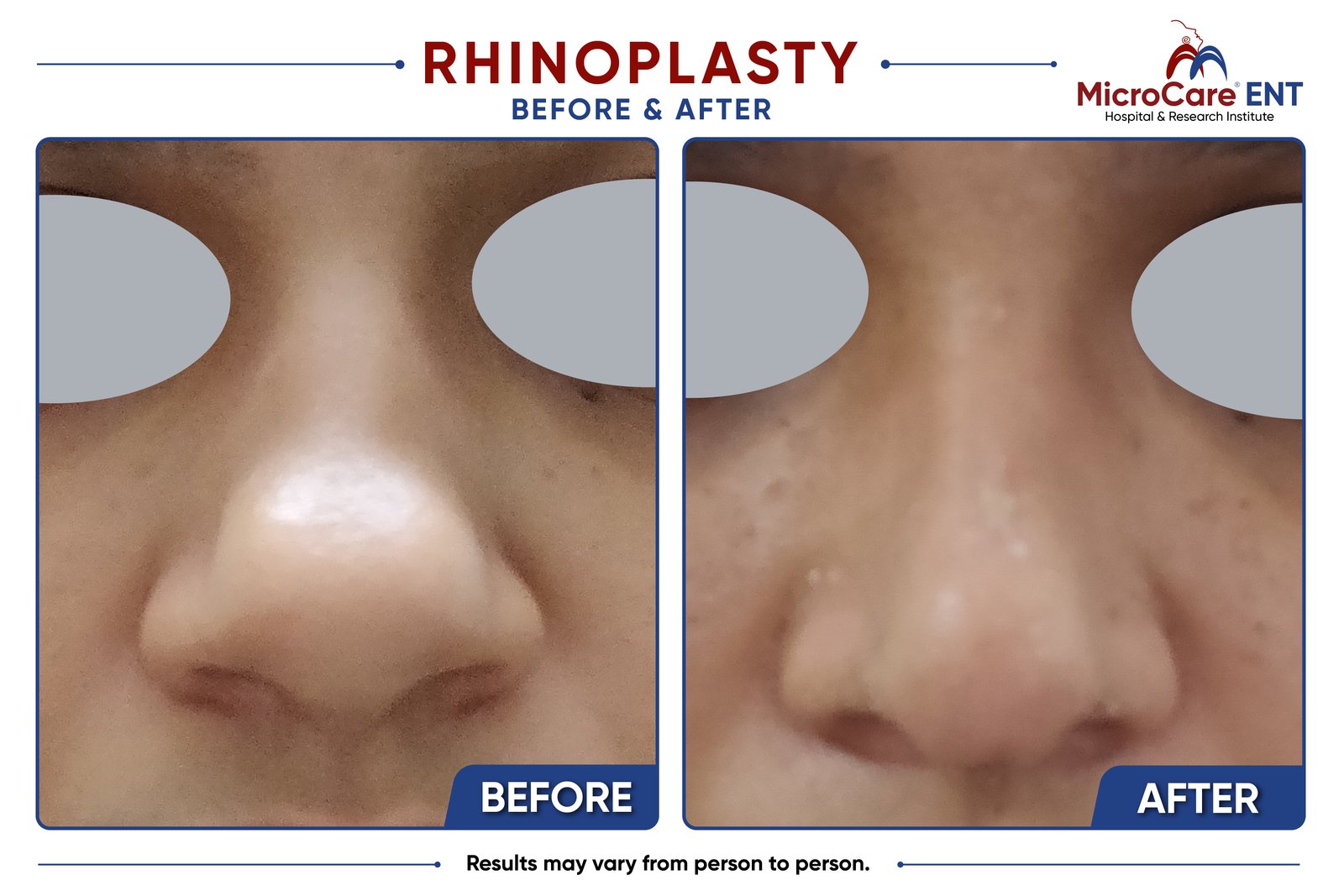
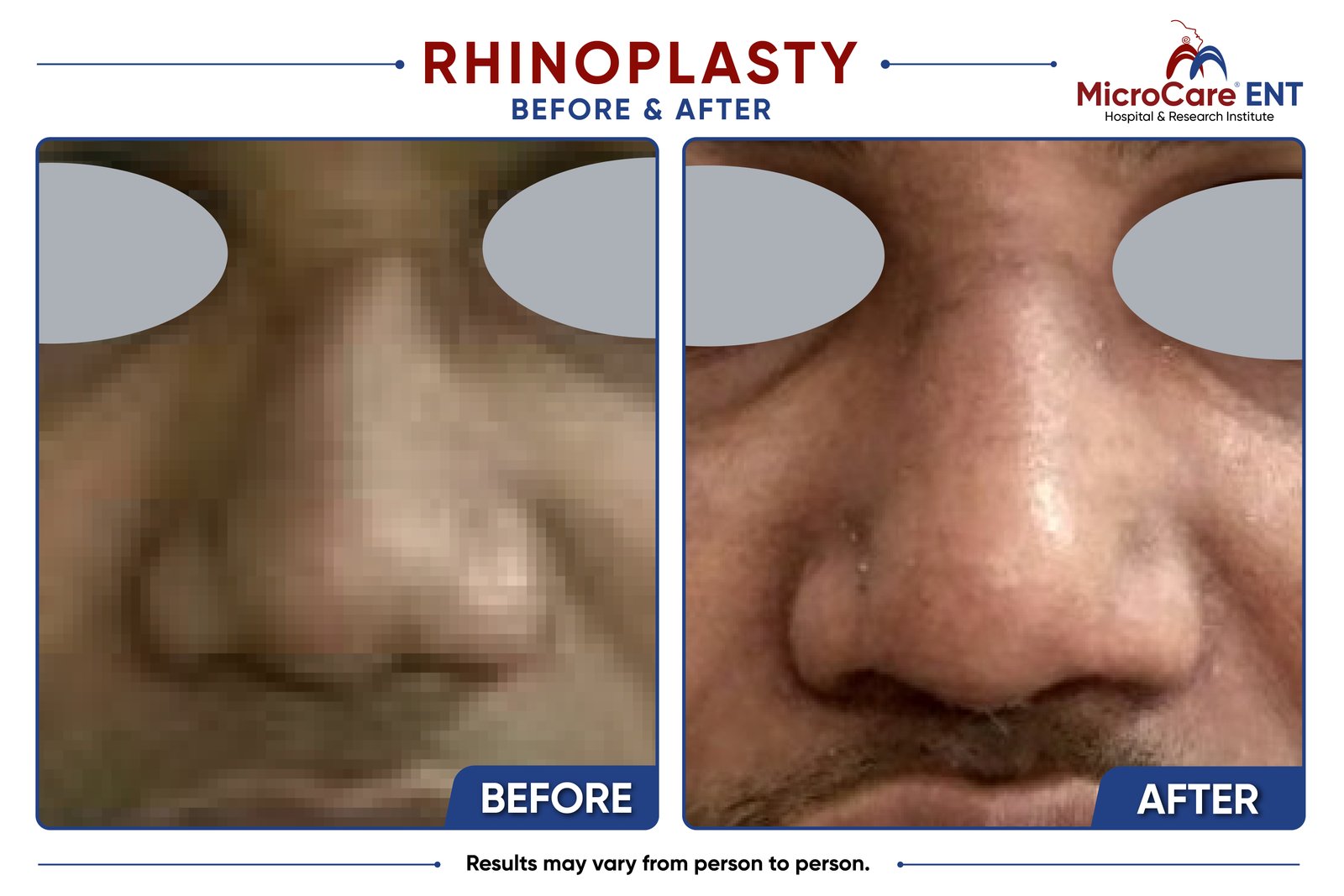
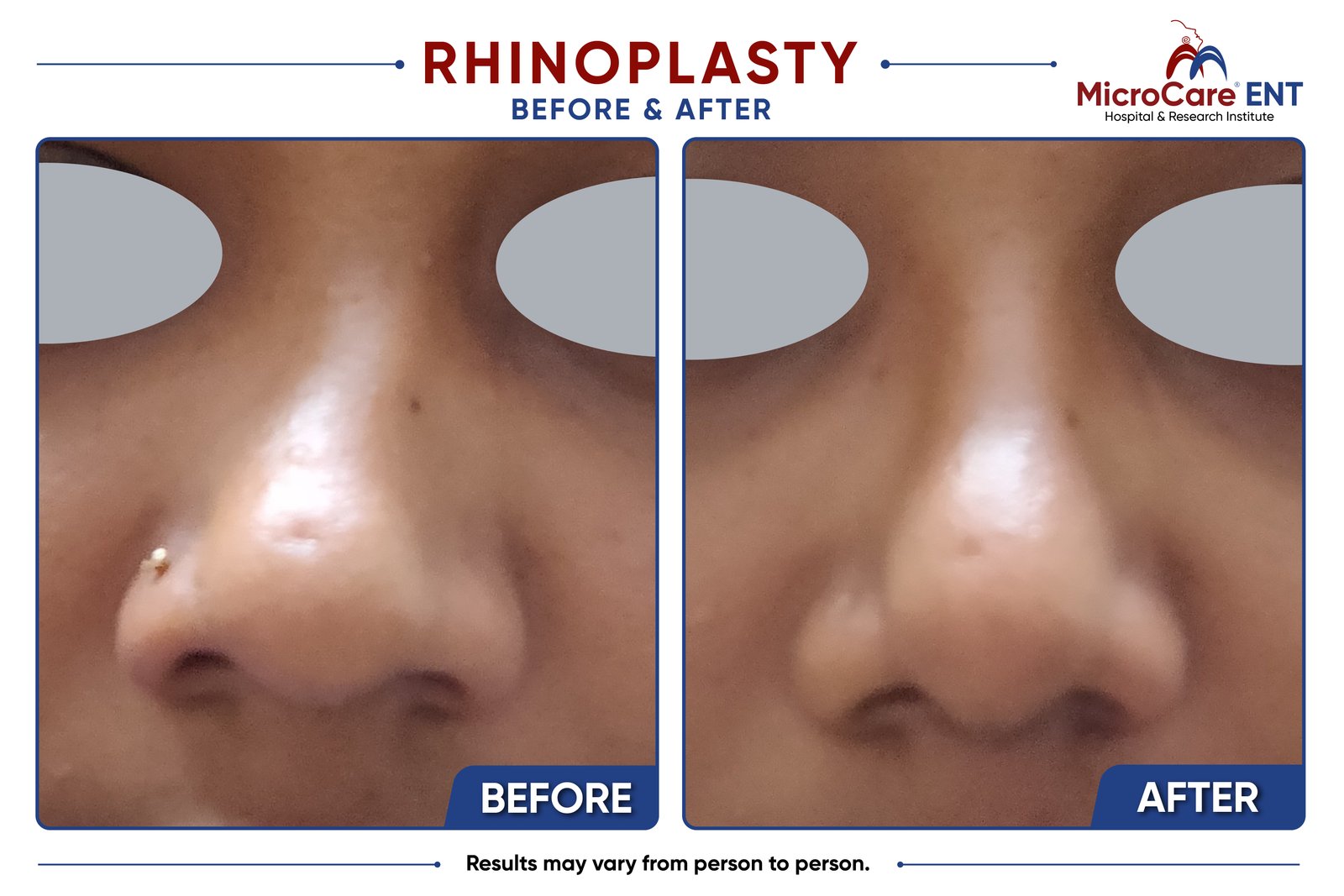
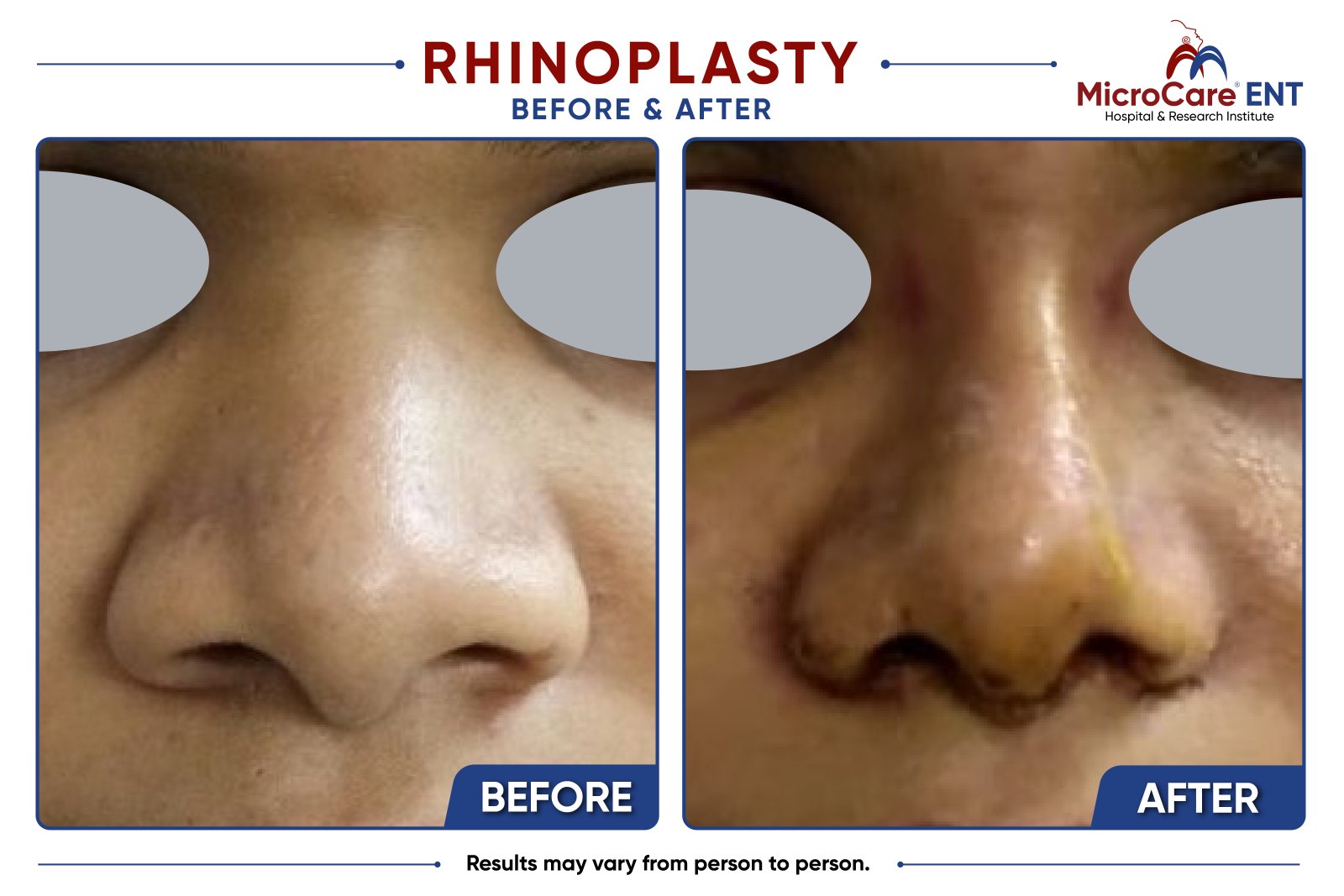
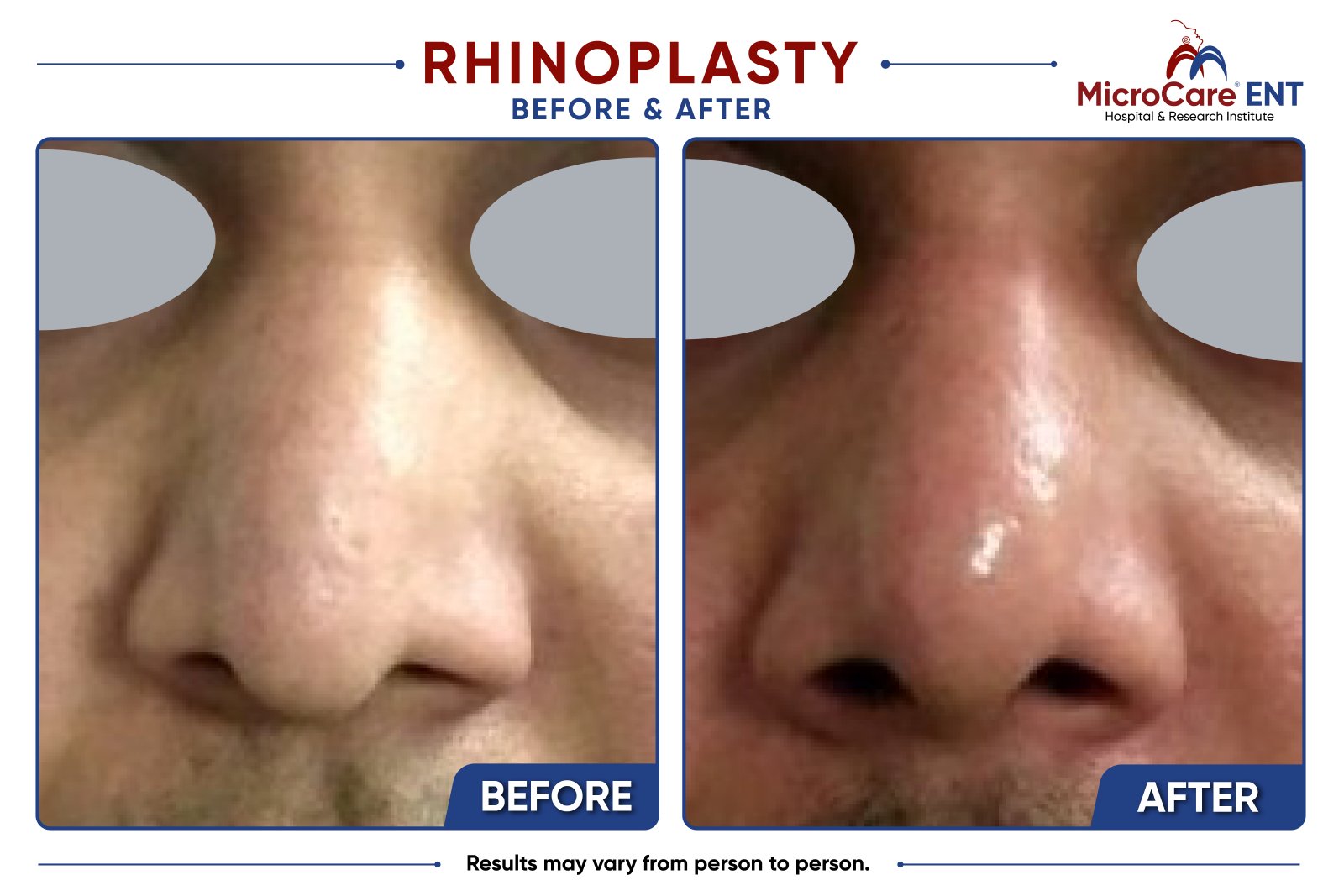
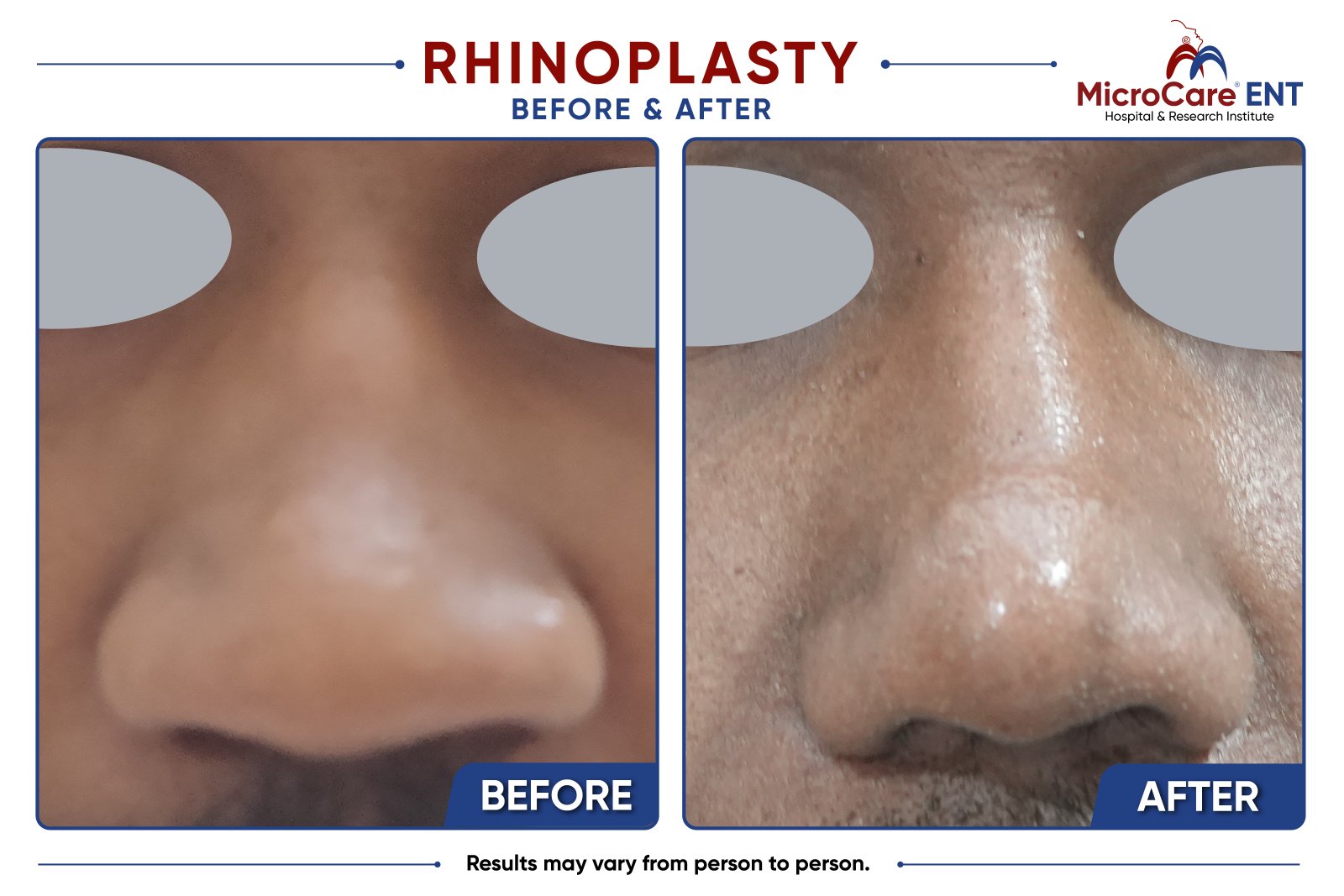
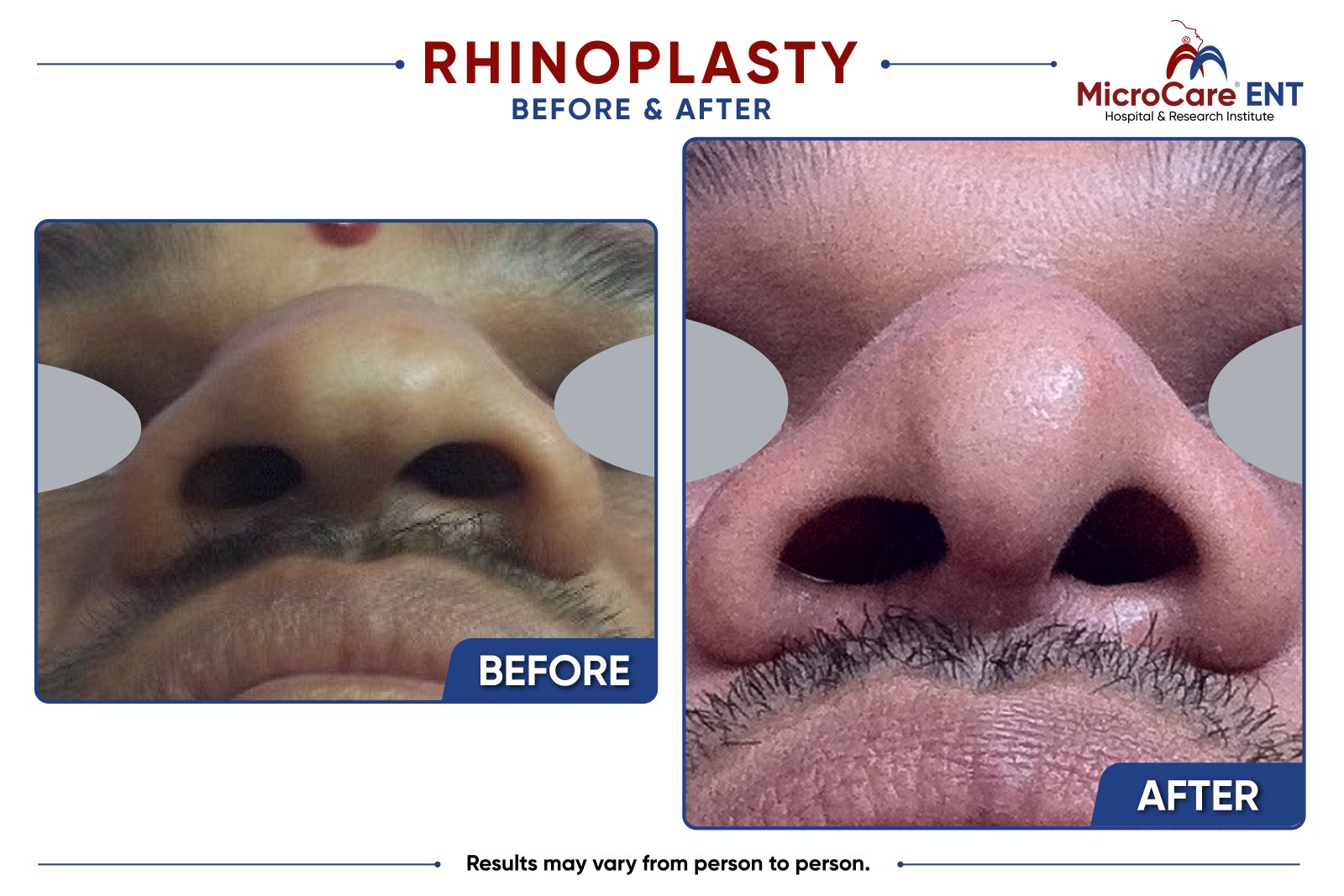
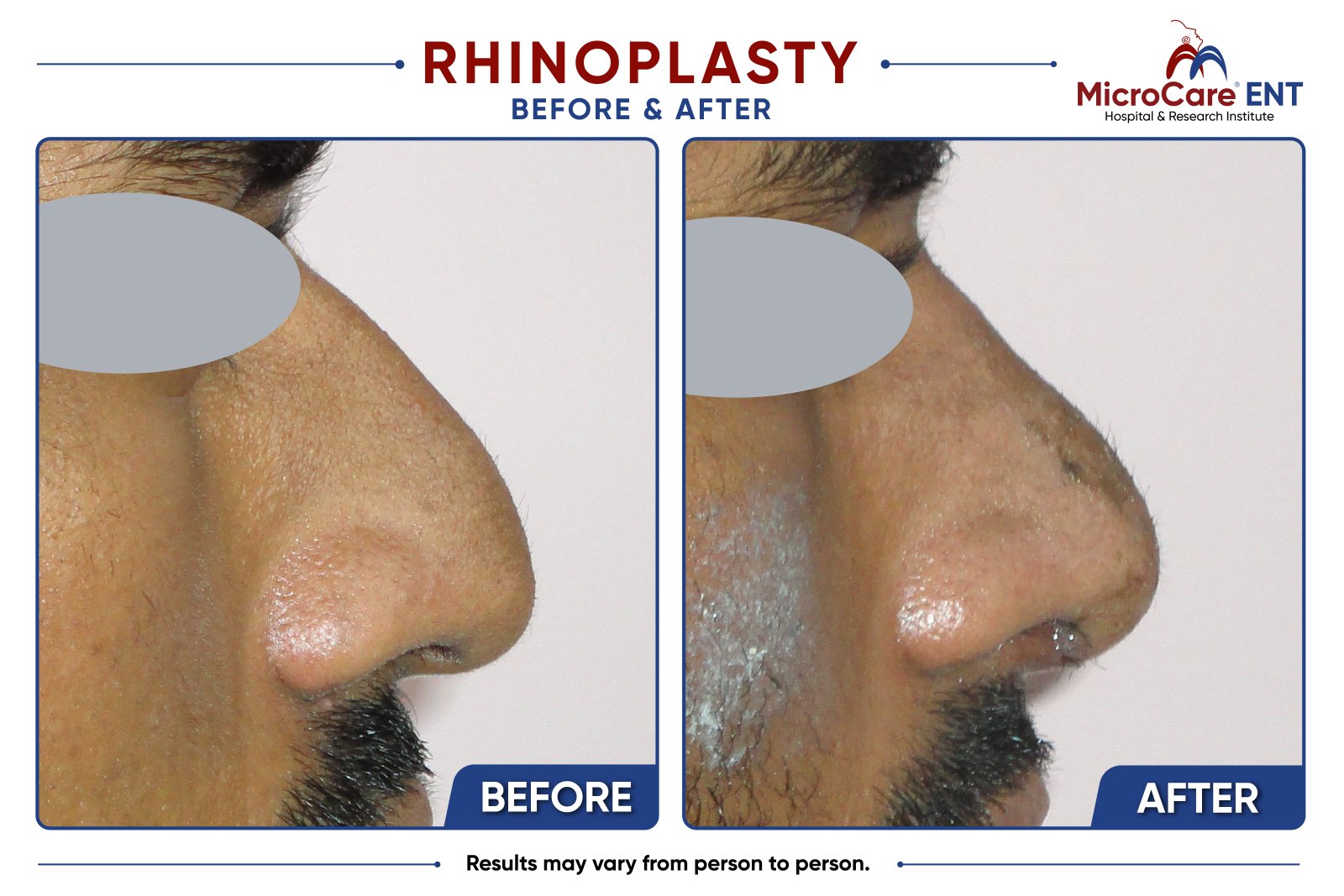
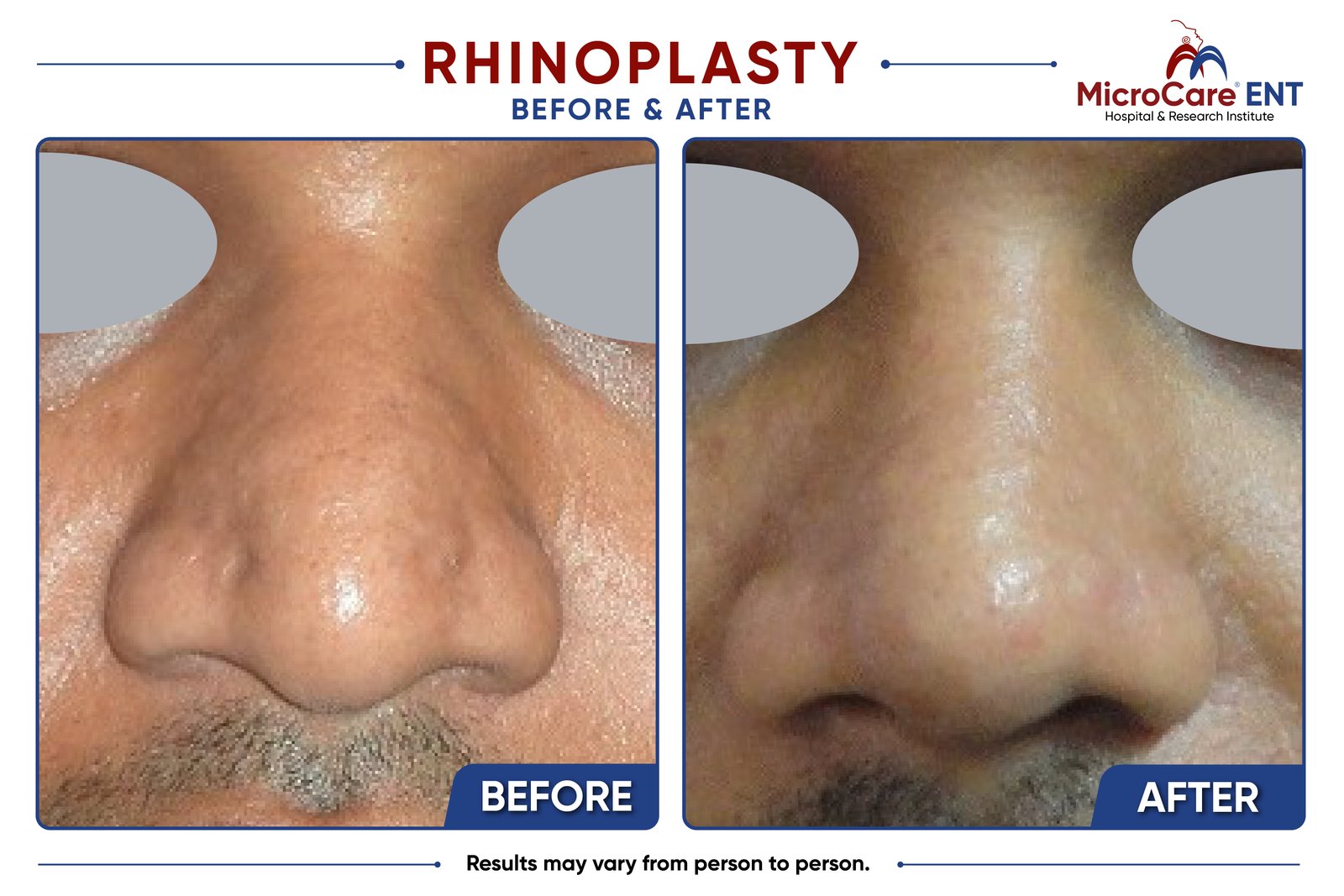
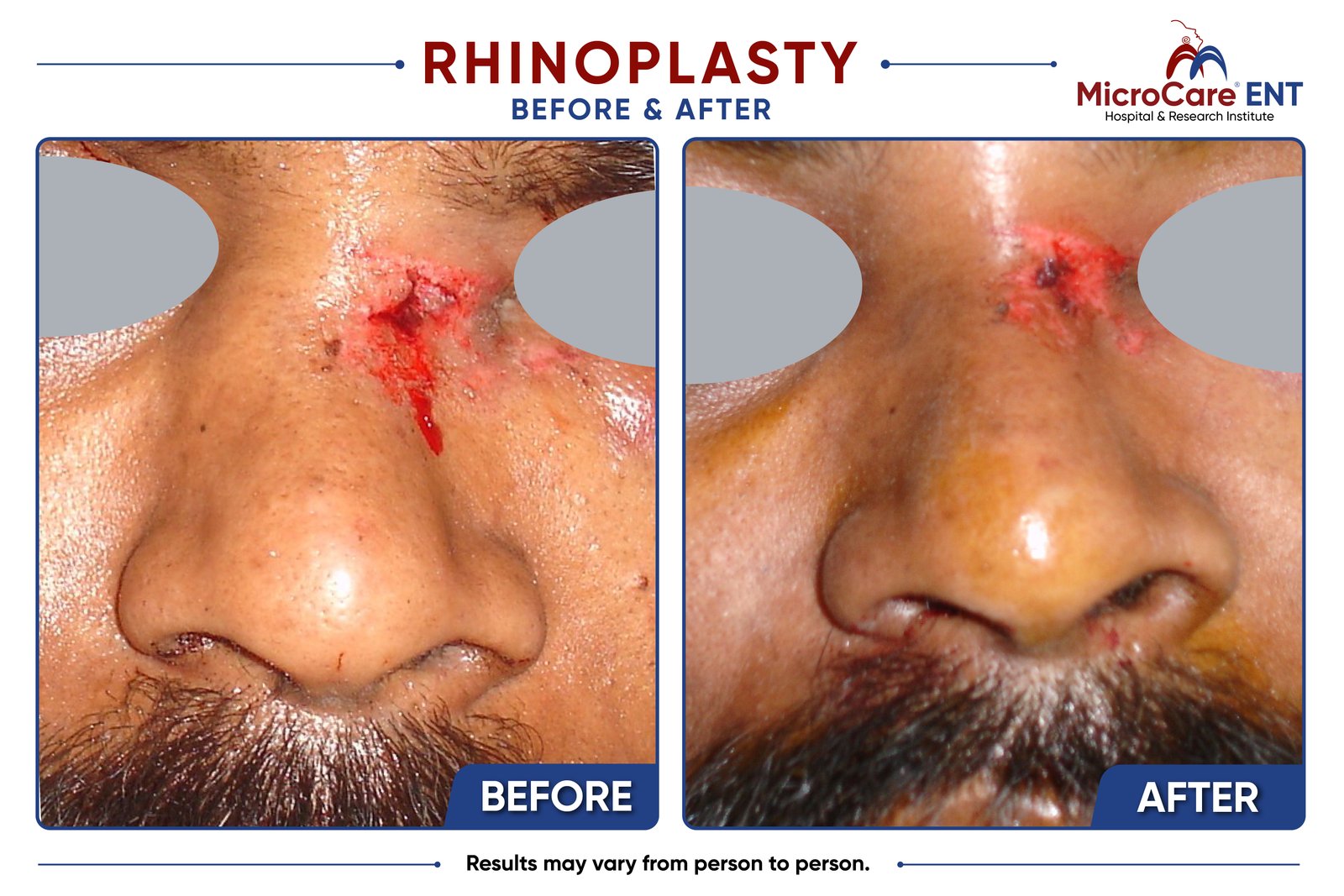
Photographs of patients of MicroCare ENT, shown with their consent. Every nose is different and individual results vary. See all before and after pictures.
Why patients choose India for rhinoplasty
Patients from across India and abroad choose to have nose surgery here, for four main reasons:
Experienced surgeons
Many surgeons have trained at leading institutes overseas, and are experienced with the wide range of skin types and cartilage strength seen across different populations.
Accredited hospitals
Leading centres are nationally or internationally accredited, with strict sterilisation, modern operating theatres and 24-hour emergency care.
Advanced diagnostics
High-definition fibre-optic endoscopy and low-radiation CT scanning are used to plan surgery before the operation.
Lower cost
Treatment usually costs a fraction of what similar surgery costs in Western countries.
Open or closed rhinoplasty?
The approach is chosen after examination, based on your skin thickness and what the structure of your nose needs.
Open rhinoplasty
A small cut across the narrowest part of the columella gives a full view of the cartilage framework.
Best for: tip work, structural grafting and revisions with dense scar tissue.
Endonasal approachClosed rhinoplasty
All cuts are inside the nostrils, so there is no visible scar.
Best for: smaller bridge changes and straightforward reshaping.
Recovery timeline
- An external splint protects the bones
- Splint and fine stitches removed at the hospital on day 7
- Fit to fly from day 8 to 10
- More than 85 percent of visible bruising and swelling settles
- Return to work, college and social life
- Deeper swelling resolves
- Breathing becomes clearer
- The skin adapts to the new shape
- Cartilage grafts integrate
- The final, permanent result is seen
Rhinoplasty cost in India
Every quote is individual. It depends on:
- The complexity of the operation, including any scar tissue from earlier surgery.
- The approach, open or closed.
- Whether grafts are needed from your own ear or rib cartilage.
Why an ENT-led approach, and why MicroCare ENT
The nose is a breathing organ. Changing only its outer shape can damage how well it works, which is why rhinoplasty at MicroCare ENT is always led by ENT surgeons.
ENT, head and neck specialists
Led by Prof. Dr. Sriprakash Vinnakota, with more than 26 years of ENT microsurgical experience.
Breathing and appearance together
Every rhinoplasty is planned as a customised septorhinoplasty, improving the airway while refining the shape, with natural-looking results.
Modern surgical technology
Endoscopic assistance, piezoelectric instruments that can reduce bruising and swelling, and modular operation theatres.
Honest, patient-centred care
Transparent consultations with realistic expectations, clear pricing and structured follow-up for up to one year.

Prof. Dr. Sriprakash Vinnakota
MS (ENT, Head & Neck) · Chief Rhinoplasty Surgeon, Centre for Advanced ENT, Head & Neck Surgery, MicroCare ENT Hospital & Research Institute
More than 26 years in ENT surgery, with international training including rhinoplasty at Marien Hospital, Stuttgart, under Prof. Dr. Wolfgang Gubisch, and endoscopic sinus surgery at the University of Graz, Austria. He runs a rhinoplasty fellowship for ENT and plastic surgeons from across India.
Frequently asked questions
Is rhinoplasty common in India?
Yes. It is one of the most frequently performed facial operations in India, chosen every year by thousands of patients for appearance, breathing, or both.
Can rhinoplasty permanently fix snoring or a blocked nose?
When snoring or sinus blockage is caused by a structural problem inside the nose, such as a deviated septum, enlarged turbinates or collapsed valves, a functional septorhinoplasty corrects that structure and the improvement usually lasts. Snoring can have other causes too, which your ENT surgeon will check.
What is the difference between rhinoplasty and septoplasty?
Septoplasty is an internal operation that straightens the septum to improve breathing; the outside of the nose does not change. Rhinoplasty reshapes the bone and cartilage that give the nose its outer shape. Septorhinoplasty does both.
Will my nose feel stiff or artificial?
It feels firm for the first 3 to 6 months while swelling settles and any grafts heal in place. After that it softens and feels natural to the touch.
When can I fly home or exercise after surgery?
Most patients can fly 8 to 10 days after surgery, once the splint has been removed. Light walking is fine from about 2 weeks. Heavy lifting, intense gym work and contact sports are avoided for 4 to 6 weeks.
I live in another city or country. Can I still be treated here?
Yes. Many patients travel to Hyderabad for rhinoplasty. Send us your photographs and any previous reports on WhatsApp, and we will help you plan the consultation, surgery and the days you need to stay.
See also rhinoplasty in Hyderabad, What is rhinoplasty? and our FAQs.
Plan your rhinoplasty in Hyderabad
Leave your name and number and we will open WhatsApp with your details filled in. If you are travelling, you can send your photographs and reports in the same chat. You can also call +91 94949 40725.