
After an injury, restore your nose and your breathing.
A road accident, a fall or a sports injury can leave the nose crooked, flattened or blocked. Whether your injury happened last week or years ago, our ENT-led team corrects the bones, cartilage and septum together, so your nose looks like yours again and breathes freely.
Medically reviewed by Prof. Dr. Sriprakash Vinnakota, MBBS, MS (ENT, Head & Neck), Chief Rhinoplasty Surgeon, Centre for Advanced ENT, Head & Neck Surgery, MicroCare ENT Hospital & Research Institute.
- See an ENT
- Within days
- Early setting
- Within about 2 weeks
- Old injuries
- Correctable later
- Usual operation
- Septorhinoplasty
- Splint removed
- Day 7
- Insurance
- Often eligible
What is a post-accident nose deformity?
The nose sits at the front of the face, so it is the bone most often broken in road accidents, falls, sports and workplace injuries. An injury can push the nasal bones to one side, crack or dislocate the septum inside, or collapse the cartilage that keeps the airway open.
If these are not set correctly, the nose can heal crooked, flattened or blocked. Treatment aims to restore both the shape of your nose and the airway inside it.
After a fresh injury: why timing matters
- An ENT examination looks inside the nose as well as outside
- A blood clot on the septum (septal haematoma) is drained urgently to protect the cartilage
- Once the first swelling settles, displaced bones can often be set back in place (closed reduction)
- Earlier in children, whose bones heal faster
- If the nose has healed crooked or blocked, it is corrected with septorhinoplasty
- Usually at least 6 months after the injury
Signs your nose was affected by the injury
- A crooked or twisted nose that looks different from before.
- A flattened or sunken bridge (saddle nose).
- A new bump on the bridge.
- Blockage on one or both sides, or nostrils that collapse when you breathe in.
- Snoring, mouth breathing or poor sleep since the injury.
- Repeated nosebleeds or crusting inside the nose.
Before you decide, read Prof. Dr. Vinnakota's book Your Best Nose, which answers 100 common rhinoplasty myths.
Types of injury we treat
Displaced nasal fracture
The nasal bones are pushed sideways or inwards, tilting the bridge.
Septal fracture or dislocation
The septum cracks or slips off its base, bending the nose and blocking one side.
Saddle nose
An untreated septal haematoma or severe fracture destroys support cartilage, so the bridge sinks.
Collapsed cartilage
Torn or displaced upper lateral cartilages narrow the internal valve and block airflow.
Tip and columella injury
Damage to the tip cartilages can leave the tip uneven, drooping or scarred.
Nose tip correctionOld, healed injuries
A nose that healed crooked years ago is treated like a complex crooked nose.
Crooked nose correctionPatient results
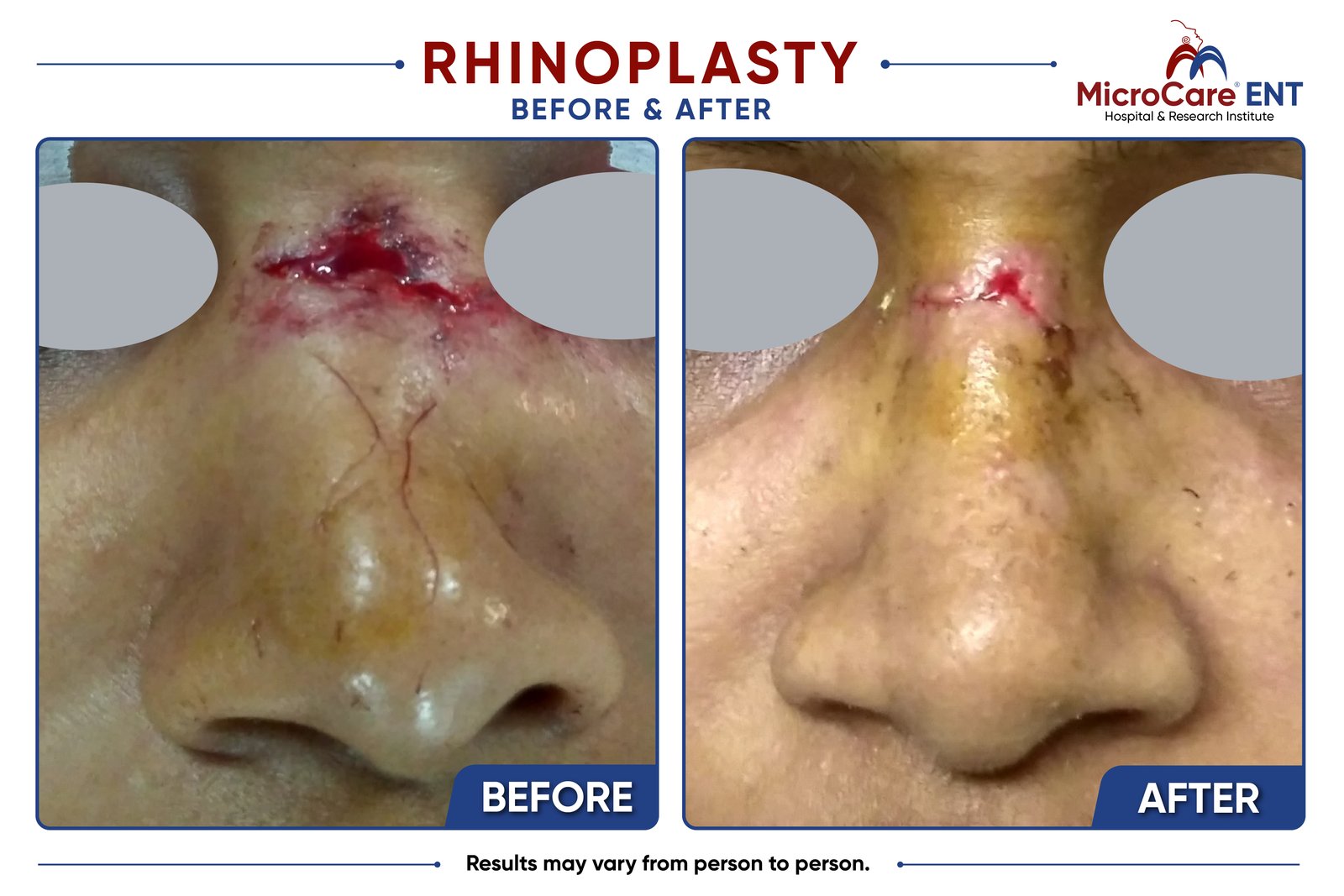
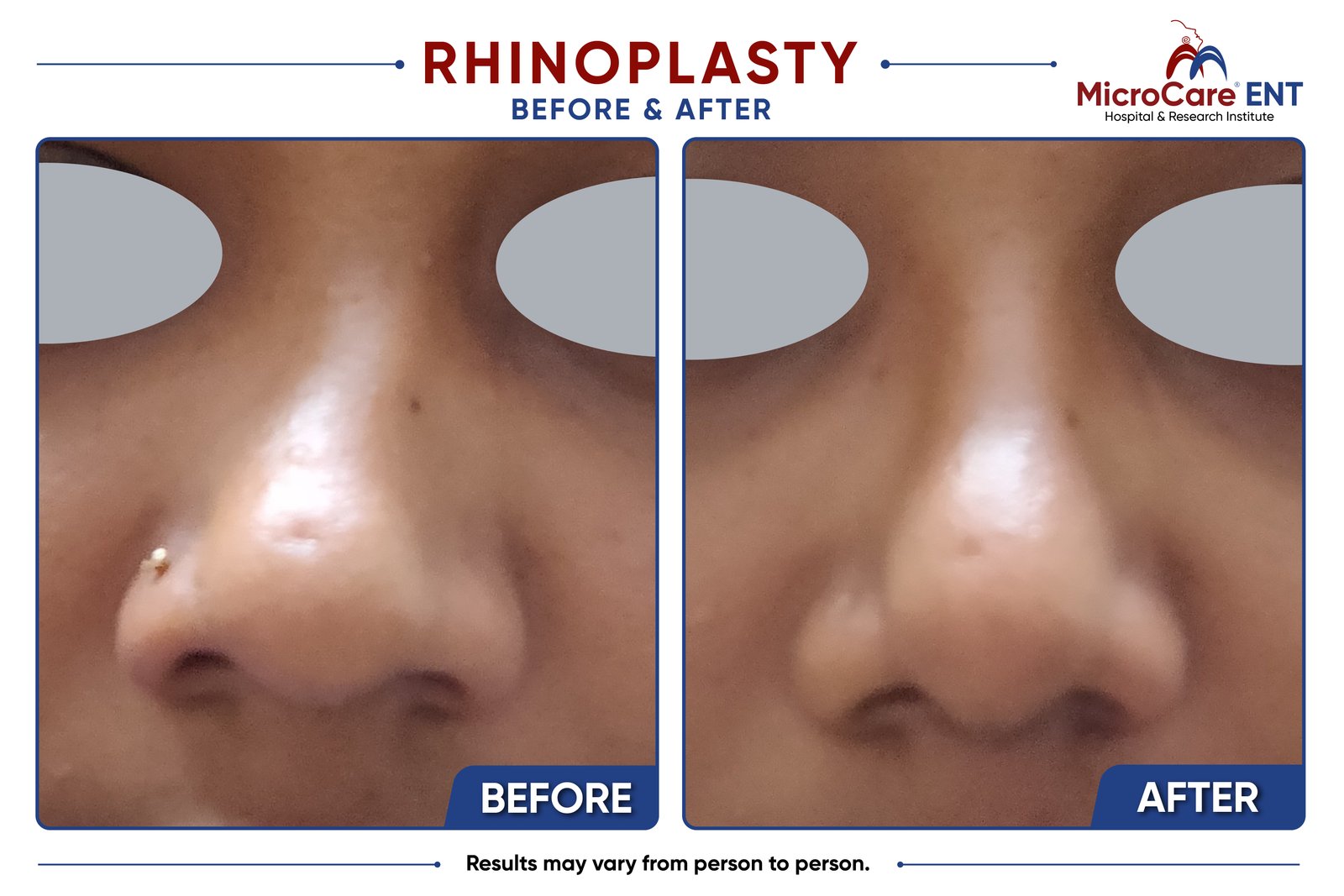
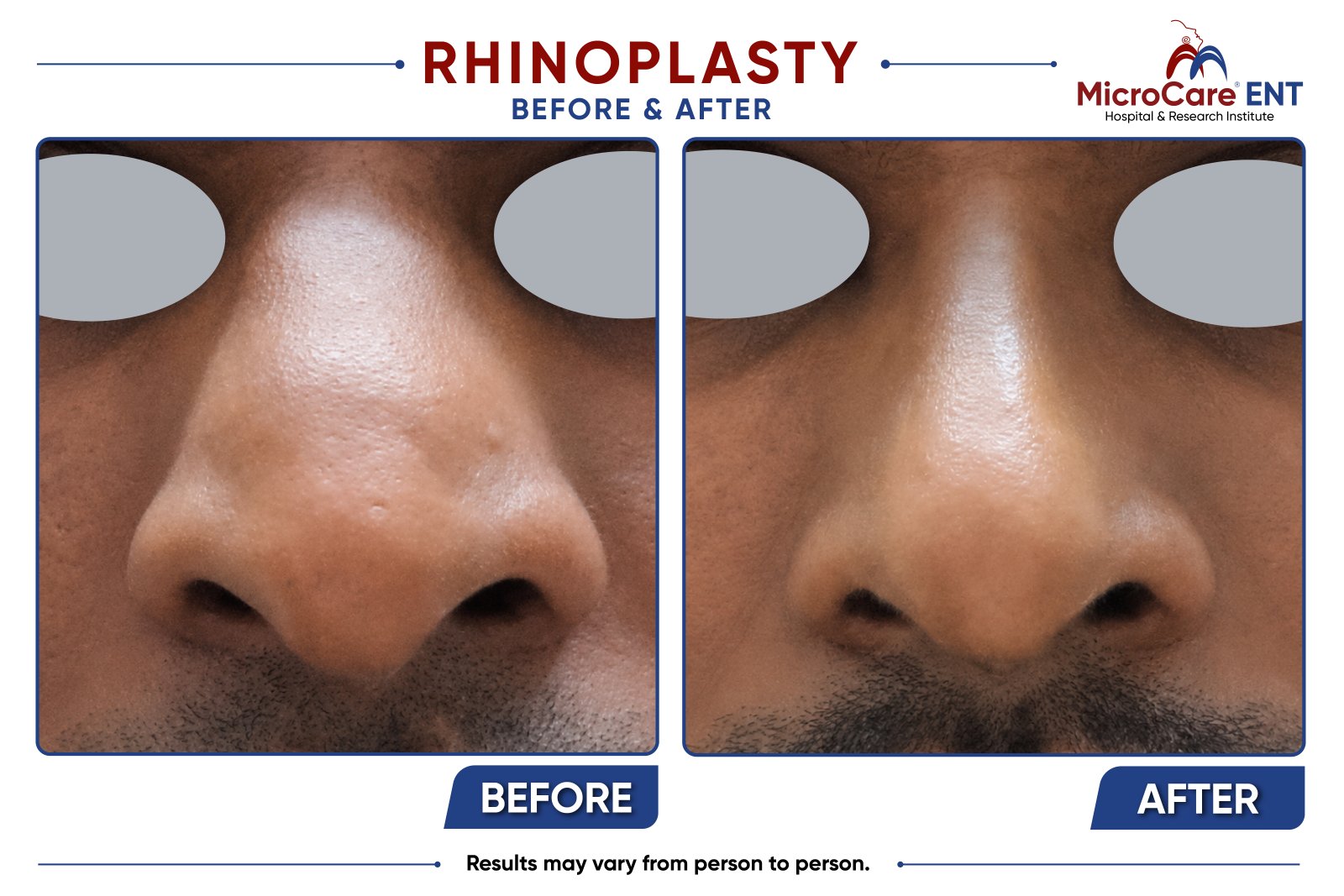
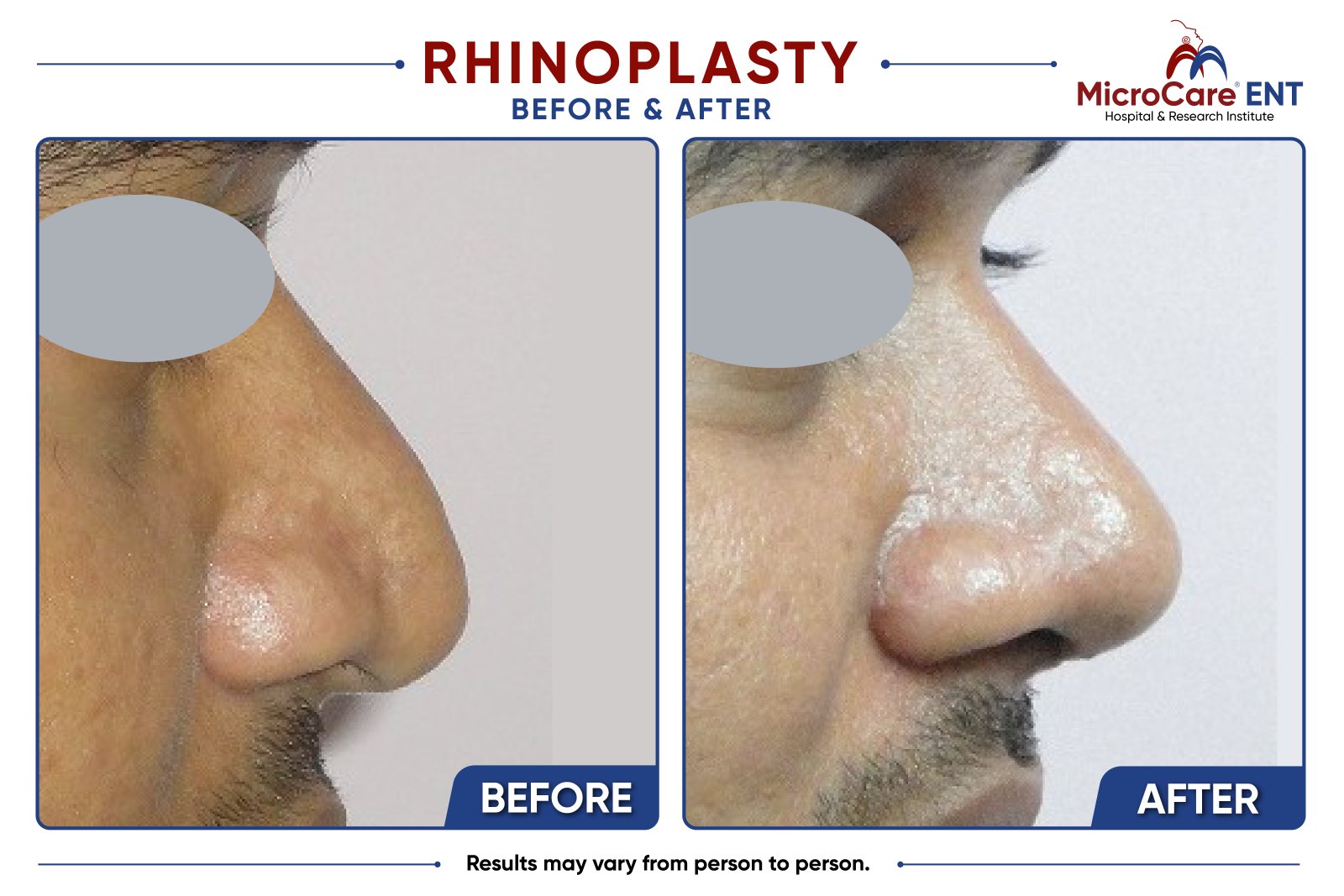
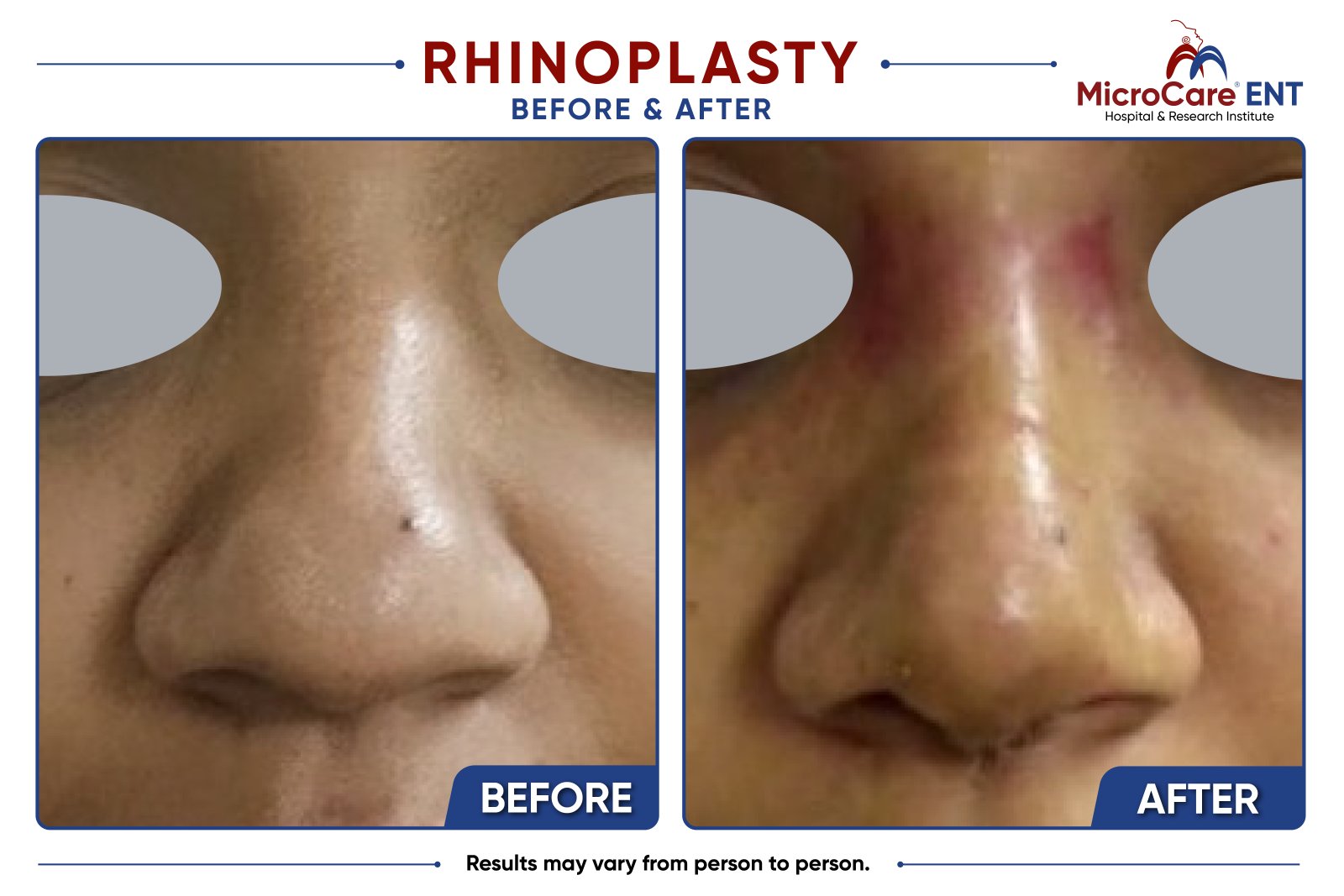
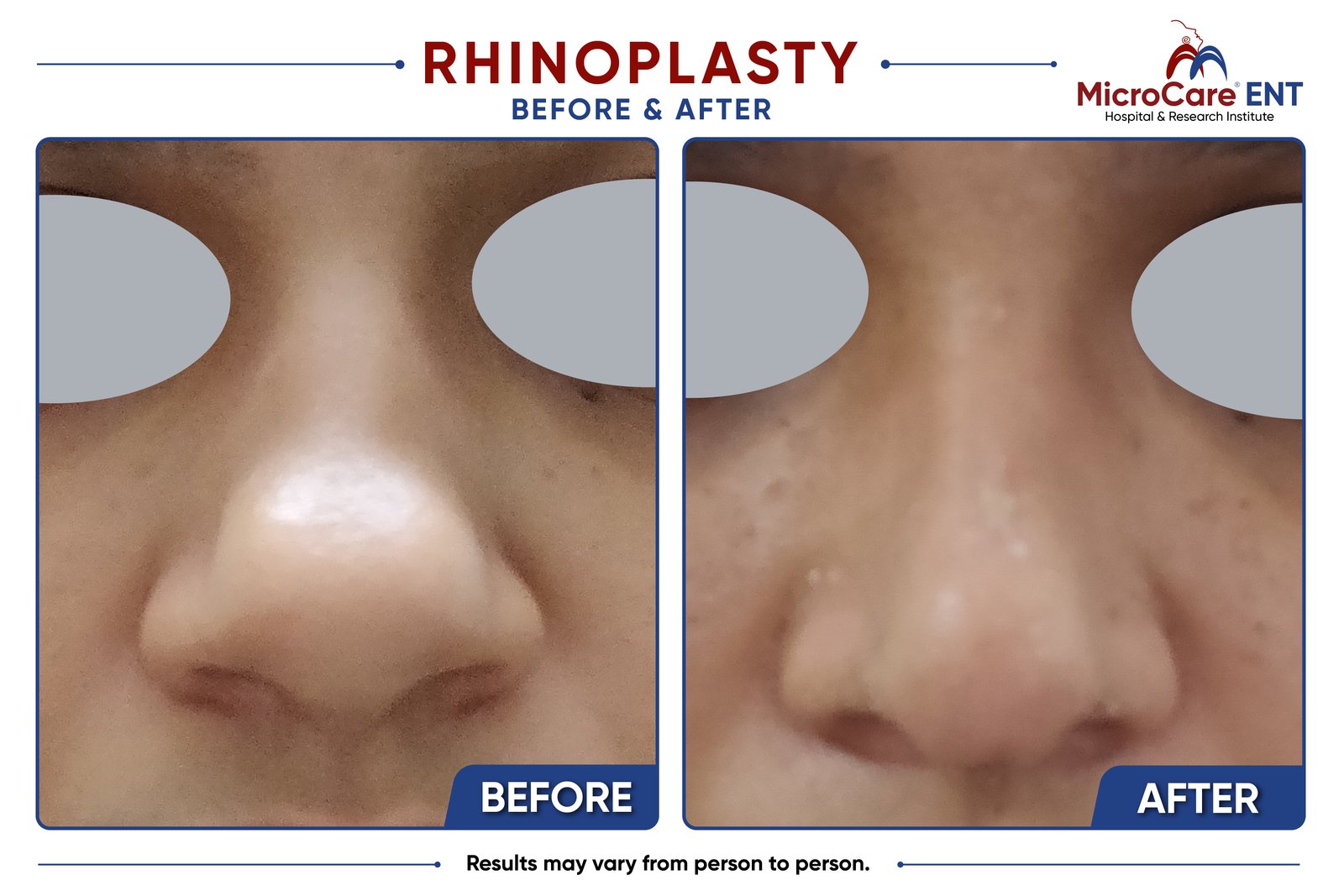
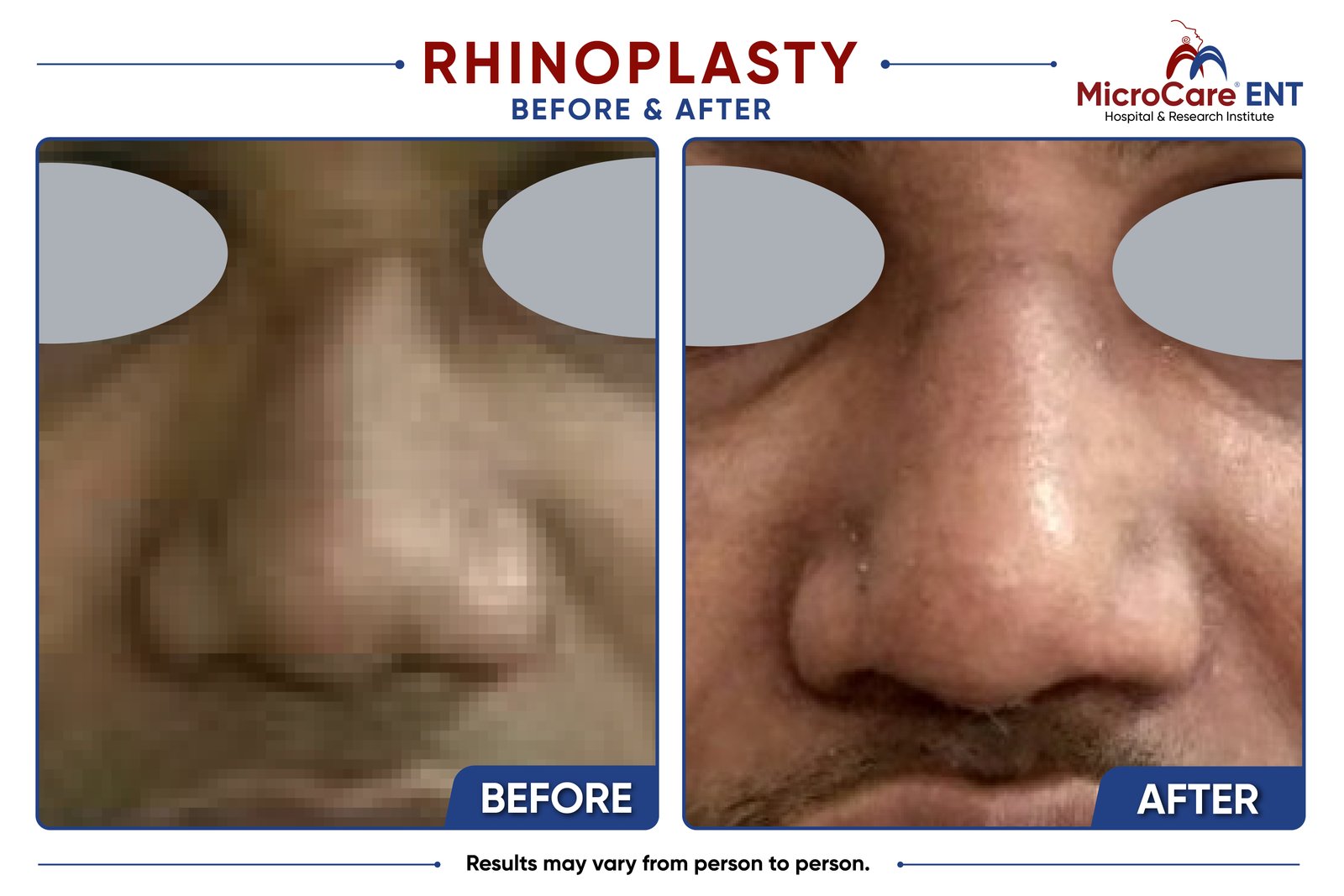
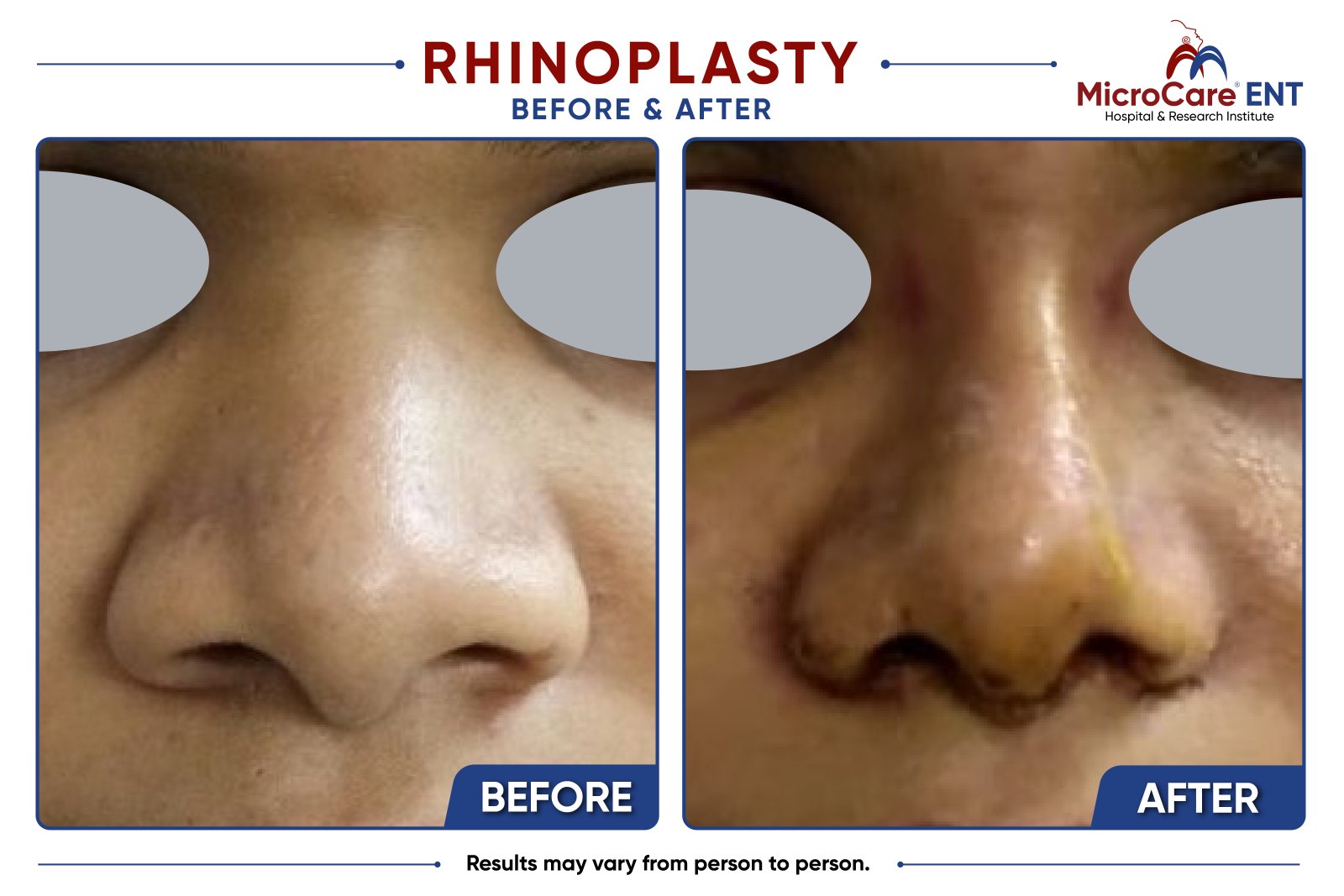
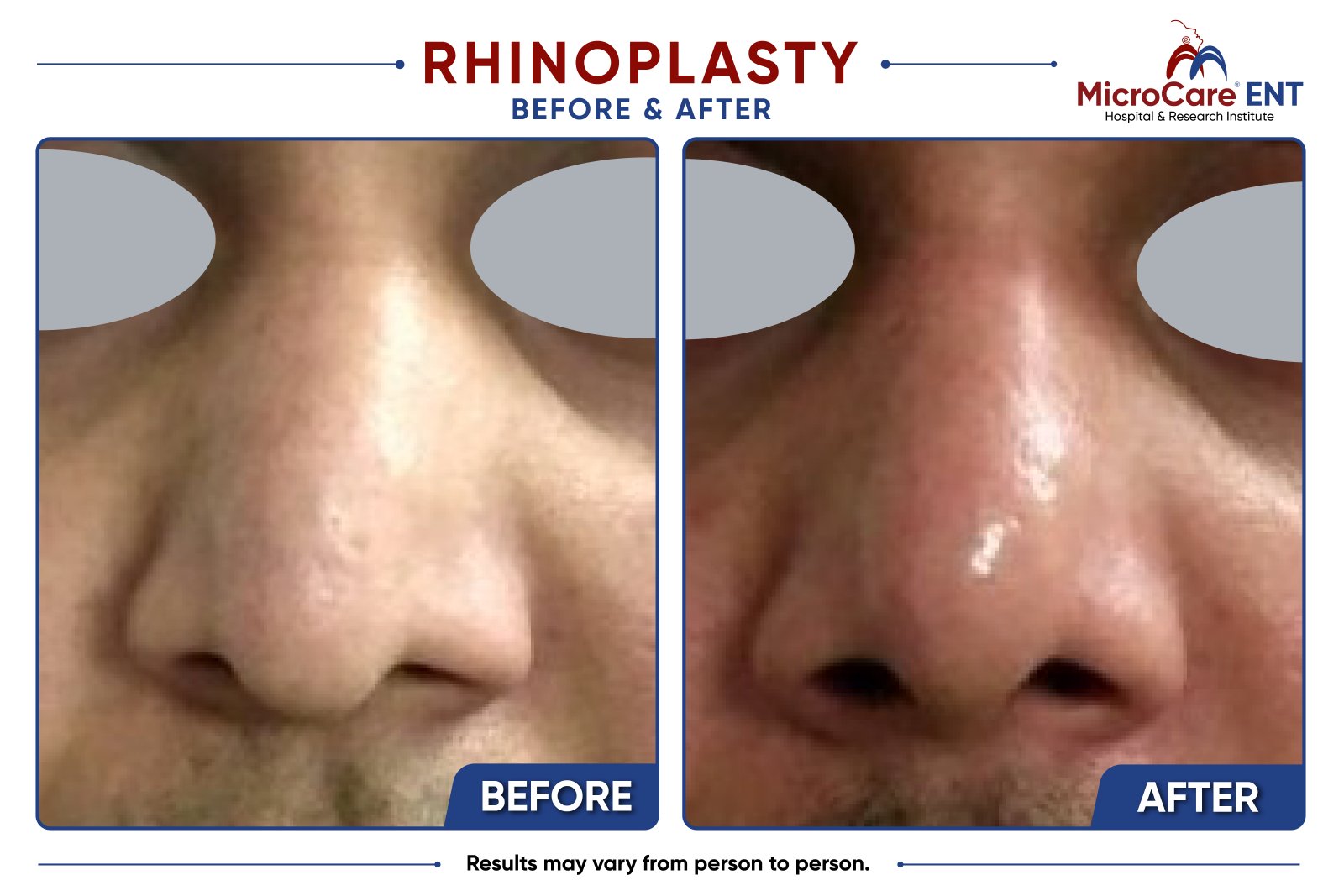
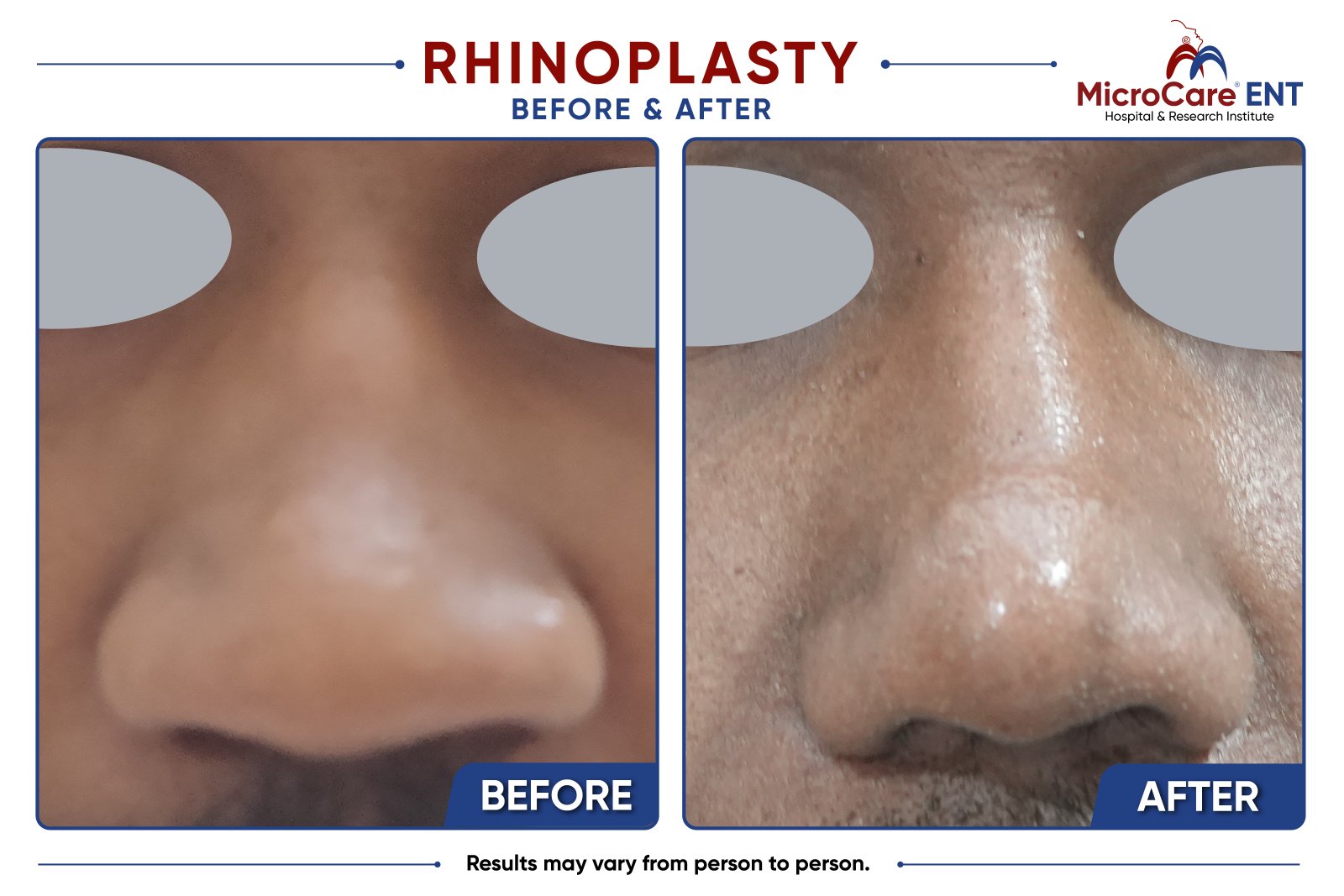
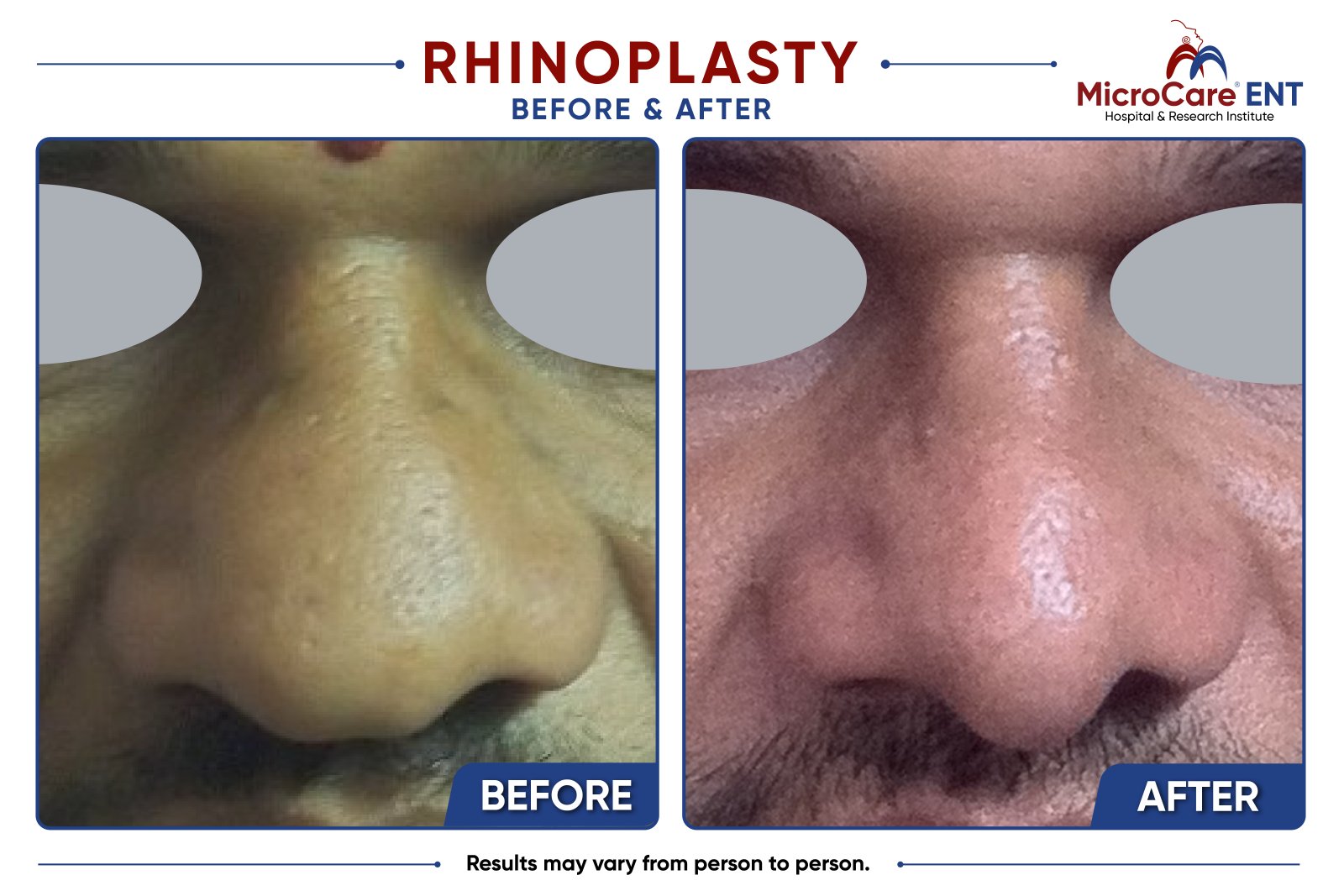
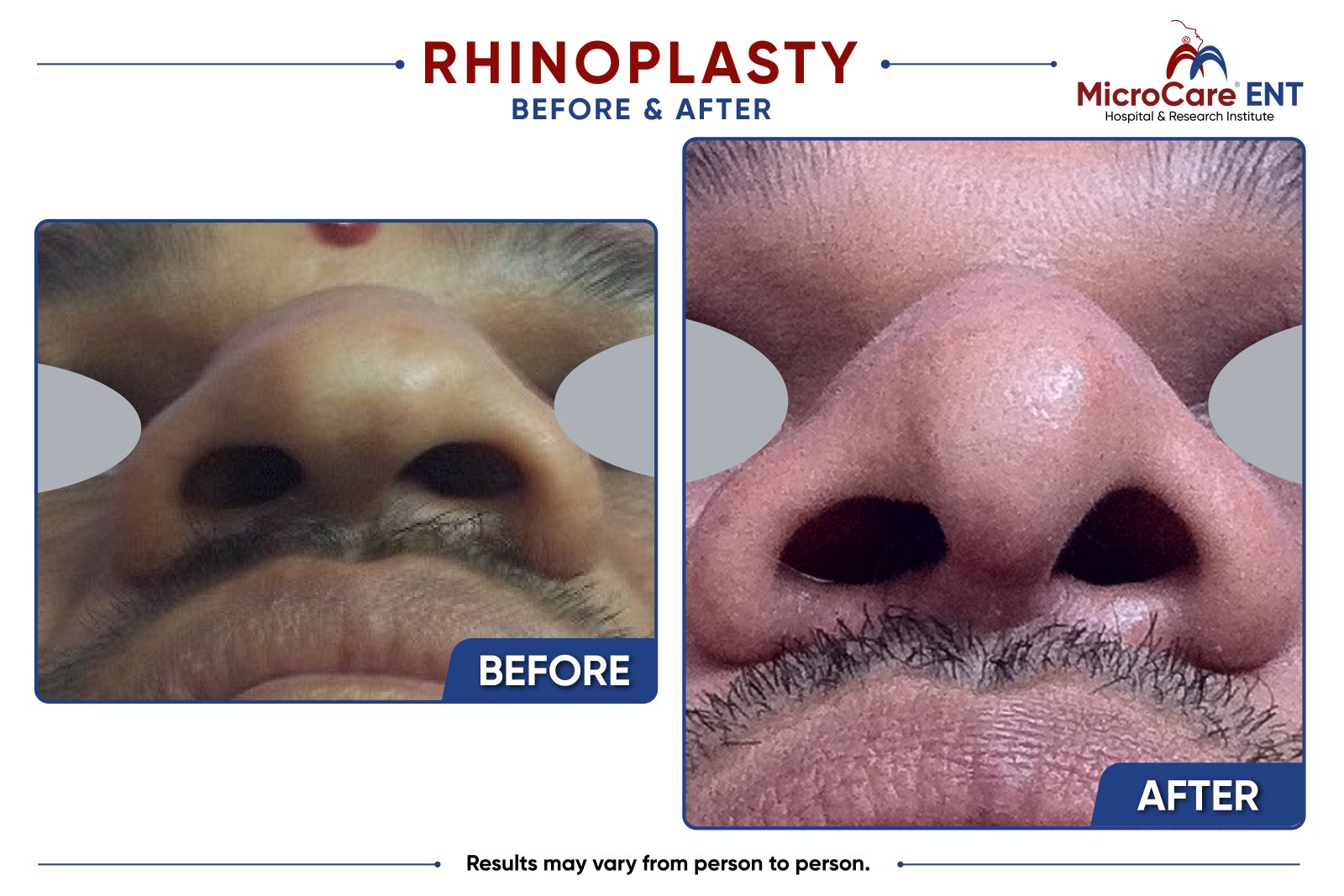
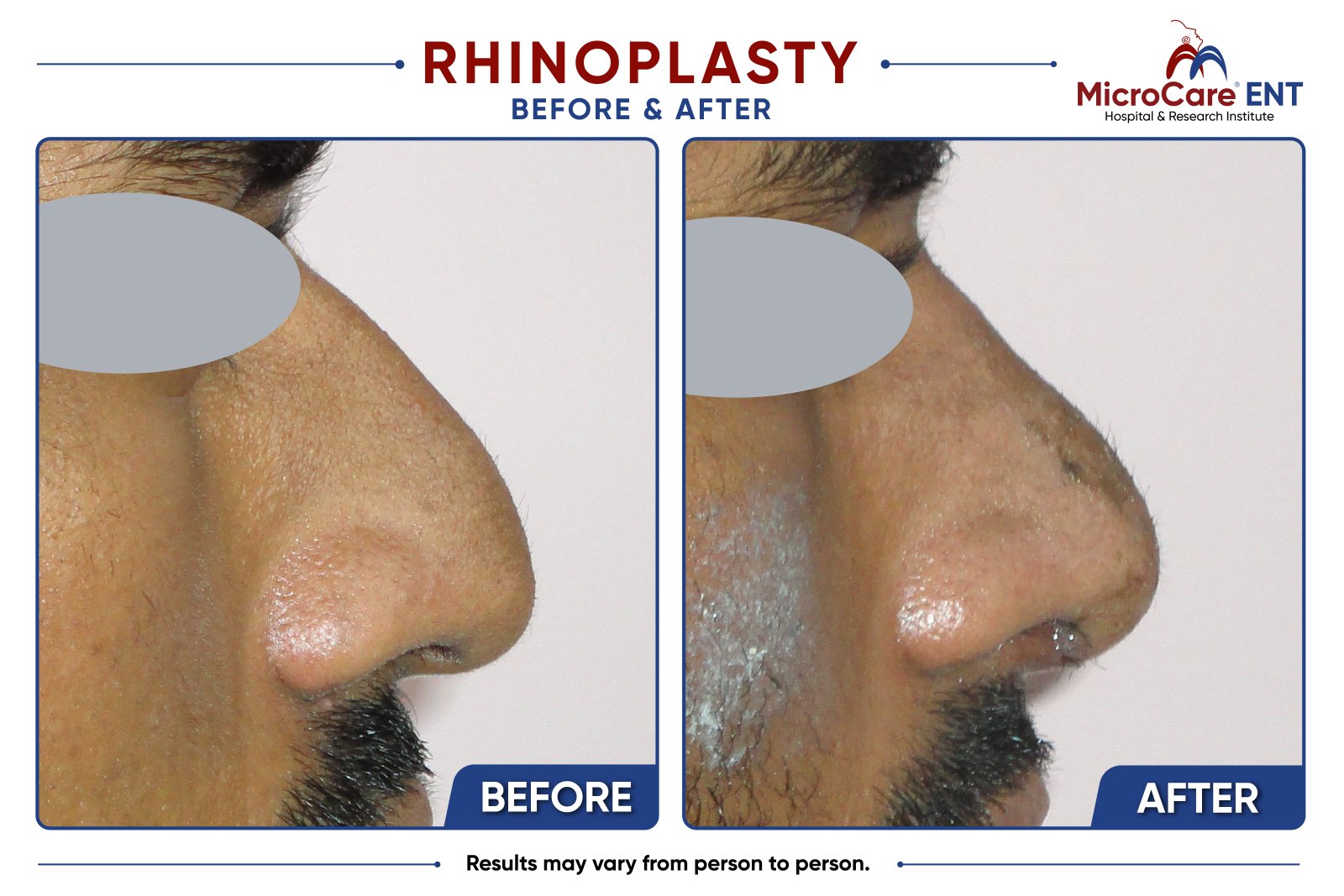
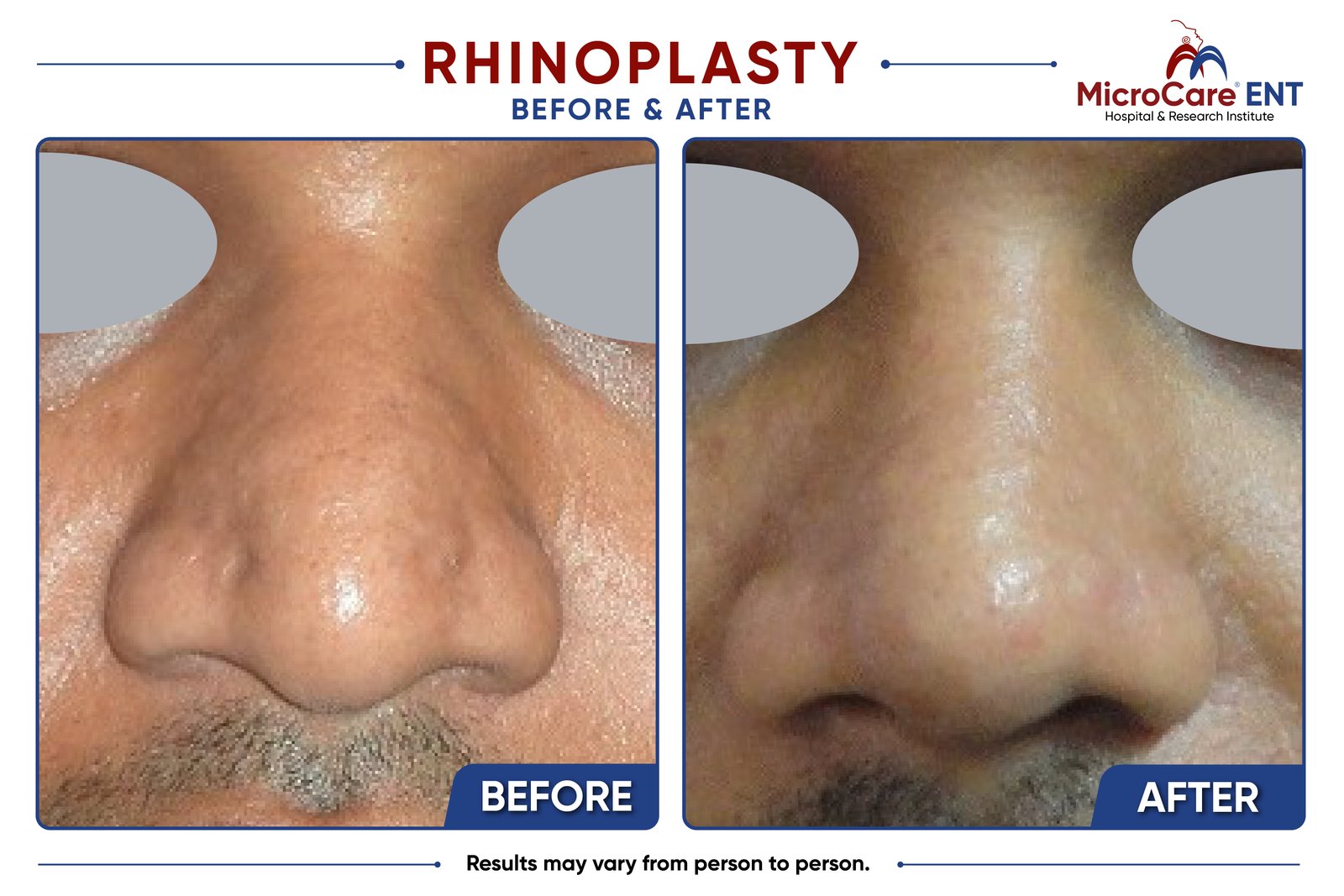
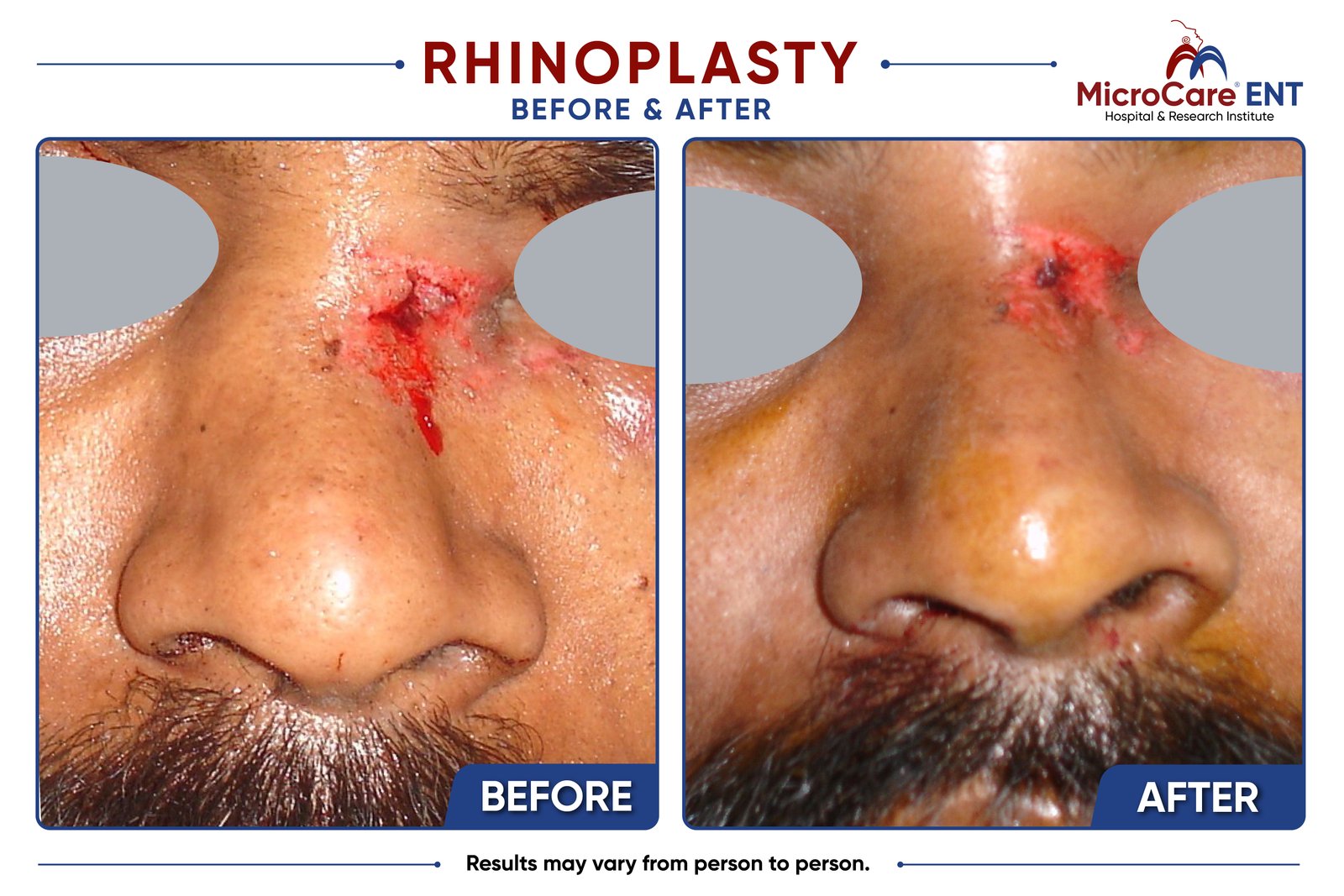
Photographs of patients of MicroCare ENT, shown with their consent. Every nose is different and individual results vary. See all before and after pictures.
Treatment options
Closed reduction
The displaced bones are gently moved back into line, usually without any cuts on the skin, and held with a splint. It works best within about two weeks of the injury. A septal haematoma, if present, is drained at the same time.
Post-traumatic septorhinoplasty
Once the nose has healed, the bones are reset with controlled osteotomies, the septum is rebuilt, the valves are reinforced and lost support is replaced with grafts from your own septum, ear or rib.
SeptorhinoplastyHow we assess your nose
Nasal endoscopy
A fine camera checks the septum, valves and turbinates for damage and blockage.
CT scan
Where needed, a CT scan shows the fracture lines and any other facial bone injury.
Photographs
Standard photographs, and photos from before the injury if you have them, guide the plan.
Recovery after correction
- A splint protects the nose
- A blocked feeling is normal
- Splint removed at about day 7
- Desk work from 7 to 10 days
- Most bruising settles by 2 weeks
- Avoid contact sports and heavy exercise for at least 4 to 6 weeks
- Breathing keeps improving
- Swelling settles completely
- Follow-up for up to one year
Cost and insurance
The cost depends on whether the injury is recent or healed, how many structures are involved, and whether grafts are needed.
Why choose MicroCare ENT

ENT surgeons for nasal injuries
Led by Prof. Dr. Sriprakash Vinnakota, with more than 26 years of experience treating nasal fractures and the airway.
Shape and breathing together
The septum, valves and bones are corrected in the same plan, using your own cartilage for support.
A full hospital
An NABH-accredited hospital with modular operation theatres, a full-time anaesthesia team and an emergency line.
Honest, patient-centred care
Realistic advice, transparent quotes, help with insurance paperwork and follow-up for up to one year.

Prof. Dr. Sriprakash Vinnakota
MS (ENT, Head & Neck) · Chief Rhinoplasty Surgeon, Centre for Advanced ENT, Head & Neck Surgery, MicroCare ENT Hospital & Research Institute
More than 26 years in ENT surgery, with endoscopic sinus surgery training at the University of Graz, Austria, and rhinoplasty training at Marien Hospital, Stuttgart, under Prof. Dr. Wolfgang Gubisch.
Frequently asked questions
How soon should I see a doctor after a nose injury?
As soon as possible, ideally within the first few days. An ENT surgeon needs to check inside the nose for a blood clot on the septum, which must be drained urgently, and to decide whether a broken nose should be set while the bones can still be moved easily.
Can a broken nose be fixed without major surgery?
Often, yes, if it is seen early. Displaced nasal bones can usually be set back in place (closed reduction) once the first swelling has settled, typically within about two weeks of the injury. After that, the bones start to heal in their new position.
My injury happened years ago. Can it still be corrected?
Yes. A nose that has healed crooked, flattened or blocked can be corrected with septorhinoplasty at any time after it has fully healed, usually at least 6 months after the injury.
Will my breathing improve as well as the shape?
In most cases the injury has damaged the septum or the nasal valves too, so the operation is planned to correct both. Breathing often improves once the internal swelling settles.
What about children with nose injuries?
Children should be seen by an ENT surgeon promptly, because an injured septum can affect how the nose grows. Major reconstruction is usually delayed until growth is complete unless breathing or the septum needs earlier treatment.
Is post-accident nose surgery covered by insurance?
Correction of an injury that affects breathing or the structure of the nose is usually considered medically necessary, so it is often eligible for insurance or TPA cover. Purely cosmetic changes are self-paid. We provide the clinical reports and endoscopy records your insurer needs.
What is the recovery like?
The splint is removed after about 7 days, desk work usually resumes in 7 to 10 days, and most bruising settles in 2 weeks. Contact sports and heavy exercise are avoided for at least 4 to 6 weeks, and the final shape develops over 6 to 12 months.
See also crooked nose correction, functional rhinoplasty and our FAQs.
Begin with a conversation
Meet Prof. Dr. Sriprakash Vinnakota to talk about your injury, your breathing and how your nose looks now. Leave your name and number and we will open WhatsApp with your details filled in, or call +91 94949 40725.