
Build height and definition, in balance with your face.
A small, flat or under-projected nose can leave the face looking out of balance. Augmentation rhinoplasty raises the bridge and projects the tip, using your own cartilage, while our ENT-led team protects, and often improves, your breathing.
Medically reviewed by Prof. Dr. Sriprakash Vinnakota, MBBS, MS (ENT, Head & Neck), Chief Rhinoplasty Surgeon, Centre for Advanced ENT, Head & Neck Surgery, MicroCare ENT Hospital & Research Institute.
- Also called
- Augmentation rhinoplasty
- Grafts
- Septum, ear or rib
- Operation time
- 2 to 4 hours
- Splint removed
- About day 7
- Work or study
- 7 to 10 days
- Final shape
- Up to 12 months
What is small nose correction?
Small nose correction, or augmentation rhinoplasty, adds structure to a nose that is under-developed, short, flat or sunken. Its goals are to:
- Raise the height of a low bridge.
- Strengthen the middle third so the bridge looks defined.
- Project the tip so it no longer looks blunt or flat.
- Fill a sunken bridge after injury or earlier surgery.
- Balance the nose with your forehead and chin.
What we augment
Dorsal augmentation
Raises a low or flat bridge for a clearer, straighter profile.
Tip projection and rotation
Brings a blunt tip forward and sets a pleasing angle between the nose and upper lip.
Radix augmentation
Adjusts the root of the nose between the eyes so the bridge starts at the right height.
Alar base refinement
Balances nostril width with the new height of the nose.
Broad nose correctionBefore you decide, read Prof. Dr. Vinnakota's book Your Best Nose, which answers 100 common rhinoplasty myths.
Who needs augmentation?
A naturally small nose
An under-developed nose, common in some ethnic profiles.
Ethnic rhinoplastyFlat bridge, wide base
A low bridge with a wide nostril base.
A blunt or drooping tip
A tip that lacks projection or support.
Over-reduction
A nose made too small, scooped or pinched by earlier rhinoplasty.
Revision rhinoplastyValve collapse
A weak, narrow nose that collapses when you breathe in.
Functional rhinoplastyWhy breathing matters in augmentation
A small nose can also be structurally weak, with narrow nostrils or valves. Building it up properly can improve airflow as well as appearance:
- Raising the bridge lifts the skin and can open a narrow airway.
- A firm cartilage framework resists the pull of the skin and supports the valves.
- A deviated septum or enlarged turbinates can be corrected at the same time.
- Proportions are planned from your face, to avoid an operated look.
- Your own tissue avoids the extrusion and infection problems that can occur with silicone implants.
Who is a good candidate?
- A low or flat bridge.
- A nose that looks small for your face.
- A tip that lacks projection or support.
- A pinched or saddle shape after earlier surgery.
- Breathing difficulty from valve collapse.
- Age 18 or over, when facial growth is complete.
- Realistic expectations.
Patient results
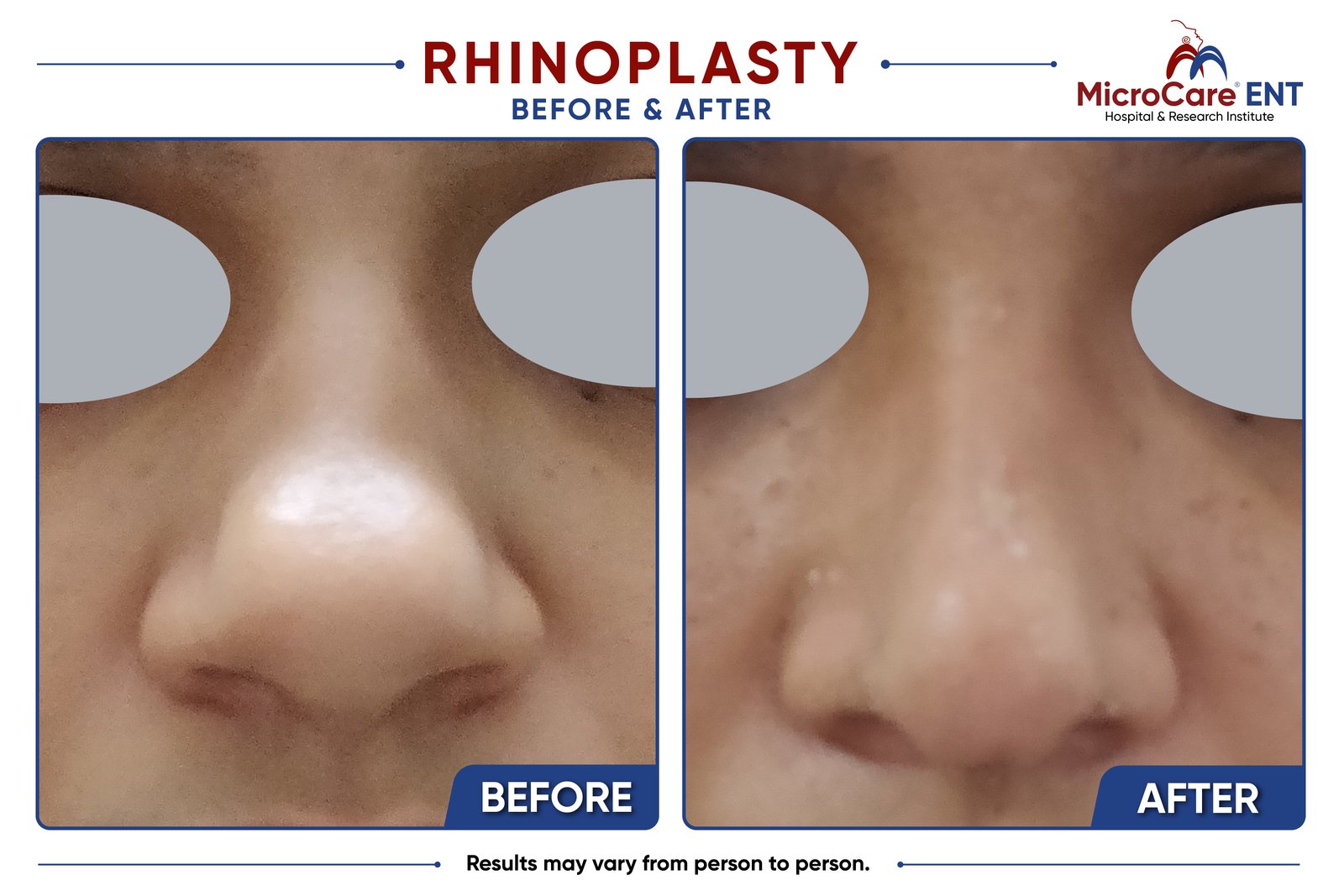
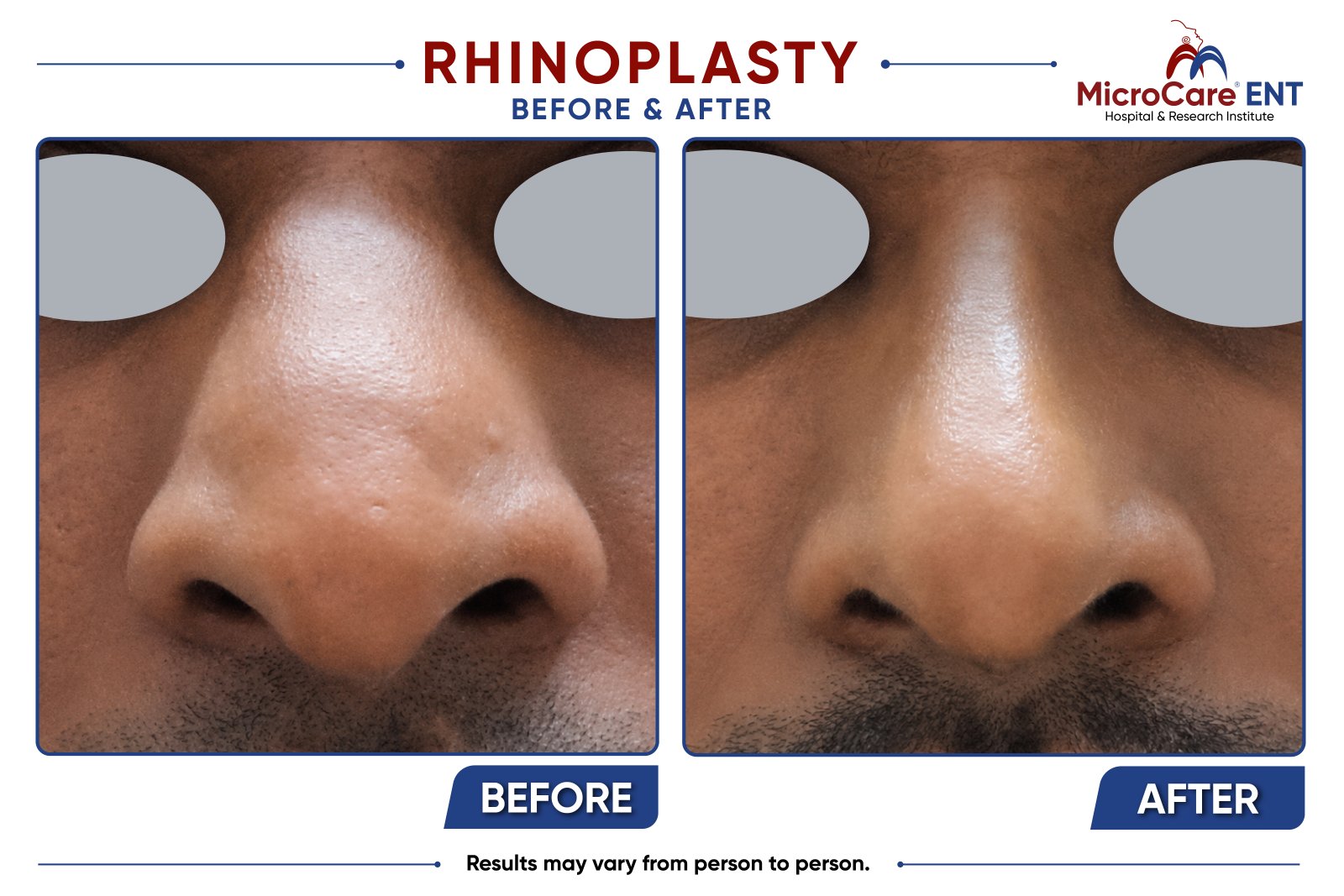
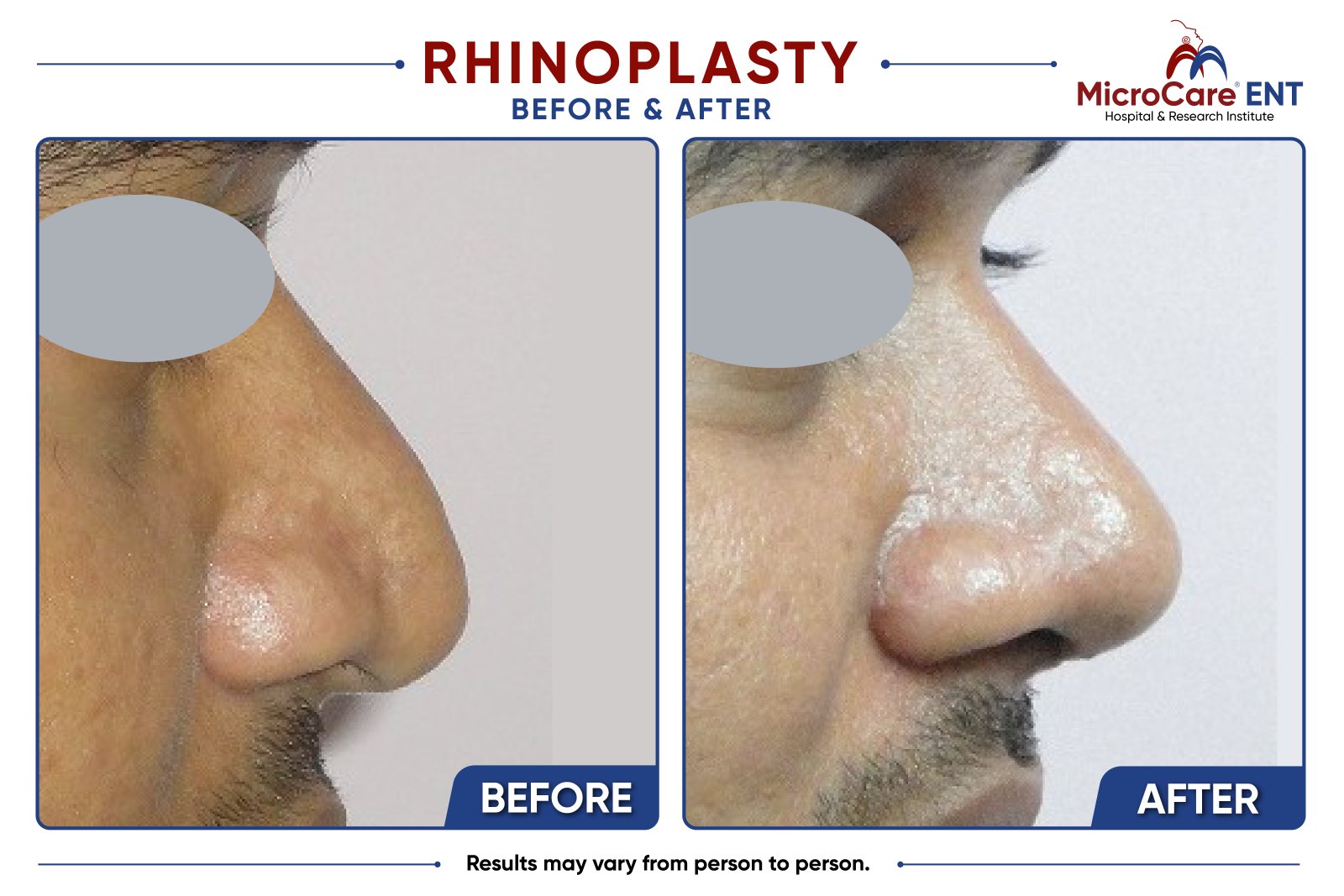
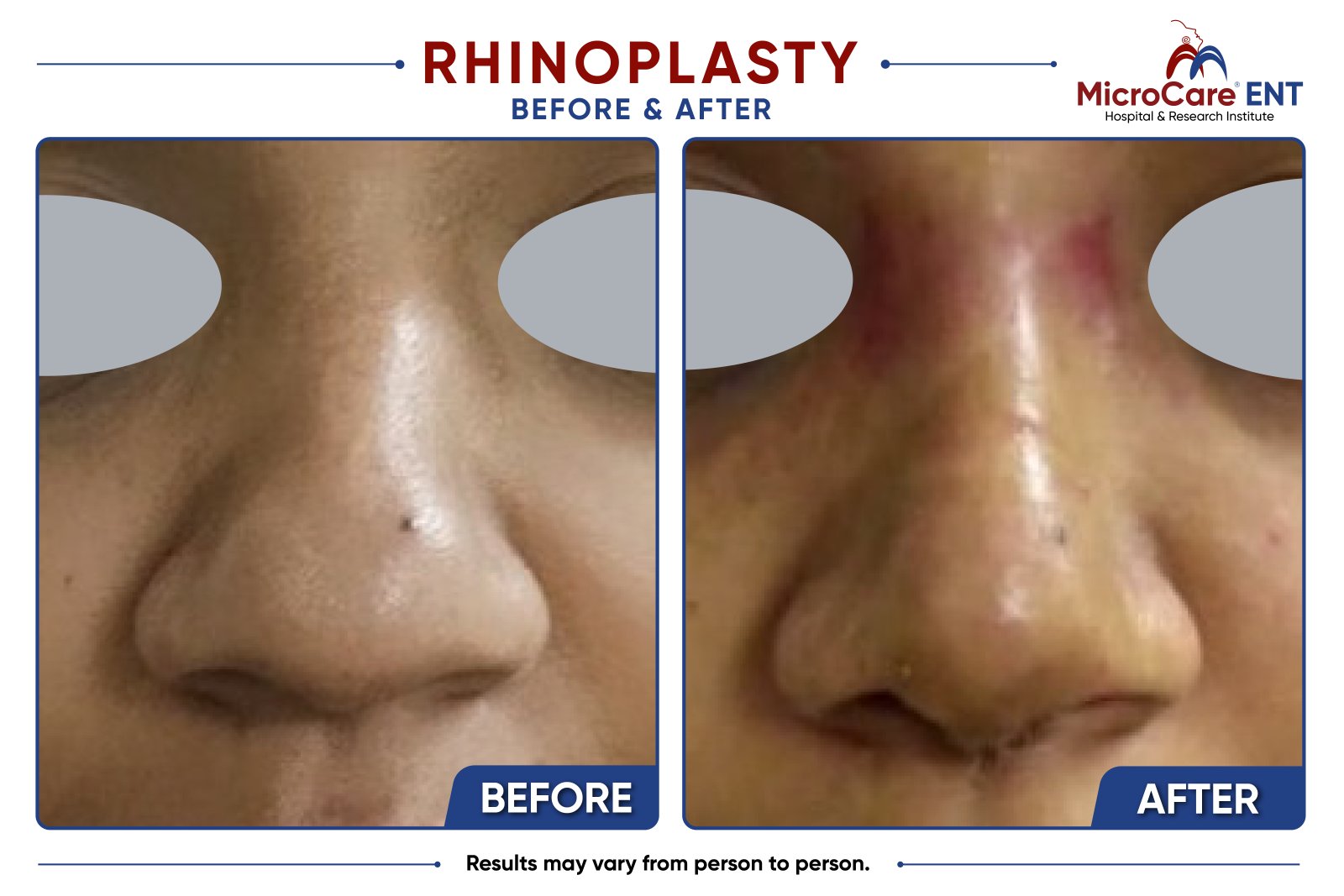
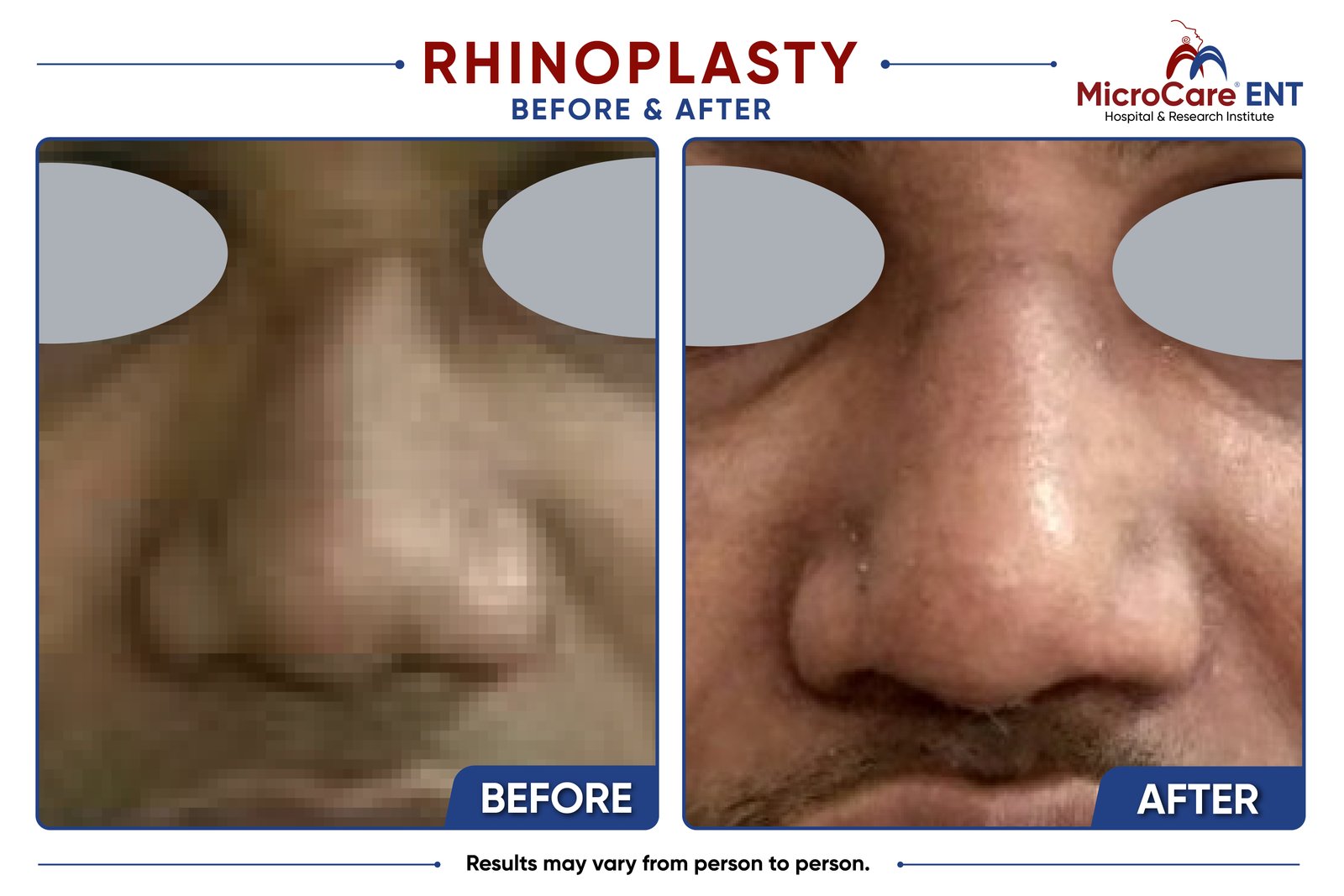
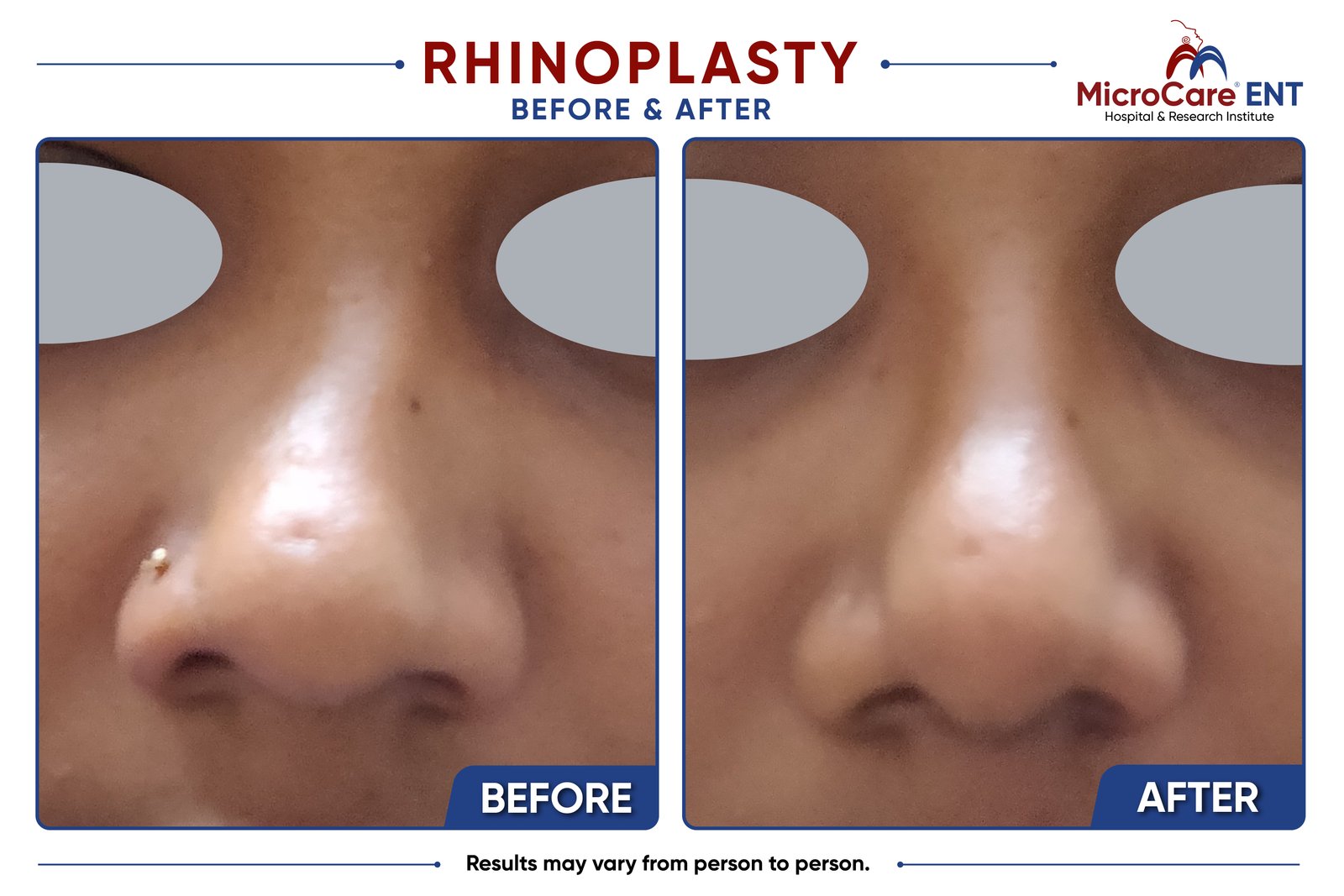
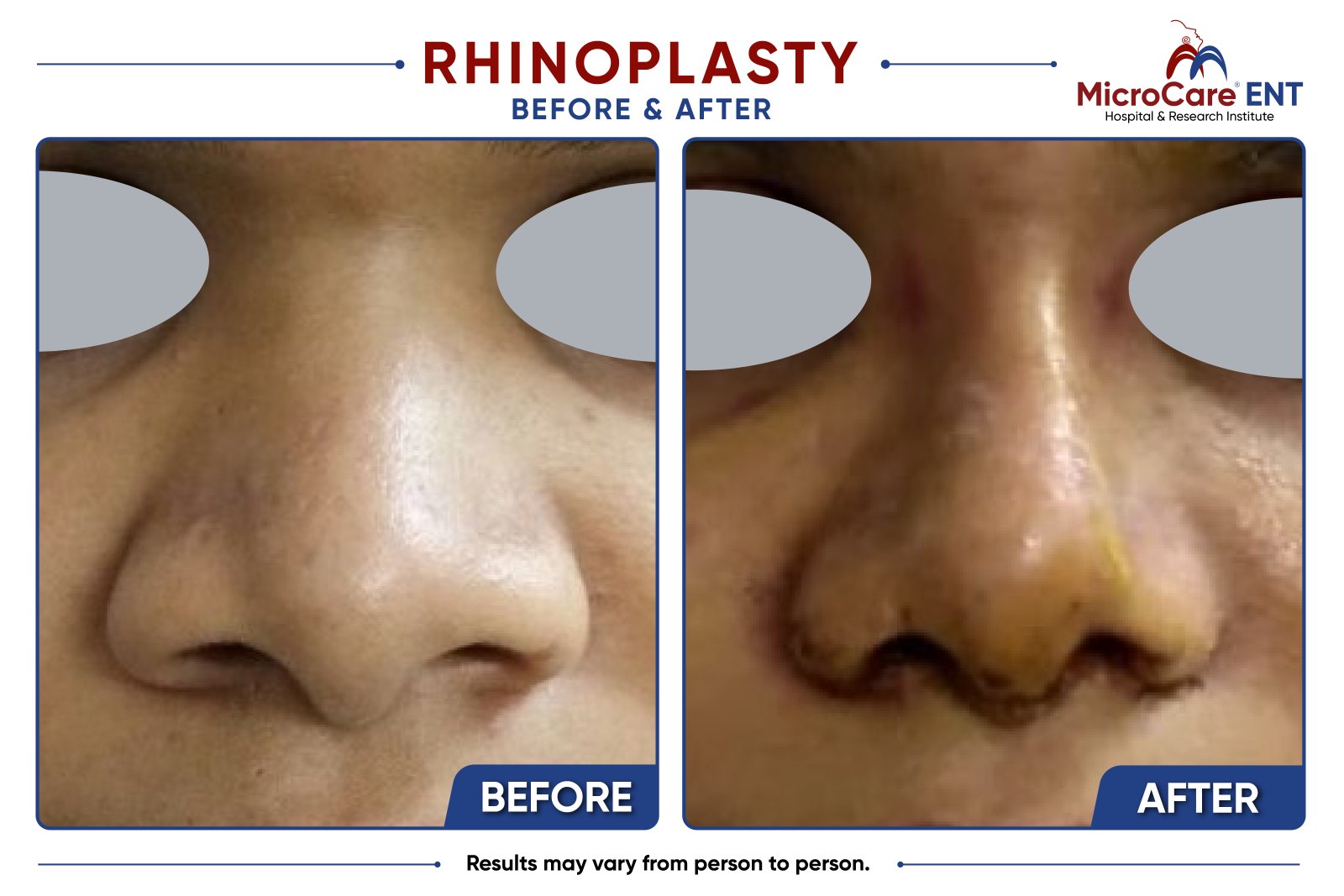
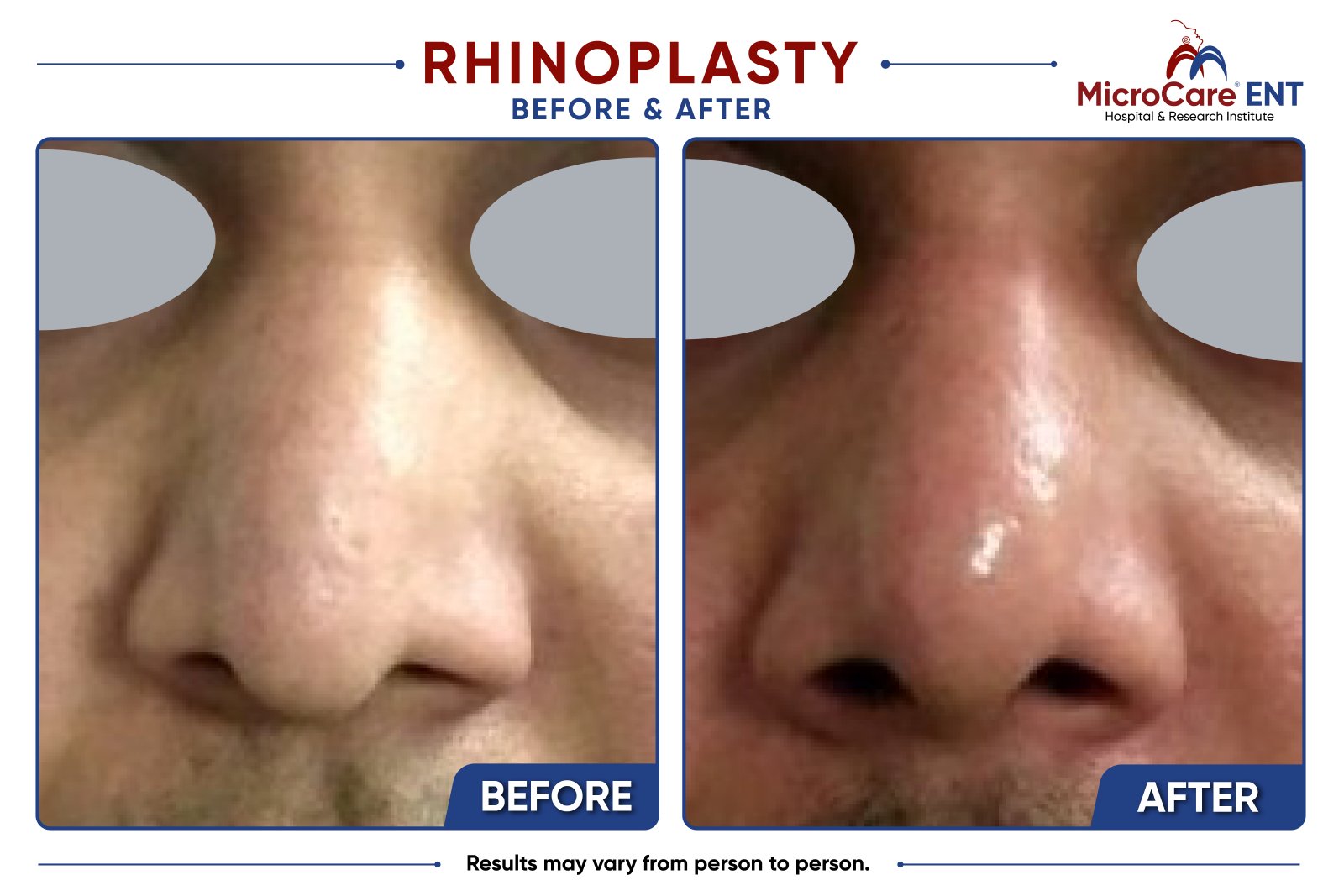
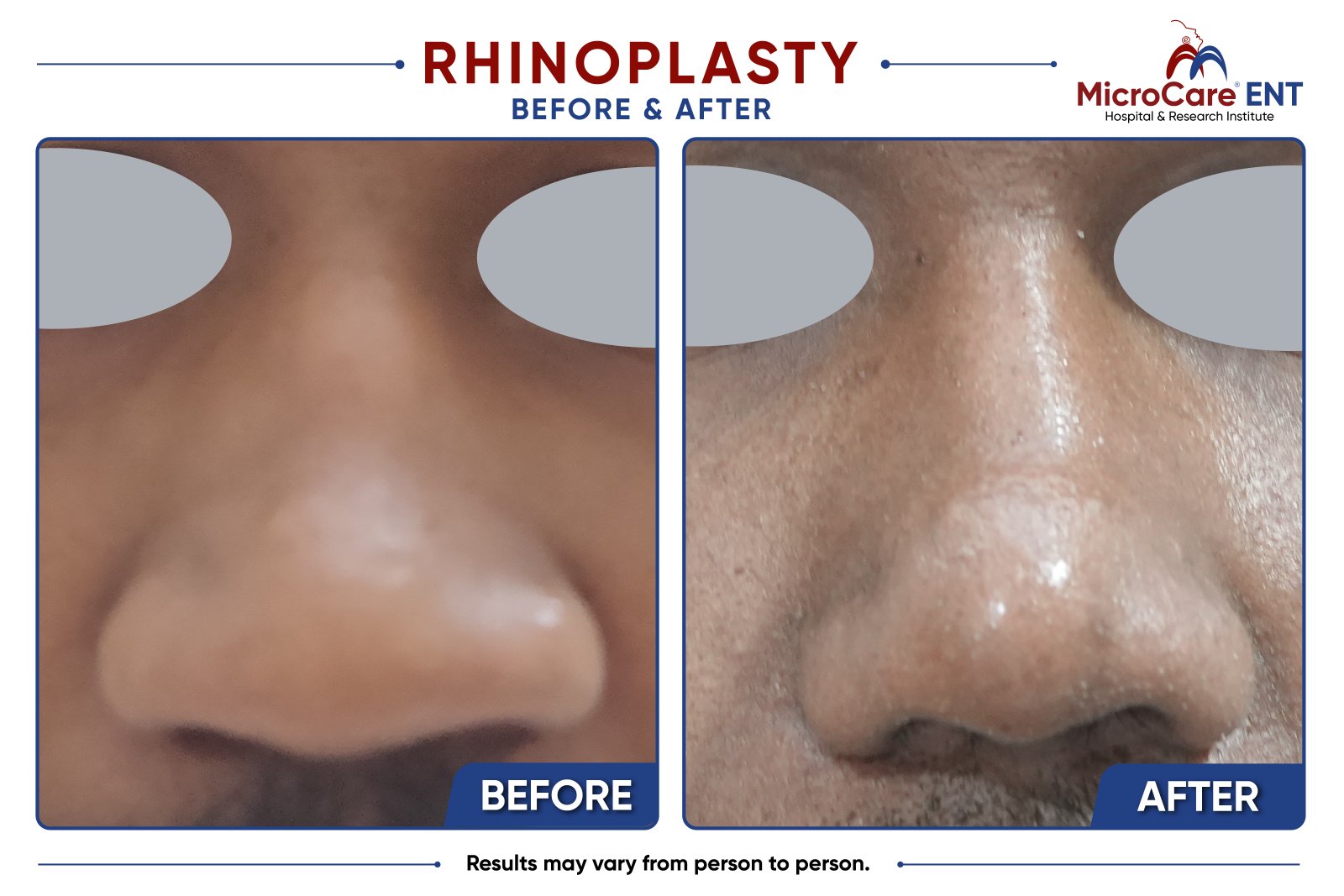
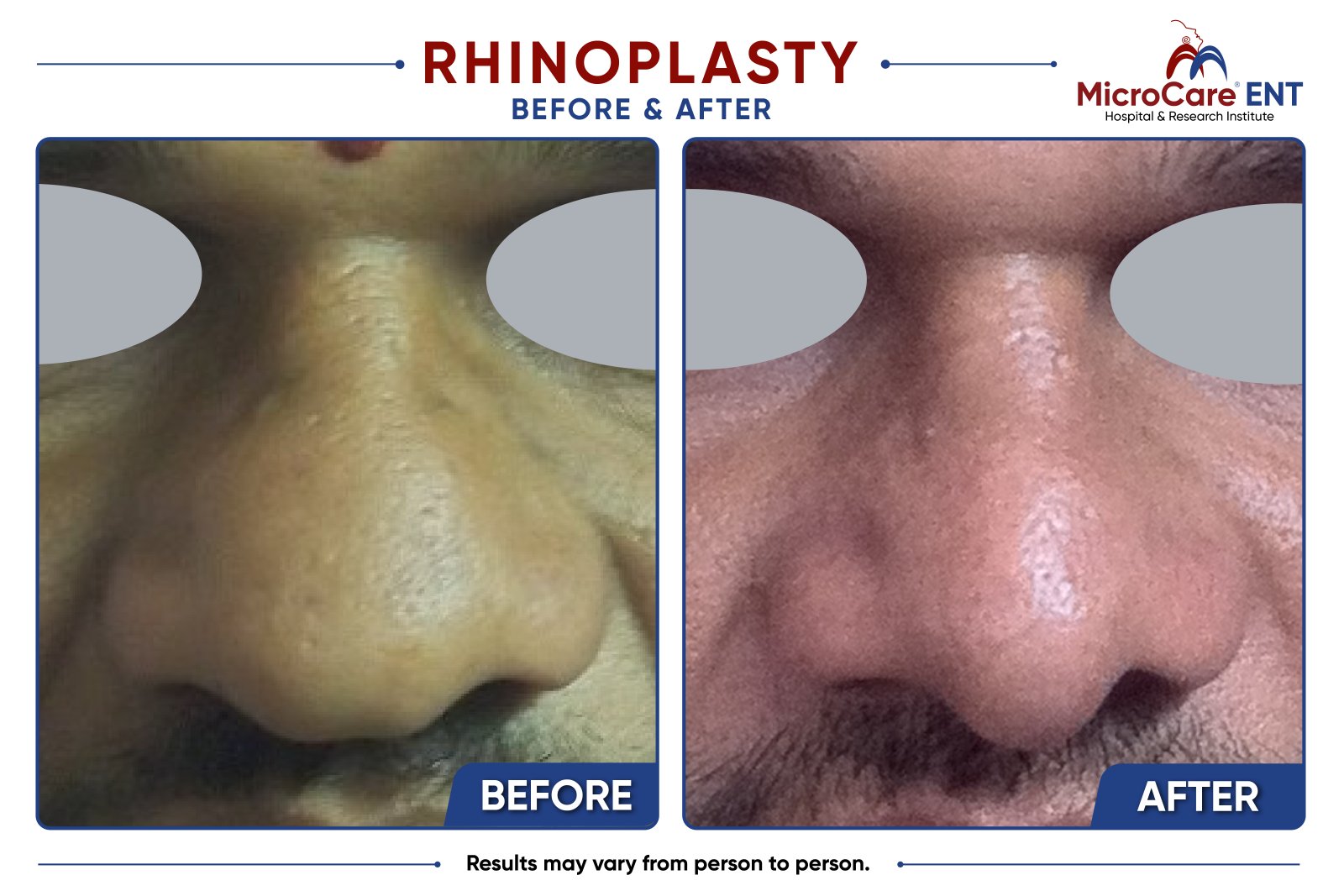
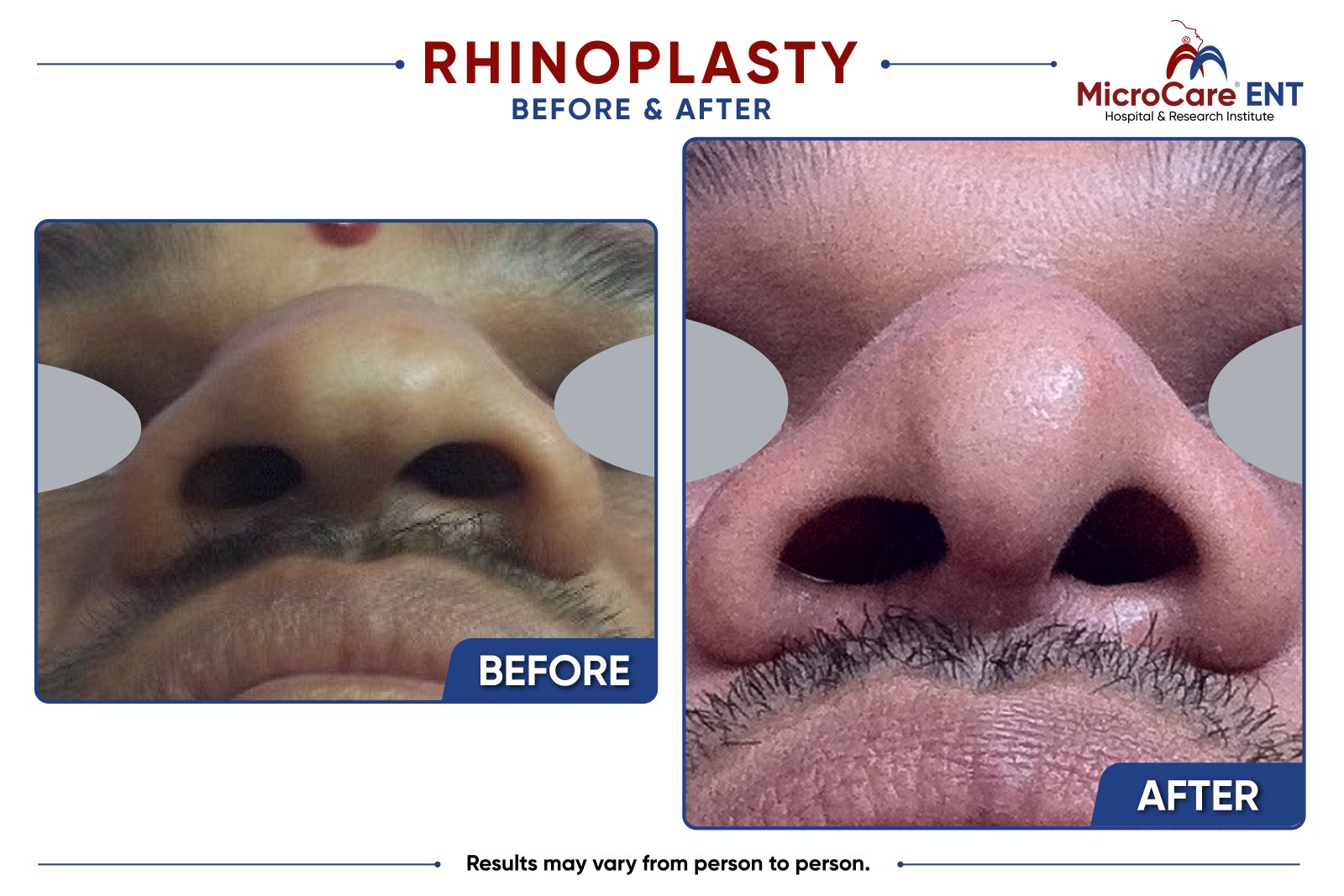
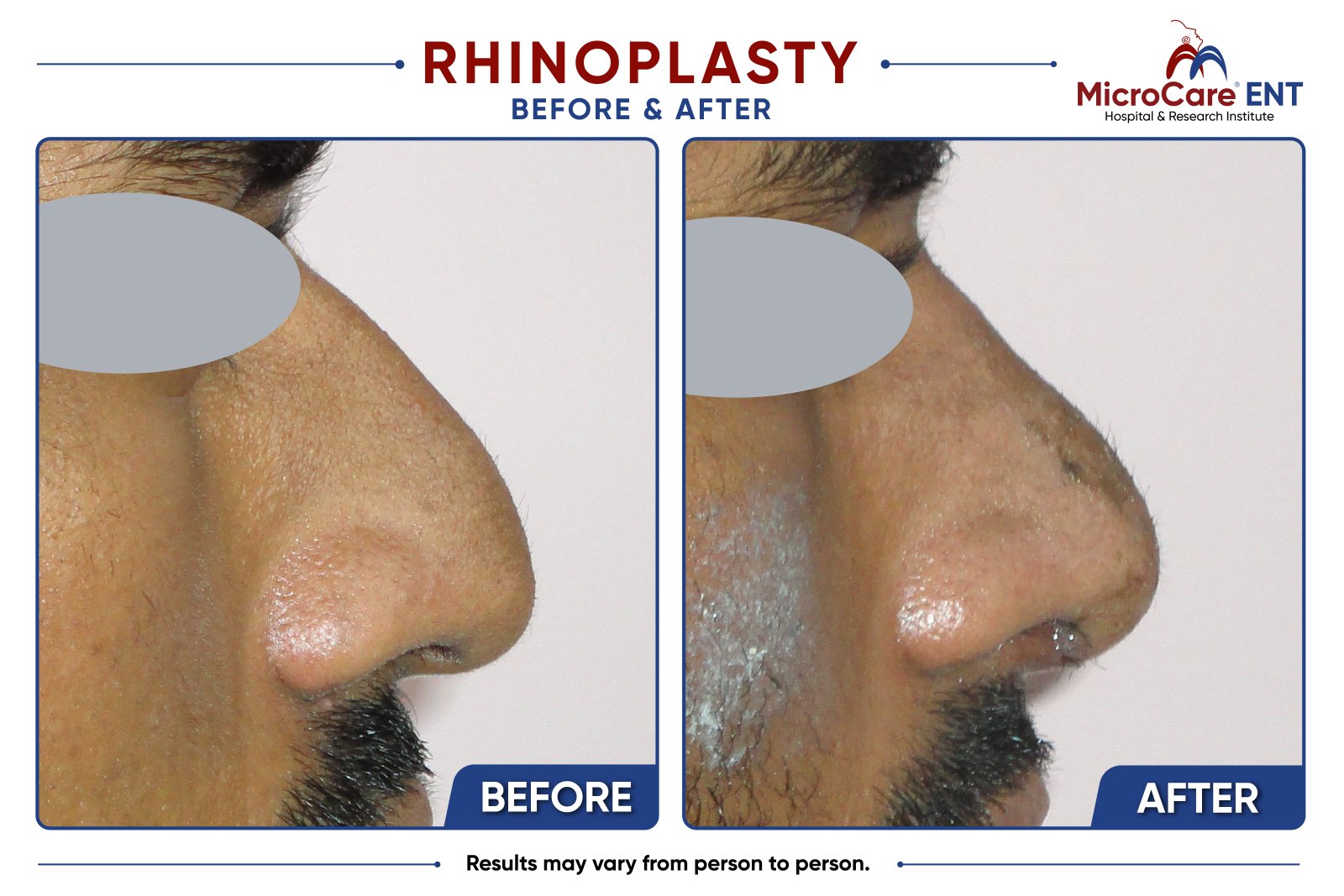
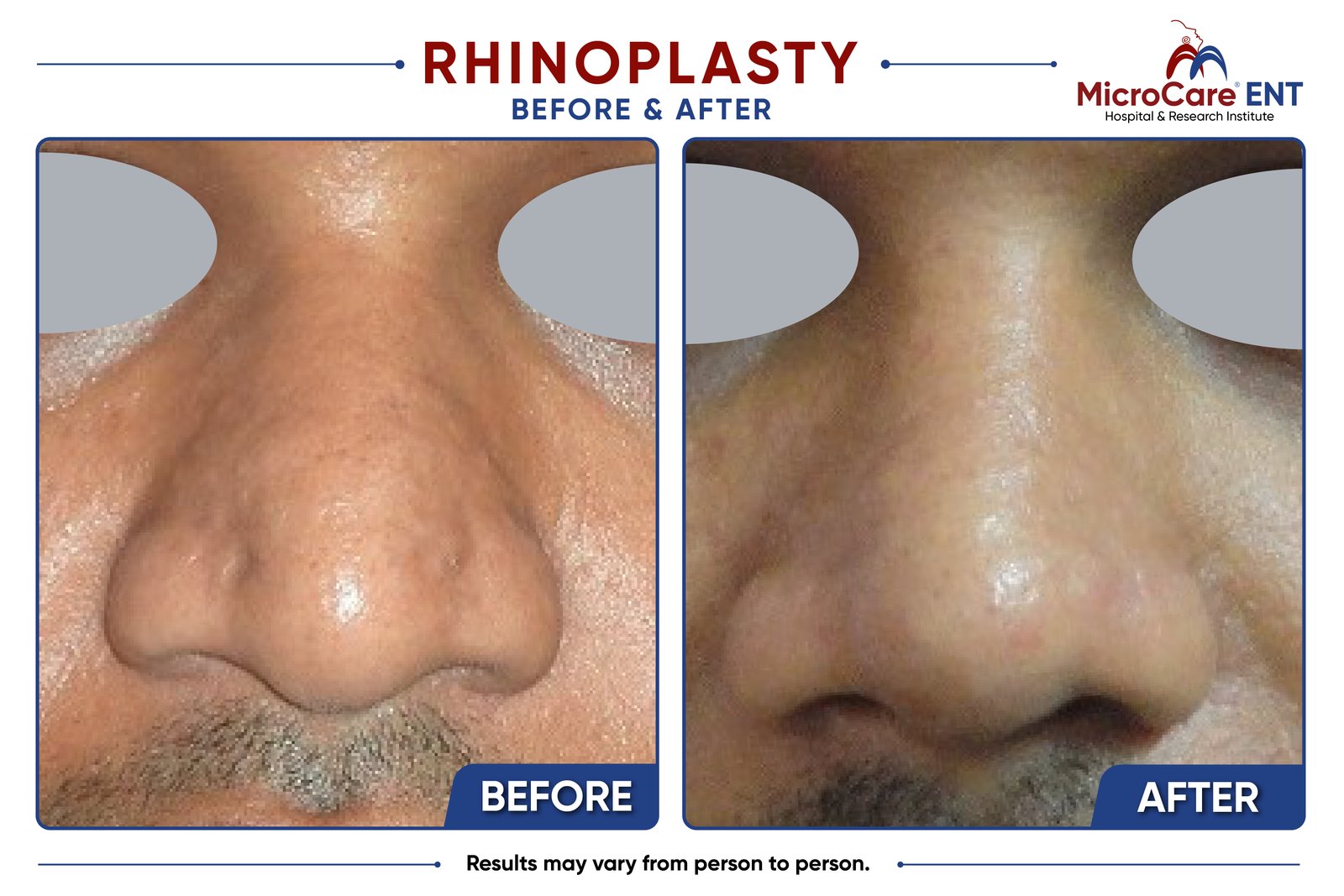
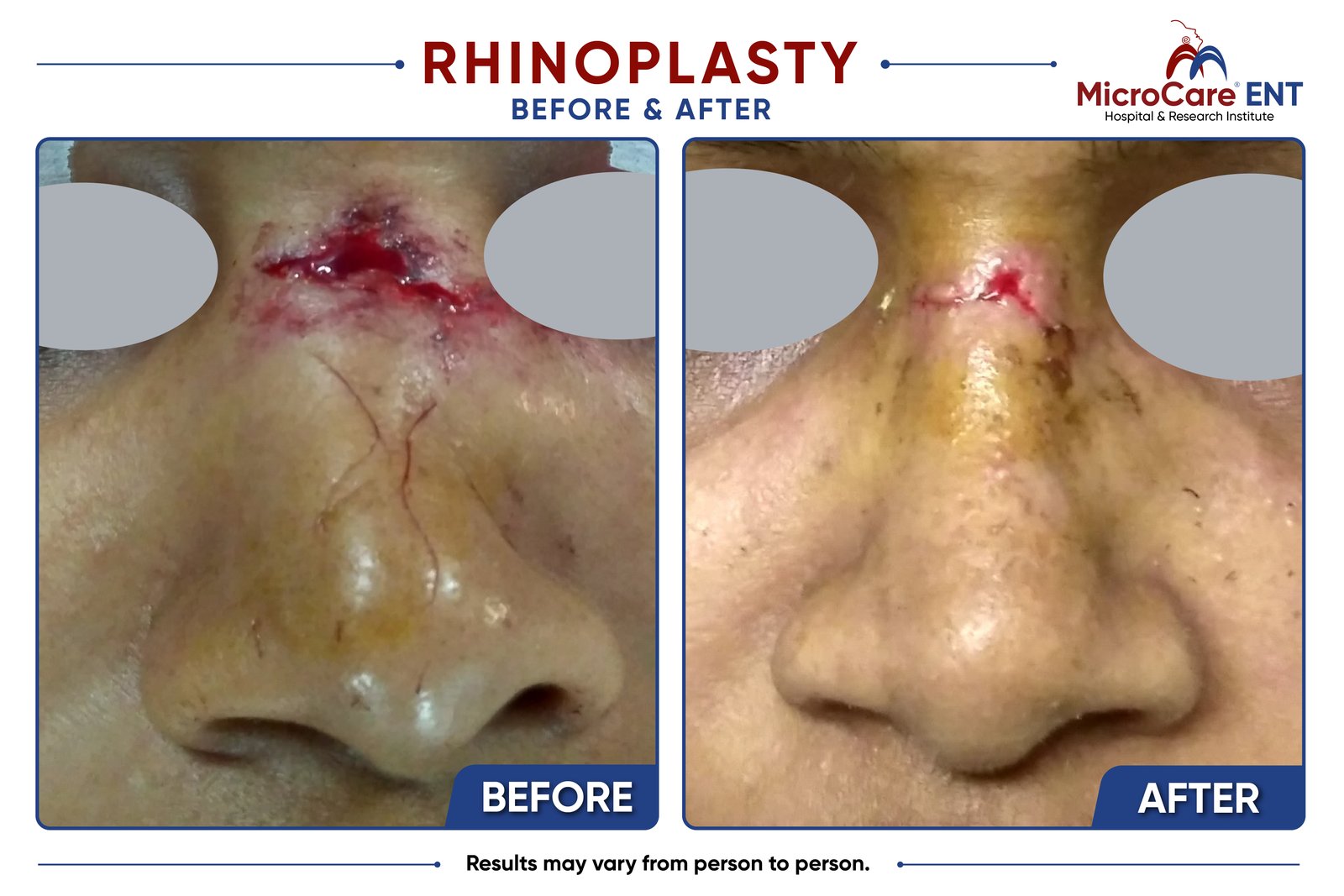
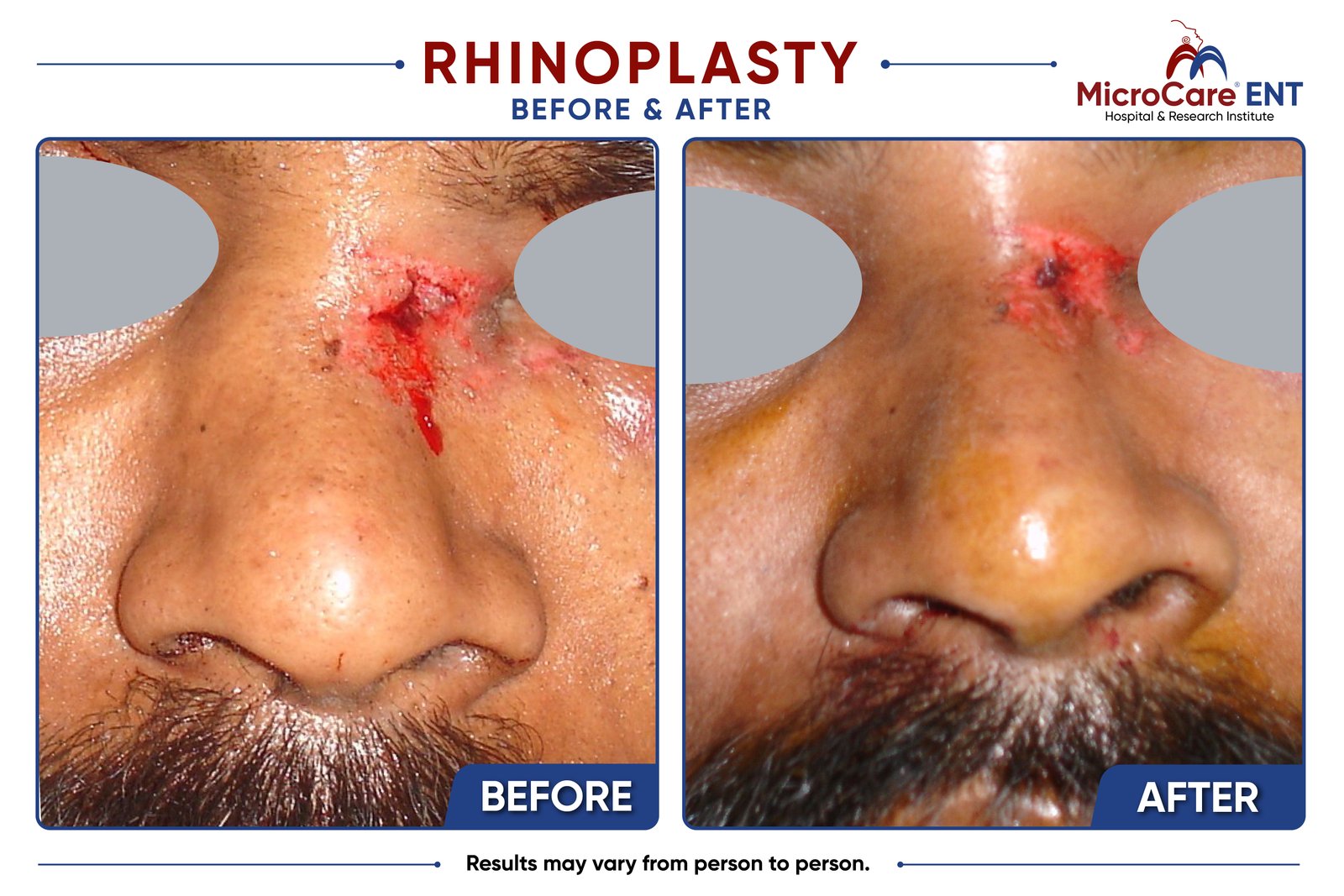
Photographs of patients of MicroCare ENT, shown with their consent. Every nose is different and individual results vary. See all before and after pictures.
Types of small nose correction

Dorsal augmentation
The bridge is raised with rib cartilage or finely diced cartilage wrapped in your own tissue, for a smooth line from the brows to the tip.
Tip projection
A columellar strut or septal extension graft brings a blunt tip forward and defines it.
Nose tip correctionRebuilding after over-reduction
When earlier surgery removed too much, the framework, including the L-shaped septal support, is rebuilt to reverse a scooped or saddle look.
Shape and breathing together
For a small nose with valve collapse, building up the bridge also opens the airway.
Graft materials: your own tissue first

Septal cartilage
Taken through the same rhinoplasty incisions; ideal for minor to moderate bridge and tip work.
Ear cartilage
Softer and curved; well suited to shaping the tip and soft contours.
Rib cartilage
Provides plenty of strong cartilage for major bridge augmentation and revisions. Special carving or dicing techniques reduce the risk of warping.
Other materials
We avoid silicone implants. Only when your own tissue is not enough are other options considered and discussed with you.
The operation
2 to 4 hours
Under general anaesthesia, as day care or with one night of observation.
Open or closed
Open rhinoplasty for major augmentation; closed for minor bridge work.
Open rhinoplastyStitches and splints
Fine columella stitches are removed at 5 to 7 days; internal splints may be used after septal work.
Recovery and graft settling
- Splint on the bridge for 7 days
- Back to work or study in 7 to 10 days
- Bruising and visible swelling mostly settle within about 2 weeks
- Most swelling gone by about 6 weeks
- The nose may feel firm for a while
- Avoid strenuous exercise for 3 to 4 weeks
- The final shape is clearer by 3 to 6 months
- Full settling takes up to a year
Is small nose correction safe?
- Your own cartilage, avoiding the rejection and extrusion problems of implants.
- Endoscopic and facial assessment before surgery.
- Clean, filtered operation theatres.
- Dedicated anaesthesia monitoring.
- Structured follow-up through the first 12 months.
Small nose correction cost in Hyderabad
A final quote follows your photographic and endoscopic assessment. It depends on:
- What is augmented: the bridge only, or the tip as well.
- The cartilage source: rib grafts add time and a second site.
- A first operation or a revision.
- Valve or septal correction at the same time.
Why choose MicroCare ENT

ENT and rhinoplasty expertise
Led by Prof. Dr. Sriprakash Vinnakota, with more than 26 years of experience, treating shape and breathing together.
Your own tissue
Septal, ear and rib cartilage grafting, with silicone implants avoided.
Modern surgical setting
Modular operation theatres, endoscopic assessment and piezoelectric instruments where they help.
Honest, patient-centred care
Realistic advice, itemised quotes and follow-up for up to one year.

Prof. Dr. Sriprakash Vinnakota
MS (ENT, Head & Neck) · Chief Rhinoplasty Surgeon, Centre for Advanced ENT, Head & Neck Surgery, MicroCare ENT Hospital & Research Institute
More than 26 years in ENT surgery, with endoscopic sinus surgery training at the University of Graz, Austria, and rhinoplasty training at Marien Hospital, Stuttgart, under Prof. Dr. Wolfgang Gubisch.
Frequently asked questions
Can a small nose be made bigger?
Yes. Augmentation rhinoplasty raises the height of the bridge and the projection of the tip, usually with your own cartilage, so the nose is better balanced with your face.
Will it look unnatural?
The new height and tip position are planned from the proportions of your forehead, cheeks and chin. Because your own tissue is used, the nose looks, feels and ages more naturally than with an implant.
Is it painful?
The operation is done under general anaesthesia. Afterwards most people feel congestion and fullness rather than sharp pain, controlled with medicines. If rib cartilage is taken, the chest can be sore for 3 to 5 days.
How long does the swelling last?
Bruising and visible swelling mostly settle within about 2 weeks, and most of the remaining swelling by about 6 weeks. The tip takes longest. The shape is clear by 3 to 6 months and fully settled by about a year.
What are the risks?
Swelling, minor asymmetry and, rarely, infection, a visible graft edge or warping of a rib graft. Using your own cartilage, careful carving techniques and endoscopic planning help reduce these risks; we discuss them in detail before surgery.
Is it covered by insurance?
Purely cosmetic augmentation is not usually covered. If you also have a documented breathing problem, such as valve collapse, that part may be partly covered; our billing team can check with your TPA.
When can I return to work or study?
Most people return within 7 to 10 days. Avoid heavy lifting and strenuous exercise for 3 to 4 weeks, and glasses resting on the nose for 4 to 6 weeks.
Can an earlier augmentation be revised?
Yes. Revision is usually done after 9 to 12 months of healing, often with rib cartilage, and starts with an endoscopic assessment of scarring.
See also ethnic rhinoplasty, revision rhinoplasty and our FAQs.
Begin with a conversation
Meet Prof. Dr. Sriprakash Vinnakota to talk about your profile, your breathing and your goals, and find out which graft option suits you. Leave your name and number and we will open WhatsApp with your details filled in, or call +91 94949 40725.