
What happens in theatre, step by step.
Rhinoplasty, often called a nose job, reshapes the bone, cartilage and soft tissue of the nose. This guide walks you through the operation from anaesthesia to the splint, how long it takes, and how healing progresses, so you know exactly what to expect.
Medically reviewed by Prof. Dr. Sriprakash Vinnakota, MBBS, MS (ENT, Head & Neck), Chief Rhinoplasty Surgeon, Centre for Advanced ENT, Head & Neck Surgery, MicroCare ENT Hospital & Research Institute.
- Anaesthesia
- General
- Approach
- Open or closed
- Operating time
- 1.5 to 5 hours
- Splint & stitches out
- Day 7
- Back to work
- 2 to 3 weeks
- Final profile
- 9 to 12 months
What a modern rhinoplasty aims to do
A modern rhinoplasty is a structural reconstruction. It balances the look of the nose with how well it breathes, and works towards three goals at once:
Proportion
A nose that fits your face, planned around facial angles and features that are true to your heritage.
A strong framework
Lifting a low bridge, smoothing a hump, and refining a bulbous or drooping tip on a well-supported structure.
An open airway
Correcting internal valve collapse and a deviated septum so the nose works as well as it looks.
Want to understand rhinoplasty before you meet a surgeon? Prof. Dr. Vinnakota's book Your Best Nose answers 100 common myths. Read it before you decide.
What happens during the operation
Every operation follows the same six-step protocol, designed for safety and long-term stability of the new framework.
- Step 1: Anaesthesia and monitoringThe operation is done under general anaesthesia in an NABH-accredited hospital theatre. Senior anaesthesiologists monitor your heart, breathing and oxygen levels continuously throughout.
- Step 2: Access: open or closedThe approach depends on how complex the work inside the nose is. In closed rhinoplasty the cuts are inside the nostril lining, leaving no outside scar, which suits straightforward bridge levelling. In open rhinoplasty a tiny inverted-V cut across the columella gives a direct view of the cartilages for complex tip work and revision.
- Step 3: Reshaping the frameworkModern rhinoplasty preserves and supports structure rather than removing large amounts of tissue. A hump is reduced by finely shaving excess bone and cartilage. The lower lateral cartilages of the tip are reshaped and supported with grafts of your own cartilage from the septum, ear or rib. A flat or low bridge is built up with natural grafts.
- Step 4: Correcting the airwayIf you have blockage, snoring or sinus pressure, the airway is treated in the same operation: septoplasty brings a bent septum back to the midline, spreader grafts strengthen weak side walls at the nasal valve, and inferior turbinoplasty reduces swollen turbinates to improve airflow.
- Step 5: Fine closureSymmetry and the airway are checked once more before the skin is redraped. Incisions are closed with ultra-fine sutures so they heal to a flat, barely visible line.
- Step 6: Protective splintA custom-shaped, firm but lightweight splint is placed on the bridge. It protects the repositioned bones and applies even pressure to limit swelling.
How long does the operation take?
Primary rhinoplasty
1.5 to 2.5 hours
A nose that has not been operated on before.
Shape and breathingSeptorhinoplasty
2.5 to 3.5 hours
Reshaping plus correction of the septum and airway.
Second operationRevision rhinoplasty
3.5 to 5 hours
Longer, because of scar tissue and, often, taking a rib cartilage graft.
Patient results
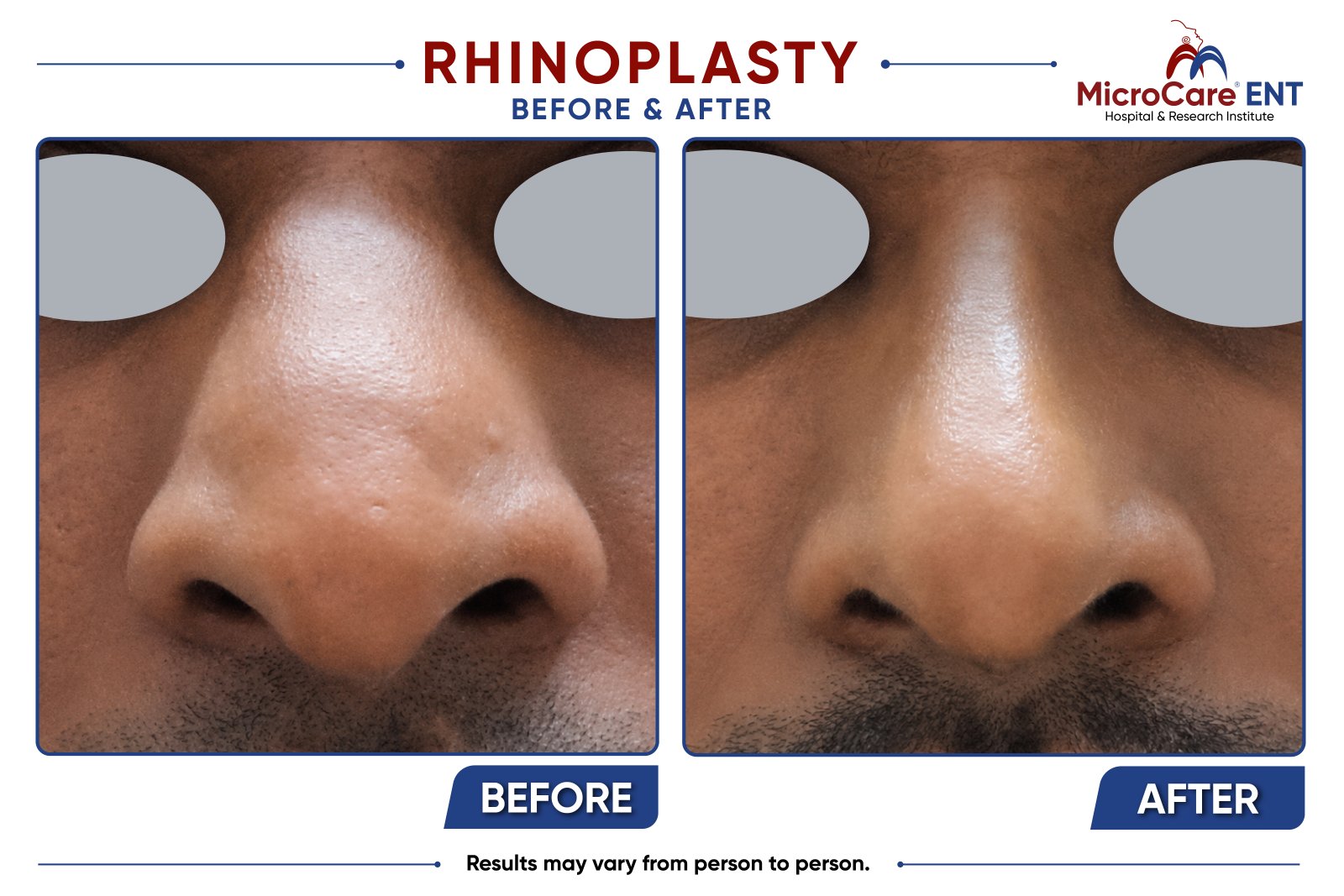
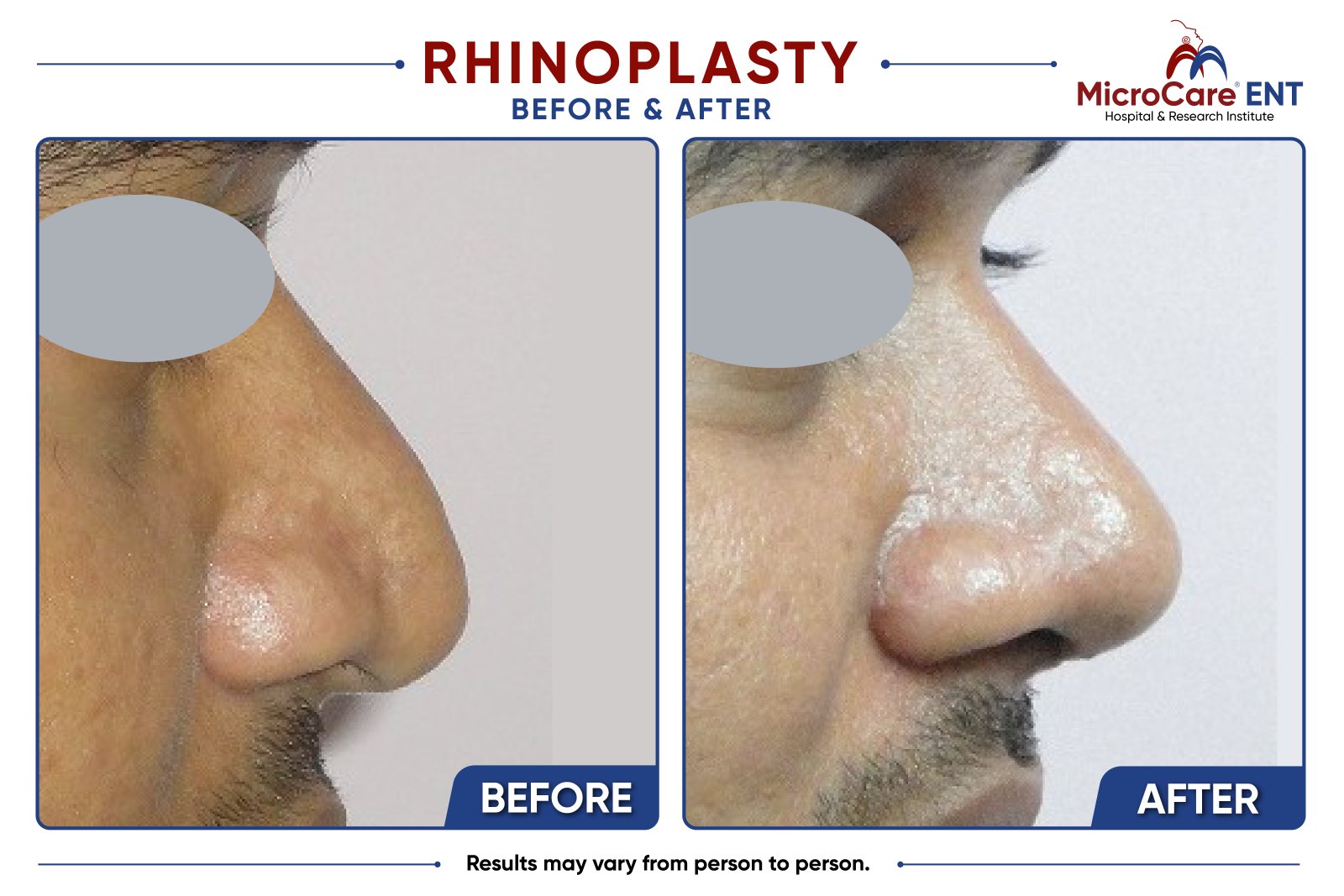
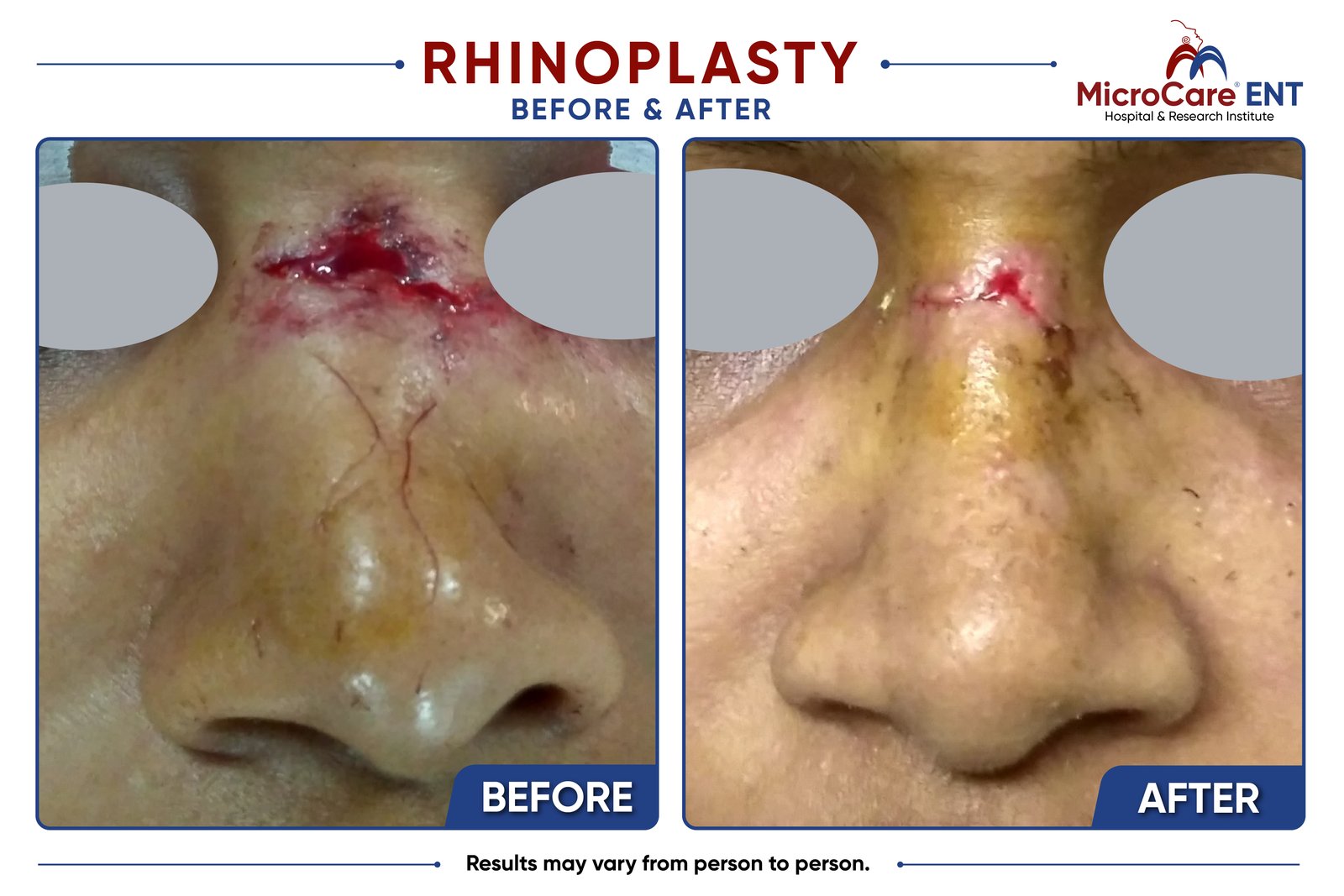
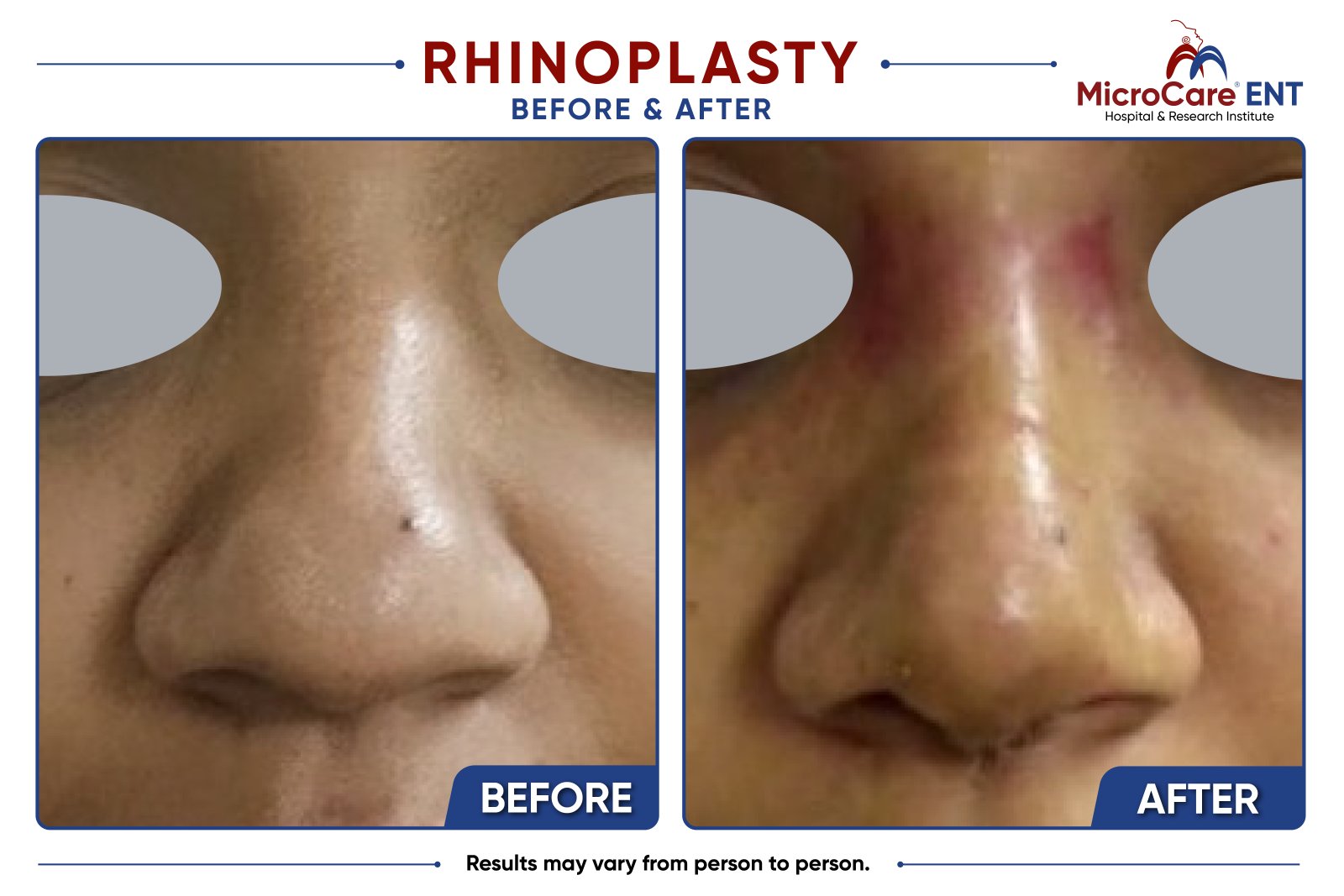
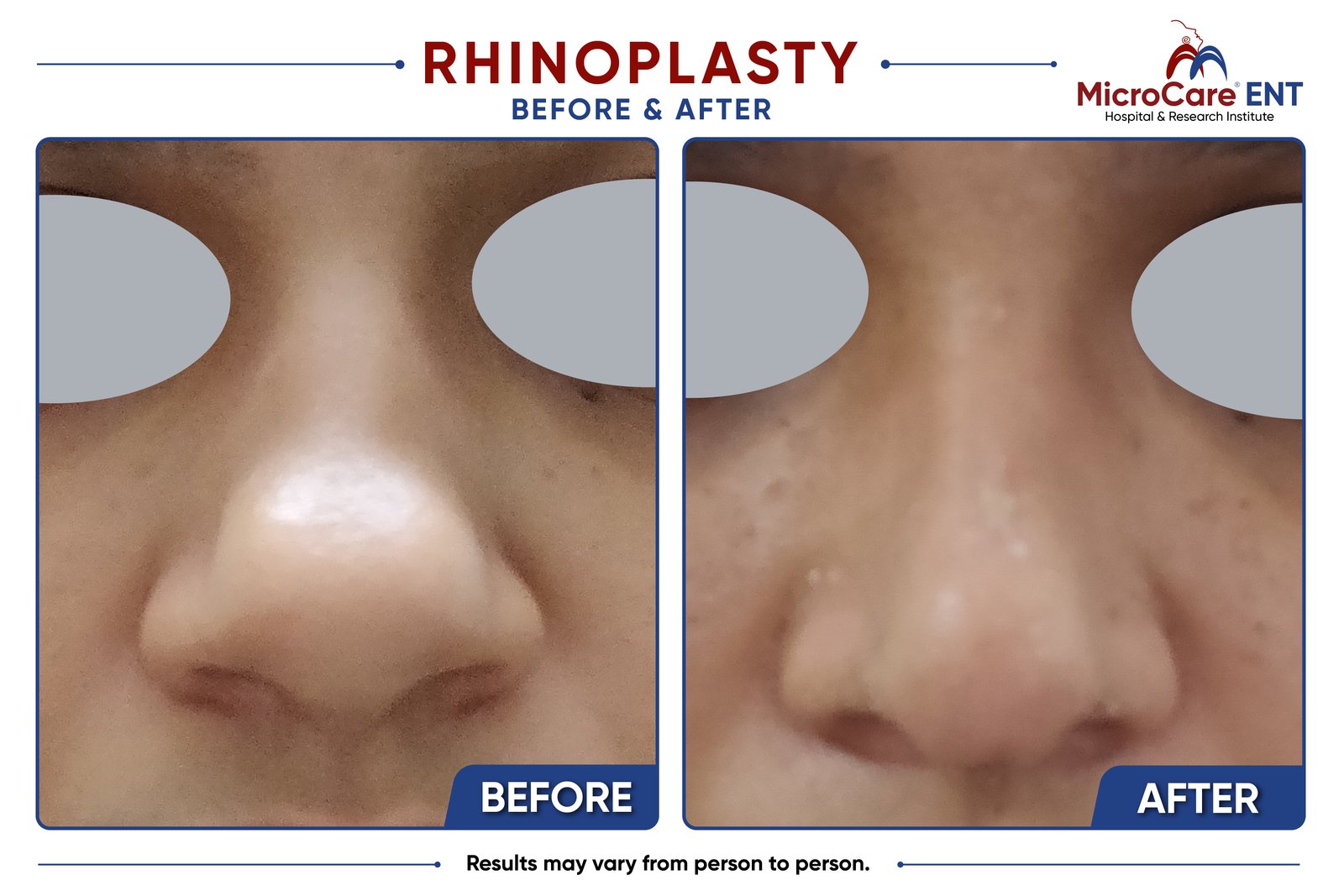
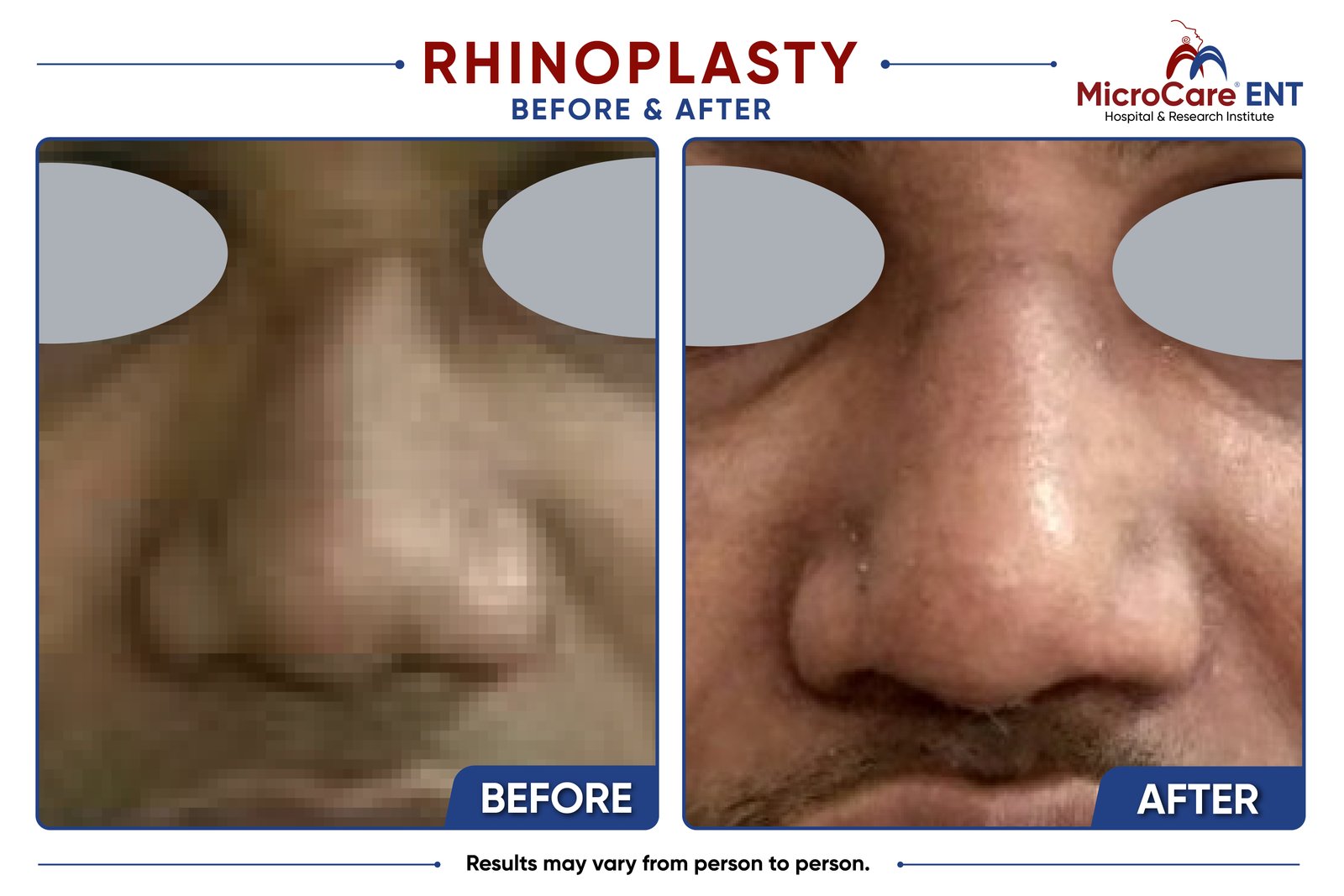
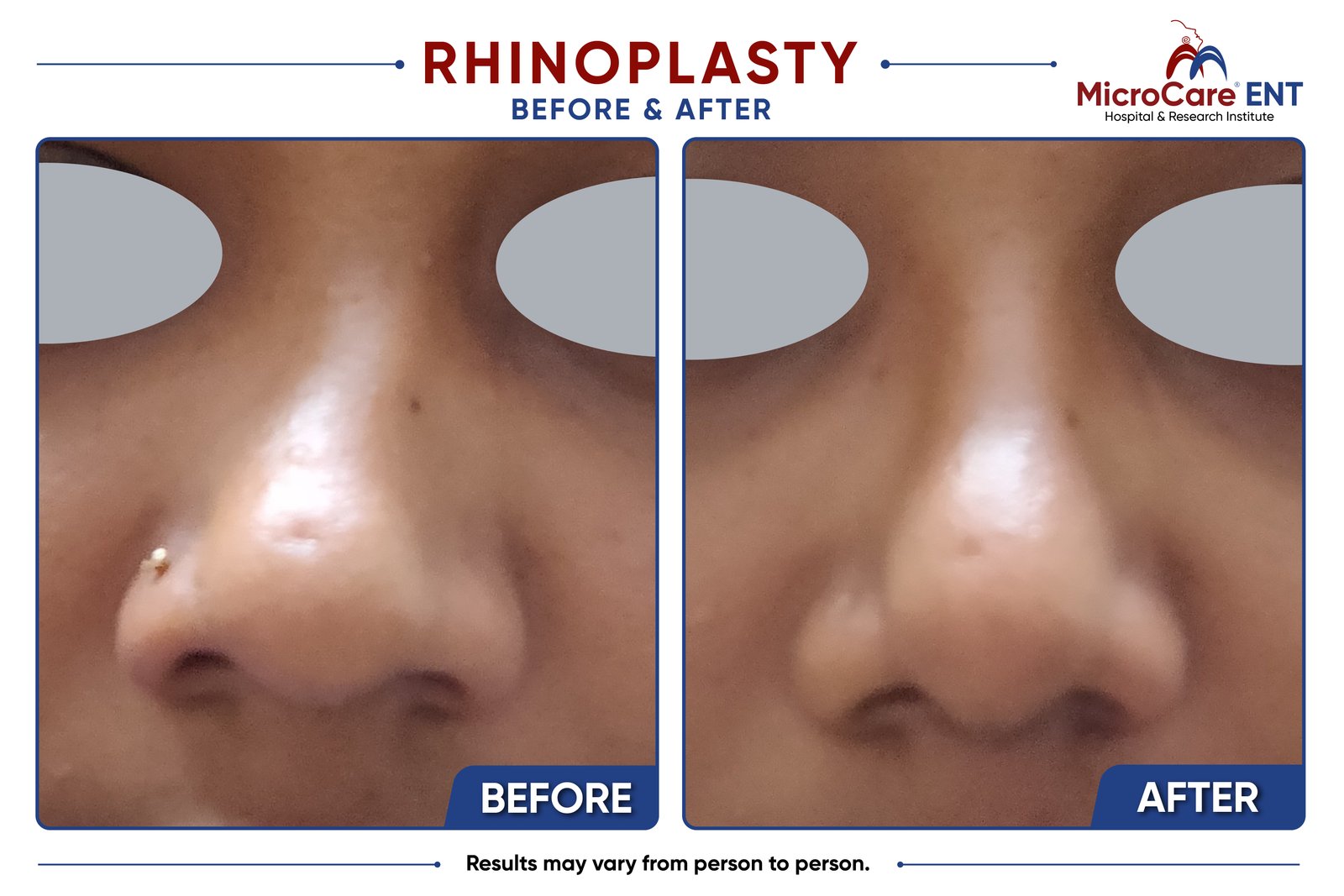
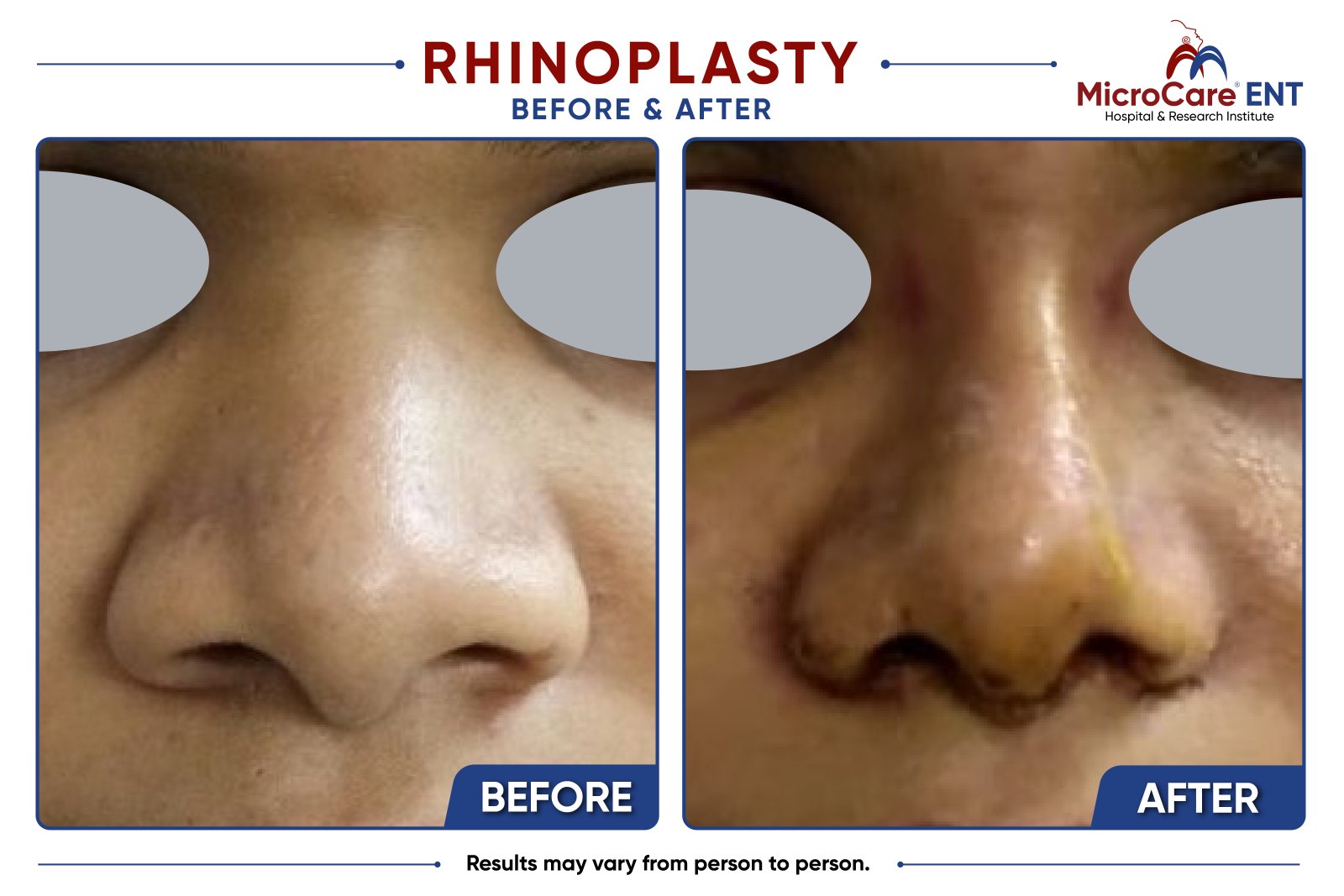
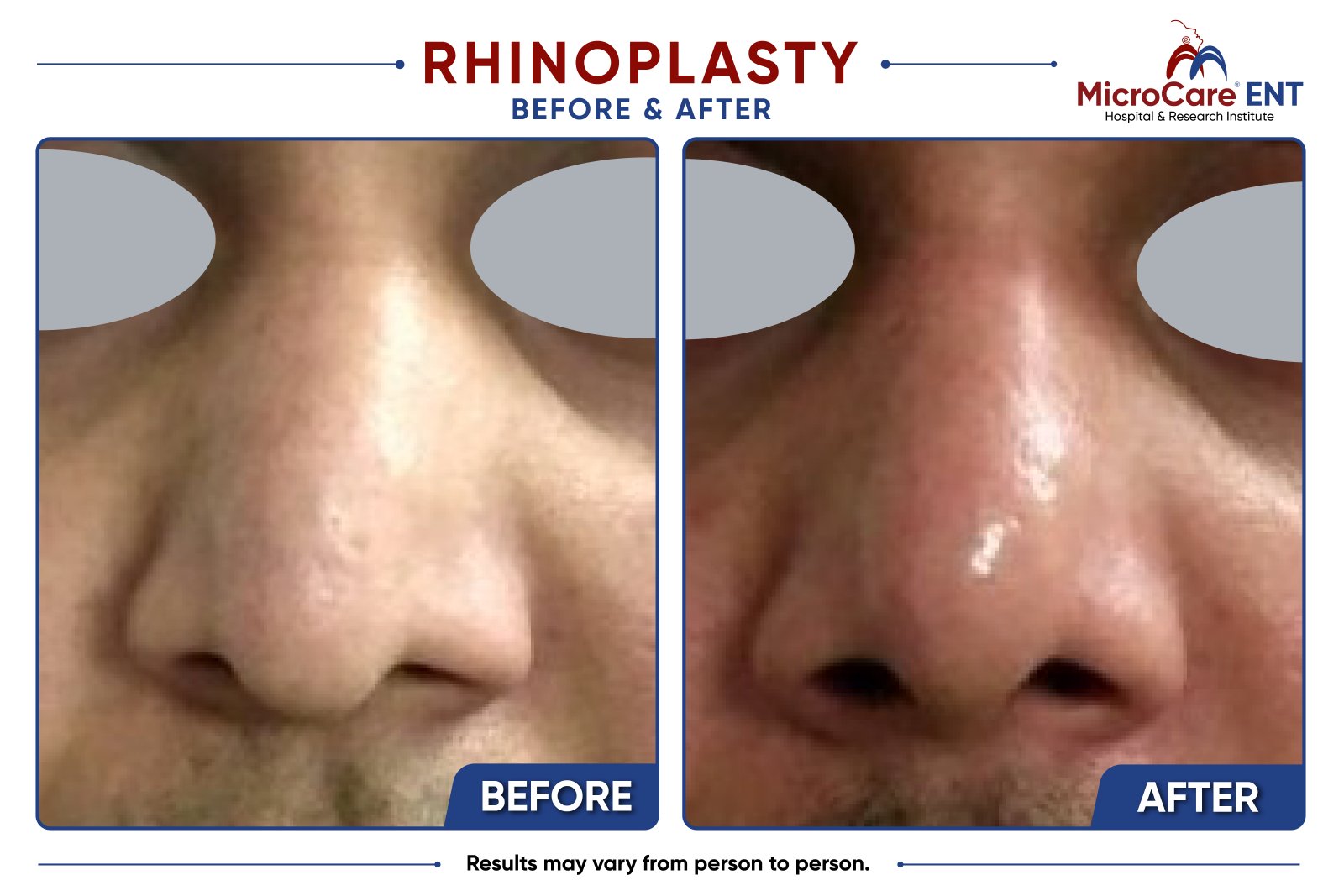
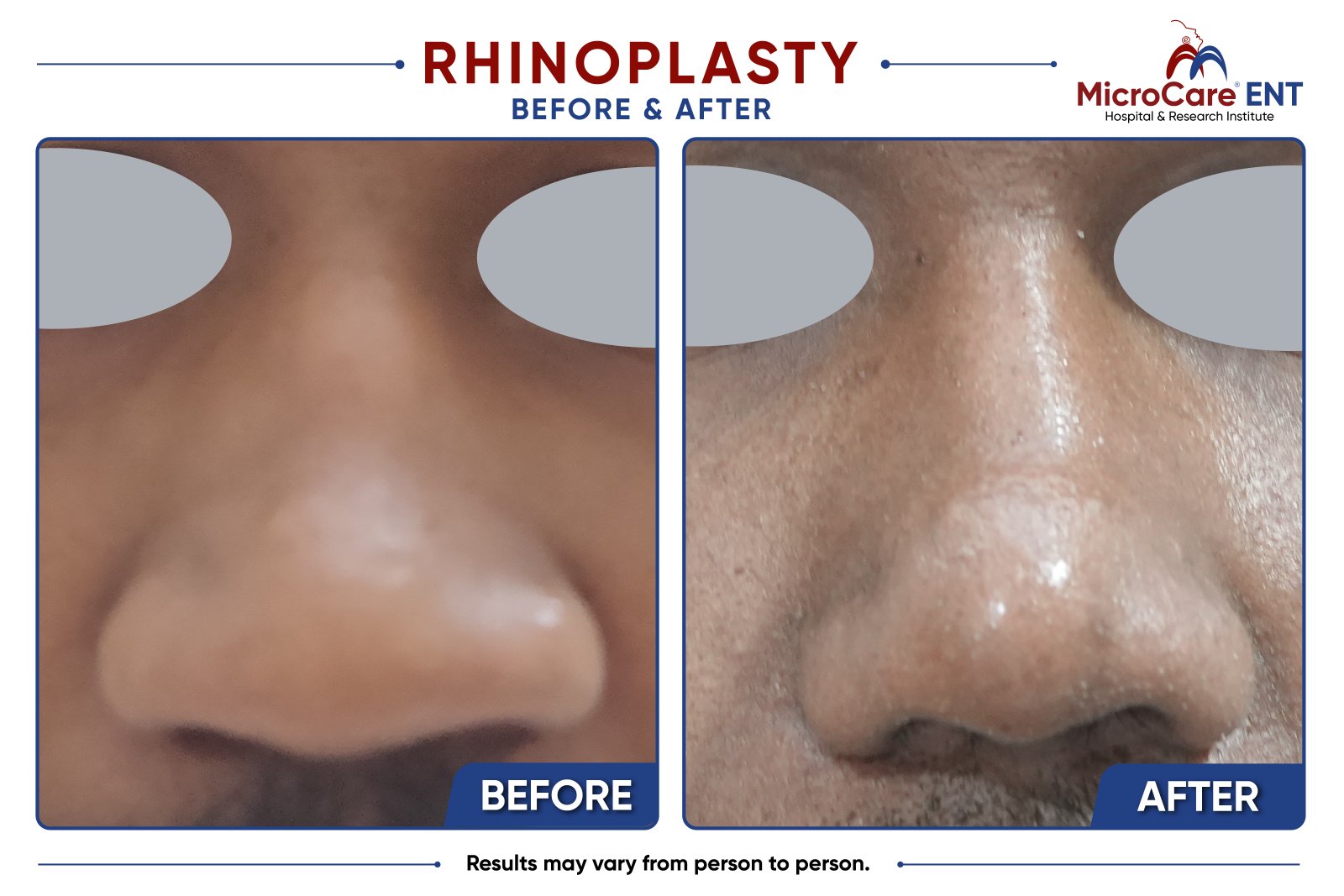
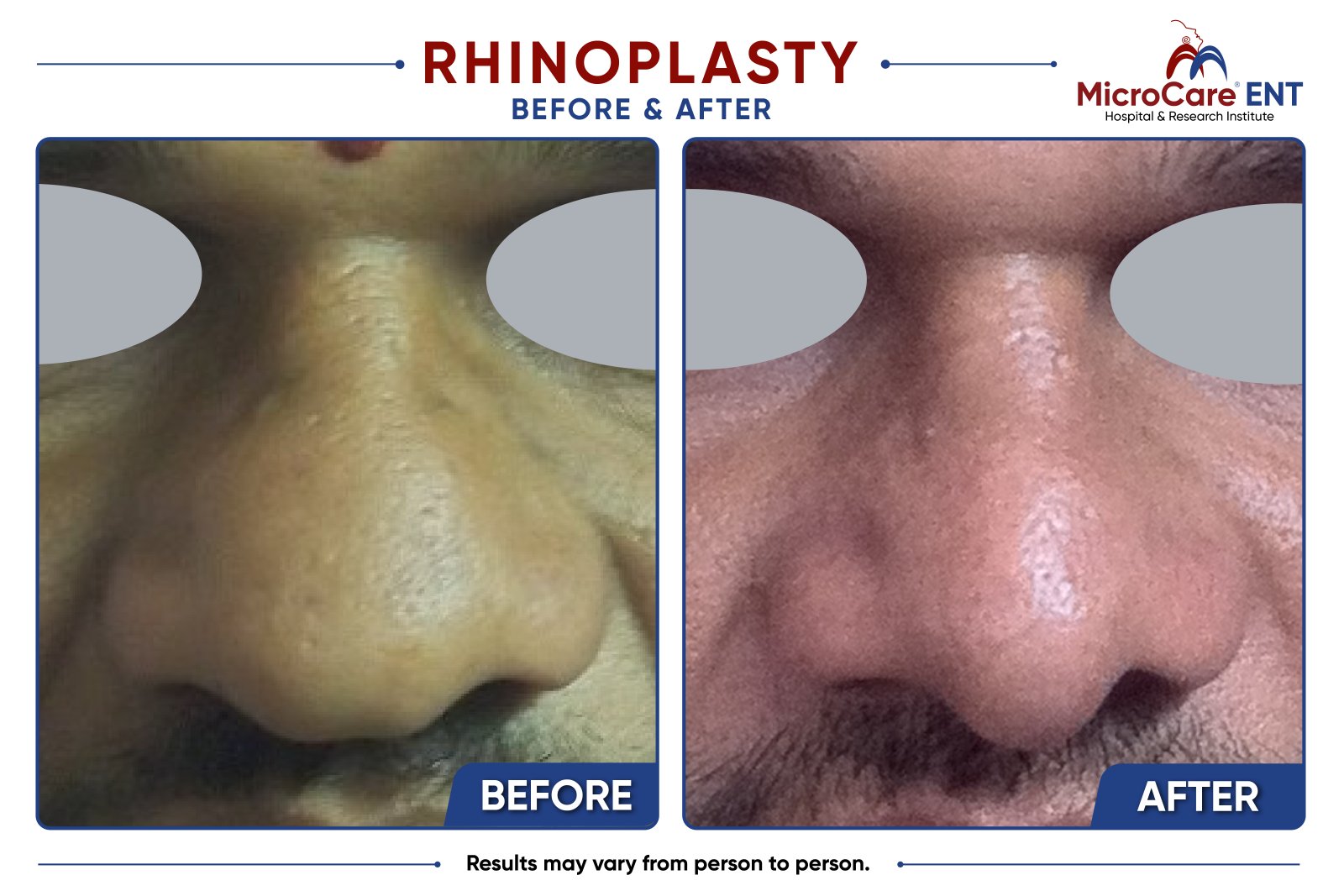
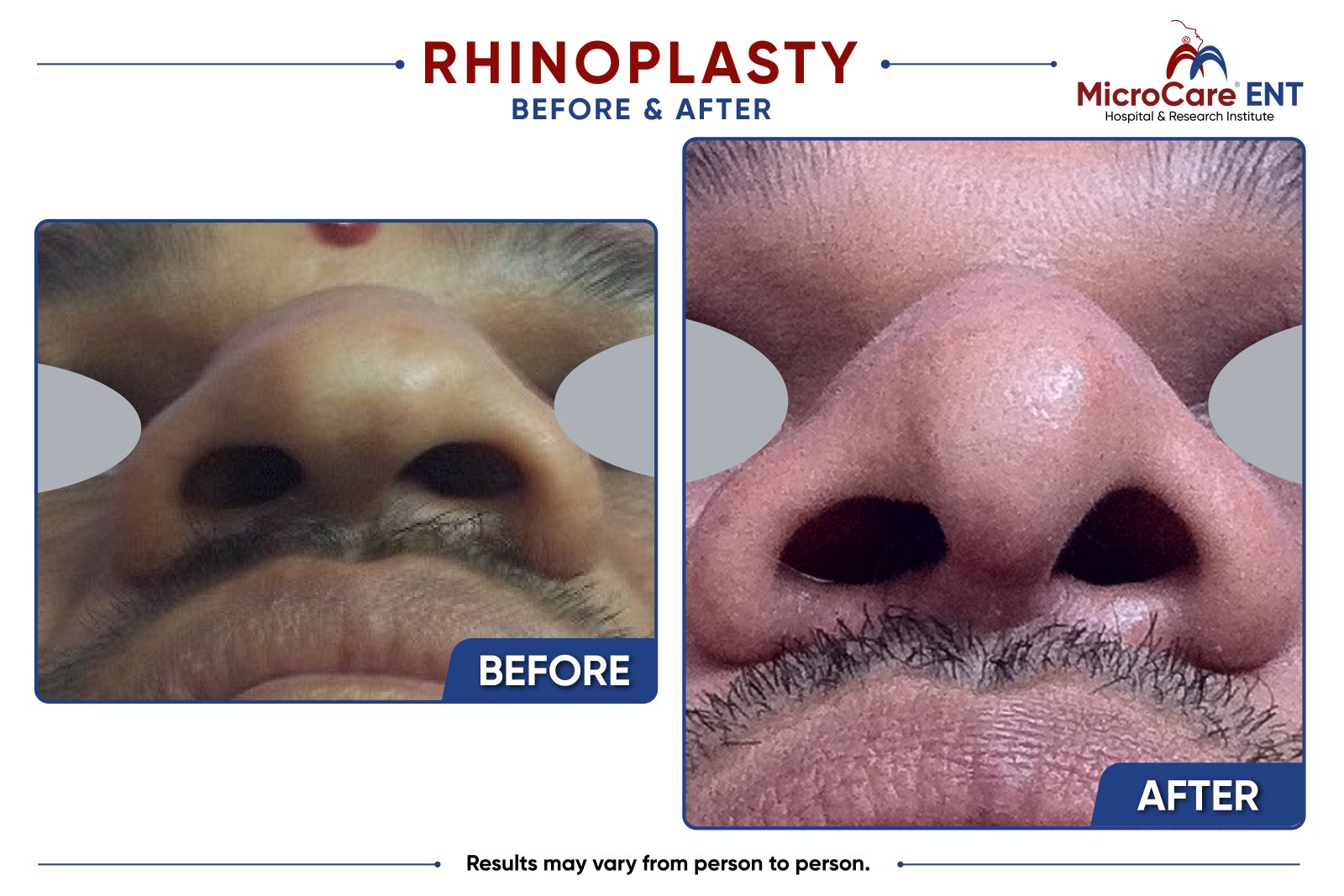
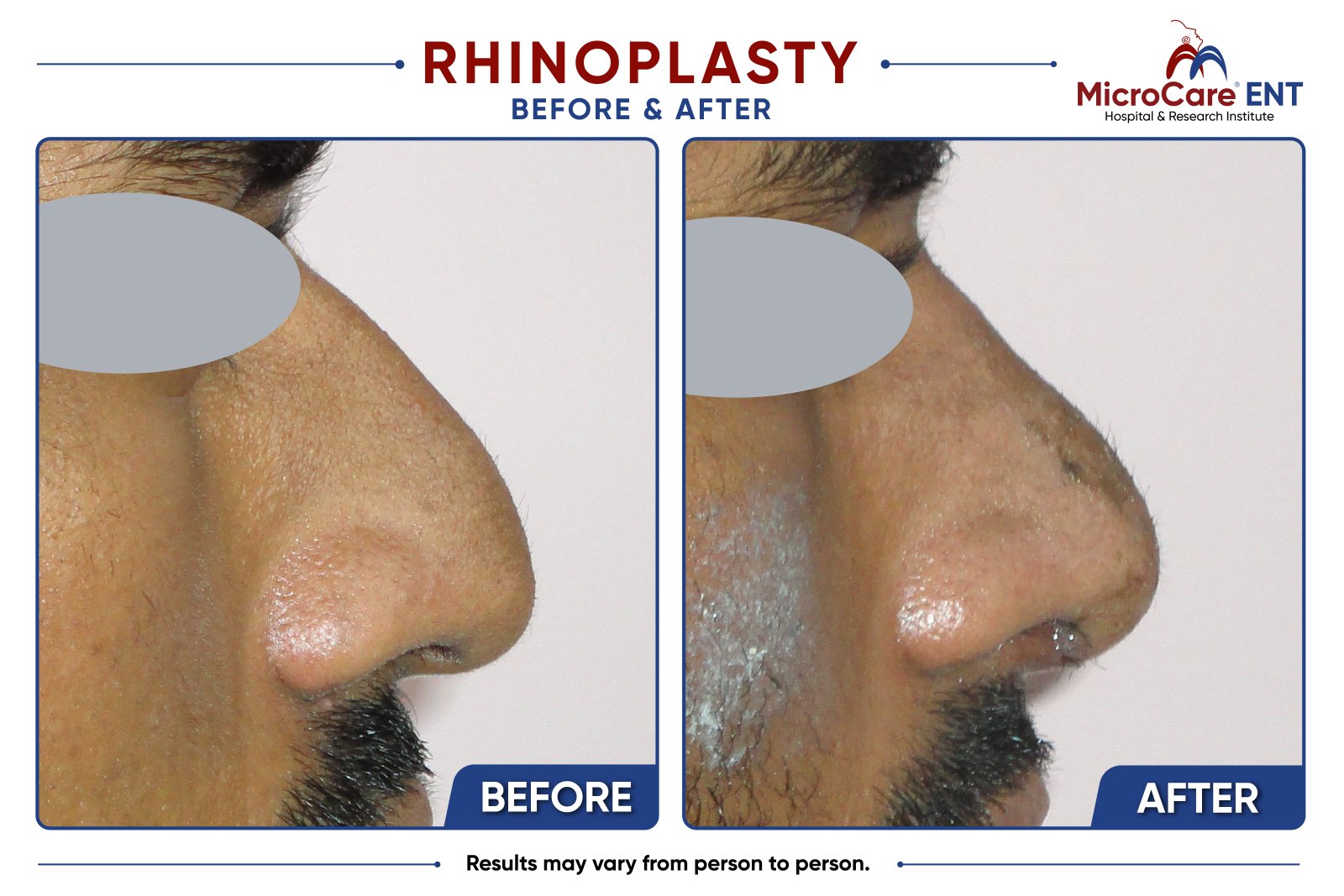
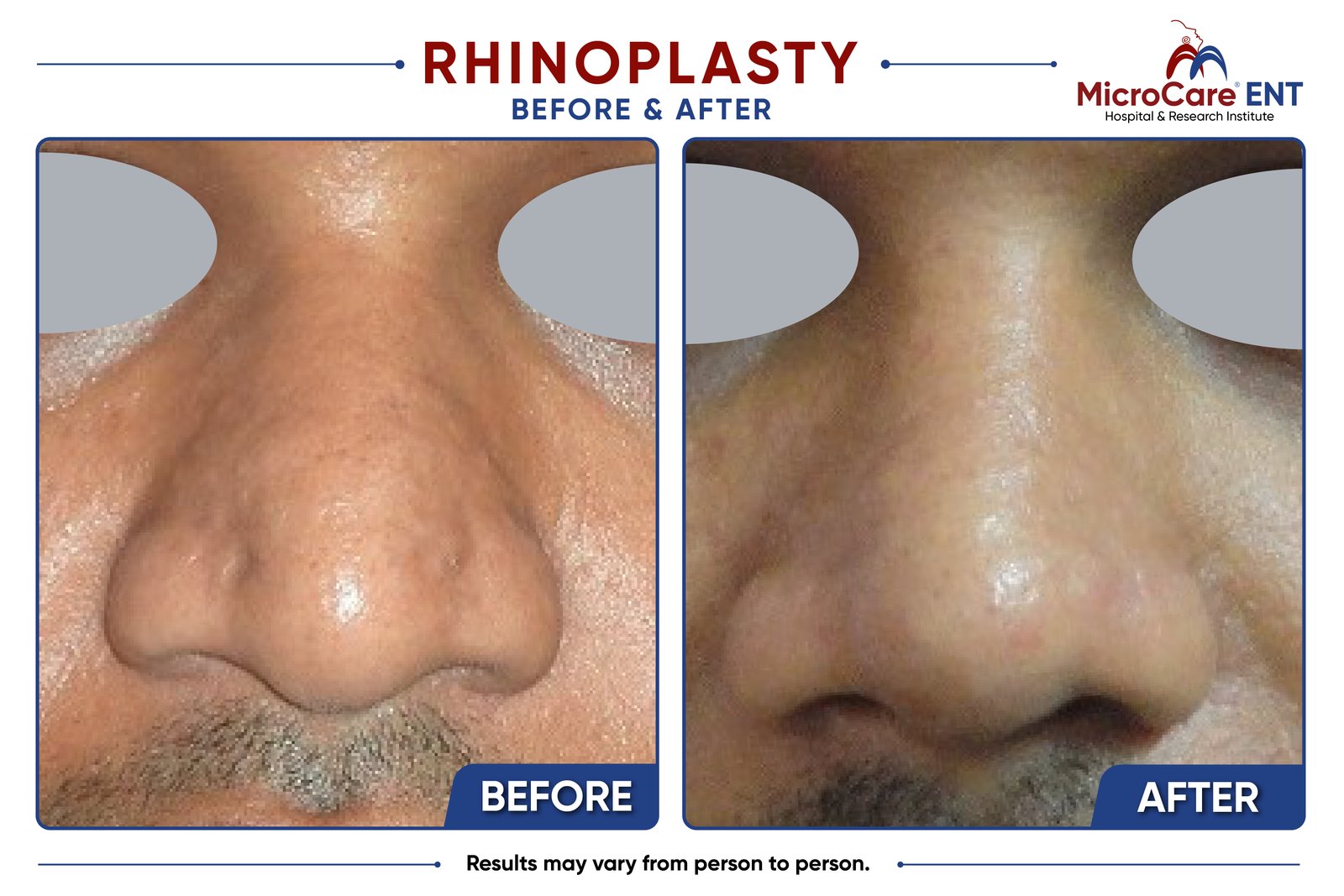
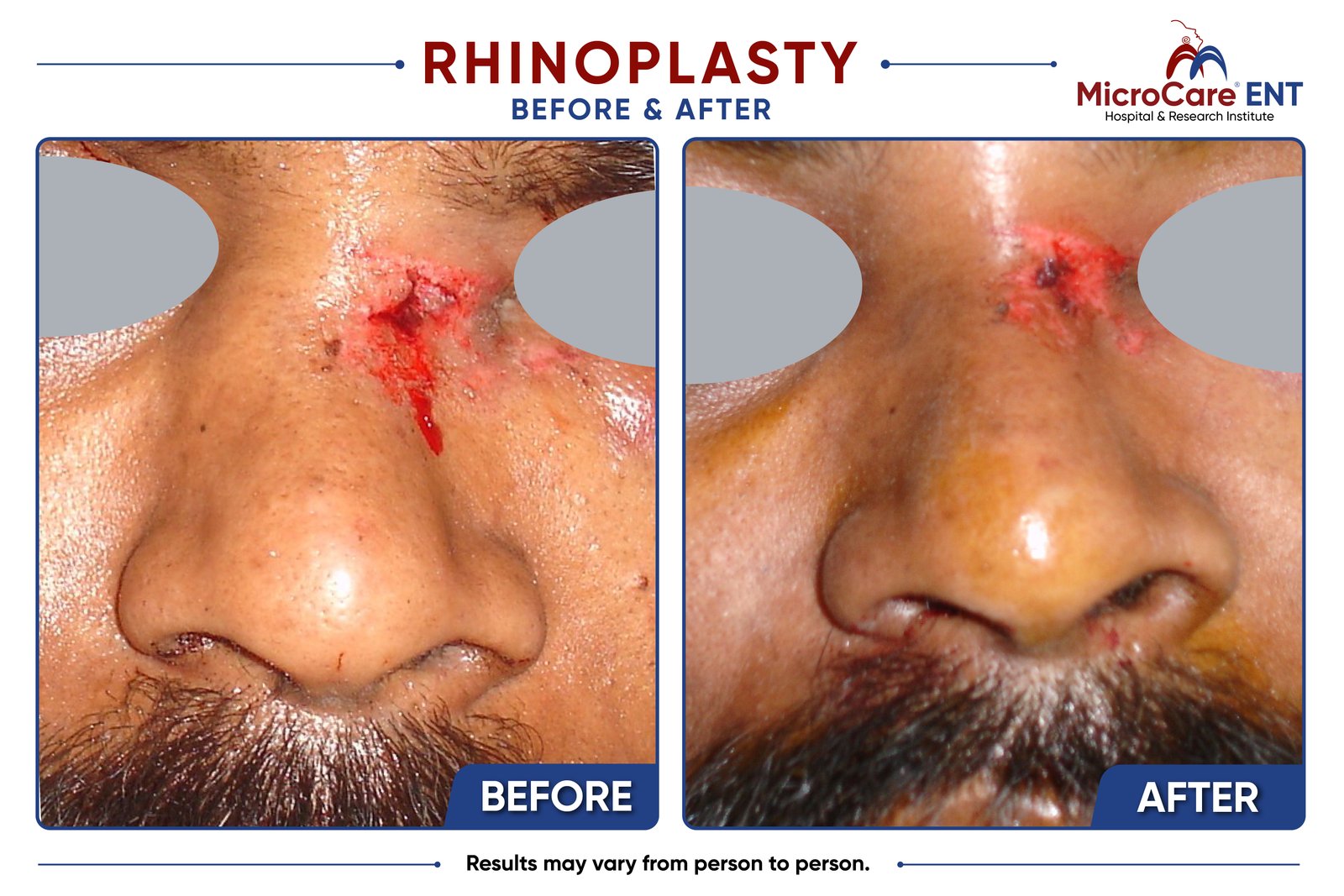
Photographs of patients of MicroCare ENT, shown with their consent. Every nose is different and individual results vary. See all before and after pictures.
The healing journey
- Swelling begins to fade
- Splint and outer stitches removed at MicroCare ENT on day 7
- More than 80 percent of visible bruising has gone
- Most people return to work, classes and social life
- Remaining swelling inside the nose settles
- Breathing becomes clearer
- The nose softens after feeling firm
- Grafts fully integrate
- The final shape is set
Why have your operation in an ENT hospital?
Rhinoplasty changes how air flows through the nose, so it is safest in an ENT-led hospital where breathing is never traded for appearance. The aim is a strong, natural-looking nose that breathes well.
ENT, head and neck specialists
A team led by Prof. Dr. Sriprakash Vinnakota, with more than 26 years of clinical experience.
Breathing and appearance together
Every rhinoplasty is planned as a customised septorhinoplasty, refining the bridge or tip while improving the airway, for results that do not look operated on.
Modern surgical technology
Endoscopic assistance to see inside the nose, piezoelectric instruments that can reduce bruising and swelling, and modular operation theatres.
Honest, patient-centred care
Consultations that put safety ahead of volume, transparent pricing and structured follow-up for up to one year.

Prof. Dr. Sriprakash Vinnakota
MS (ENT, Head & Neck) · Chief Rhinoplasty Surgeon, Centre for Advanced ENT, Head & Neck Surgery, MicroCare ENT Hospital & Research Institute
More than 26 years in ENT surgery, with rhinoplasty training at Marien Hospital, Stuttgart, under Prof. Gubisch. He is operating faculty for RhinoSculpt 2026, a national live rhinoplasty workshop.
Frequently asked questions
Is the rhinoplasty operation painful?
You are fully asleep during the operation. Afterwards most people feel moderate pressure and congestion, like a heavy head cold, rather than sharp pain. This is controlled with pain medicine planned for you.
Is rhinoplasty covered by insurance?
Purely cosmetic rhinoplasty is not covered. When the examination shows a breathing problem, such as a significant septal deviation or valve collapse, the functional part of the operation is often eligible for insurance or TPA cover. We provide the endoscopy and clinical reports for your claim, and interest-free EMI plans are available.
Should I have open or closed rhinoplasty?
It depends on what needs to change. Closed rhinoplasty, with all cuts inside the nose, suits straightforward bridge work. Open rhinoplasty, with a tiny cut across the columella, gives the direct view needed for complex tip work and revision surgery. Your surgeon will recommend the approach after examining you.
Will my nose feel stiff after surgery?
Yes, for a while. The nose usually feels firm for the first 3 to 6 months as the tissues heal, and then gradually softens and becomes flexible again.
When can I exercise and wear glasses?
Light walking is fine after about 2 weeks. Strenuous gym work, heavy lifting and contact sports are avoided for 4 to 6 weeks. Heavy glasses should not rest on the bridge for at least 4 weeks; our team will show you how to tape your frames to the forehead.
See also What is rhinoplasty?, rhinoplasty cost and our FAQs.
Ask us about your operation
Leave your name and number and we will open WhatsApp with your details filled in. You can also call +91 94949 40725.