
Your first rhinoplasty, done right.
Primary rhinoplasty is the first operation to reshape, refine or reconstruct the nose. It can balance your features, smooth a bump on the bridge or correct a structural problem that affects breathing, and often all of these in one operation. Working on a nose that has never been operated on, our ENT-led team preserves your natural tissue layers for a result that looks and works naturally.
Medically reviewed by Prof. Dr. Sriprakash Vinnakota, MBBS, MS (ENT, Head & Neck), Chief Rhinoplasty Surgeon, Centre for Advanced ENT, Head & Neck Surgery, MicroCare ENT Hospital & Research Institute.
- For
- A nose not operated on before
- Approach
- Open or closed
- Splint removed
- Day 7
- Back to work
- 2 to 3 weeks
- Bridge contours
- 6 to 12 weeks
- Final result
- 6 to 12 months
What is primary rhinoplasty?
Primary rhinoplasty is the first nose-reshaping operation for someone who has never had nasal surgery. Because the inside of the nose is untouched, the tissue layers are intact and there is plenty of the patient's own cartilage to work with. This gives the surgeon the most freedom and the most predictable result. It is used for three main goals:
Shape and proportion
Balancing the profile of the bridge, narrowing a broad base and lifting a drooping tip.
Airway correction
Repairing internal blockages, straightening the midline and strengthening weak nasal walls.
Repair after trauma
Rebuilding broken nasal bones and repositioning displaced cartilage.
Post-accident nose deformityPlanning your first rhinoplasty? Prof. Dr. Vinnakota's book Your Best Nose answers 100 common myths. Read it before you decide.
Why patients choose primary rhinoplasty
Every plan is built around your own reasons, which usually fall into two groups.
1. Appearance
A hump on the bridge
Bone and cartilage are smoothed for a straight profile.
A bulbous tip
Wide, rounded tip cartilage is reshaped for definition.
A drooping tip
A tip that drops when you talk or smile is lifted and supported.
A crooked nose
A nose that leans away from the centre of the face is straightened.
2. Breathing
Deviated septum
The internal wall is straightened so air flows evenly through both sides.
Weak nasal valves
Narrow or collapsing valves are supported to keep the airway open.
Long-term congestion
Ongoing sinus pressure, snoring, disturbed sleep and constant mouth breathing caused by structural blockage.
What primary rhinoplasty can correct
- Hump reduction using small, controlled cuts in the nasal bones (micro-osteotomy).
- Alar base contouring to reduce nostril width and flare.
- Tip projection and lift using cartilage extension grafts.
- Internal septoplasty to straighten the septum.
Bridge reduction or elevation
A sharp hump is smoothed, or a low, flat bridge is built up. Bone and cartilage are shaped for a smooth line from forehead to tip.
Tip refinement
The lower lateral cartilages are reshaped with fine suture techniques and supporting cartilage grafts, adjusting how far the tip projects and turns up while keeping it strong.
Functional septorhinoplasty
The bony framework is reset and the cartilage straightened, correcting visible asymmetry and hidden airway blockage in one operation.
SeptorhinoplastyPatient results
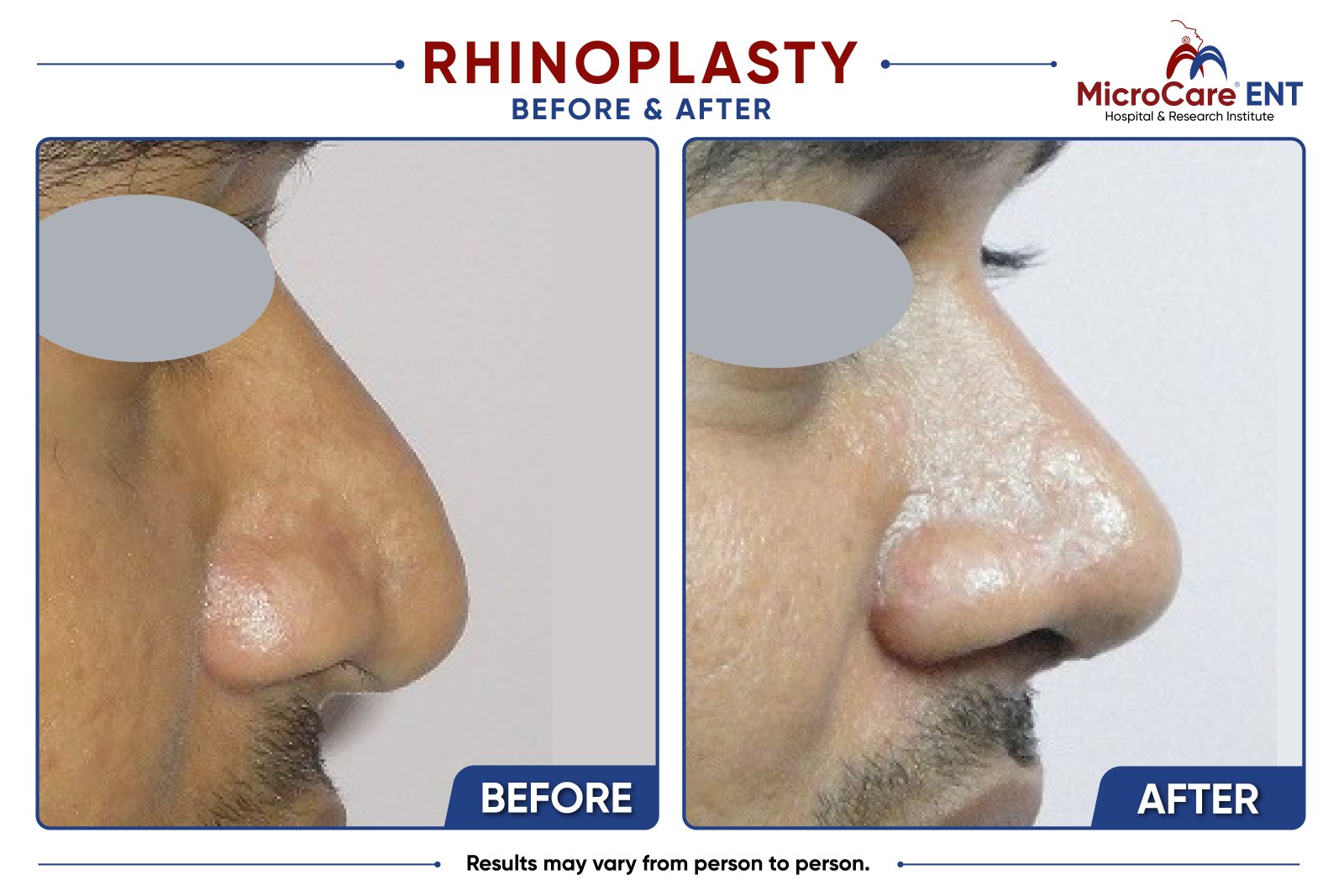
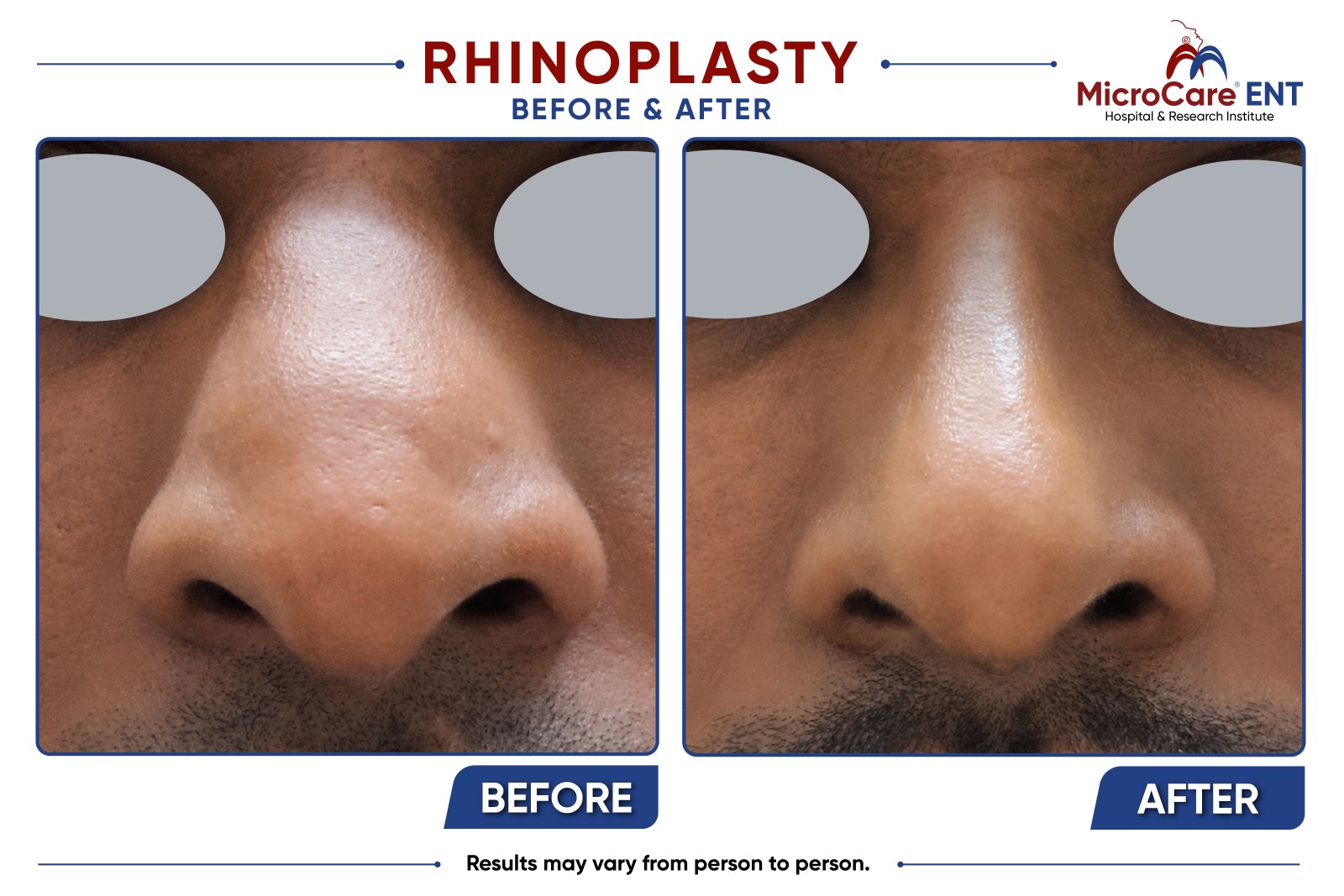
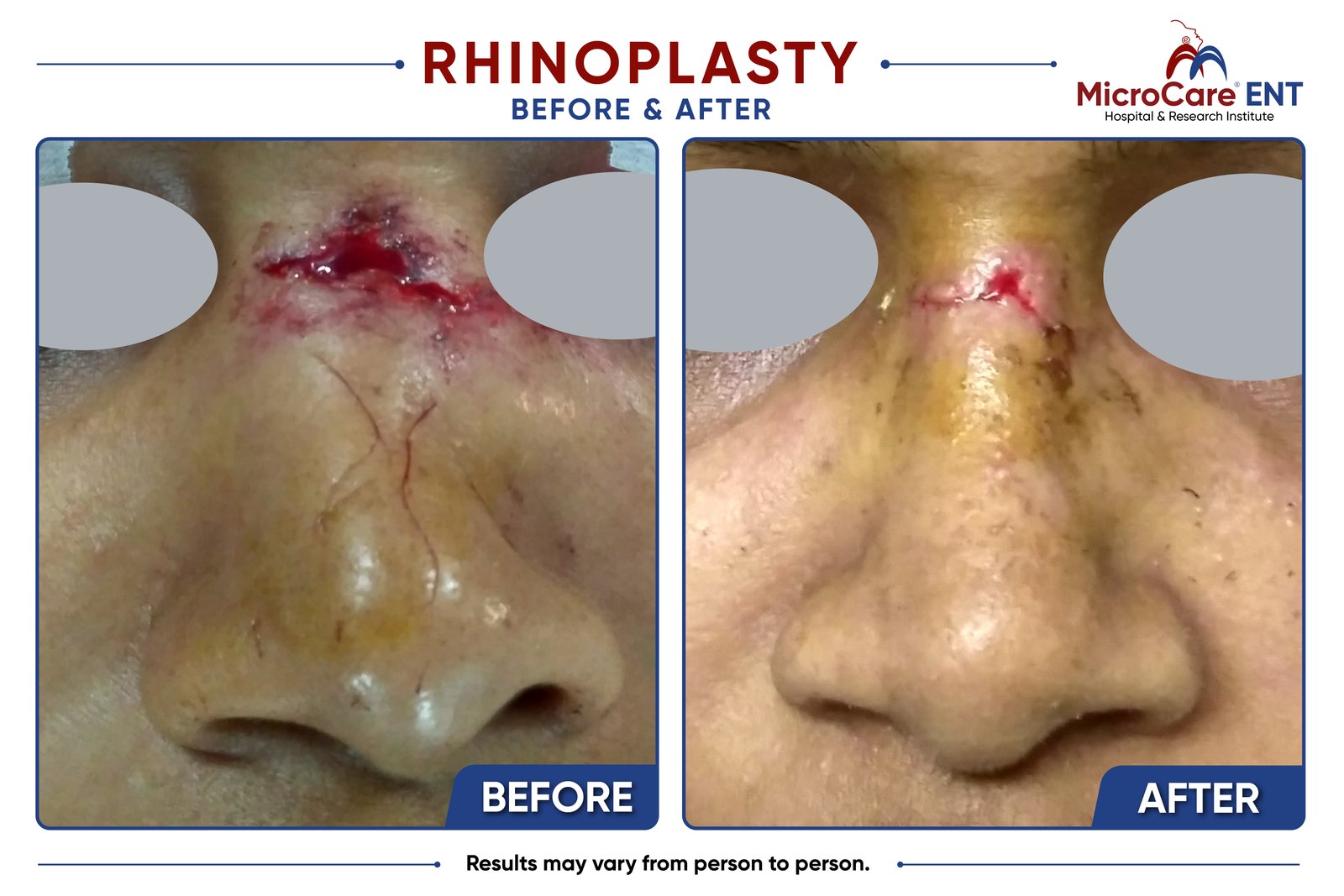
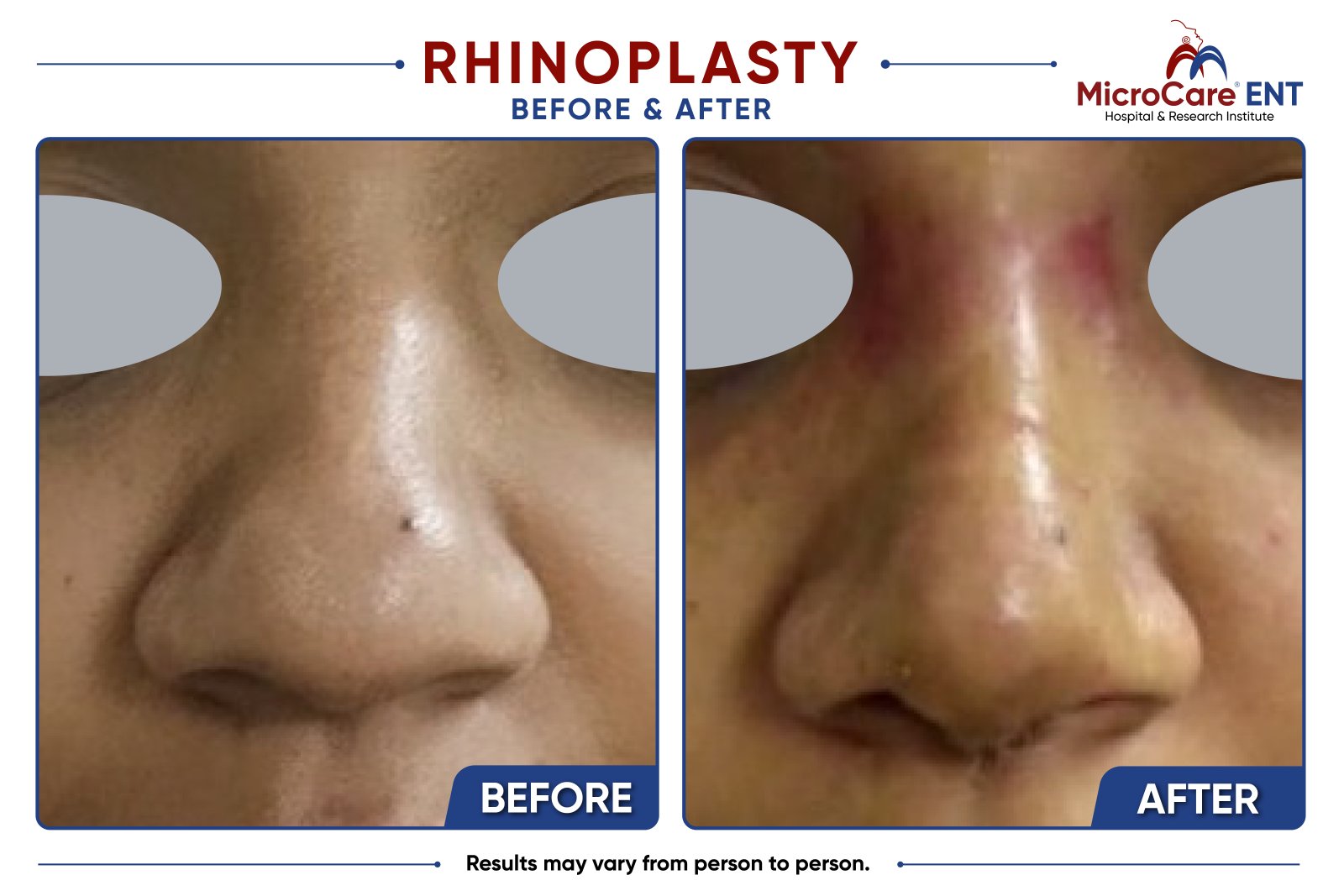
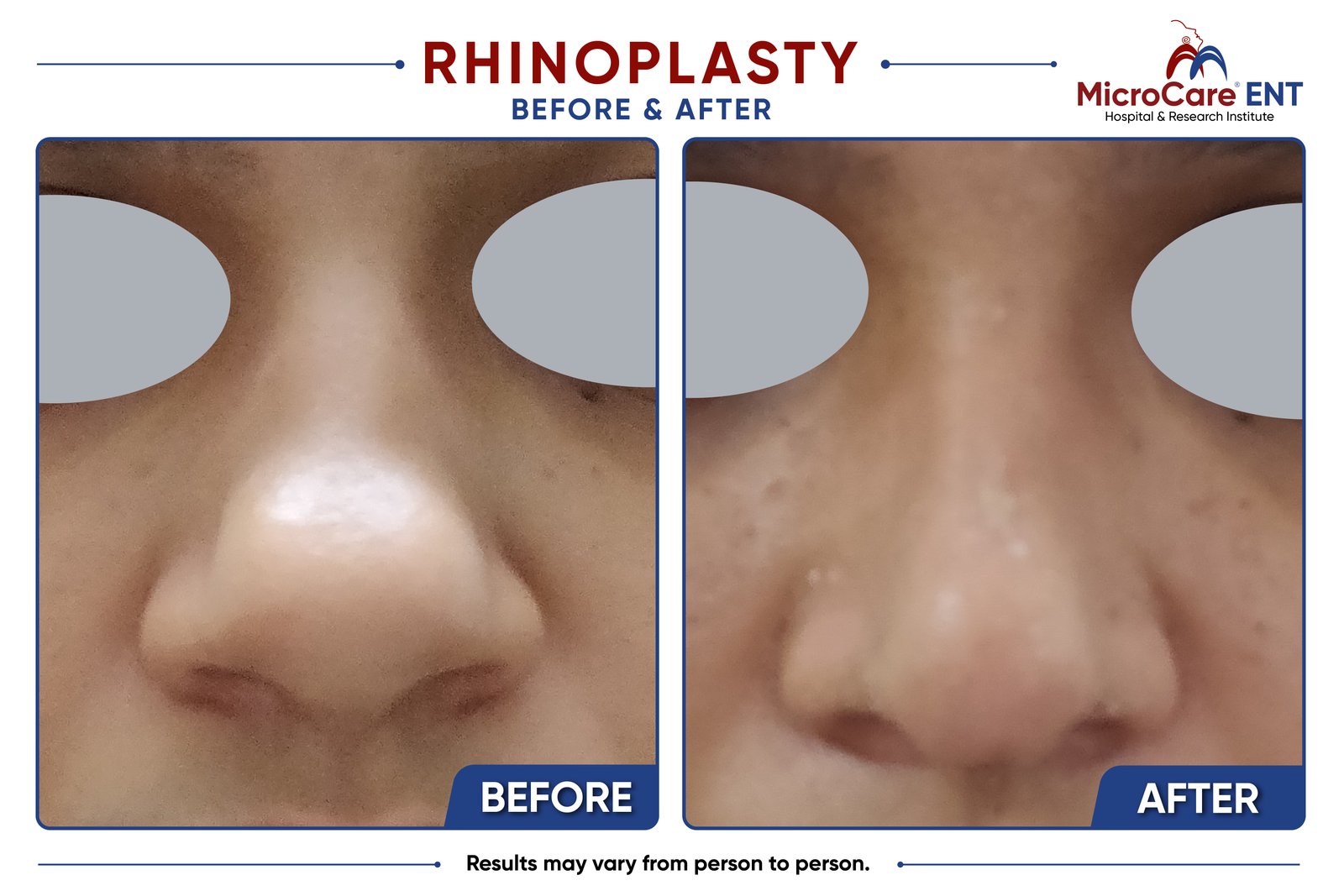
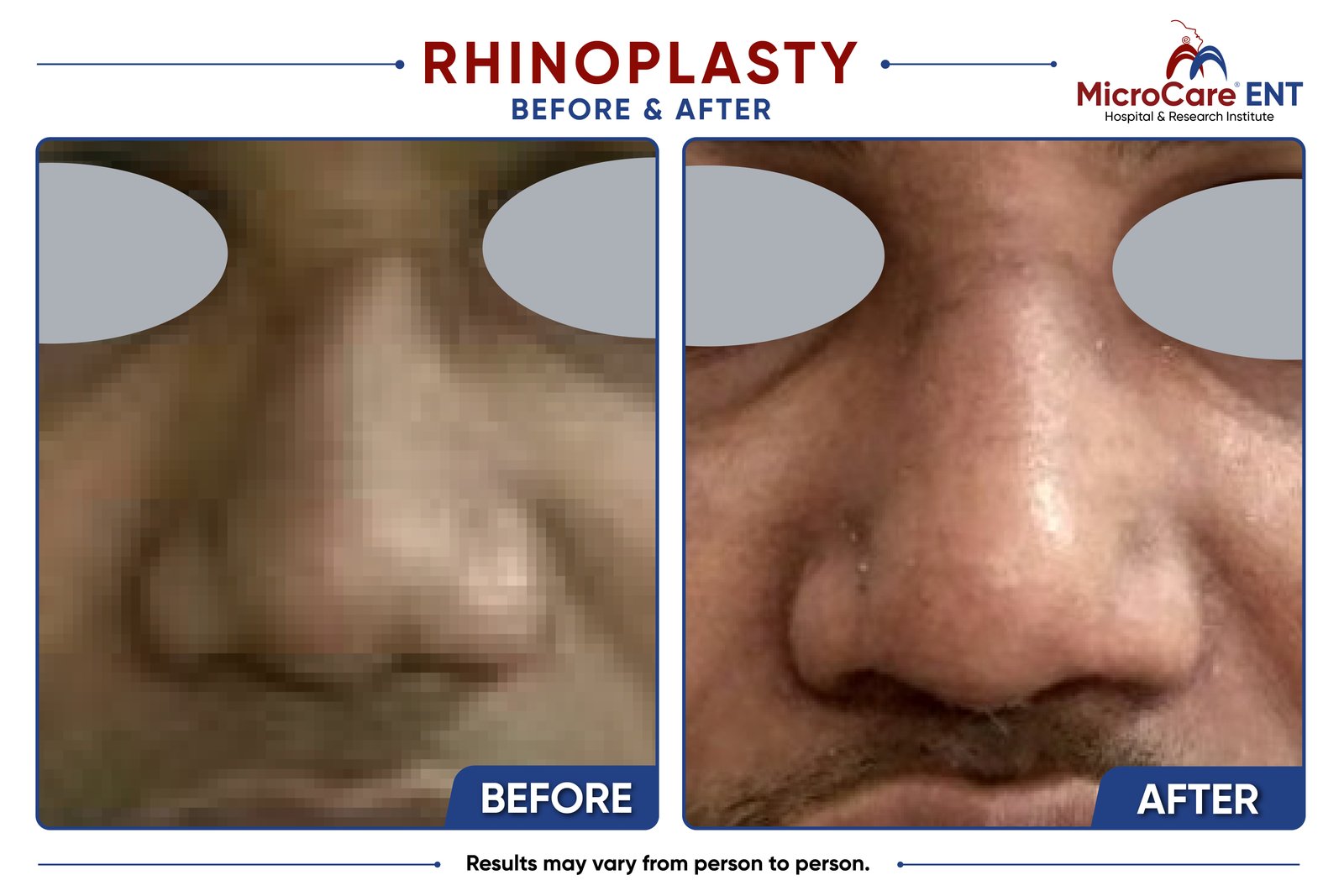
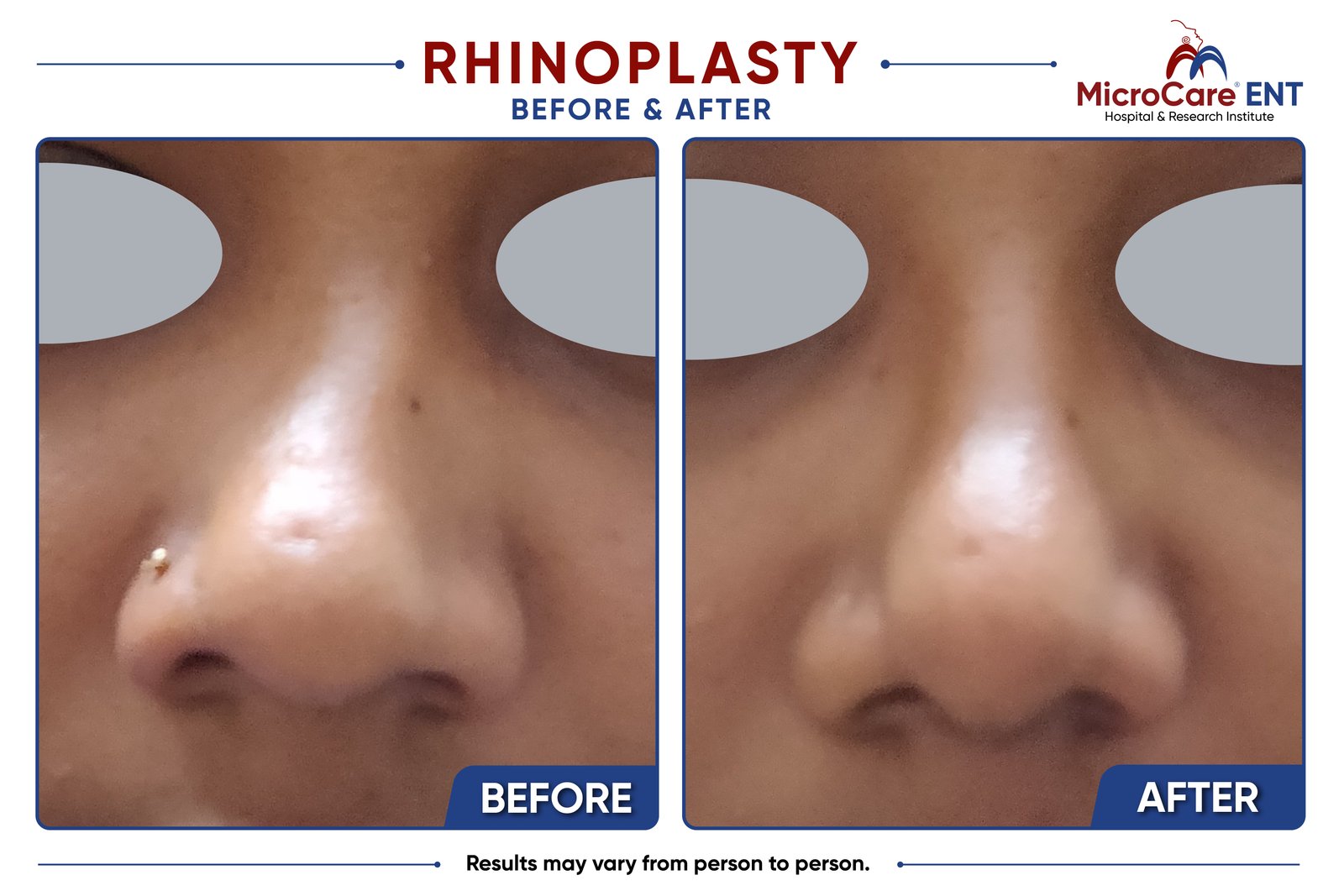
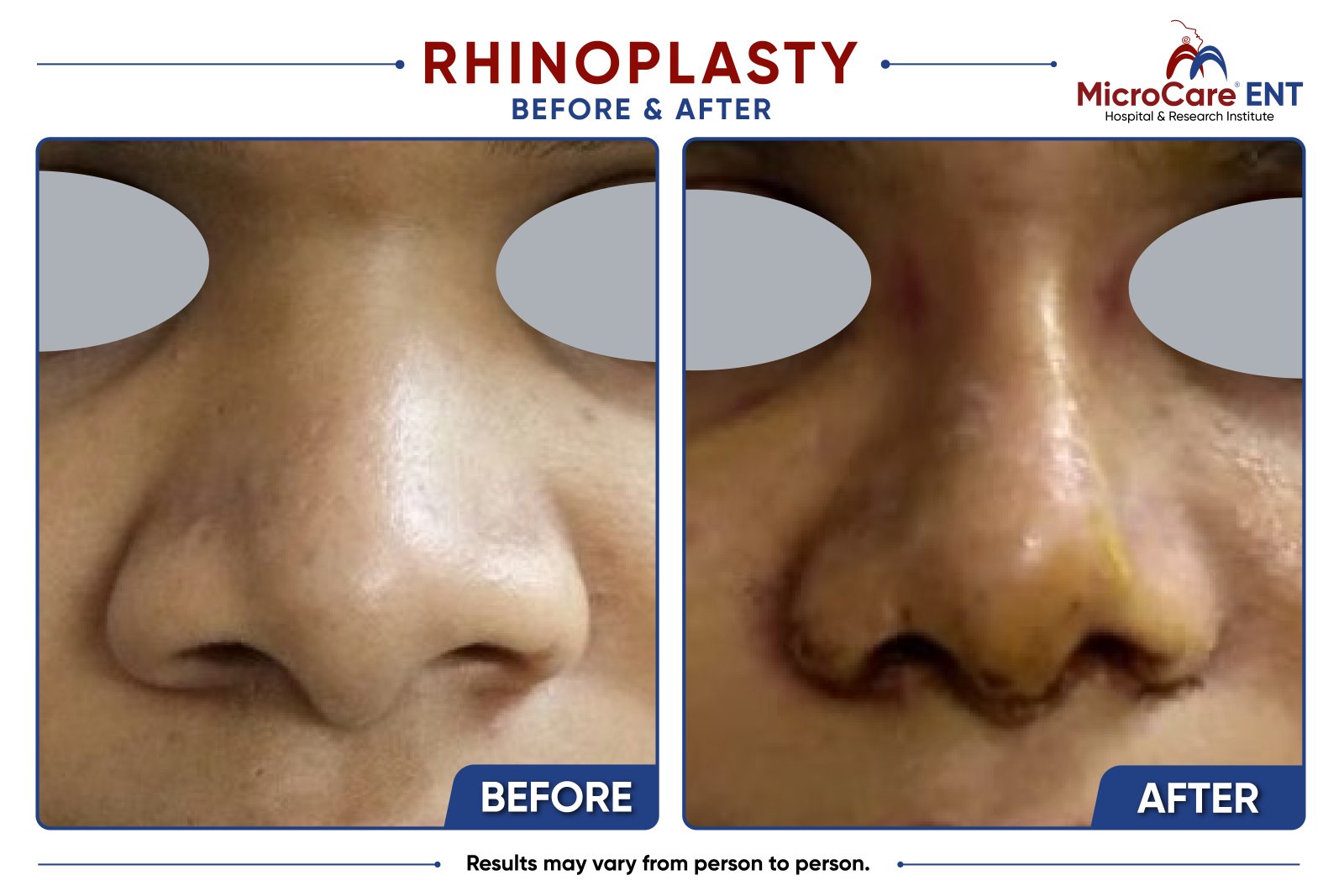
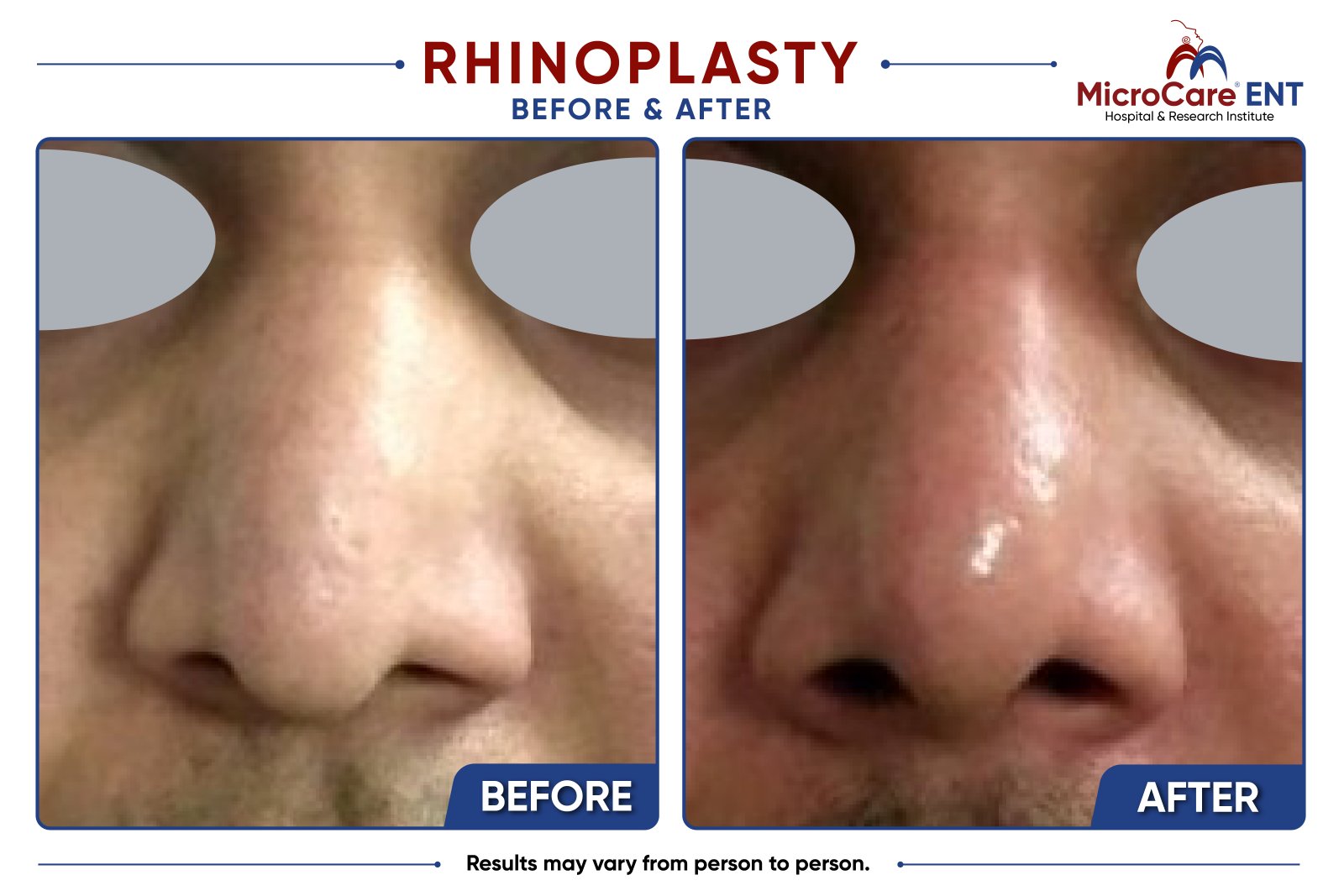
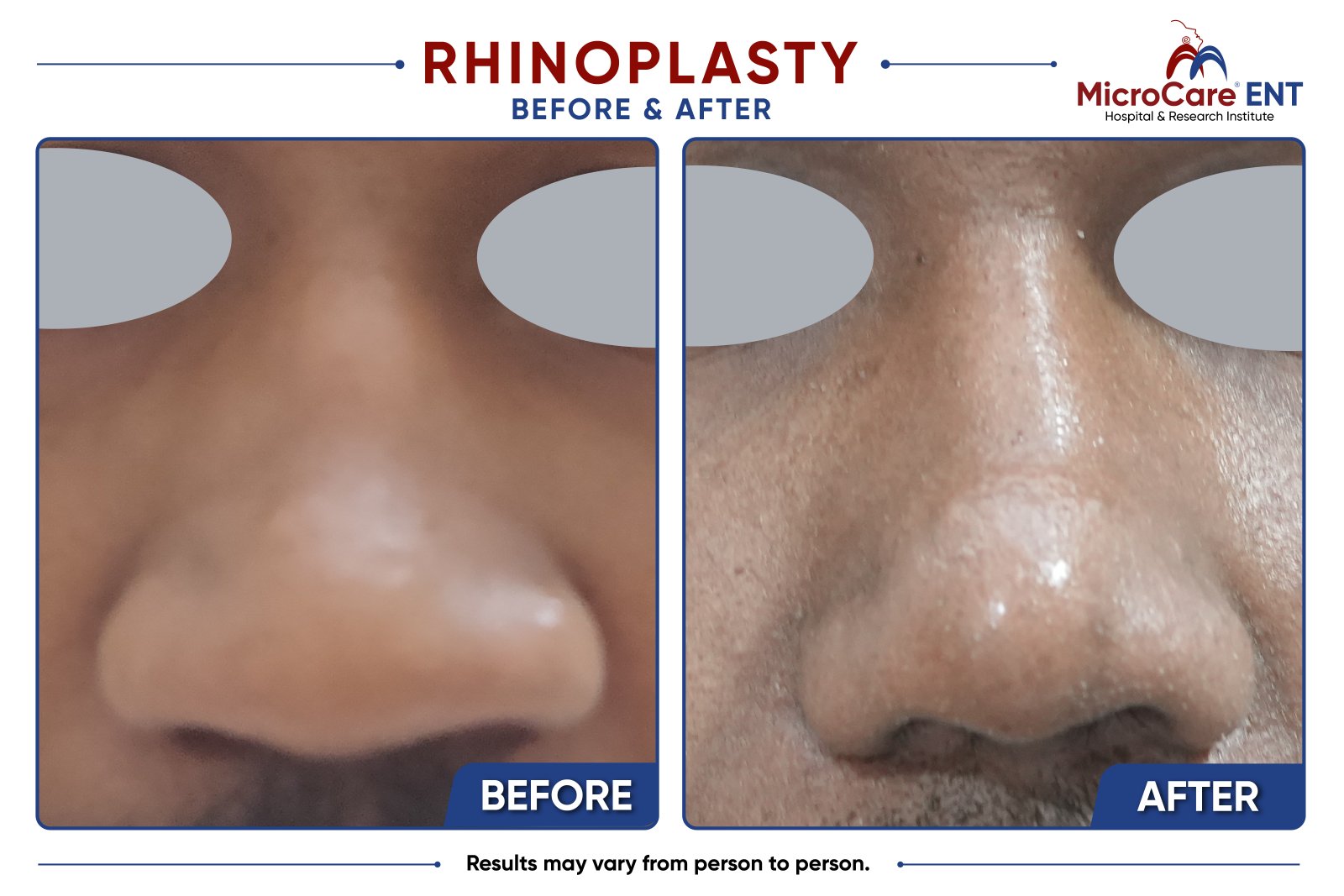
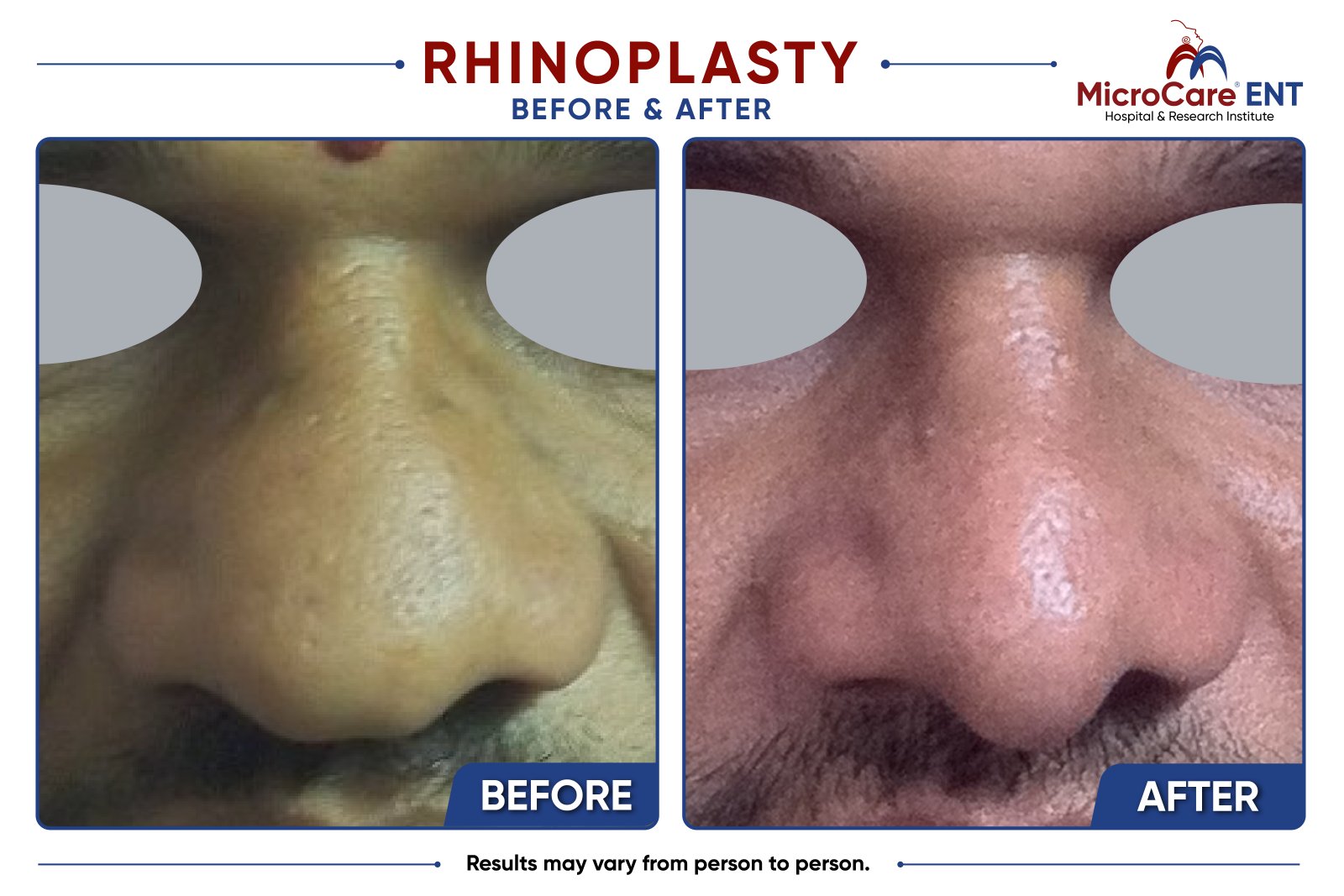
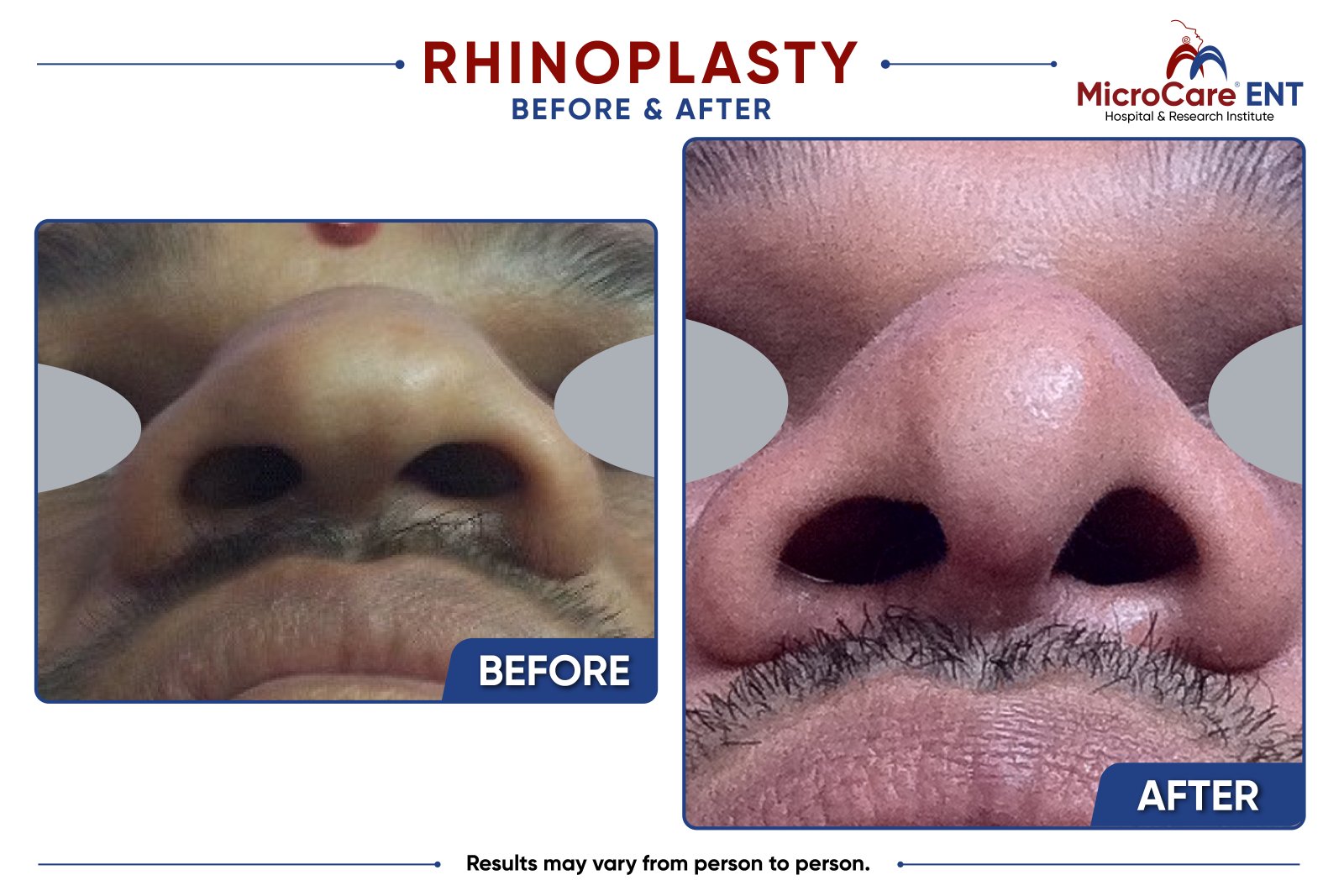
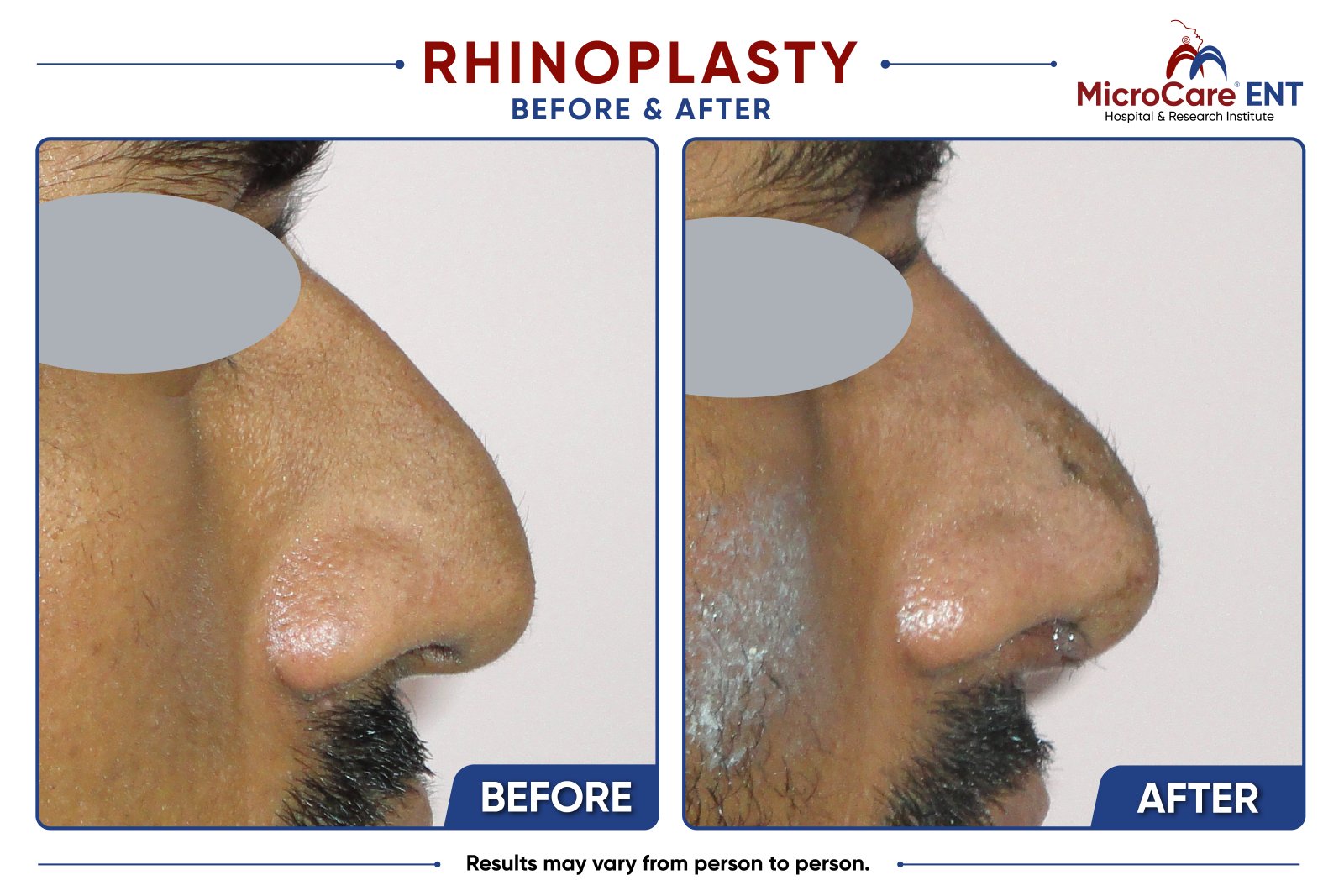
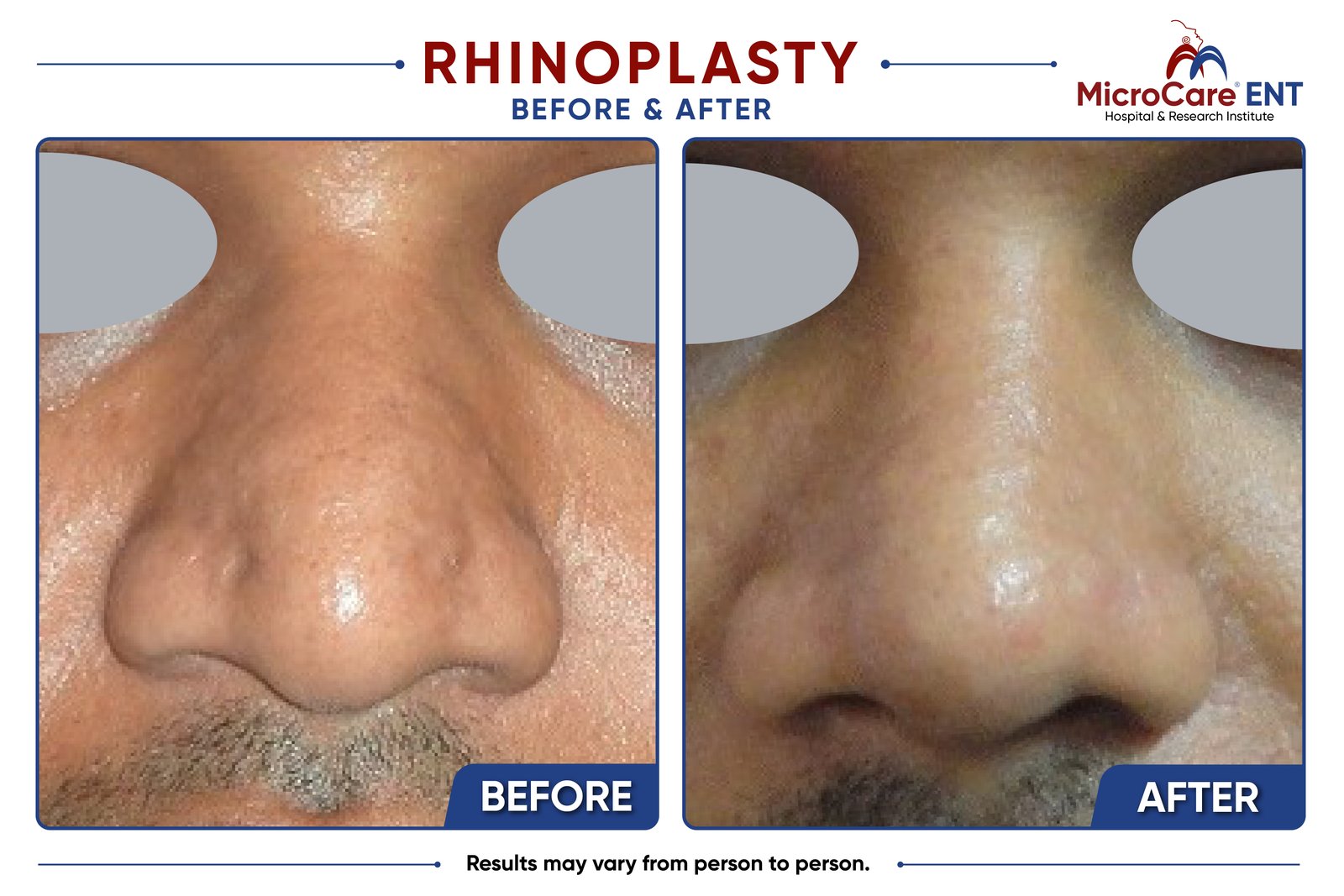
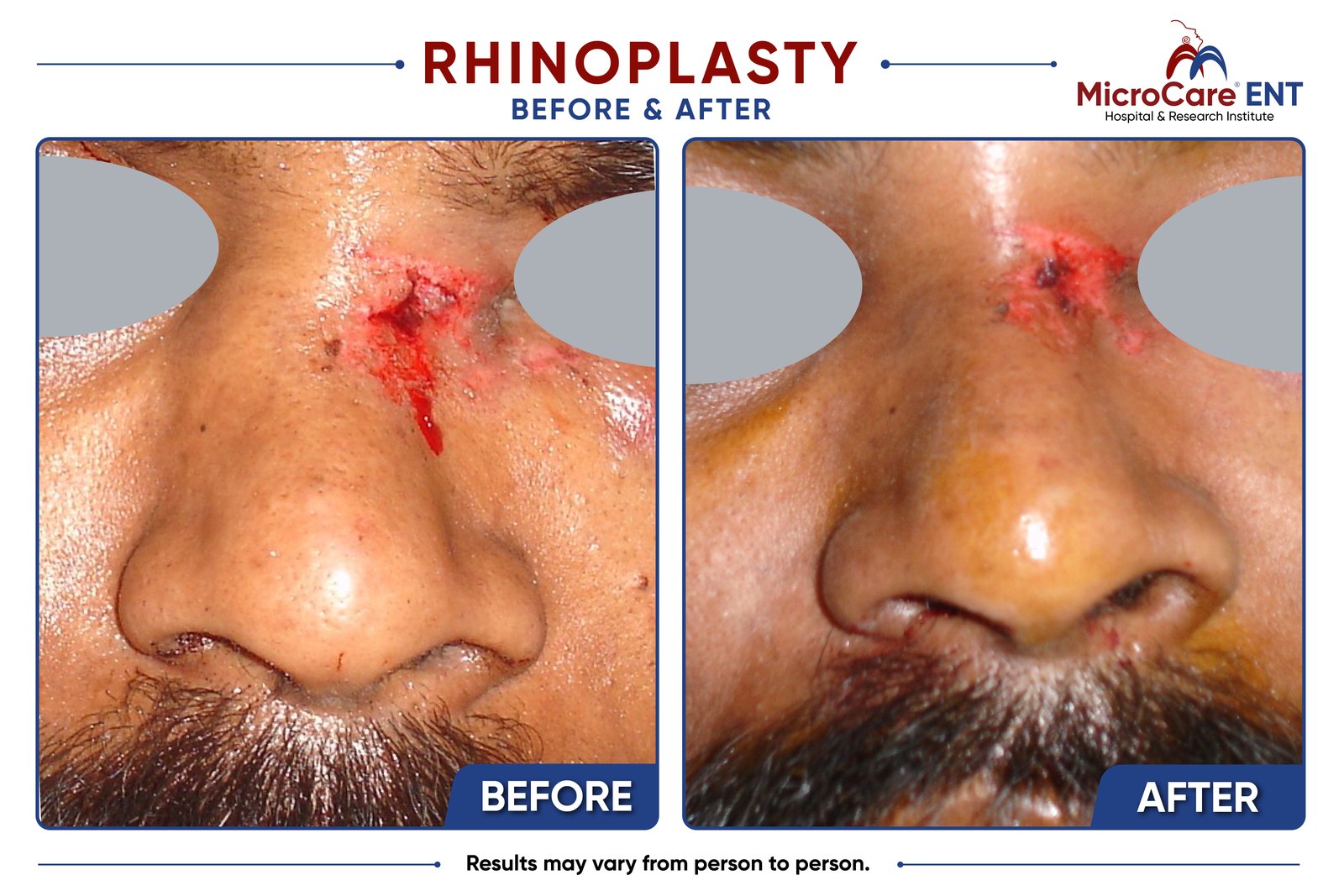
Photographs of patients of MicroCare ENT, shown with their consent. Every nose is different and individual results vary. See all before and after pictures.
Open or closed primary rhinoplasty?
The approach is chosen at your facial-mapping consultation, based on the elasticity of your tissues and what you want to change.
Open primary rhinoplasty
A tiny stepped cut across the narrowest part of the columella gives a full view of the framework.
Best for: complex tip reshaping, building up the bridge and major bone shifts after injury.
Endonasal approachClosed primary rhinoplasty
All cuts are inside the nostrils, so there is no visible scar, and early swelling is slightly less.
Best for: simple bridge or hump reduction and minor tip contouring.
Our evaluation process
A good first rhinoplasty depends on careful planning before surgery.
- Facial proportion analysisThe ratios between your forehead, cheekbones, lips and chin are measured so the new nose fits your face.
- High-definition nasal endoscopyAn ultra-fine, illuminated fibre-optic camera examines the valves, septum and turbinates inside the nose.
- Skin and cartilage assessmentSkin thickness and cartilage strength are assessed so any grafting is tailored to you.
Healing timeline
A nose that has not been operated on has an intact blood supply, so healing follows predictable stages.
| When | What is happening | What you can do |
|---|---|---|
| Days 1 to 7 | A protective external splint holds the bones; the nose feels blocked, like a cold | Splint and internal dressings removed at the hospital on day 7 |
| Weeks 2 to 3 | More than 80 percent of visible bruising clears | Return to office, college and social life |
| Weeks 6 to 12 | Deeper swelling drains and the contours of the bridge emerge | Normal cardio can resume; avoid high-impact contact sports |
| Months 6 to 12 | The skin settles over the new framework | Final definition and the best airflow are reached |
Primary rhinoplasty cost in Hyderabad
Every quote is individual. It depends on:
- The approach, open or closed.
- How complex the bone work is, including any micro-osteotomies.
- Whether septoplasty or nasal valve reconstruction is done at the same time.
Why choose MicroCare ENT for your first rhinoplasty?
ENT-led expertise
Prof. Dr. Sriprakash Vinnakota brings more than 26 years of ENT microsurgical experience.
Hospital-level safety
Surgery in NABH-accredited operating theatres with full anaesthesia support, strict sterilisation and round-the-clock emergency cover, never in a cosmetic salon.
Your own tissue
Instead of mass-produced silicone implants, grafts are made from your own septal or ear cartilage.
Natural, balanced design
No over-rotated, "operated" look; the aim is a refined nose that suits your face and your heritage.

Prof. Dr. Sriprakash Vinnakota
MS (ENT, Head & Neck) · Chief Rhinoplasty Surgeon, Centre for Advanced ENT, Head & Neck Surgery, MicroCare ENT Hospital & Research Institute
More than 26 years in ENT surgery, with rhinoplasty training at Marien Hospital, Stuttgart, under Prof. Dr. Wolfgang Gubisch. He is the author of Your Best Nose.
Frequently asked questions
Why is a first rhinoplasty easier than a revision?
In a nose that has never been operated on there is no scar tissue and no missing cartilage. That makes the result more predictable, gives the surgeon more options, and usually means a quicker early recovery.
Will making my nose smaller affect my breathing?
It can if the nose is reduced without supporting its internal structure. At MicroCare ENT, every change to the outside is paired with work on the inside where needed, so breathing is protected or improved.
Are the results permanent?
Yes. Once healing is complete within the first year, the new shape is stable. Your nose will still age naturally along with the rest of your face.
Will there be a visible scar?
Closed rhinoplasty leaves no outside scar. Open rhinoplasty leaves a very fine line across the columella, the strip of skin between the nostrils, which usually fades within 3 to 6 months.
What should I avoid after surgery?
Do not blow your nose for 2 to 3 weeks. Keep heavy glasses off the bridge for 4 to 6 weeks; we will show you how to tape them to your forehead instead.
See also What is rhinoplasty?, cosmetic rhinoplasty and our FAQs.
Plan your first rhinoplasty
Leave your name and number and we will open WhatsApp with your details filled in. You can also call +91 94949 40725.