
Understanding Nasal Anatomy
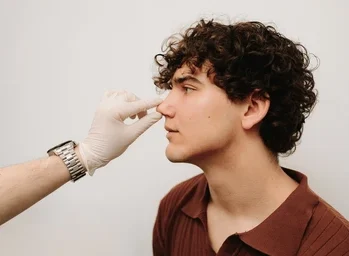
The Structure Behind Breathing and Facial Harmony
The human nose is an intricately engineered gateway that balances complex respiratory physics with the focal symmetry of the face. Understanding internal and external nasal anatomy allows patients to appreciate how deep-seated structural variations alter daily airflow, sleep architecture, and surgical success.
At the Microcare Centre for Advanced Rhinoplasty, our specialized ENT-led surgical team approaches every procedure with a comprehensive master-level knowledge of nasal biomechanics. This ensures that any change made to your facial profile actively preserves or enhances your long-term breathing health.
India's Top Rhinoplasty Surgeon

Why Nasal Anatomy Matters
The Intersect of Form and Function
The nose is far more than a fixed aesthetic feature. It acts as a dynamic biological organ that performs several vital physiological functions:
- Conditioning Air: It actively filters, warms, and humidifies thousands of liters of inhaled air daily before it reaches the lungs.
- Aerodynamic Regulation: It controls baseline airflow resistance, optimizing lung expansion and overall oxygenation.
- Sensory and Vocal Support: It houses specialized olfactory nerves responsible for the sense of smell and serves as a major resonant chamber for clear speech.
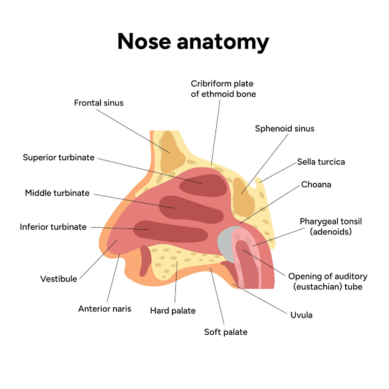
External Nasal Anatomy: Bony and Cartilaginous Landmarks
The visible exterior of the nose is divided into distinct anatomical zones. These structures define your unique profile and are the primary focus of cosmetic modification:

1. The Nasal Bridge (Dorsum)
The visible exterior of the nose is divided into distinct anatomical zones. These structures define your unique profile and are the primary focus of cosmetic modification:
2. The Nasal Tip
The character and projection of the tip are determined by the paired, wing-shaped lower lateral cartilages (alar cartilages). Weakness, excess volume, or structural asymmetry in these cartilages can manifest externally as a bulbous, drooping, or under-rotated tip that shifts out of alignment when you smile.
3. The Nostrils (Nares) and Alar Base
The nostrils act as the external entry points for daily respiration. The lateral walls, or ala, are made of dense fibrofatty tissue. Wide, flaring, or asymmetric nostrils require highly precise alar base reduction techniques to reshape the base without pinching the entrance to the airway.
4. The Columella
The columella is the narrow strip of skin and tissue that separates the nostrils, covering the lower border of the nasal septum. It serves as a vital structural pillar that supports the projection and stability of the entire nasal tip.
Internal Nasal Anatomy: The Engines of Respiration
While external landmarks define your visual profile, the internal architecture hidden behind the skin dictates exactly how well you breathe on a daily basis.

1. The Nasal Septum
The septum is the central dividing partition that splits the internal nasal cavity into two distinct, separate air passages. The anterior portion is composed of living quadrangular cartilage, while the posterior zone merges into structural ethmoid and vomer bones.
When the septum is displaced or crooked—a condition known as a deviated septum—it significantly narrows one or both breathing channels. This causes a physical obstruction that leads to chronic mouth breathing, snoring, recurrent sinus blockages, and sleep disruptions.
2. The Nasal Turbinates
Turbinates are long, curved, bony shelves covered in highly vascular mucosal tissue that project from the lateral walls of the nasal cavity. There are three sets: superior, middle, and inferior turbinates. The inferior turbinates are responsible for expanding and shrinking to regulate moisture levels. Chronic allergies or structural deviations can cause permanent swelling (turbinate hypertrophy), which severely limits deep nasal breathing.
3. The Nasal Valve Area
The internal nasal valve is the narrowest structural space within the entire upper respiratory tract. It is bounded by the nasal septum, the lower edge of the upper lateral cartilage, and the floor of the nose. This tiny zone regulates the velocity of your breath. If this area is weak or narrow, it causes nasal valve collapse, where the nostrils pinch closed during deep inhalation, severely restricting oxygen intake during exercise or sleep.

How Anatomy Directs Successful Rhinoplasty Outcomes
Modern, advanced rhinoplasty rejects the outdated concept of simply cutting down bones to make a nose smaller. Every single alteration to an external bone or internal cartilage permanently shifts how air moves through the internal passages.
- Structural Preservation: Instead of aggressively removing cartilage, our Advanced Septorhinoplasty approach focuses on rebuilding and reinforcing the existing anatomical framework using autologous grafts (sourced from your own septum, ear, or rib).
- Airway Security: When a dorsal hump is removed, the upper lateral cartilages can collapse inward. An ENT-led team proactively places spreader grafts to widen the internal nasal valves, ensuring the nose looks beautifully straight while maintaining an open, unobstructed airway.
- Passage Clearance: By integrating a septoplasty and targeted turbinate reduction into the aesthetic plan, we permanently cure long-standing sinus pressure and breathing blocks during the same surgical session.
Why an ENT-Led Understanding Changes Everything
The human nose cannot be treated purely as an aesthetic ornament or an isolated respiratory tube. It is a highly complex organ where internal engineering directly shapes your external appearance.
Choosing an ENT-led Rhinoplasty hospital like Microcare ensures that your surgical plan is handled by specialists who have spent decades mastering the micro-anatomy of the human airway. We treat the underlying structural issues causing your nasal concerns, delivering results that are as healthy, stable, and long-lasting as they are naturally beautiful.
Discover the Blueprint Behind Your Nose
Take the first step toward optimal breathing and complete facial harmony. Get a comprehensive, state-of-the-art internal and external assessment from Hyderabad’s premier rhinoplasty team.
Button: WhatsApp for Mobile Photo Analysis
Button: Schedule Your Diagnostic Hospital Consult
Target SEO Keywords Integrated:
Nasal Anatomy Rhinoplasty Hyderabad, Internal Nose Structure, Deviated Septum Cartilage, Nasal Valve Collapse Treatment, Best Septorhinoplasty Surgeon Hyderabad, Advanced Functional Nose Surgery India.

Dr. Sriprakash Vinnakota
MS ENT, HEAD & NECK
CHIEF RHINOPLASTY SURGEON
26+ years of Experience
The ENT Advantage: Why Specialized Expertise Matters in Rhinoplasty
A successful rhinoplasty must achieve a delicate equilibrium between form and function. Because the nose is primarily a complex respiratory organ, the specialized training of an ENT (Otolaryngology) Surgeon provides a distinct advantage in ensuring long-term surgical success.
A successful rhinoplasty must achieve a delicate equilibrium between form and function. Because the nose is primarily a complex respiratory organ, the specialized training of an ENT (Otolaryngology) Surgeon provides a distinct advantage in ensuring long-term surgical success.
At Microcare ENT, Center for Advanced Rhinoplasty & Functional Nose Surgery, our surgical philosophy is rooted in the following four pillars of ENT expertise:
Why Choose Microcare ENT for Your Rhinoplasty?
Selecting the right facility for nasal reshaping surgery is a decision that impacts both your lifelong breathing health and your facial aesthetic. As a premier Centre for Advanced Rhinoplasty & Functional Nose Surgery, Microcare ENT provides a level of precision and safety that sets us apart in the field of facial plastic surgery.

1. Board-Certified ENT & Super Specialised Expertise
Under the leadership of Dr. Sriprakash Vinnakota, our team brings over 26 years of clinical experience to every procedure. We are not just cosmetic surgeons; we are ENT, Head & Neck specialists who understand the deep-seated relationship between nasal form and respiratory function.
2. Dual-Focus Approach: Functional & Aesthetic Harmony
We reject the “one-size-fits-all” model. Every rhinoplasty at Microcare ENT is a customized Septorhinoplasty, ensuring that as we refine your nasal bridge or tip, we simultaneously optimize your airway. We specialize in achieving Natural-Looking Results that never appear “operated on.”
3. Advanced Surgical Technology
We utilize 2026’s gold-standard medical technologies to ensure faster recovery and higher precision:
- Endoscopic Assistance: For clear visualization of internal nasal structures.
- Piezoelectric (Ultrasonic) Tools: To reshape nasal bones with minimal trauma, reducing post-operative bruising and swelling.
- Modern Level-3 Modular OTs: Ensuring a sterile, safe, and controlled surgical environment.
4. Ethical & Patient-Centric Care
At an Advanced Super Speciality level, we adhere to the highest ethical standards. Our protocols include:
- Transparent Consultations: We provide honest assessments of what can be achieved, prioritizing your safety over surgical volume.
- Structured Post-Operative Follow-ups: Comprehensive long-term care to monitor your healing progress for up to a year after surgery.
- Affordable Excellence: Providing world-class super-speciality care with transparent pricing and ethical treatment paths.