
Breathe better. Look like yourself.
A blocked nose, a crooked bridge and breathing that disturbs your sleep often share one cause: the structure inside the nose. Septorhinoplasty straightens the septum and reshapes the outside of the nose in a single operation, so you recover once.
Medically reviewed by Prof. Dr. Sriprakash Vinnakota, MBBS, MS (ENT, Head & Neck), Chief Rhinoplasty Surgeon, Centre for Advanced ENT, Head & Neck Surgery, MicroCare ENT Hospital & Research Institute.
- Treats
- Breathing and shape together
- Approach
- Open or closed
- Splint & stitches out
- Day 7
- Back to work
- 2 to 3 weeks
- Breathing improves
- Within 1 to 3 months
- Final profile
- 6 to 12 months
What is septorhinoplasty?
Septorhinoplasty combines two operations in one. Septoplasty straightens the septum, the wall of bone and cartilage that divides the nose into two airways. Rhinoplasty reshapes the outside of the nose. Doing both together means one anaesthetic and one recovery, and the inside and outside are planned to support each other.
The septoplasty part
The bent septum is straightened so air flows evenly through both sides, with less resistance to breathing.
The rhinoplasty part
The bridge is straightened or smoothed, a bulbous tip refined, asymmetry corrected, or a flat profile built up.
Before your consultation, Prof. Dr. Vinnakota's book Your Best Nose answers 100 common rhinoplasty myths. Read it before you decide.
Signs of a structural problem inside the nose
Many people who come in about the shape of their nose do not realise that the same structure is affecting their breathing. Septorhinoplasty may help if you have:
- A blocked nose that does not go away, on one side or both.
- Mouth breathing and a dry throat, with snoring, a sore throat in the morning or poor sleep.
- A nose that healed crooked after a sports injury, fall or fracture.
- Nostrils that collapse inwards when you breathe in deeply.
- Constant sinus pressure, congestion or headaches that nasal sprays do not relieve.
Conditions treated with septorhinoplasty
Deviated nasal septum
A bent septum narrows one or both airways and causes lasting blockage. It is reshaped precisely while enough cartilage is kept to support the outside of the nose.
Saddle nose and bridge collapse
A sunken bridge after a serious injury or earlier surgery also restricts airflow. Grafts of your own cartilage restore the height of the bridge and open the airway.
Twisted or crooked nose
When the septum is crooked, the outer nose often follows it away from the centre of the face. Straightening the septum and repositioning the nasal bones restores symmetry.
Crooked nose correctionNasal valve narrowing
The narrowest part of the airway can collapse when you breathe in. Reinforcing the valves keeps them open and helps end mouth breathing.
Functional rhinoplastyPatient results
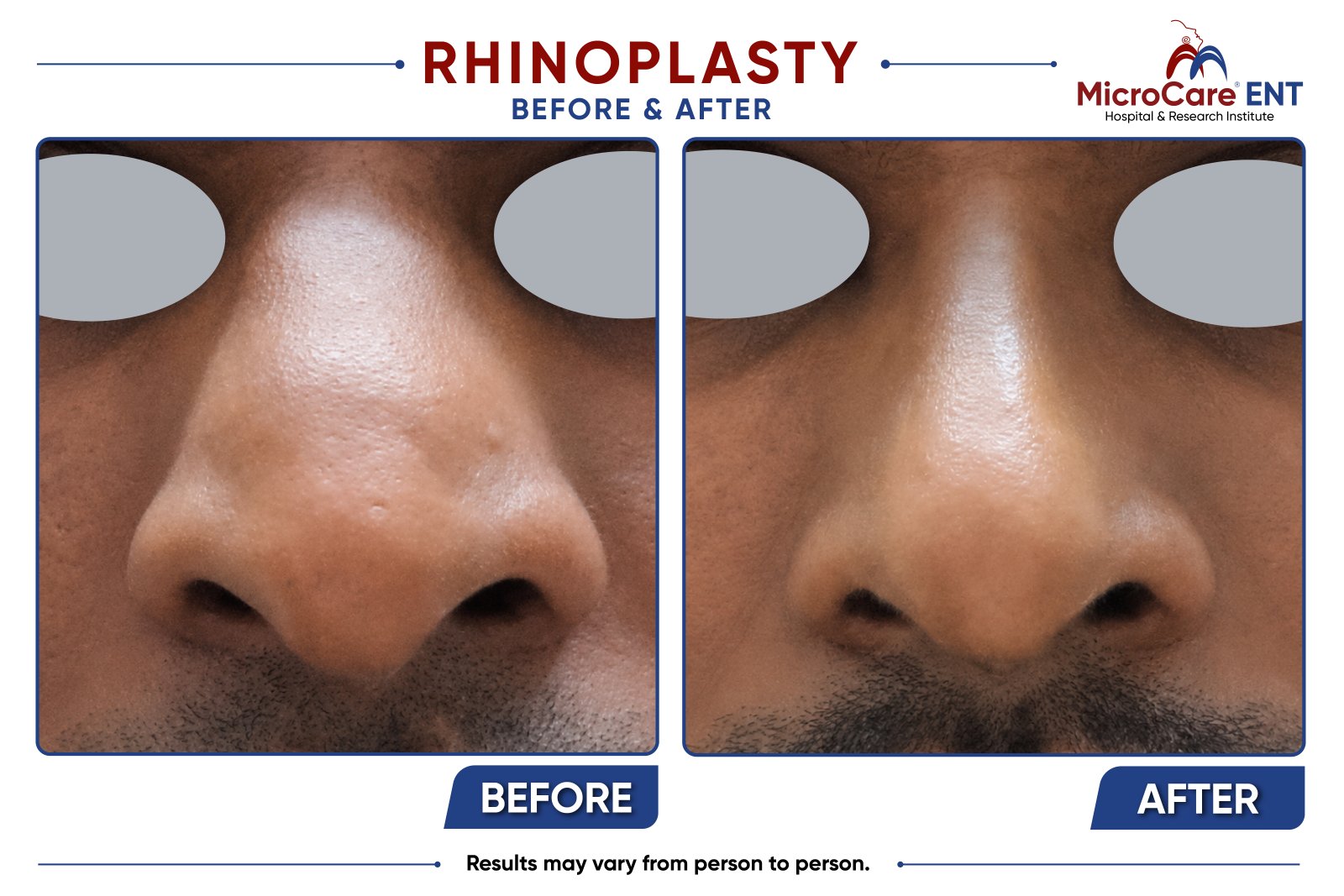
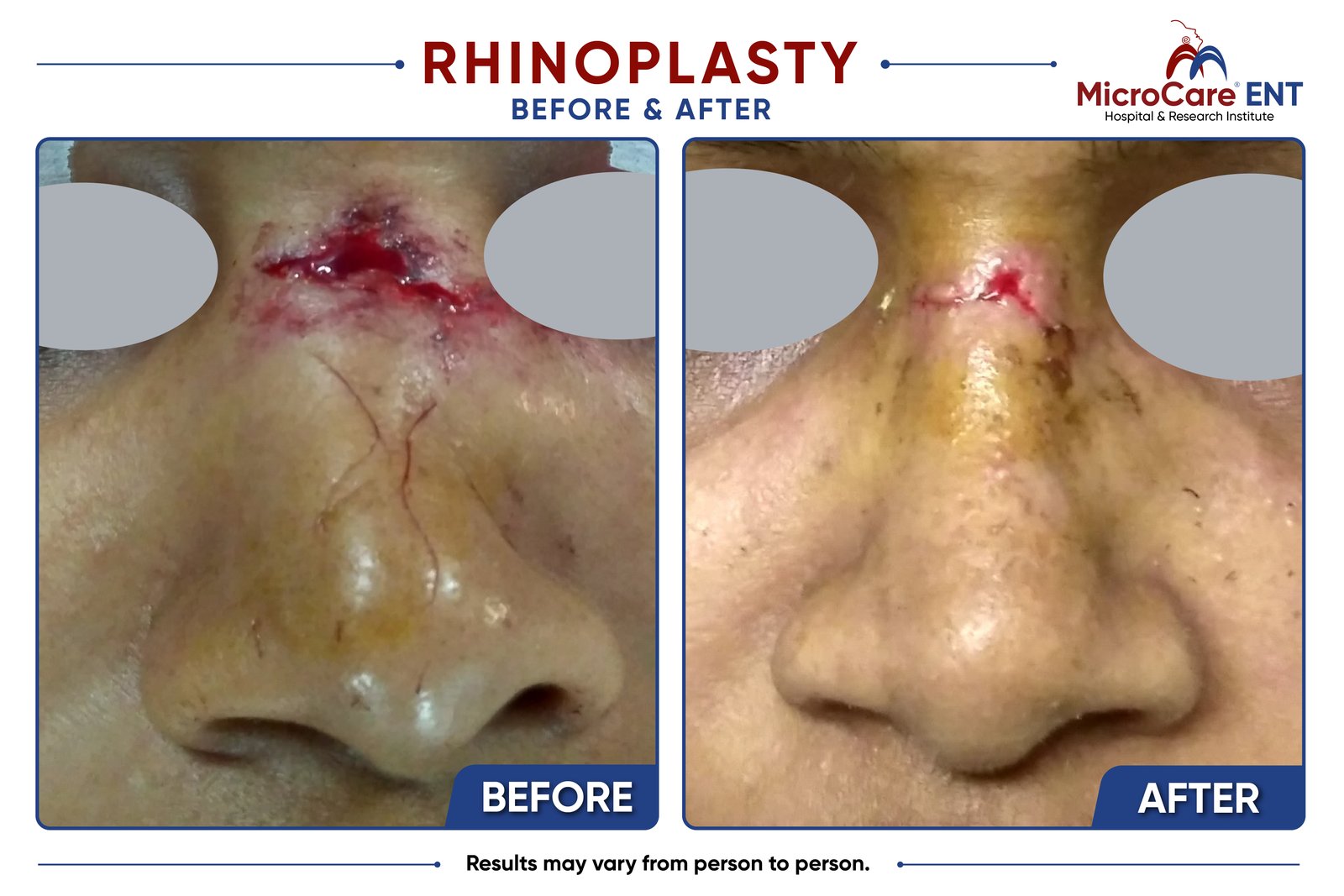
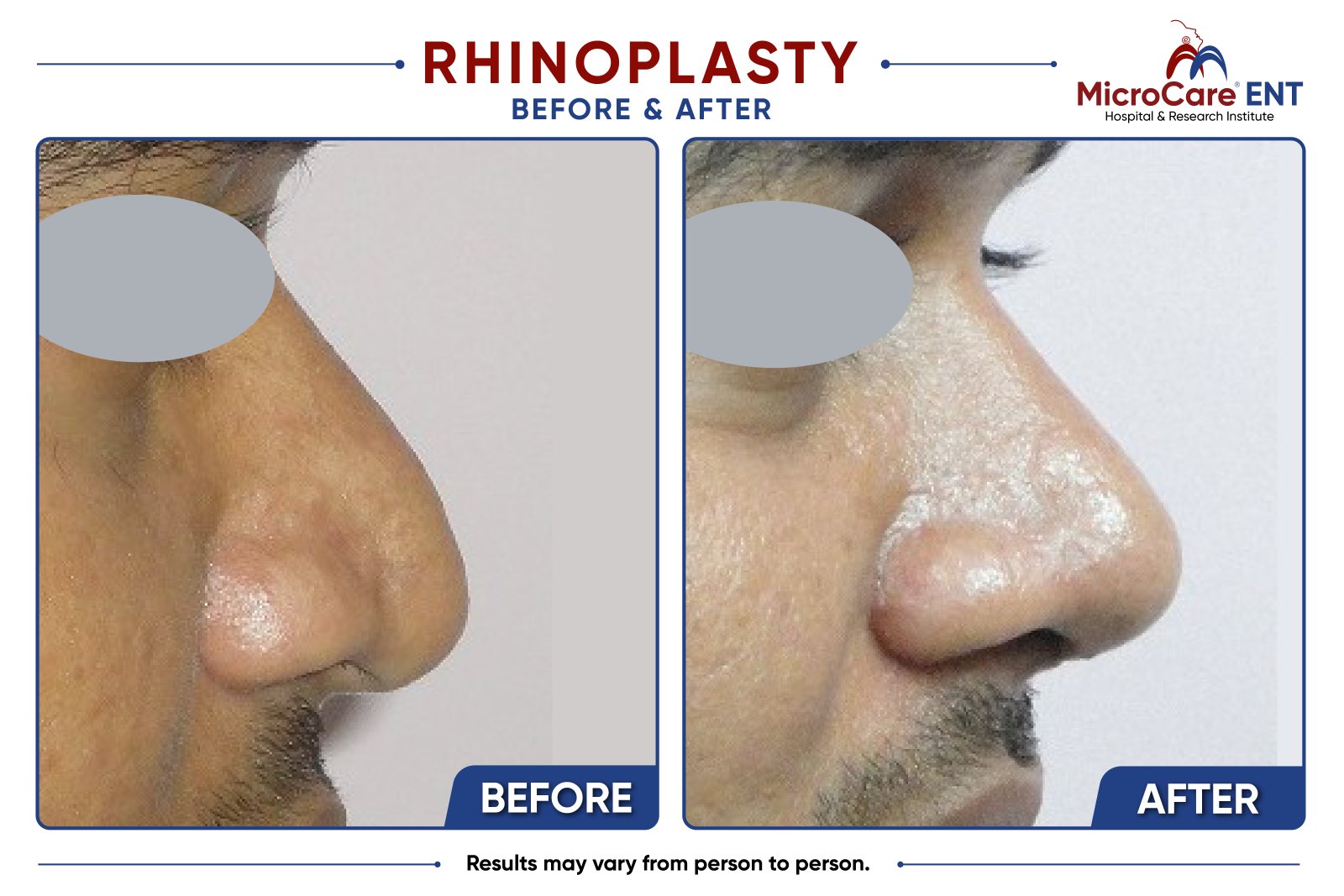
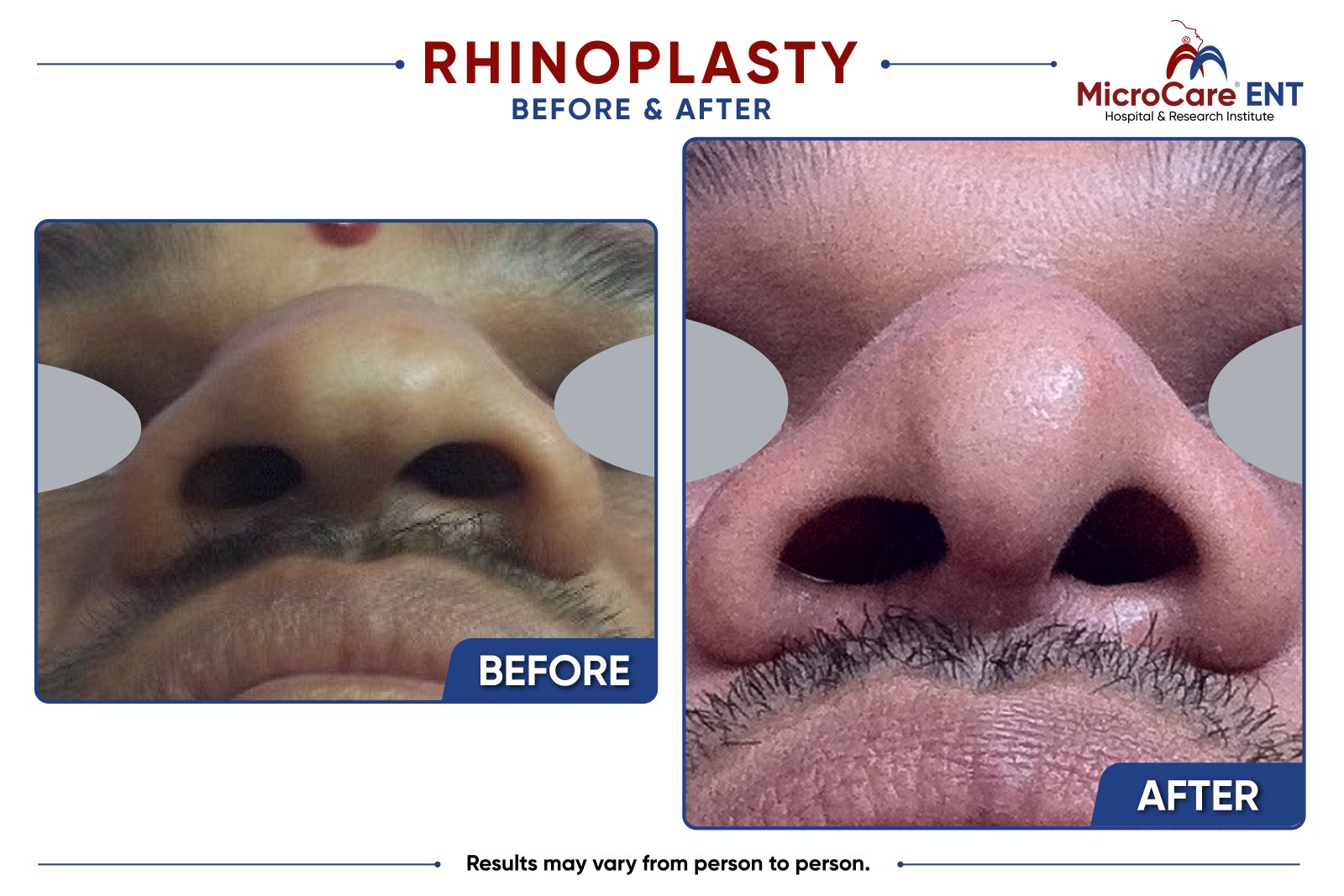
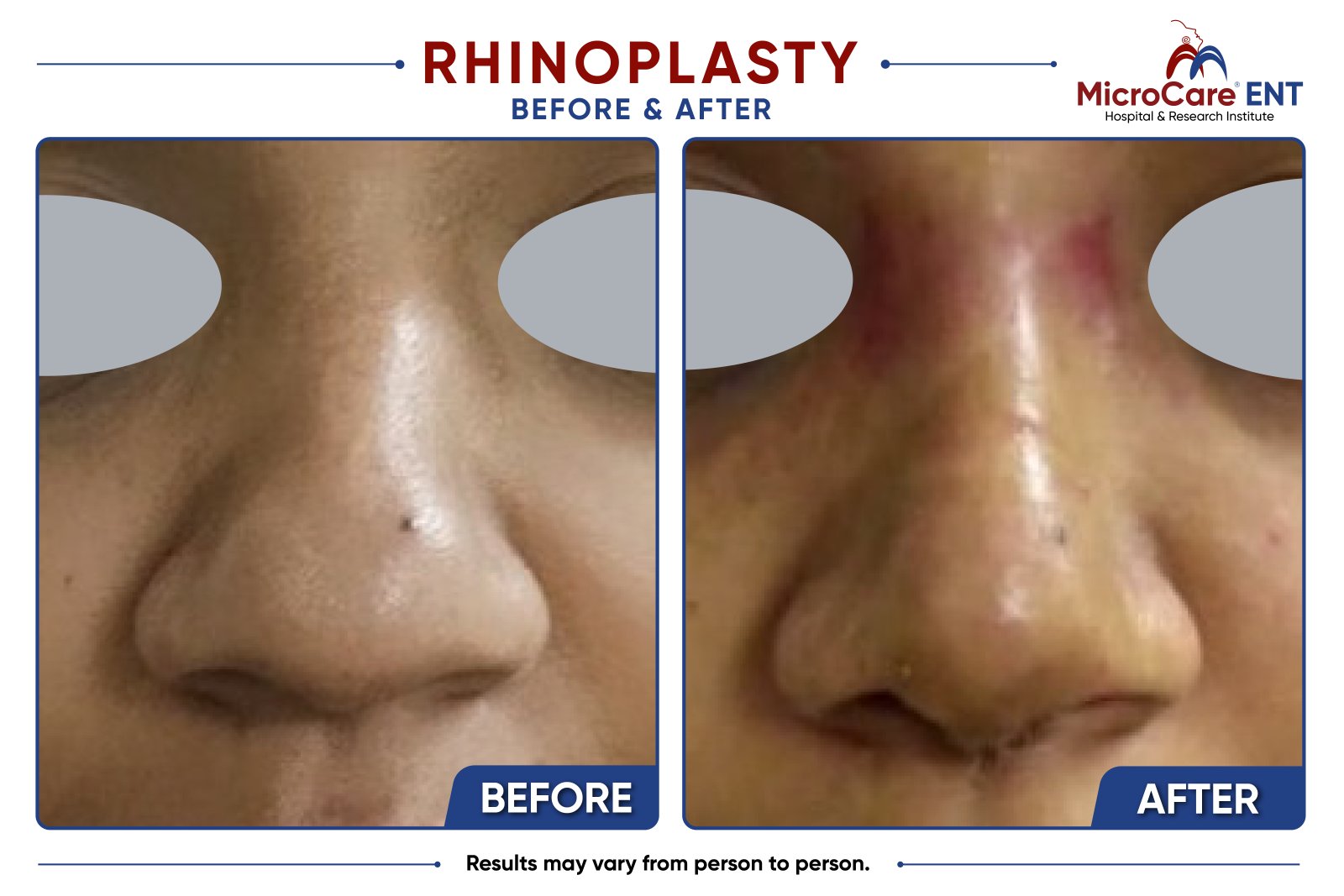
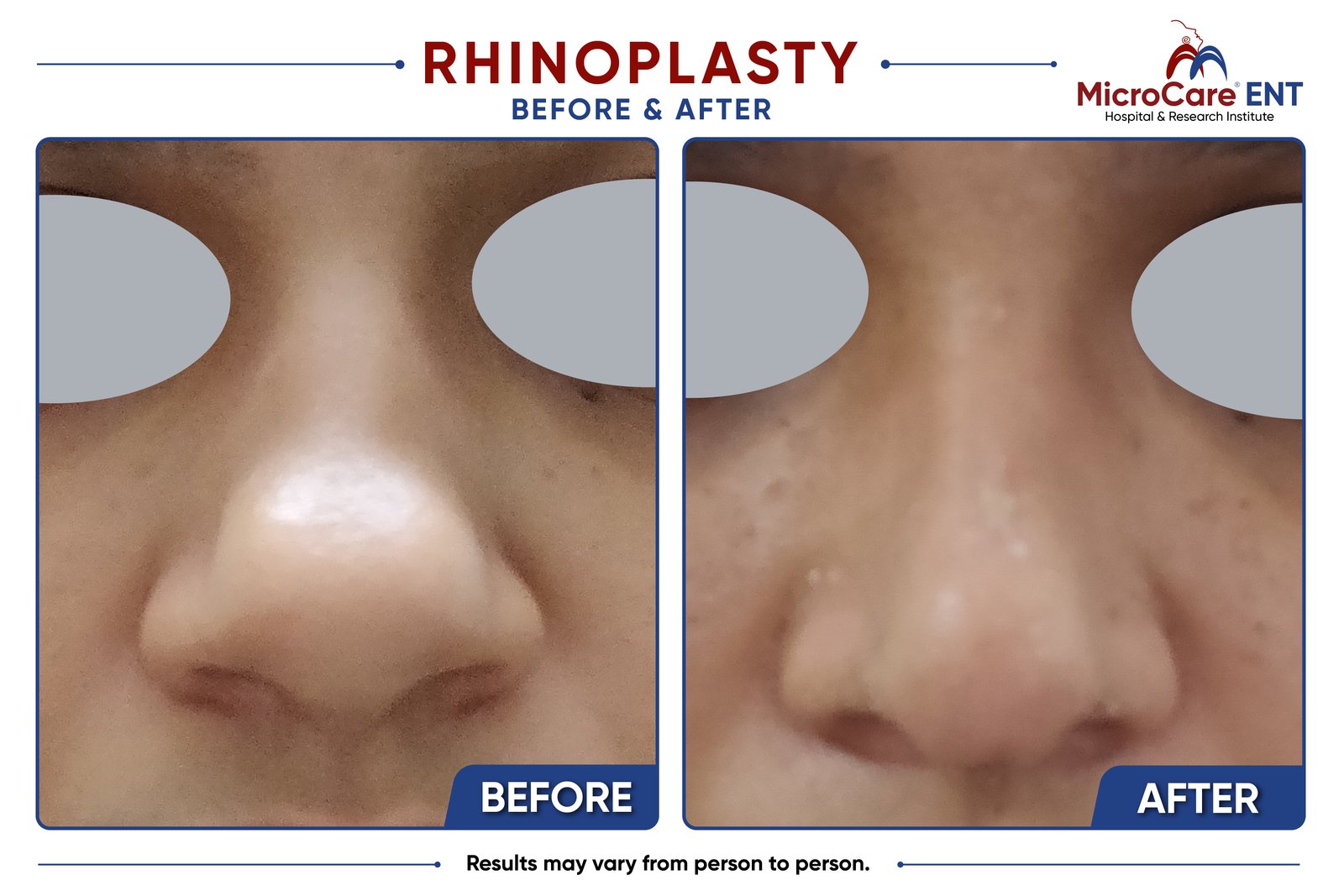
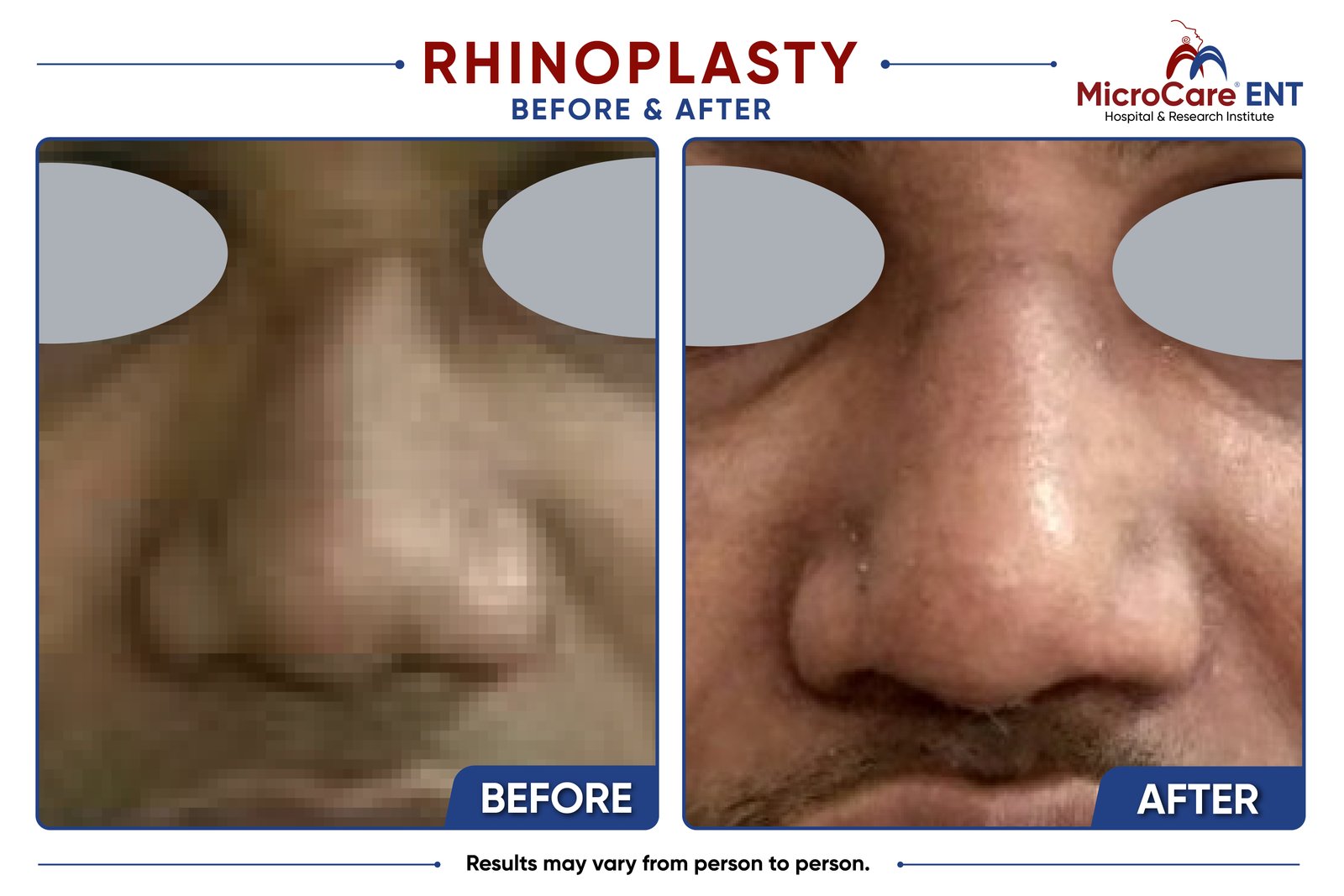
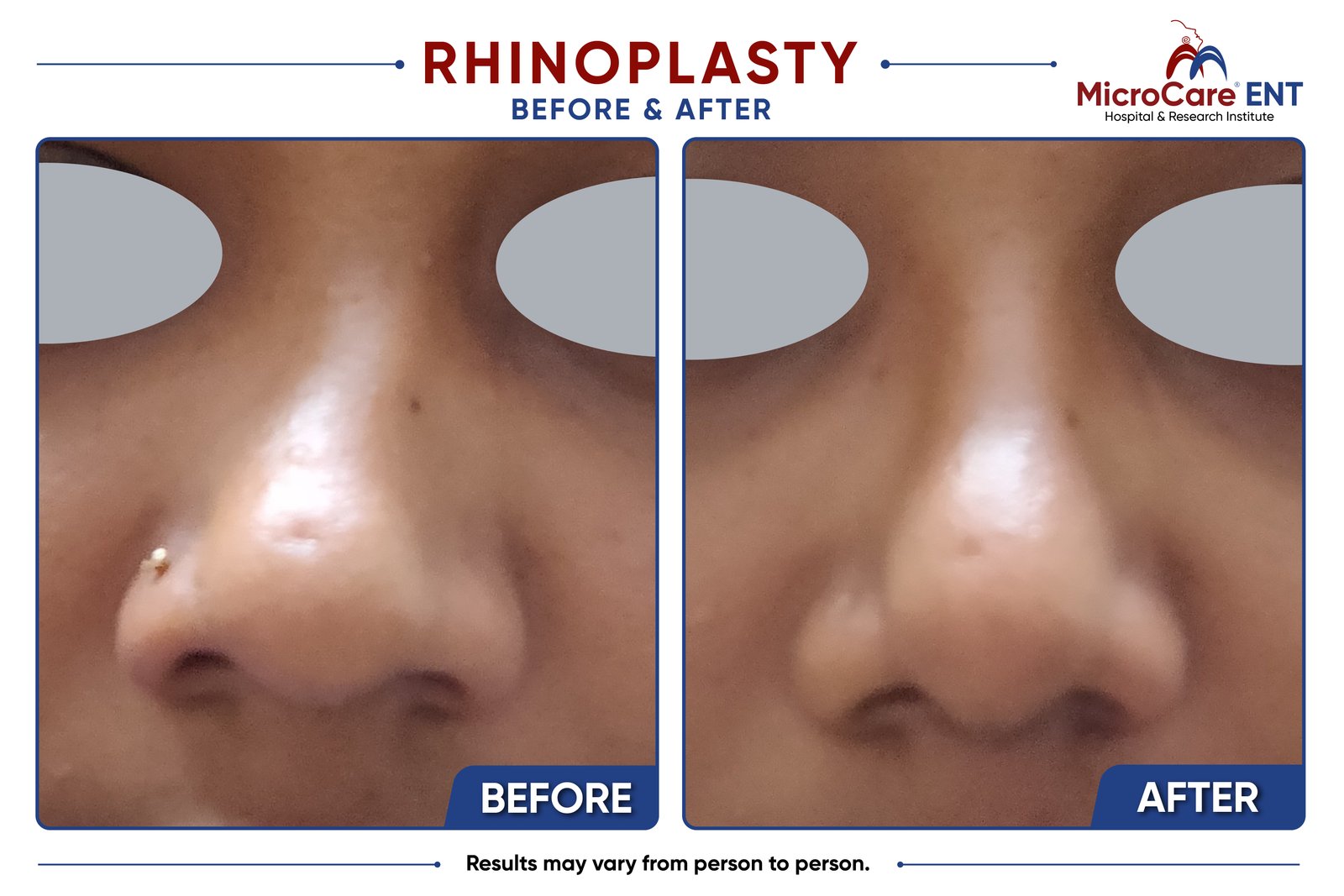
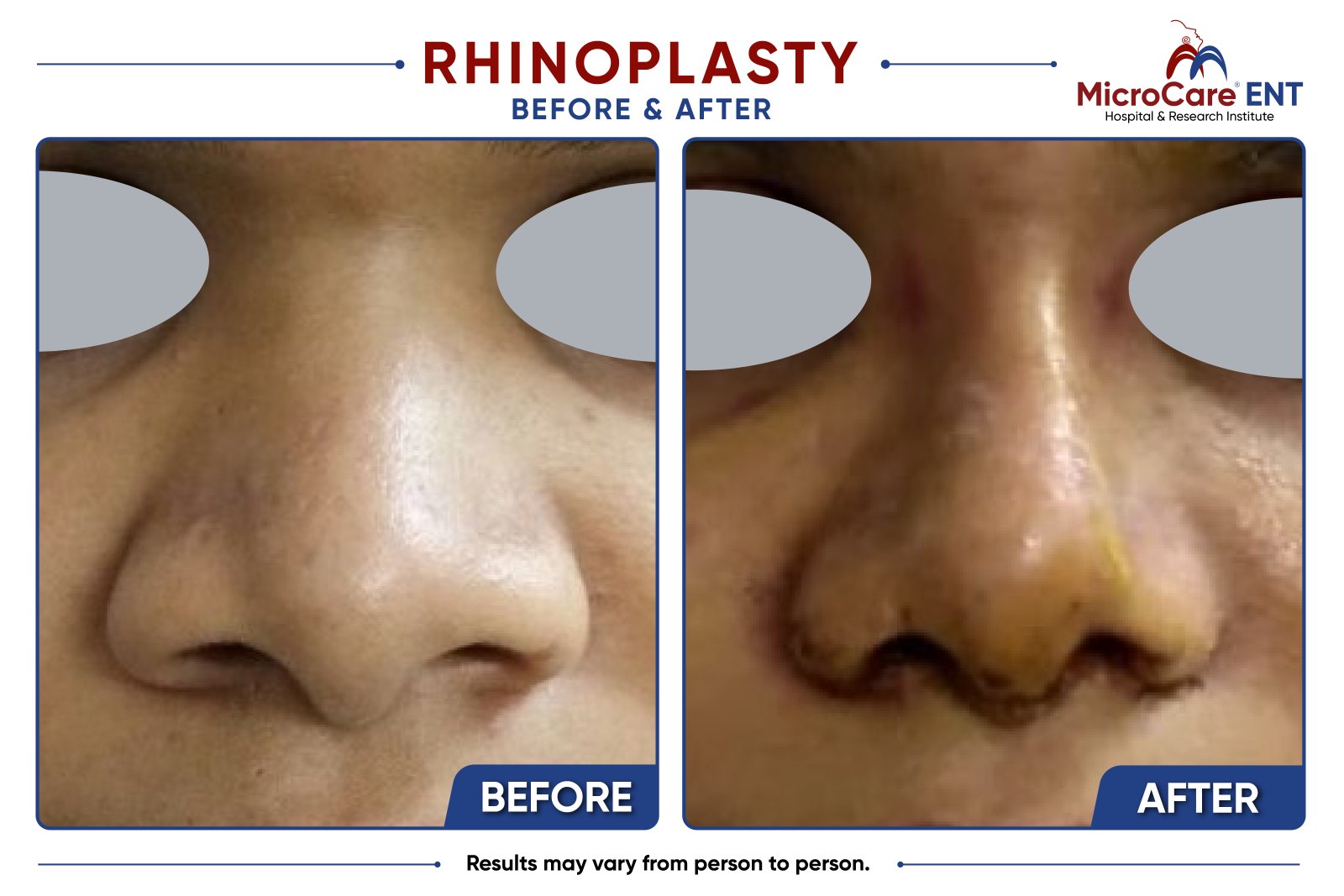
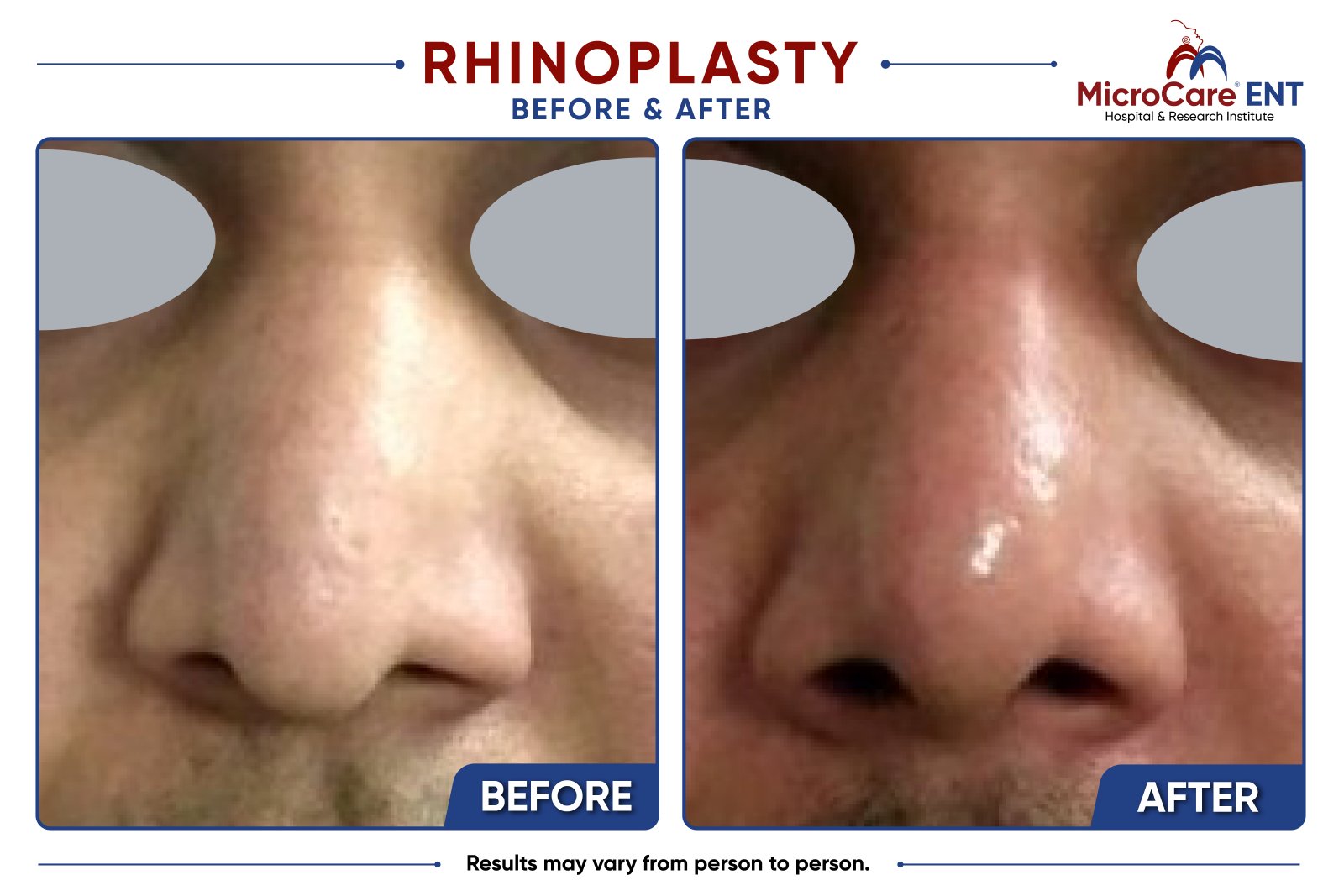
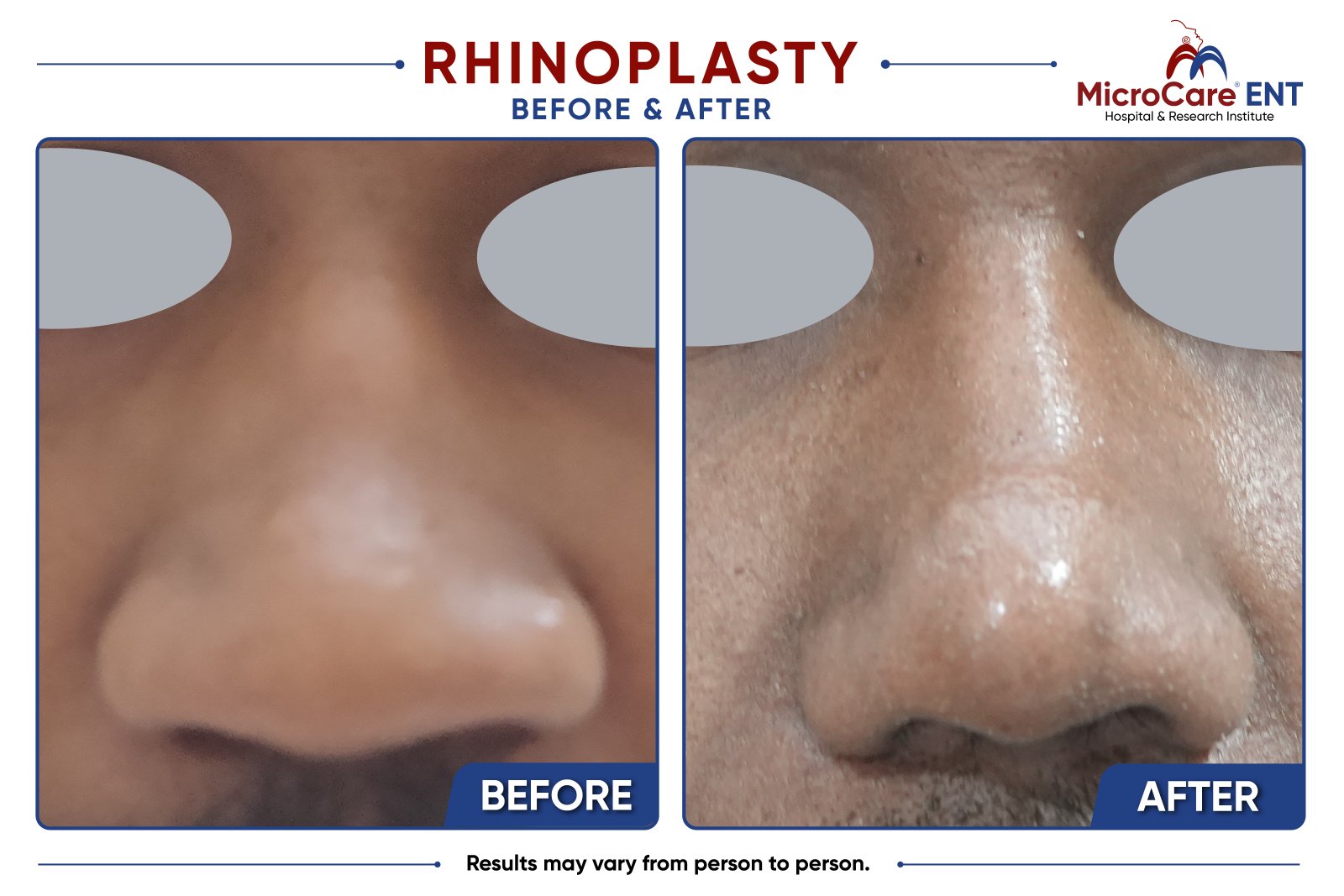
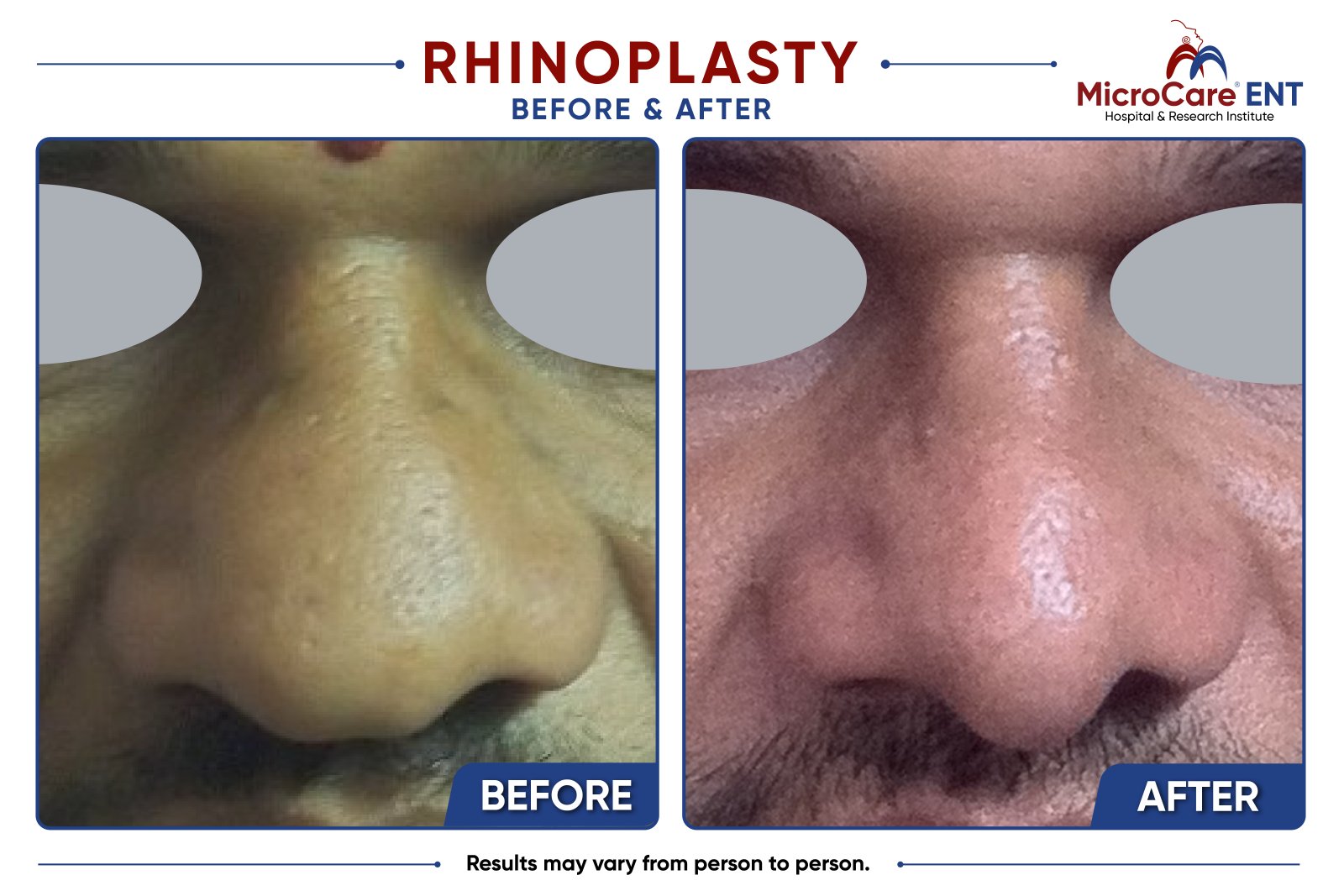
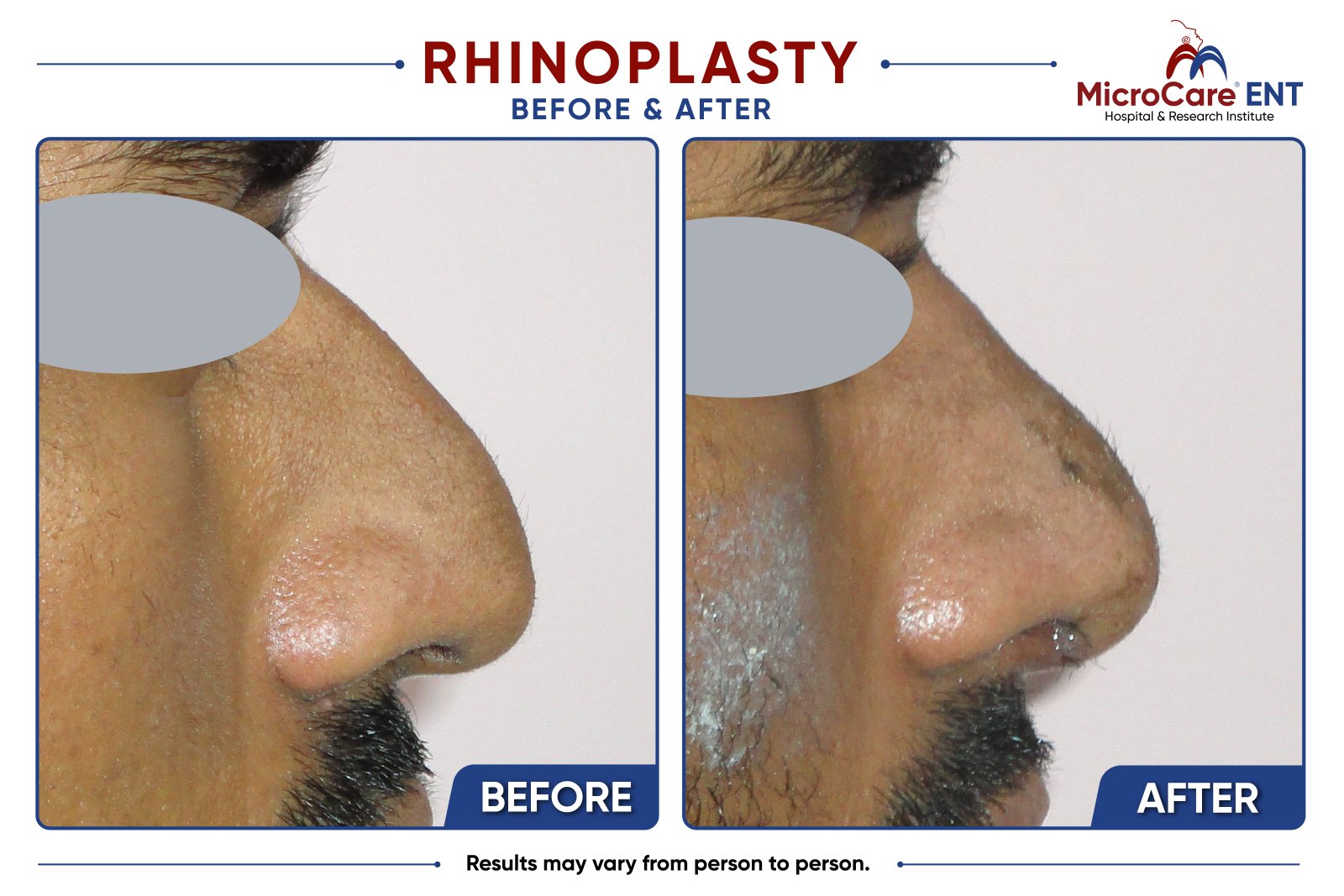
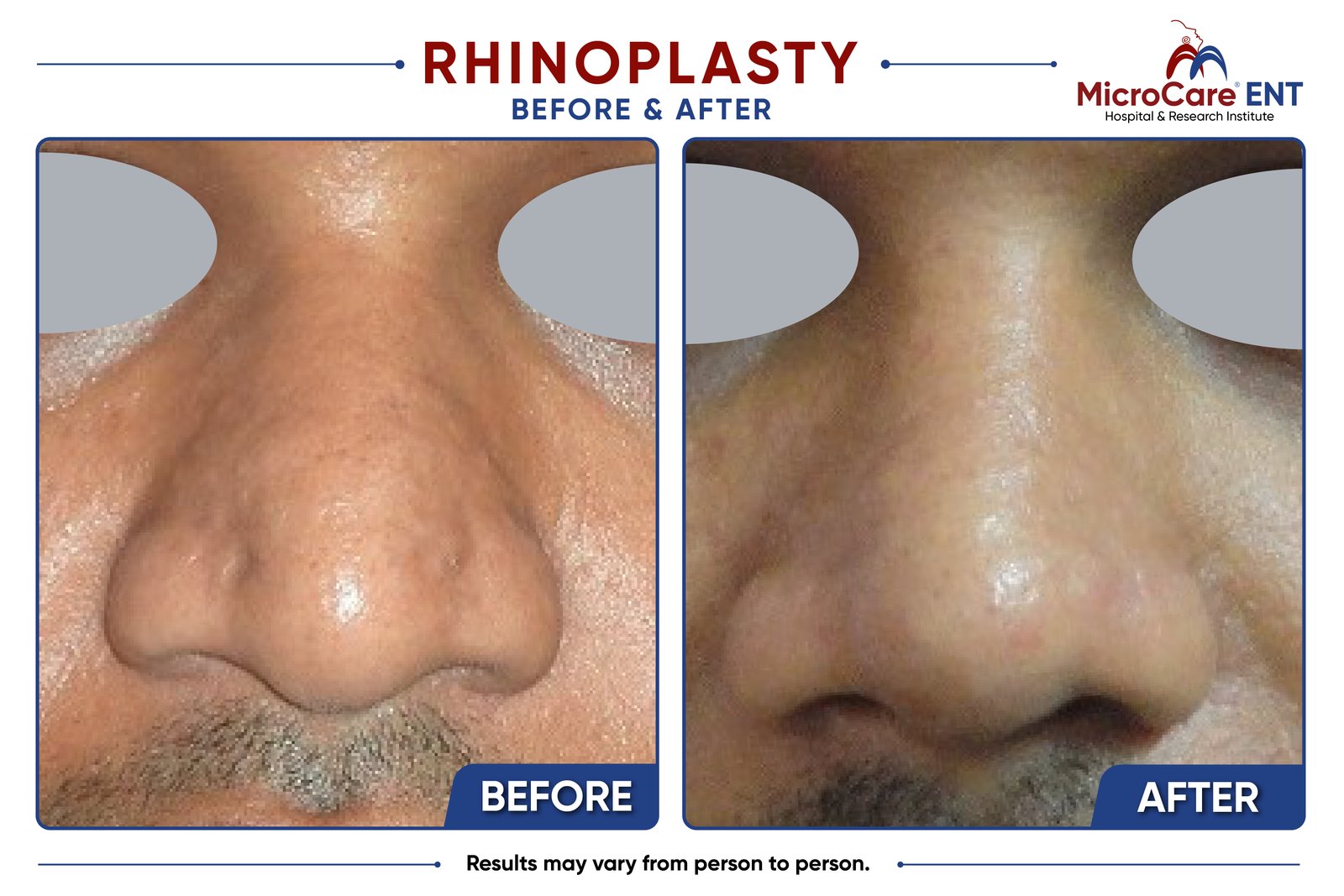
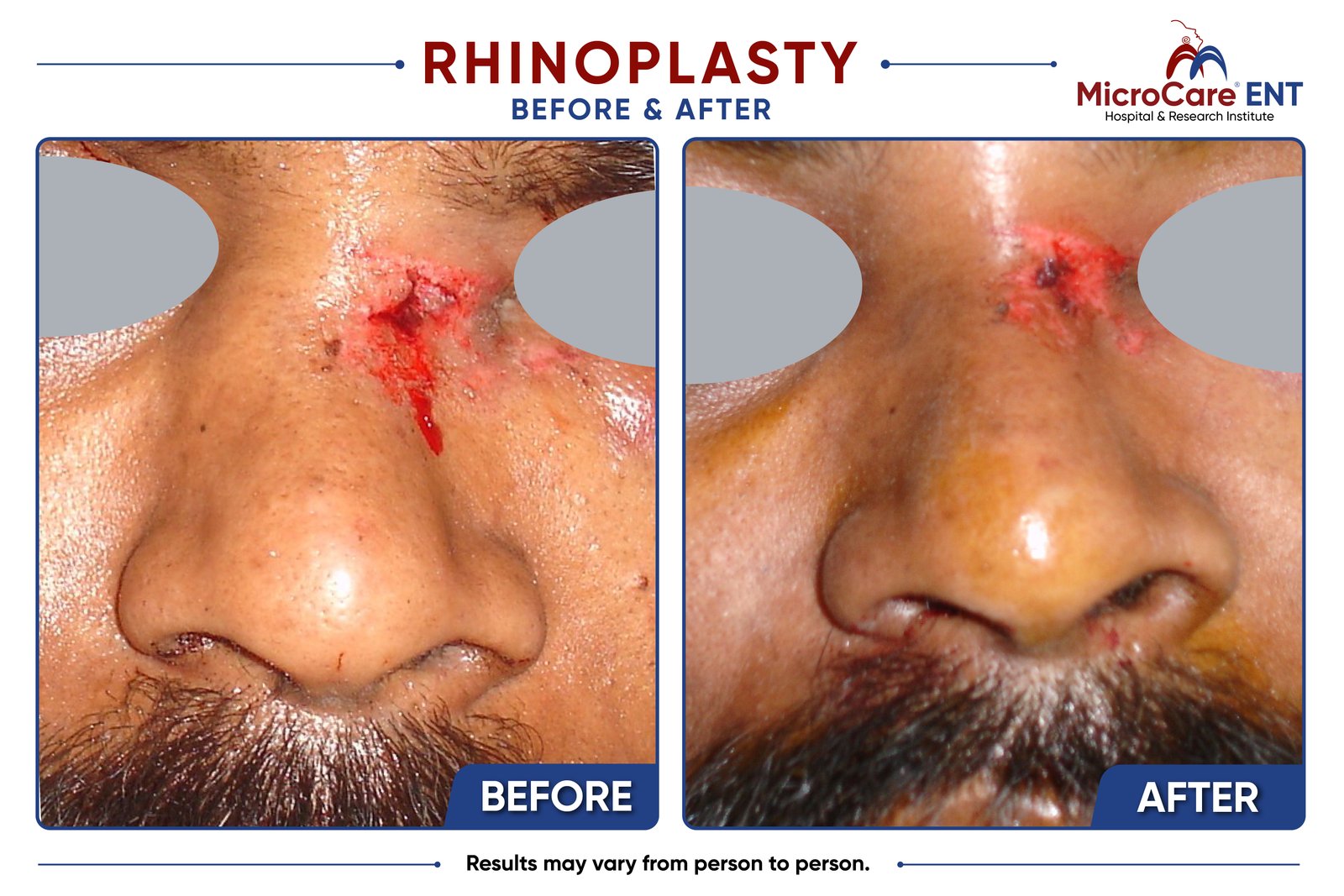
Photographs of patients of MicroCare ENT, shown with their consent. Every nose is different and individual results vary. See all before and after pictures.
Open or closed septorhinoplasty?
The approach is chosen after examination, based on the structure inside your nose and what you would like to change outside.
Open septorhinoplasty
A small stepped cut across the columella gives a full view of the septum and framework.
Best for: complex septal correction, severe twisting after injury and placing grafts.
Endonasal approachClosed septorhinoplasty
All cuts are inside the nostrils, so there is no visible scar, and early swelling is usually less.
Best for: minor bridge smoothing and straightforward straightening of the septum.
The MicroCare septorhinoplasty protocol
- High-definition endoscopyA fine fibre-optic camera maps the septum, valves and turbinates before anything is planned.
- Your own cartilage, not implantsThe framework is rebuilt with cartilage from your septum, ear or rib. Synthetic implants are avoided.
- Airway checked at every stepEach change to the shape is checked against its effect on airflow, so the nose is never made narrower at the cost of breathing.
- Hospital-grade safetySurgery in an NABH-accredited hospital theatre, continuous monitoring by senior anaesthesiologists and round-the-clock medical cover.
Recovery and breathing timeline
- An external splint protects the nose
- The nose feels blocked for now
- Splint and fine stitches removed at the hospital on day 7
- More than 85 percent of swelling and bruising fades
- Return to work, college and social life
- Swelling of the nasal lining settles
- Breathing becomes deeper, clearer and quieter
- Sleep usually improves
- The skin adapts to the new framework
- The final shape settles
Returning to your activities
- Do not blow your nose for 2 to 3 weeks
- Light walking: from the second week
- Heavy weightlifting, running and contact sports: after 4 to 6 weeks
- Follow-up continues for up to one year
Septorhinoplasty cost and insurance in Hyderabad
Every quote is individual. It depends on:
- How severe the septal deviation is.
- How much valve reconstruction is needed.
- Where graft cartilage comes from: the septum, ear or rib.
Why patients choose MicroCare ENT
ENT and rhinoplasty expertise
Led by Prof. Dr. Sriprakash Vinnakota, with more than 26 years of ENT, head and neck surgery.
Breathing and appearance together
Every rhinoplasty is planned as a customised septorhinoplasty, with natural-looking results.
Modern surgical technology
Endoscopic assistance, piezoelectric instruments that can reduce bruising and swelling, and modular operation theatres.
Honest, patient-centred care
Clear consultations with an honest assessment of what surgery can achieve, transparent pricing and follow-up for up to one year.

Prof. Dr. Sriprakash Vinnakota
MS (ENT, Head & Neck) · Chief Rhinoplasty Surgeon, Centre for Advanced ENT, Head & Neck Surgery, MicroCare ENT Hospital & Research Institute
More than 26 years in ENT surgery, with endoscopic sinus surgery training at the University of Graz and rhinoplasty training at Marien Hospital, Stuttgart, under Prof. Gubisch. He leads each septorhinoplasty with a senior surgical team.
Frequently asked questions
What is the difference between septoplasty and septorhinoplasty?
Septoplasty straightens the septum inside the nose and does not change how the nose looks. Septorhinoplasty does the same internal correction and also reshapes the outside of the nose in the same operation.
Will my nose look over-operated?
No. Grafts are shaped by hand from your own cartilage and their edges are tapered so they blend in. The new shape is planned to suit your face and your heritage.
Is recovery painful?
Most people describe pressure and a blocked feeling, similar to a heavy cold, rather than sharp pain. It is managed with pain medicine planned for you.
Are the results permanent?
Yes. Once healing is complete in the first year, the new structure is stable. The nose will still age naturally with the rest of your face.
When can I exercise and blow my nose?
Avoid blowing your nose for 2 to 3 weeks. Light walking is fine from the second week. Heavy weightlifting, running and contact sports are avoided for 4 to 6 weeks.
Is septorhinoplasty covered by insurance?
Purely cosmetic surgery is not covered. When a significant septal deviation or valve collapse is documented, the functional part of the operation is often eligible for insurance or TPA cover, and we provide the endoscopy and clinical reports for your claim.
See also What is rhinoplasty?, cosmetic rhinoplasty and our FAQs.
Find out what is blocking your breathing
Leave your name and number and we will open WhatsApp with your details filled in. You can also call +91 94949 40725.