
Breathe better. Look natural.
Constant nasal blockage affects your sleep, your stamina, your concentration and your quality of life. Functional rhinoplasty is reconstructive surgery that restores airflow by correcting the structures blocking it inside the nose, while keeping or improving the balance of your face. Our ENT-led team treats the nose as a breathing organ first.
Medically reviewed by Prof. Dr. Sriprakash Vinnakota, MBBS, MS (ENT, Head & Neck), Chief Rhinoplasty Surgeon, Centre for Advanced ENT, Head & Neck Surgery, MicroCare ENT Hospital & Research Institute.
- Main goal
- Clear breathing
- Grafts
- Your own cartilage
- Splint removed
- Day 7
- Desk work
- 7 to 10 days
- Breathing improves
- Months 1 to 3
- Insurance
- Often eligible
What is functional rhinoplasty?
Functional rhinoplasty treats long-term blockage of the nasal airway by rebuilding the internal structures that are narrowing it. Cosmetic rhinoplasty focuses on how the nose looks; functional rhinoplasty focuses on how it works.
The two are closely linked. A crooked or collapsed outer nose is very often caused by a problem inside, so the best results come from treating shape and function together.
Before you decide, read Prof. Dr. Vinnakota's book Your Best Nose, which answers 100 common rhinoplasty myths.
Signs you may need functional rhinoplasty
If nasal sprays, antihistamines or breathing strips only help for a while, the cause is probably structural. You may be a candidate if you have:
- A blocked nose that does not go away, on one side or both.
- Constant mouth breathing, with a dry mouth, throat irritation and dental problems.
- Poor sleep: waking at night, heavy snoring and tiredness in the morning.
- Nostril walls that cave in when you breathe in deeply.
- Breathing problems after an injury, accident or nasal fracture.
- Breathing problems after earlier cosmetic surgery elsewhere.
Conditions we correct
Deviated nasal septum
The septum is the wall of cartilage and bone that divides the nose. When it bends, it narrows the airway and can cause congestion, sinus headaches and uneven breathing.
Nasal valve collapse
The internal and external nasal valves are the narrowest parts of the airway. When the upper or lower lateral cartilages are weak, they collapse inwards as you breathe in.
Turbinate hypertrophy
The turbinates warm and moisten the air you breathe. Allergies or a deviated septum can make them permanently swollen, blocking airflow.
Post-traumatic deformity
An injury can displace the nasal bones and break cartilage, leaving the nose crooked outside and blocked inside.
Post-accident nose deformityFunctional, cosmetic or both?
| Functional rhinoplasty | Cosmetic rhinoplasty | Septorhinoplasty | |
|---|---|---|---|
| Main goal | Free, unrestricted breathing | Changing the shape and balance of the nose | Better airflow and a refined appearance together |
| What is done | Straightens the septum and reinforces weak valves | Smooths humps, lifts the tip, narrows wide nostrils | Rebuilds the internal framework to support the new profile |
| Insurance | Often covered | Elective, self-paid | The functional part may be covered |
Patient results
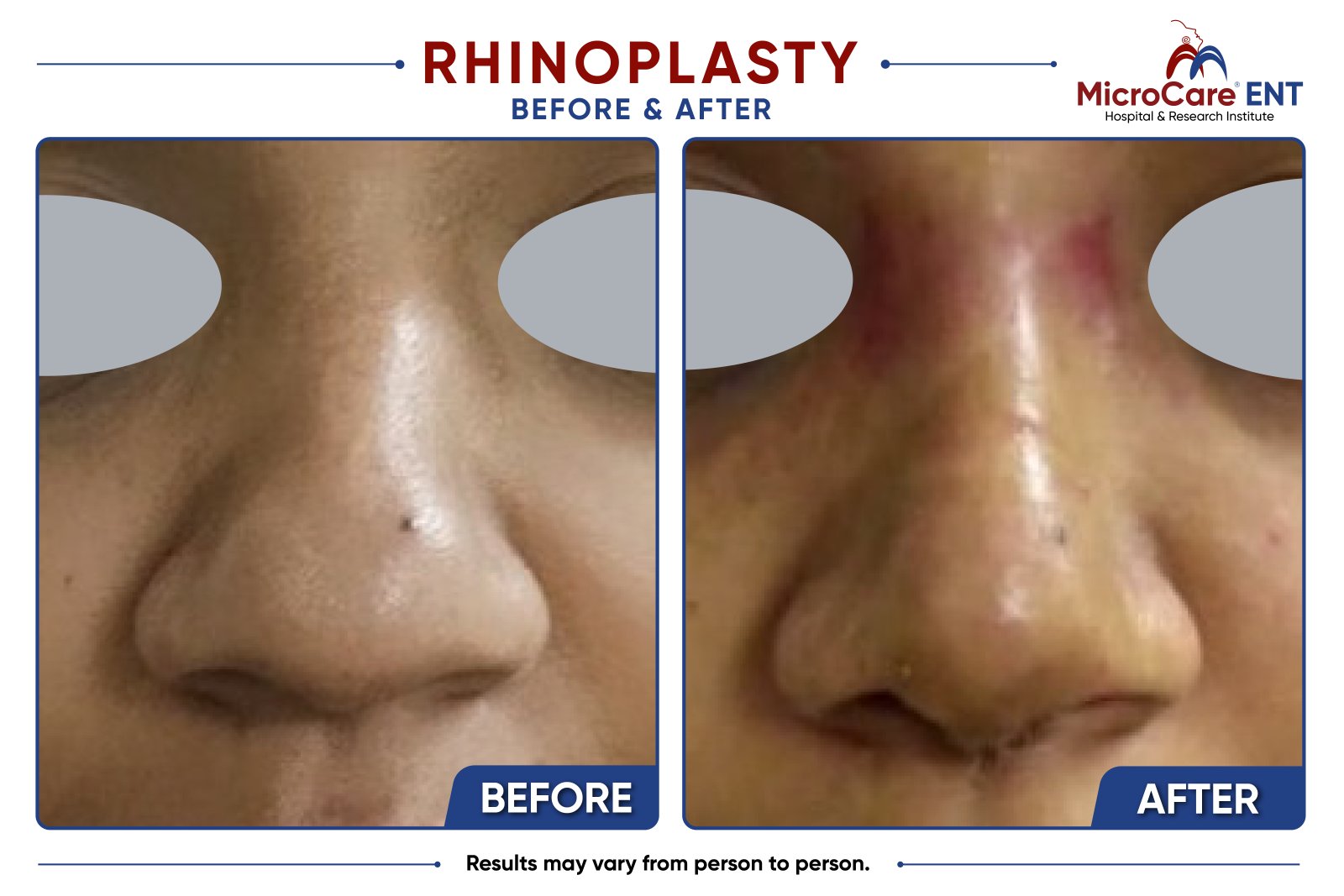
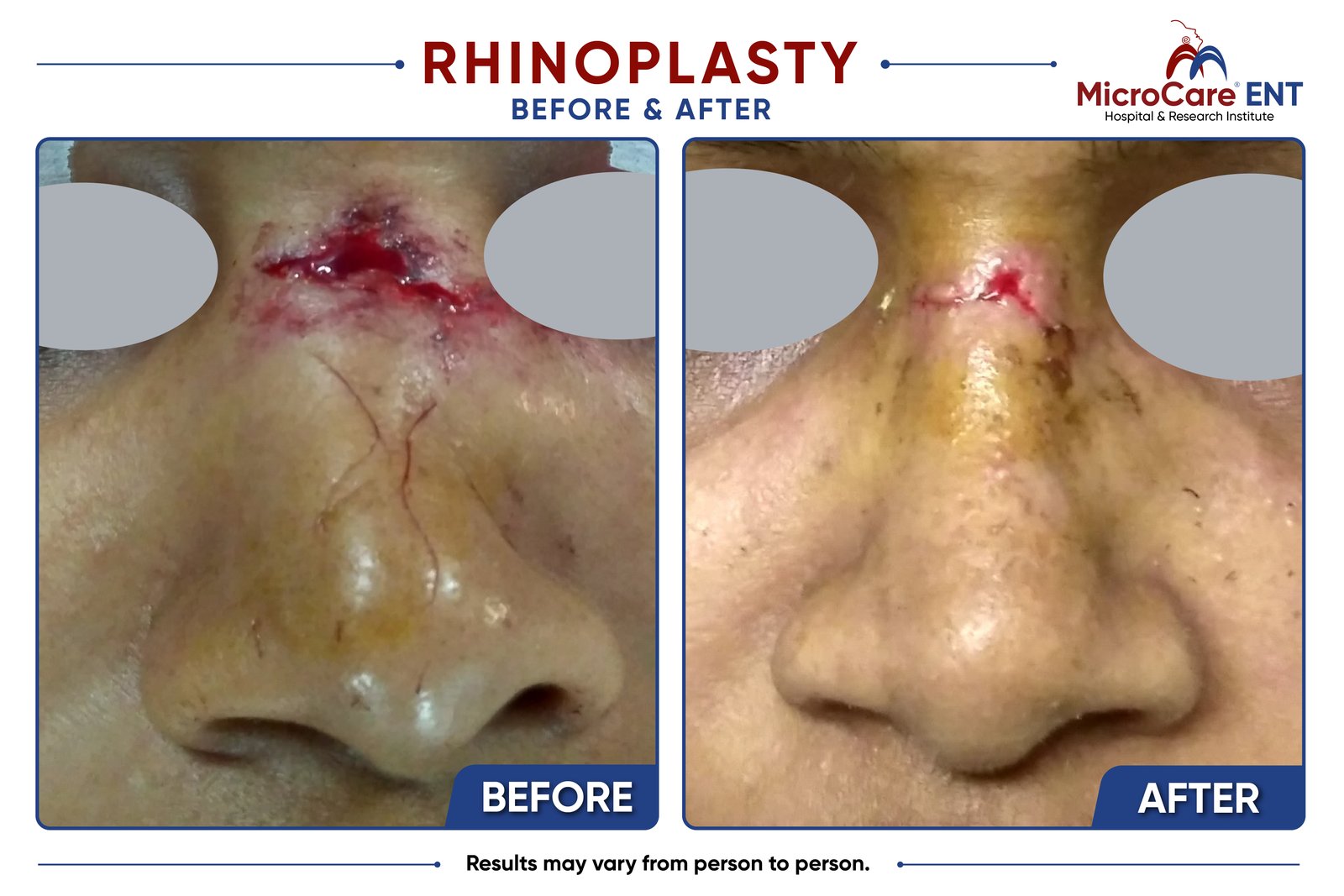
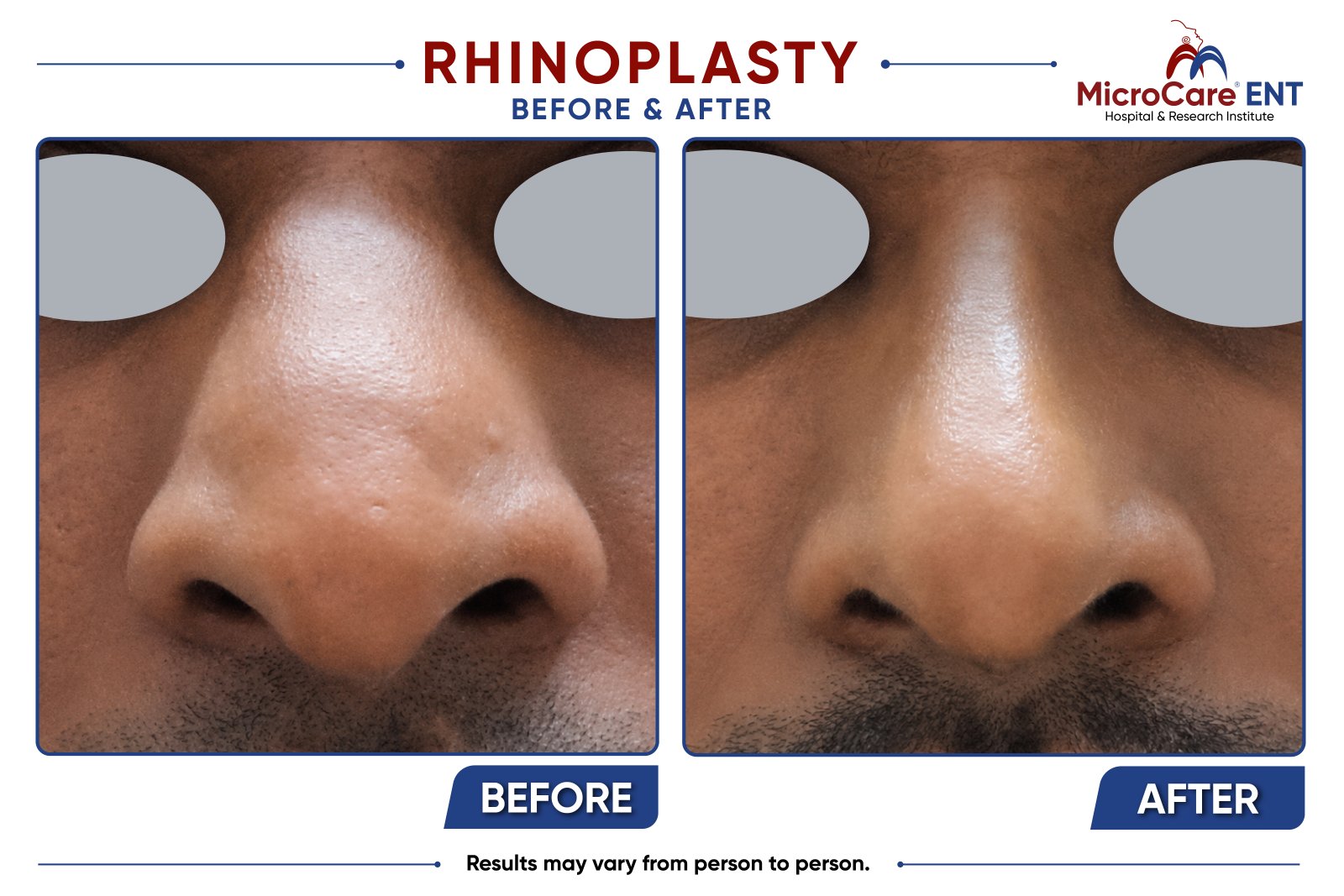
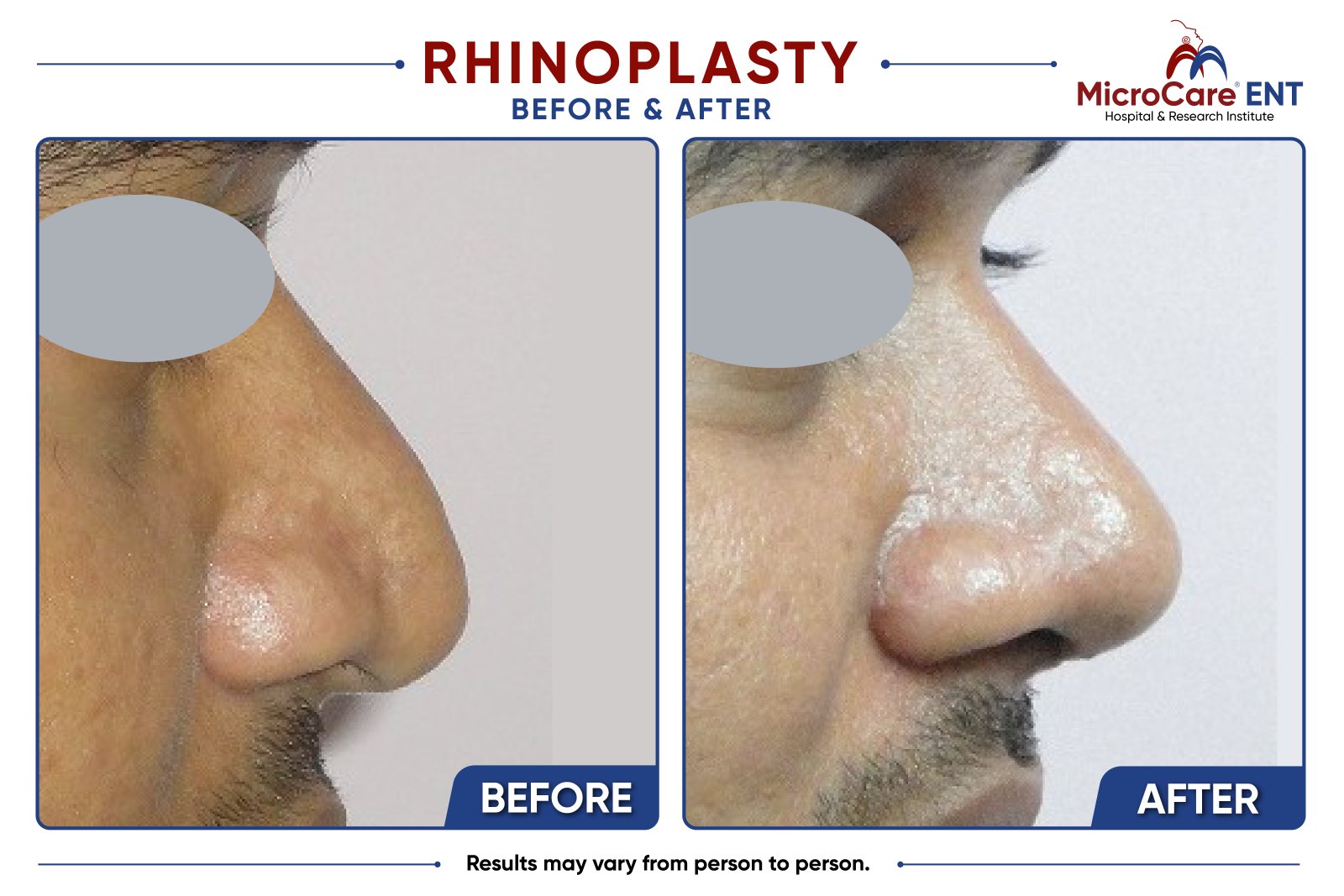
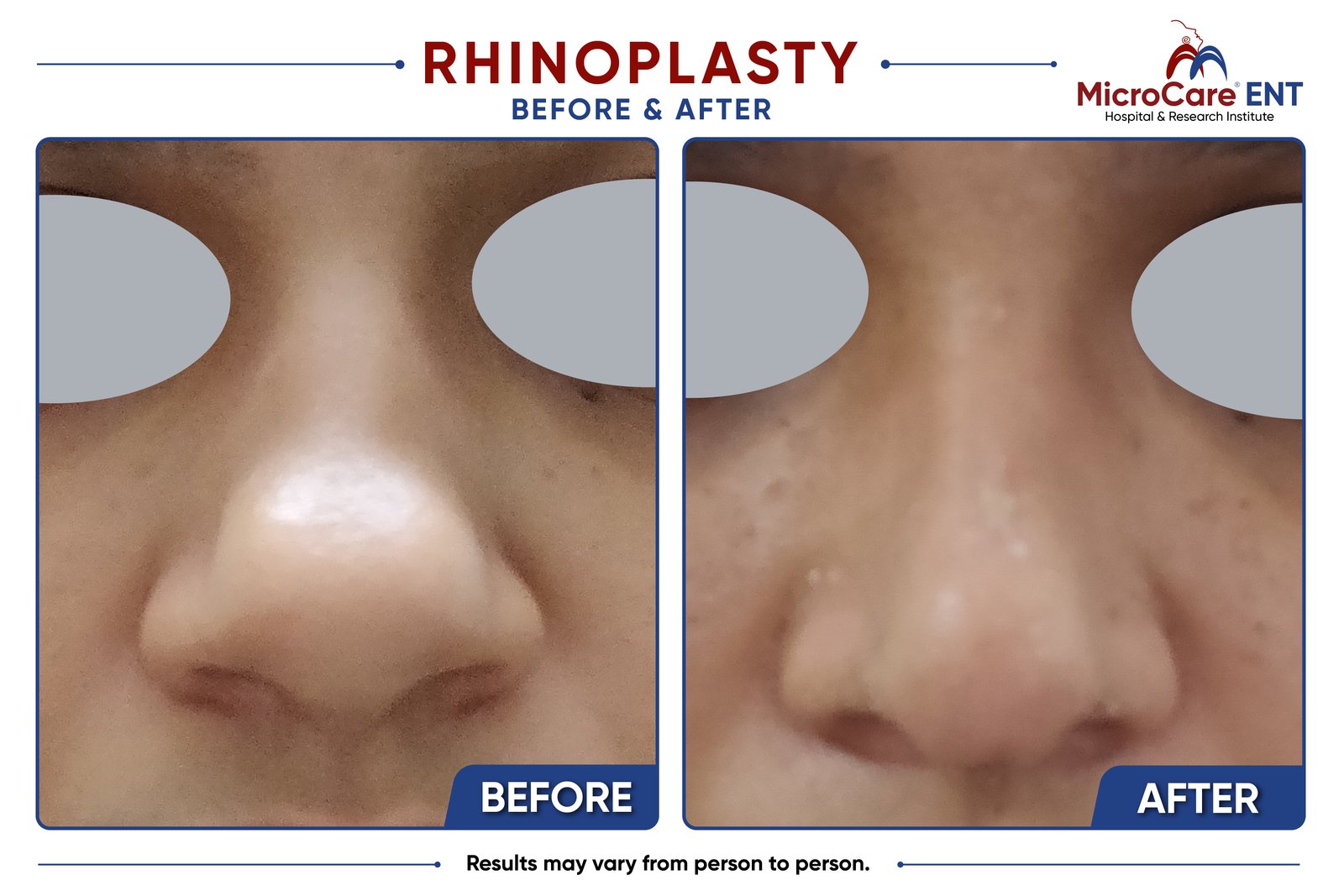
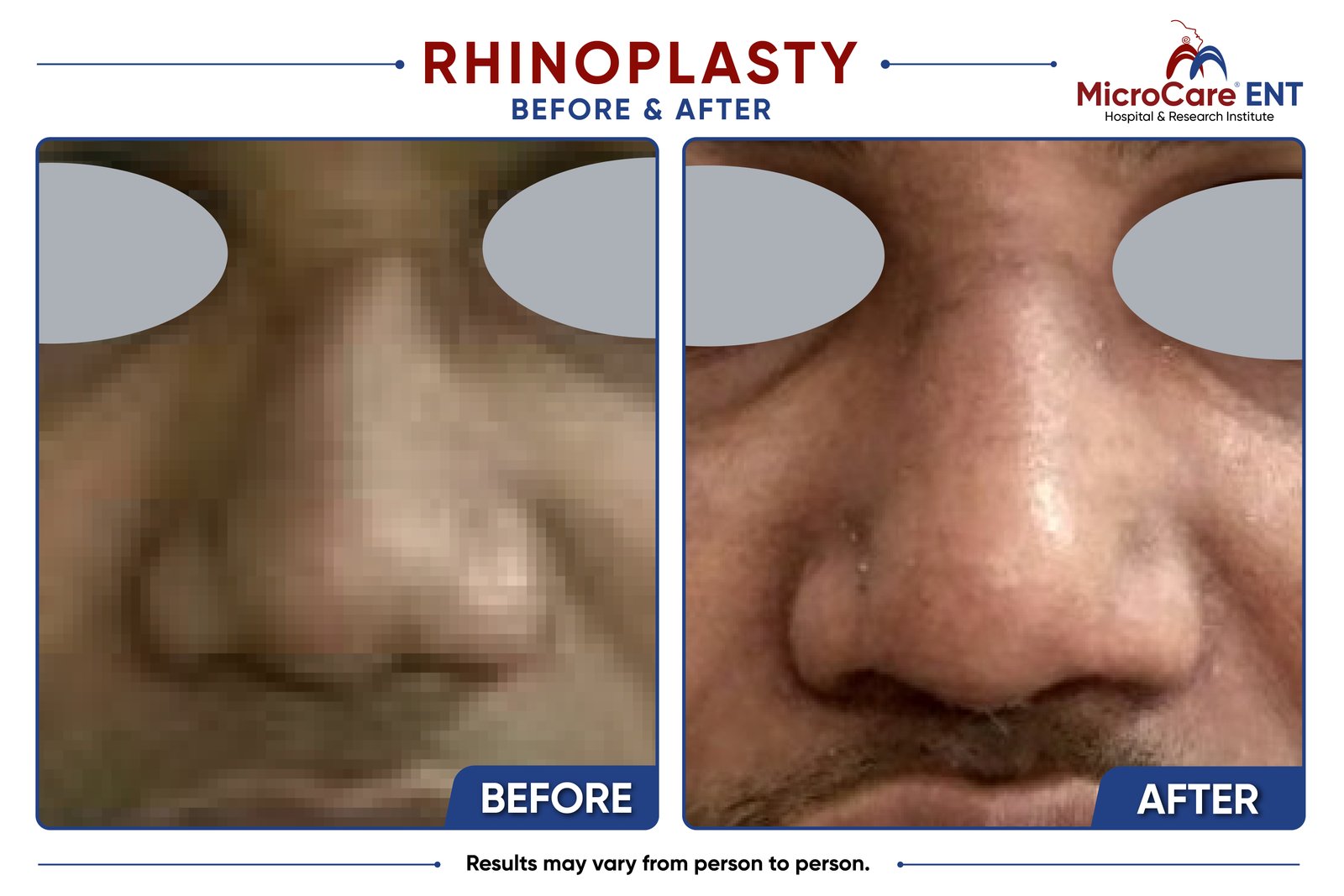
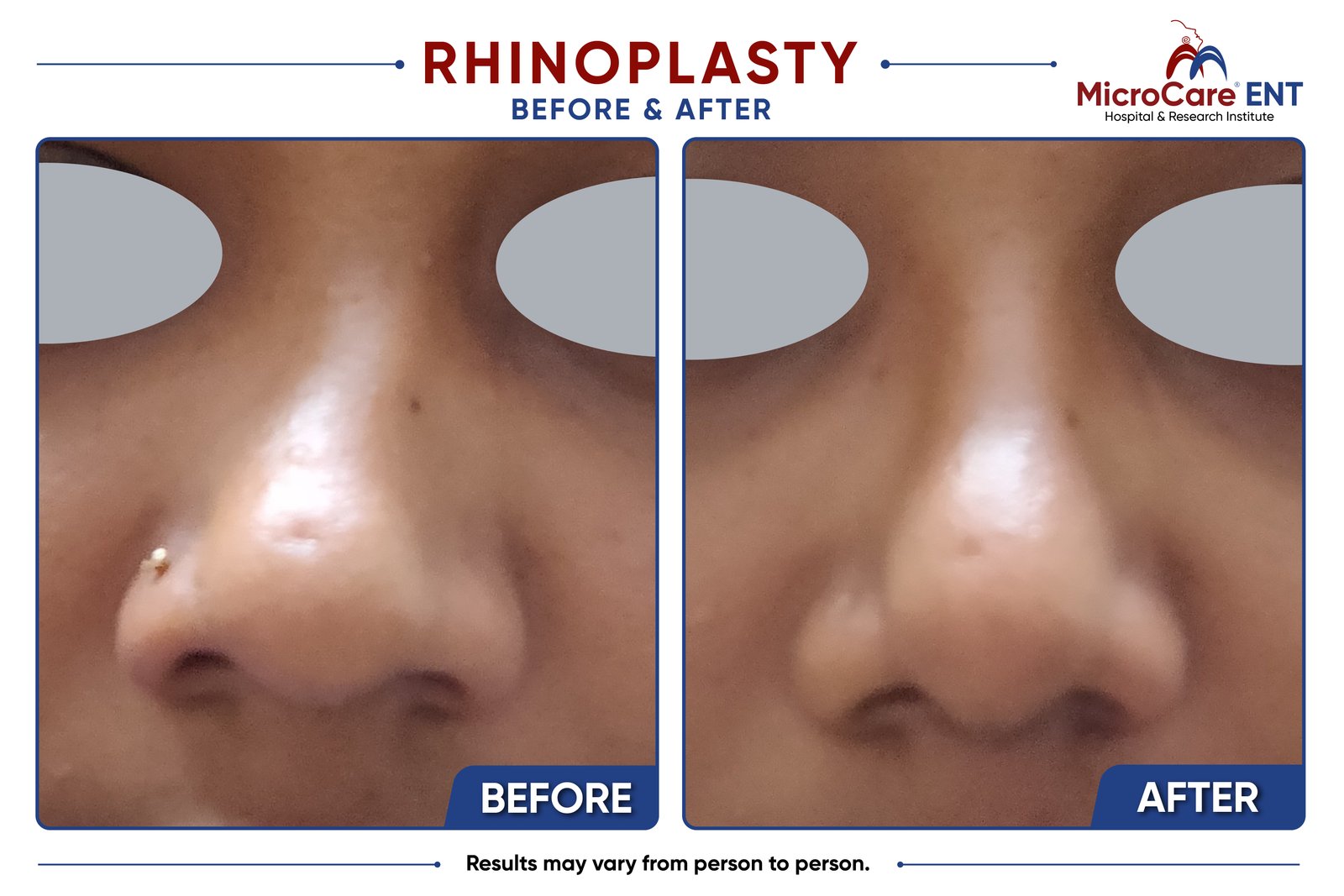
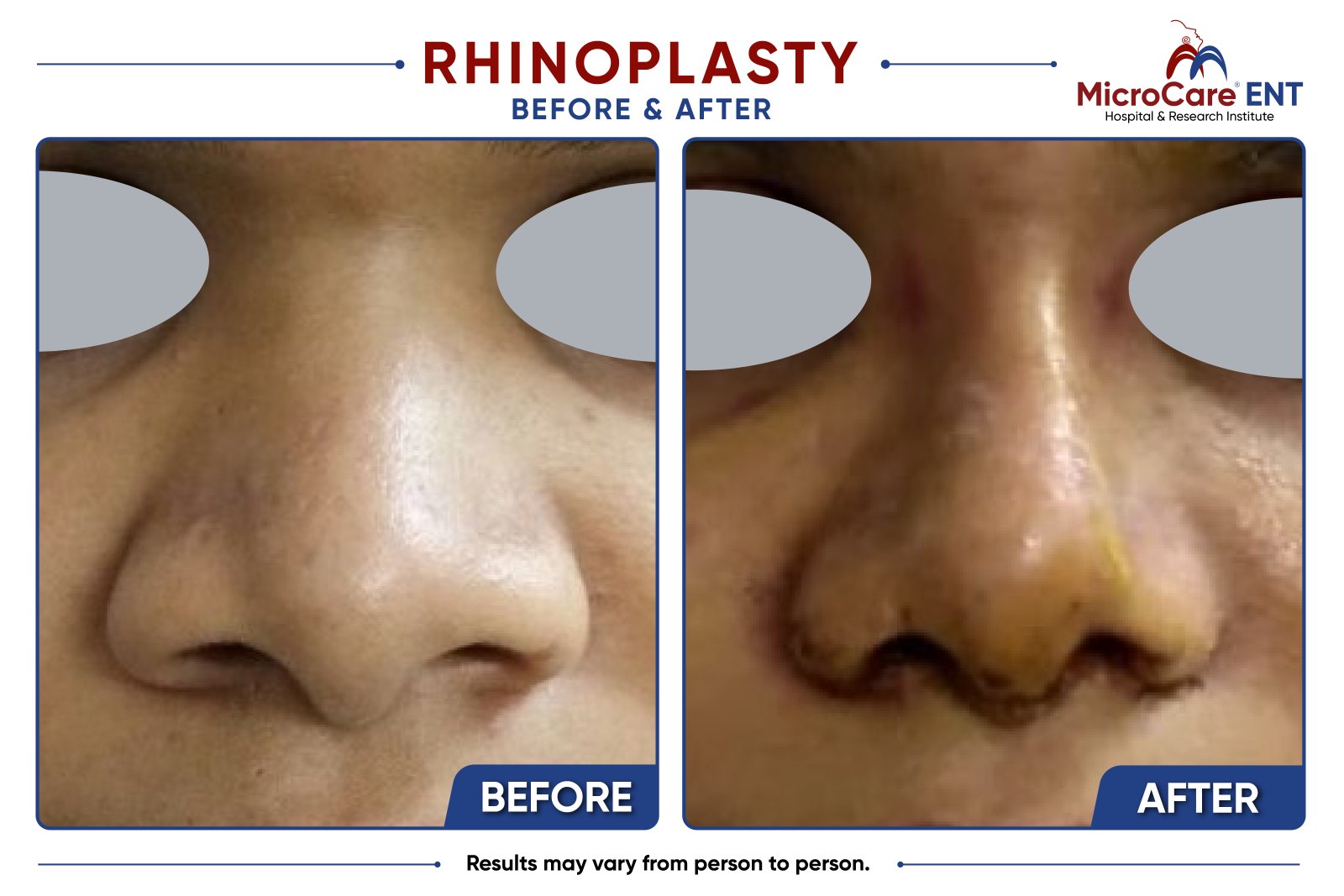
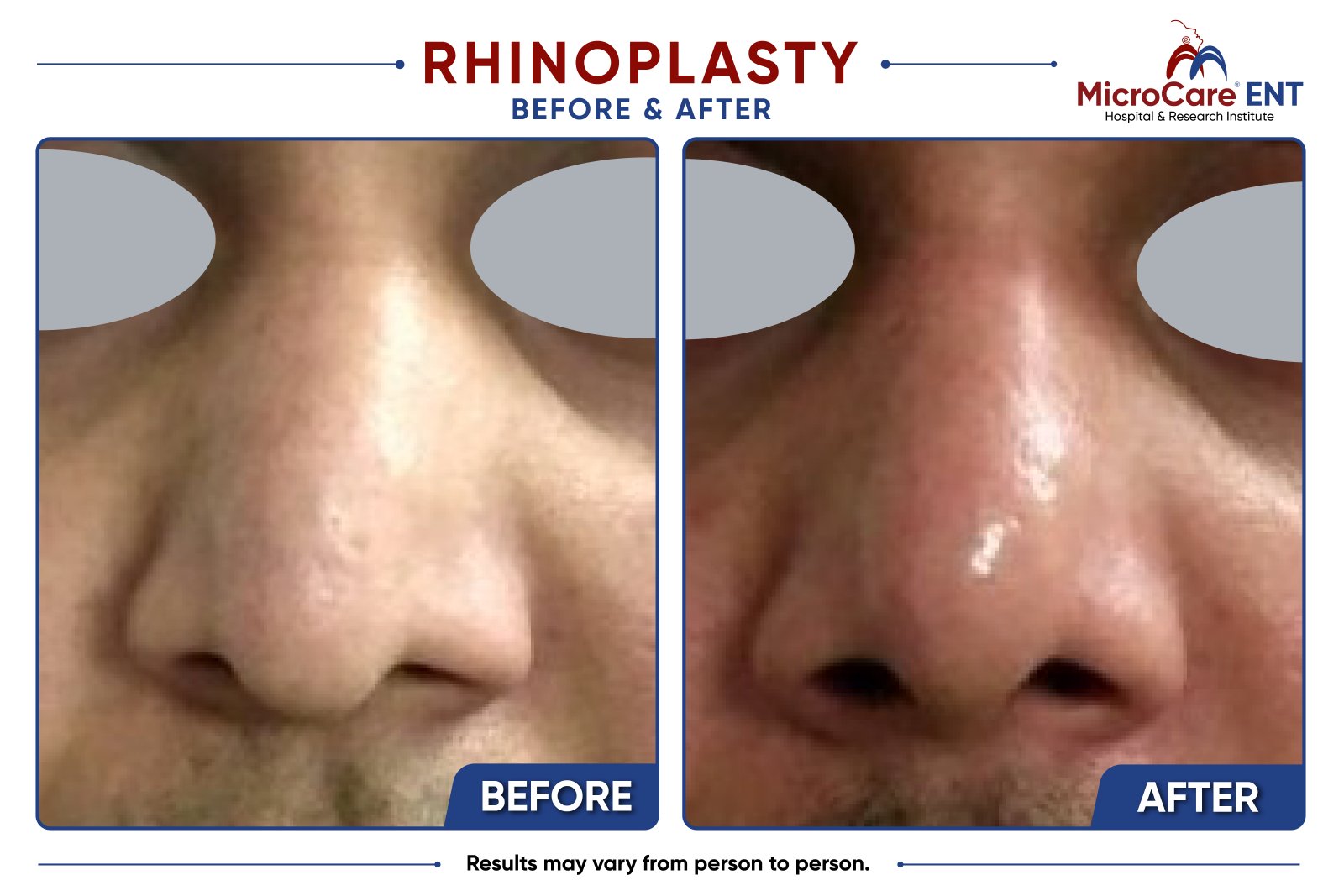
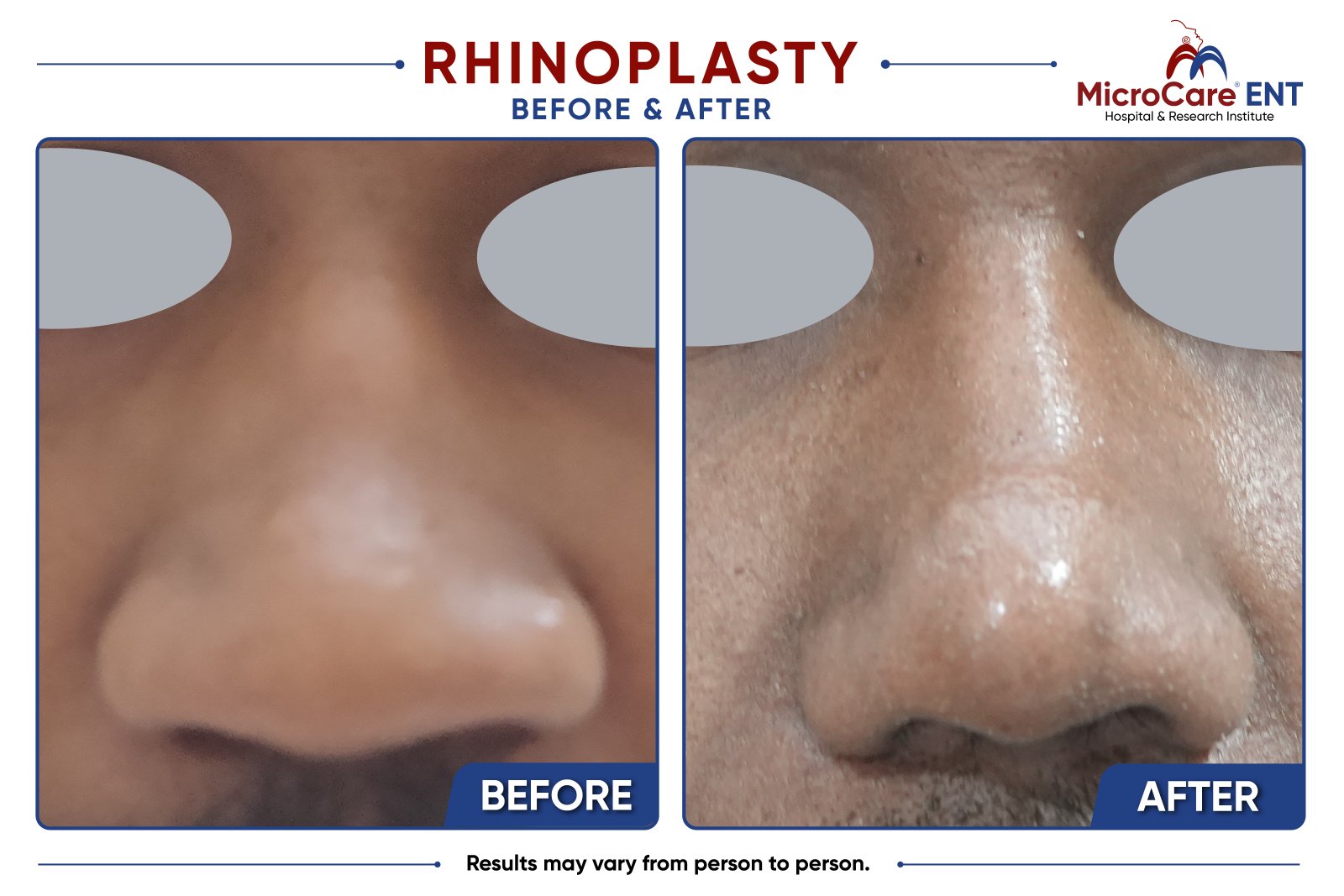
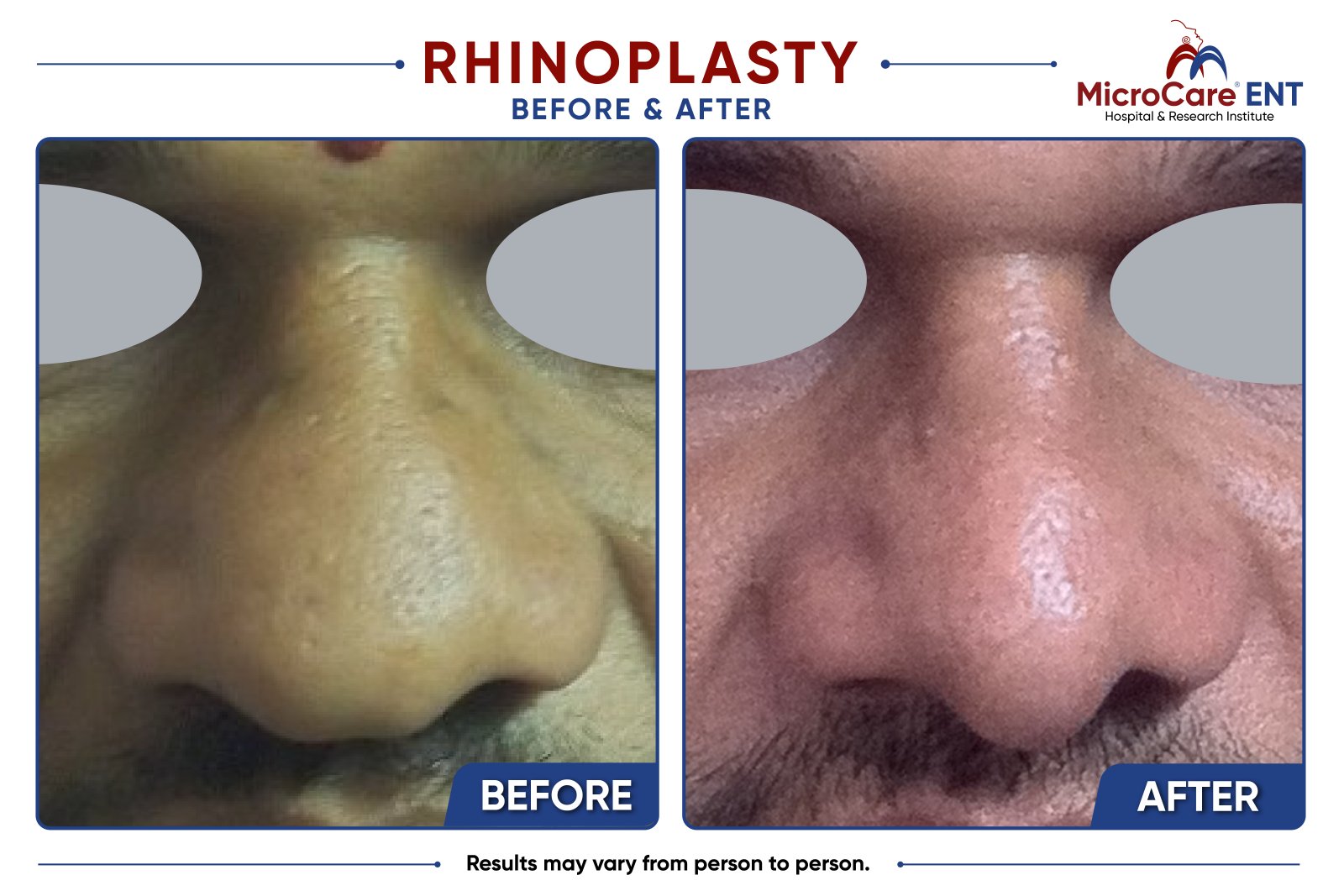
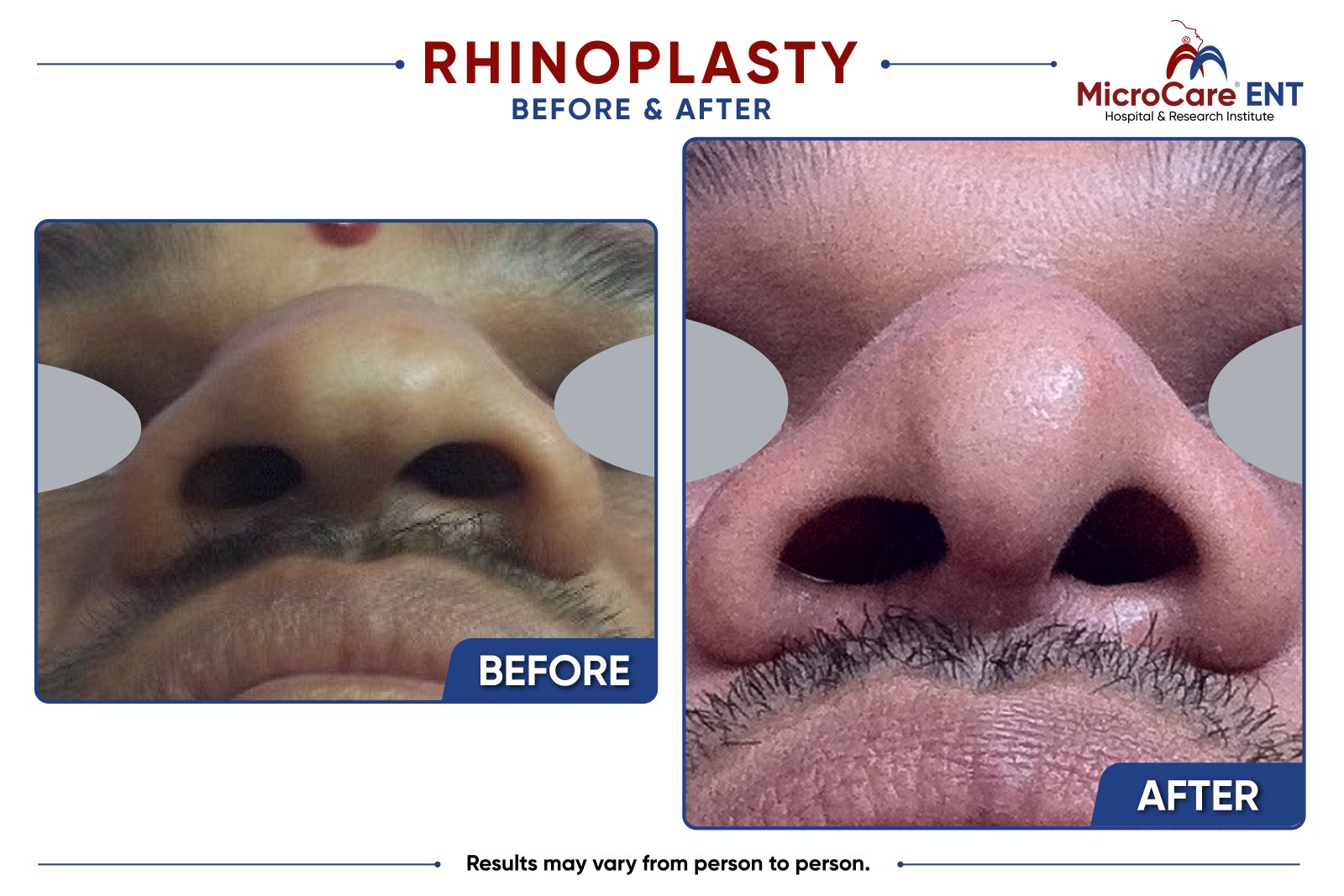
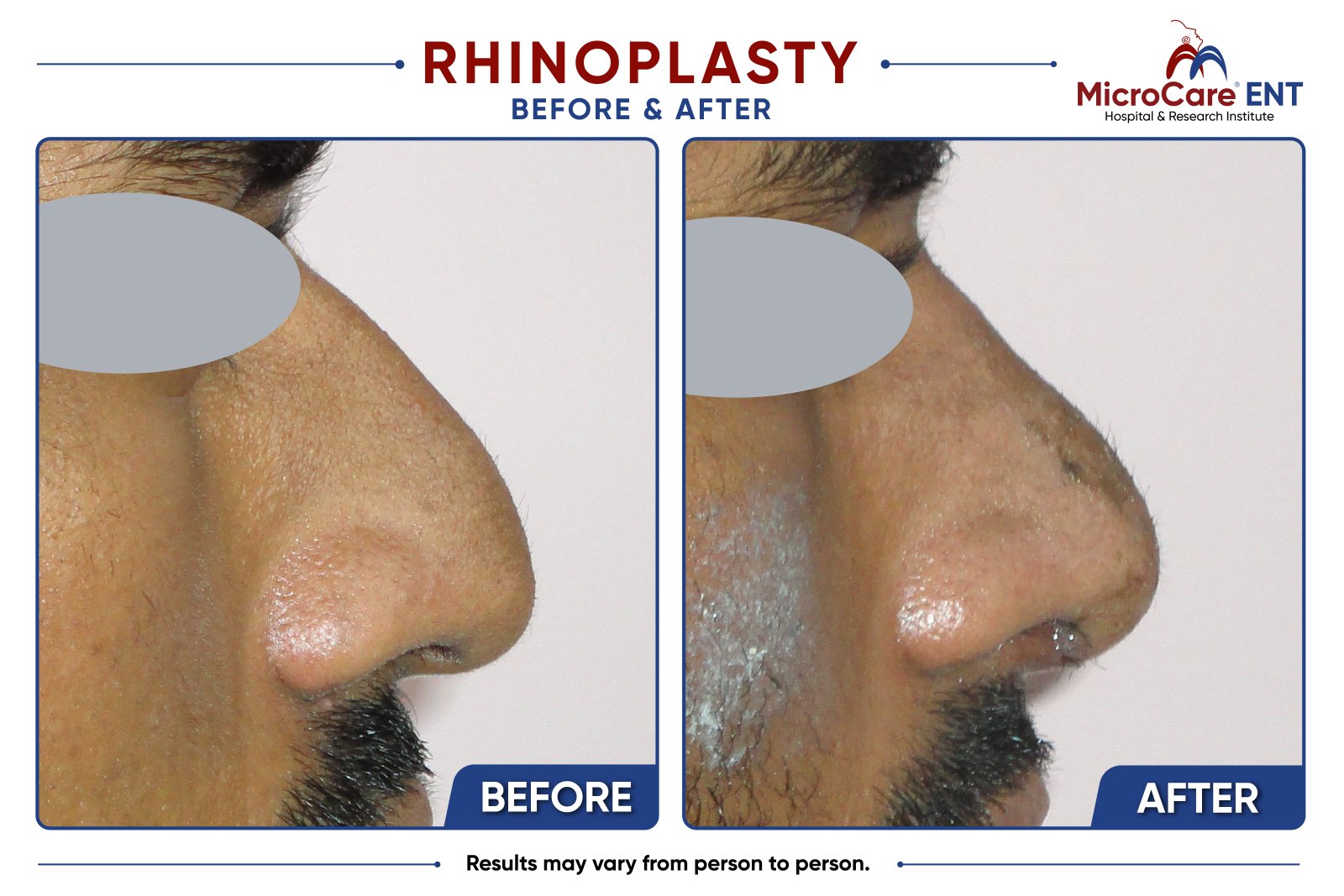
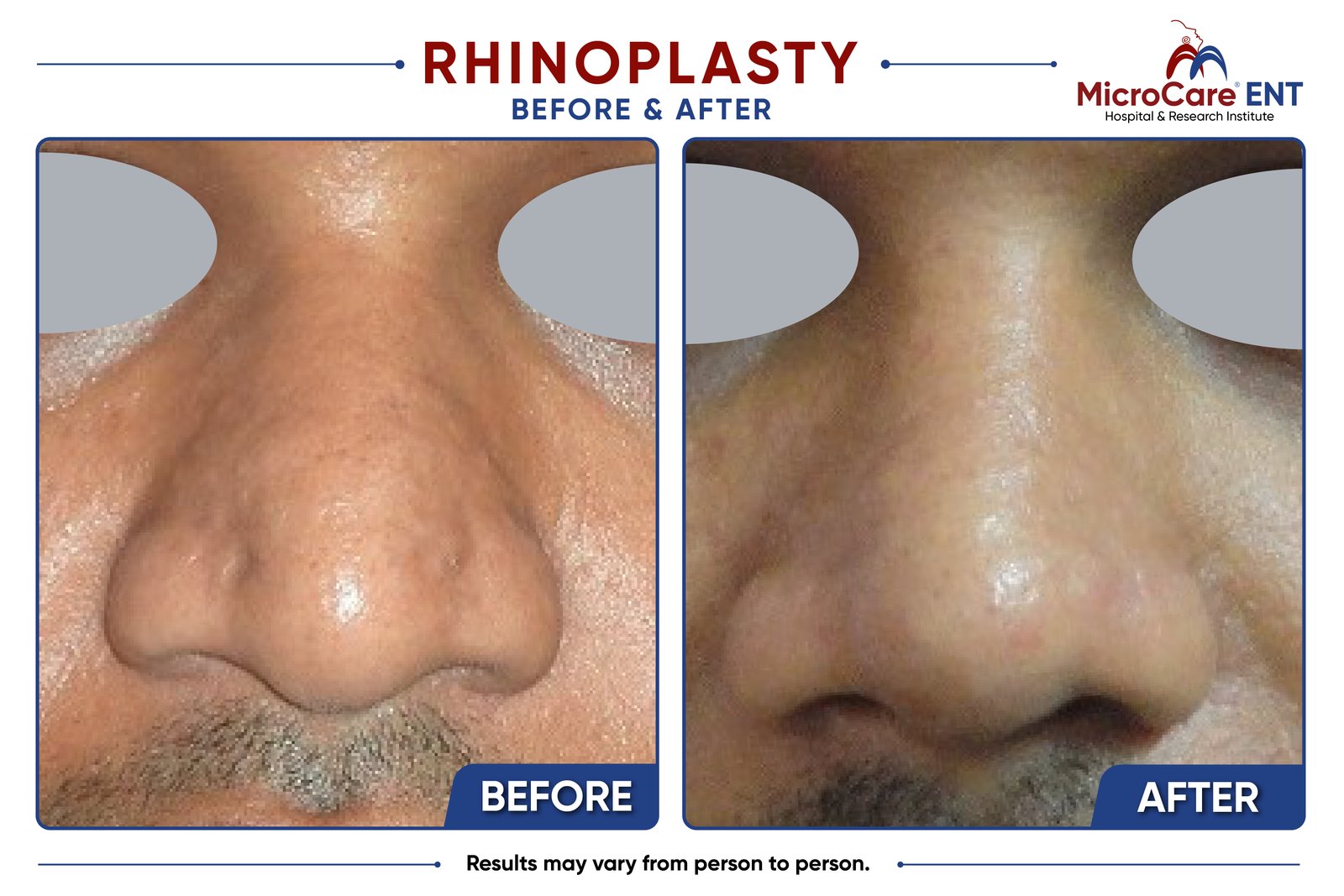
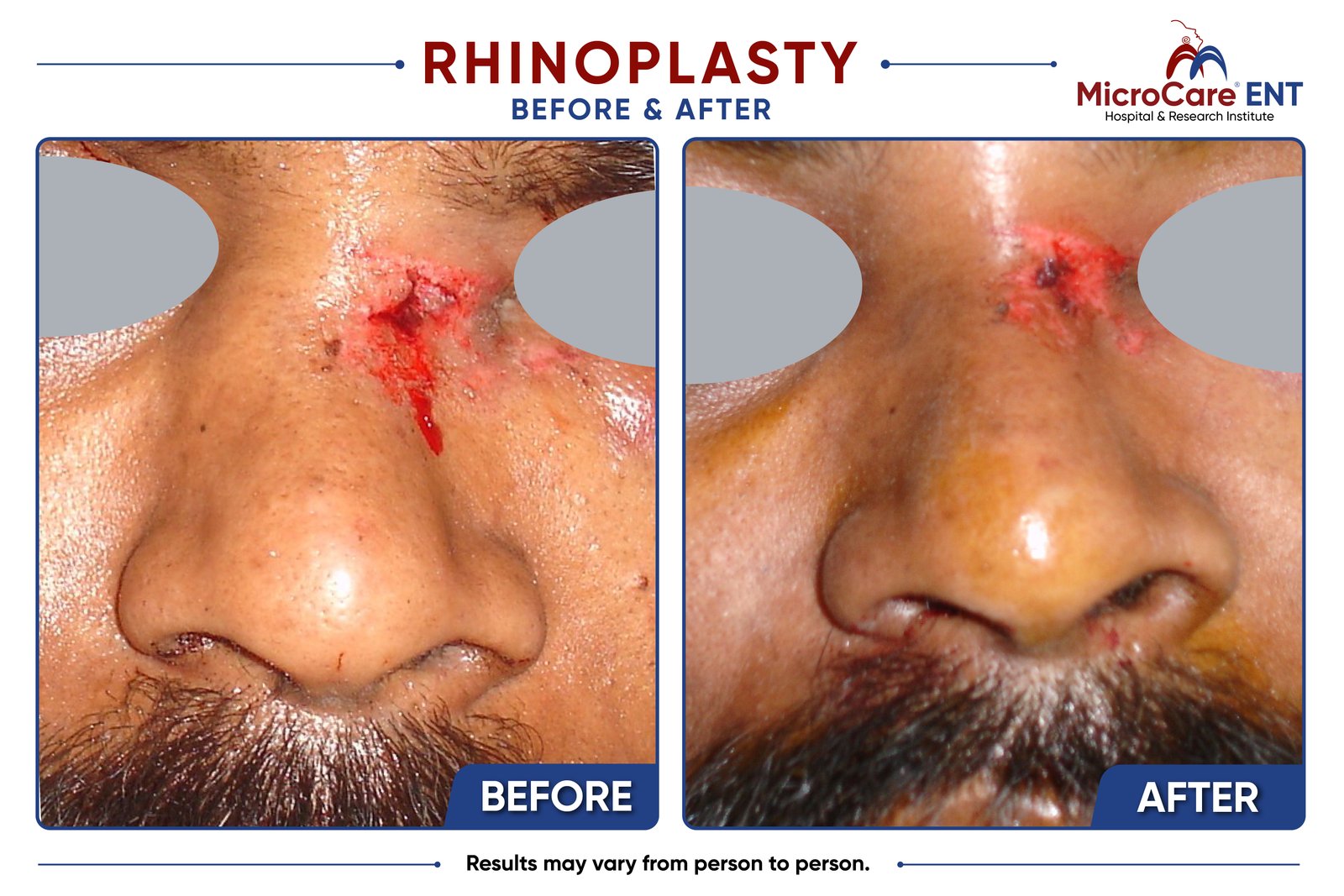
Photographs of patients of MicroCare ENT, shown with their consent. Every nose is different and individual results vary. See all before and after pictures.
The MicroCare surgical protocol
We correct the cause of the blockage, not just its symptoms.
- Airway evaluationA fibre-optic diagnostic endoscopy finds exactly where and why the airway is blocked.
- Grafts from your own cartilageCartilage from your septum, ear or rib is shaped into spreader and batten grafts to strengthen the airway.
- Nasal valve reconstructionThe internal and external valves are widened and reinforced so they stay open when you breathe in.
- Precise septoplastyThe septum is reshaped and brought back to the midline while conserving as much cartilage as possible.
- Natural appearanceThe outside of the nose is kept natural, so it does not look operated on.
Benefits of restoring the airway
Clear, quiet breathing
Easy airflow through both nostrils.
Better sleep
Fewer night-time disturbances and less mouth breathing.
More stamina
Easier breathing during exercise and everyday activity.
Lasting support
A stronger structure that resists drooping with age.
Recovery and breathing timeline
- An internal or external splint supports the nose
- Swelling and congestion are managed
- Splints and fine stitches removed at the hospital on day 7
- Desk or remote work from 7 to 10 days
- Most visible swelling clears by weeks 2 to 3
- Return to college and social life
- Swelling of the nasal lining settles
- Breathing keeps improving
- The tissues settle permanently
- Follow-up continues for up to one year
Functional rhinoplasty cost and insurance
Every quote is individual. It depends on:
- How severe the blockage is.
- Whether complex valve reconstruction is needed.
- Where graft cartilage comes from: the septum, ear or rib.
Why ENT-led care matters for breathing
Cosmetic-only clinics may overlook how air flows through the nose. Operating inside the narrow, blood-rich nasal passages needs ENT training, so every change to the outside is built on a sound breathing framework.
ENT, head and neck specialists
Led by Prof. Dr. Sriprakash Vinnakota, with more than 26 years of experience in the anatomy of the upper airway.
Breathing and appearance together
Every rhinoplasty is planned as a customised septorhinoplasty, with natural-looking results.
Modern surgical technology
Endoscopic assistance, piezoelectric instruments that can reduce bruising and swelling, and modular operation theatres.
Honest, patient-centred care
Consultations that put safety ahead of volume, transparent pricing and structured follow-up for up to one year.

Prof. Dr. Sriprakash Vinnakota
MS (ENT, Head & Neck) · Chief Rhinoplasty Surgeon, Centre for Advanced ENT, Head & Neck Surgery, MicroCare ENT Hospital & Research Institute
More than 26 years in ENT surgery, with endoscopic sinus surgery training at the University of Graz, Austria, and rhinoplasty training at Marien Hospital, Stuttgart, under Prof. Dr. Wolfgang Gubisch.
Frequently asked questions
Is functional rhinoplasty a permanent fix for a blocked nose?
When the blockage is structural, yes. Functional rhinoplasty widens narrowed valves and straightens the septum, correcting the cause rather than easing the symptoms the way sprays and strips do.
Will my nose look different afterwards?
If a twisted nose or collapsed bridge is part of the problem, straightening it also makes the nose look more symmetrical. If you would like other changes to the shape, cosmetic refinements can be done in the same operation.
How is it different from septoplasty?
Septoplasty only straightens the septum. Functional rhinoplasty treats the whole framework that controls airflow, including the nasal valves, the nostrils and the bridge.
How soon can I go back to work?
Most patients return to non-strenuous office or remote work 7 to 10 days after surgery, once the splint is removed. Full normal routine, including college and social life, usually follows by 2 to 3 weeks.
My breathing got worse after cosmetic surgery elsewhere. Can this be fixed?
Yes. Breathing problems after an earlier rhinoplasty are treated with functional revision rhinoplasty, using cartilage grafts to rebuild the support that was lost.
Is functional rhinoplasty covered by insurance?
Because it treats a documented breathing problem, such as a septal deviation or valve collapse, functional rhinoplasty is often eligible for insurance or TPA cover. Cosmetic changes made at the same time are not covered.
See also septorhinoplasty, revision rhinoplasty and our FAQs.
Find out what is blocking your breathing
Leave your name and number and we will open WhatsApp with your details filled in. You can also call +91 94949 40725.