
What is Rhinoplasty?
Rhinoplasty is surgery that reshapes the nose. It can change how the nose looks, how it works, or both. This guide explains what the operation involves, who it suits, and what recovery is really like, so you can come to your consultation with clear questions.
Medically reviewed by Prof. Dr. Sriprakash Vinnakota, MBBS, MS (ENT, Head & Neck), Chief Rhinoplasty Surgeon, Centre for Advanced ENT, Head & Neck Surgery, MicroCare ENT Hospital & Research Institute. Last reviewed January 2026.
- Surgery time
- About 2 to 4 hours
- Anaesthesia
- General, or local with sedation
- Hospital stay
- Usually one night
- Splint removed
- Day 7 to 10
- Back to desk work
- 10 to 14 days
- Final shape
- About 12 months
What rhinoplasty is
Rhinoplasty, often called a nose job, is an operation that reshapes the framework of the nose: the nasal bones, the upper and lower lateral cartilages, and the septum. The surgeon works on this framework under the skin, and the skin then settles over the new shape as it heals. Changes are measured in millimetres, which is why careful planning matters so much.
It has two aims that are often treated together. Cosmetic rhinoplasty changes the bridge, tip or nostrils so the nose suits the face. Functional rhinoplasty corrects problems such as a deviated septum or collapsed nasal valves that block breathing.
The nose is also the entrance to the airway. The same operation can straighten the septum (the wall between the two nostrils), support collapsing nasal walls and open the breathing passage. When appearance and breathing are treated together, the operation is called septorhinoplasty.
Benefits of rhinoplasty
Facial balance
A nose in proportion with the forehead, eyes, lips and chin.
Easier breathing
Correcting the septum, valves and turbinates opens the airway.
Correction of birth differences
Nasal deformities present from birth, such as cleft lip nose deformity, can be reconstructed.
Healthier sinuses
Better airflow and drainage can reduce repeated sinus problems in patients whose blockage contributes to them.
What it can change
A hump on the bridge
The bony and cartilage bump is smoothed for a straighter profile.
A crooked nose
Bones and septum are realigned so the nose sits in the centre of the face.
The tip
A drooping, wide or bulbous tip is refined and given better support.
Width
A broad bridge or wide nostrils are narrowed in proportion to the face.
A flat or low bridge
The bridge is built up, usually with the patient's own cartilage.
Injury
Shape and airway are restored after a fracture or accident.
Types of rhinoplasty
- Cosmetic rhinoplastyChanges the appearance of the nose to suit the face.
- Functional rhinoplastyImproves breathing by strengthening collapsing nasal walls (valves) and reducing enlarged turbinates.
- SeptorhinoplastyTreats appearance and a deviated septum in one operation.
- Primary rhinoplastyA first operation on a nose that has not had surgery before.
- Revision rhinoplastyCorrects problems after an earlier operation. Often complex, because of scar tissue and reduced cartilage.
- Female rhinoplastyA softer bridge, refined tip and a balanced angle between nose and upper lip.
- Male rhinoplastyA strong, straight bridge and a tip that keeps masculine proportions.
- Ethnic rhinoplastyRefines wide nostrils or a flat bridge while keeping features true to the person's heritage.
Open or closed approach?
| Open rhinoplasty | Closed rhinoplasty | |
|---|---|---|
| Incisions | Inside the nose plus a small cut between the nostrils | Inside the nose only |
| View of the structure | Full, direct view of the tip and cartilages | Limited view through the nostrils |
| Best suited to | Tip work, complex changes and revision surgery | Hump reduction and straightforward changes |
| Swelling | Takes a little longer to settle at the tip | Usually settles sooner |
The approach is chosen after examination. Neither is better in every case; the right one depends on what needs to change.
Is rhinoplasty right for you?
Every patient needs a clinical assessment first. In general, you are a suitable candidate when:
- Facial growth is complete, usually after 15 to 16 years in girls and 17 to 18 years in boys. Surgery may be considered earlier for a severe birth deformity or significant injury.
- There is a medical need or a clear concern, such as a blocked airway from a deviated septum, narrowing at the nostril (vestibular stenosis) or valve collapse, a deformity from birth, or damage after an injury.
- Your general health is good, with conditions such as diabetes or blood pressure under control and no active infection in or around the nose.
- You do not smoke, or can stop for several weeks before and after surgery, because smoking slows healing and raises the risk of infection.
- Your expectations are realistic. You are looking for improvement rather than perfection, and you are choosing surgery for yourself.
- You have had an ENT evaluation, including a nasal endoscopy, so that breathing is protected in the plan.
Patient results
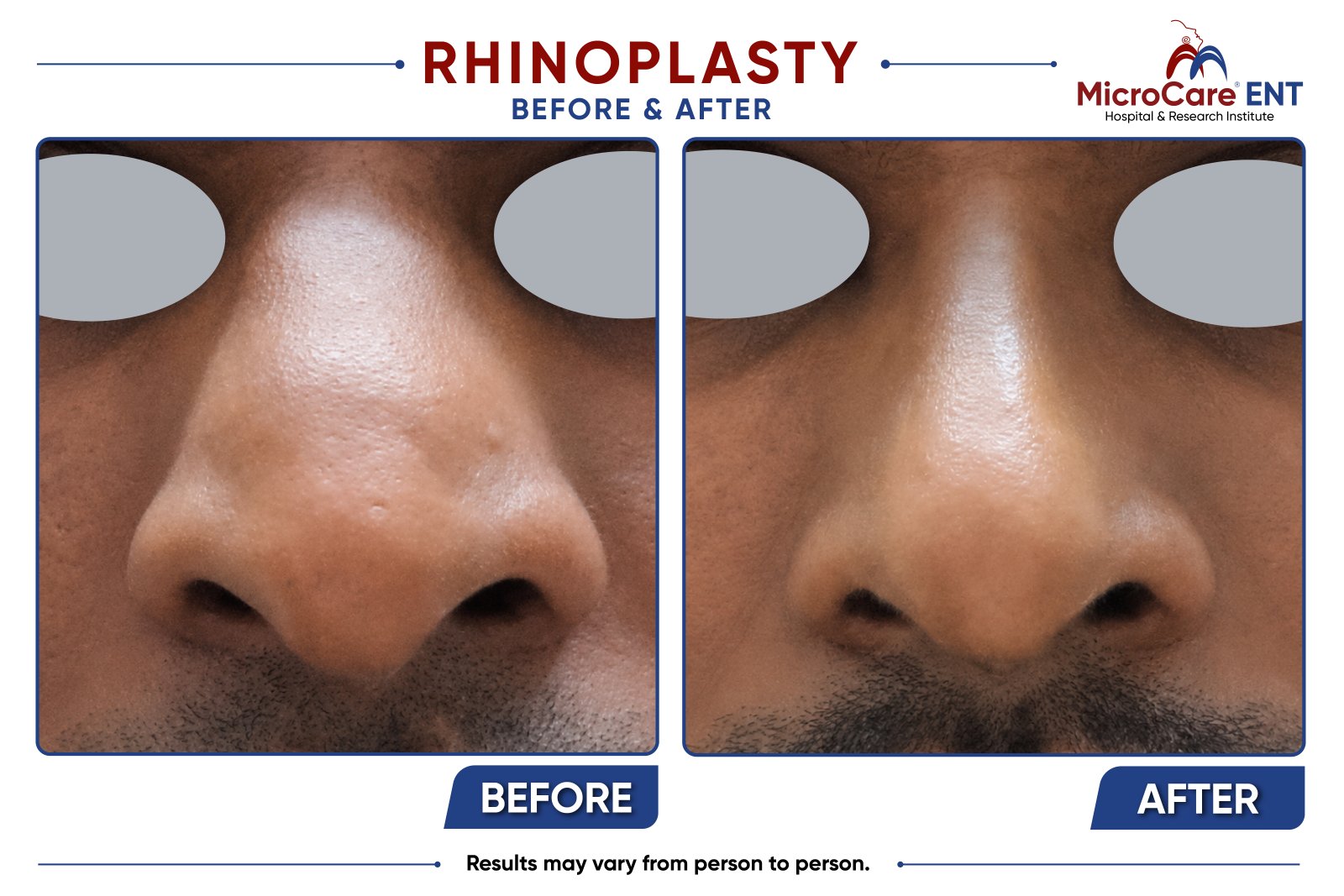
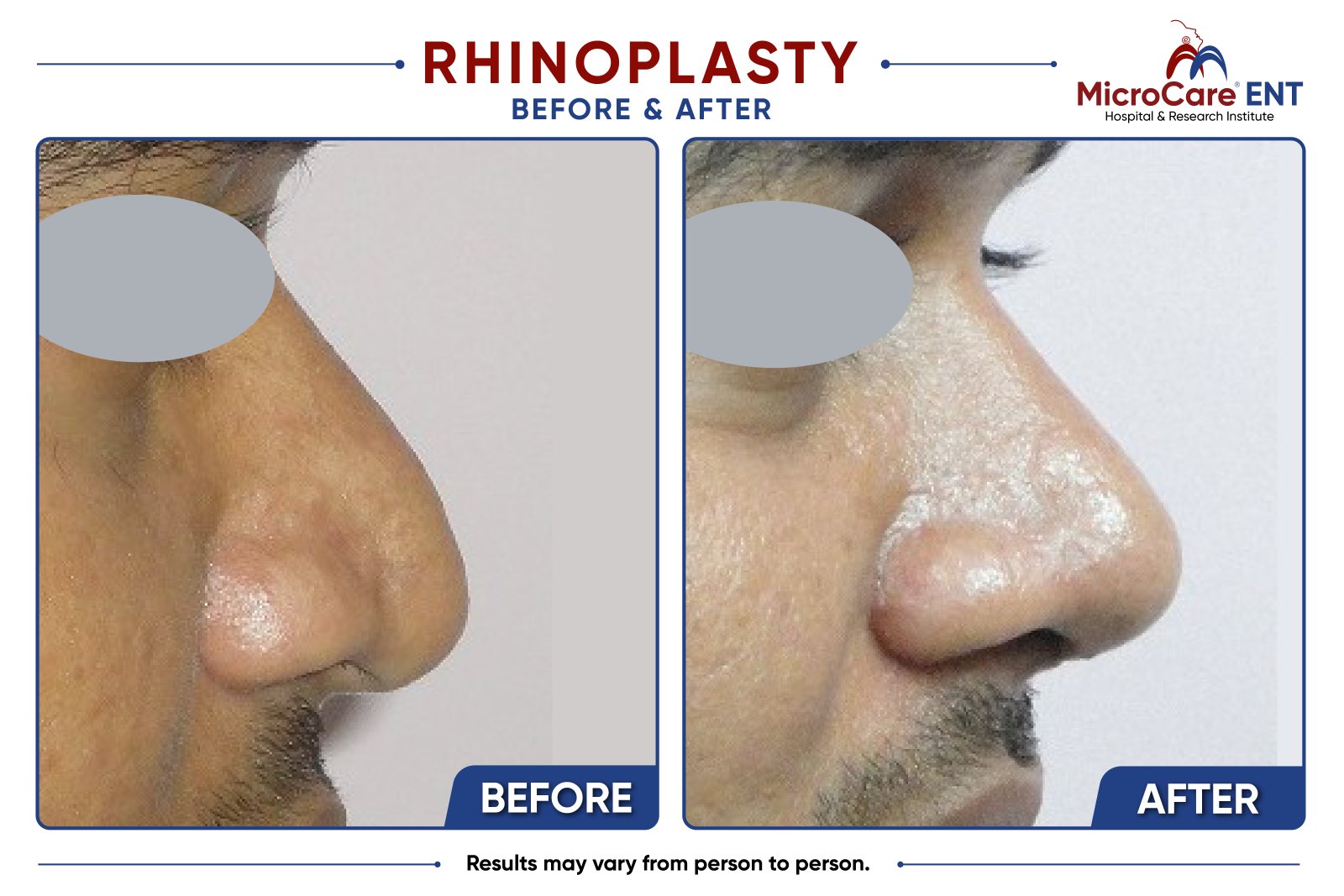
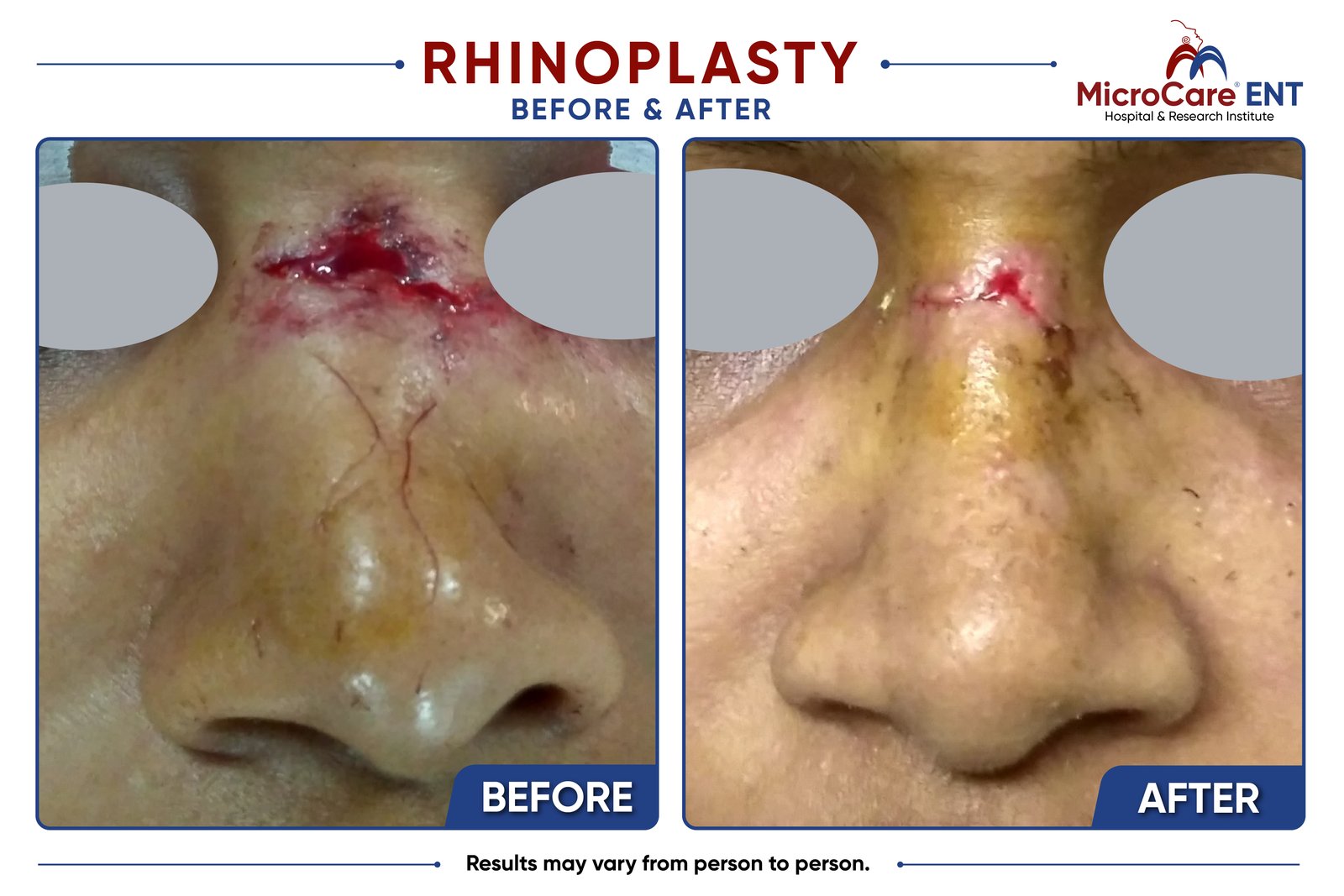
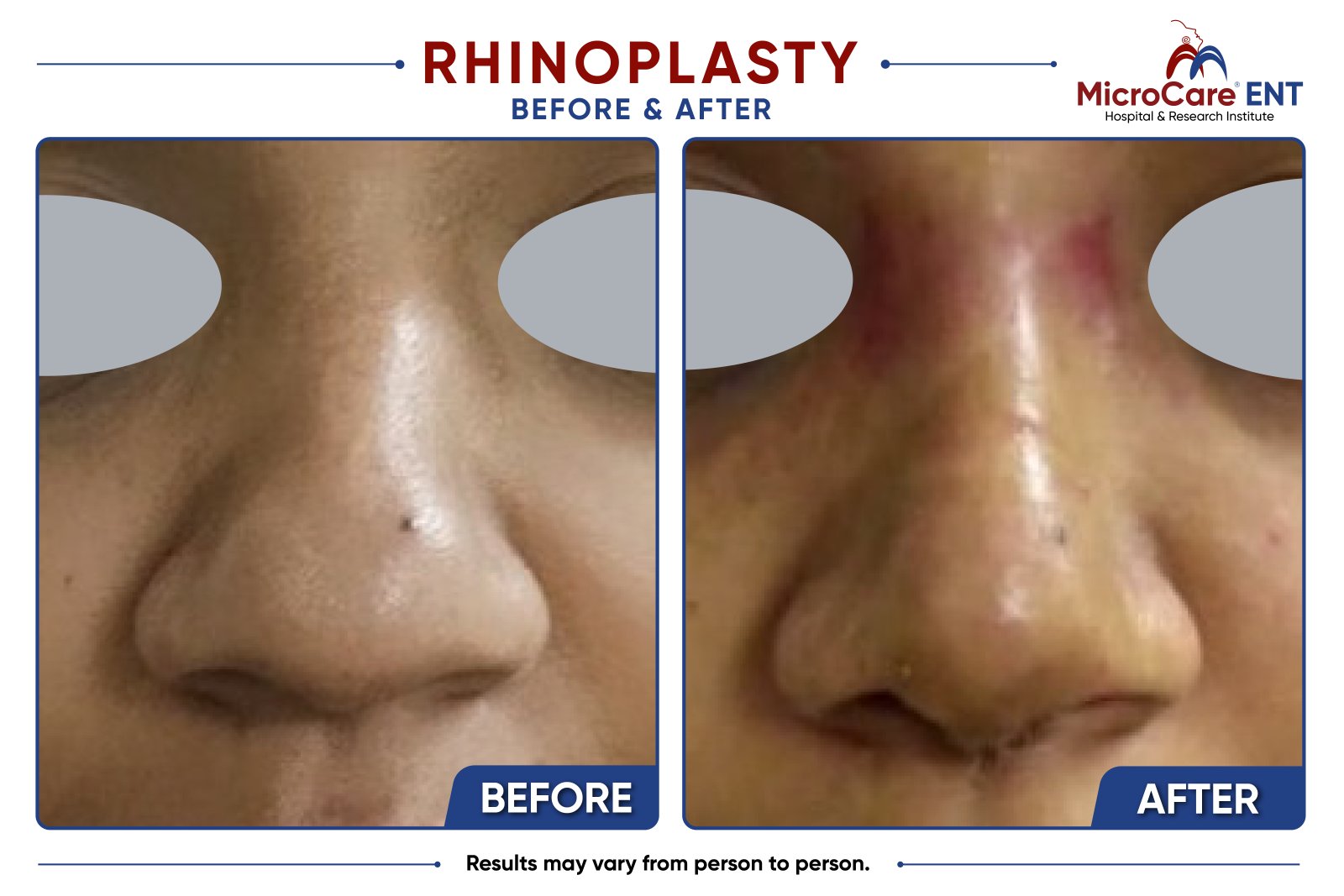
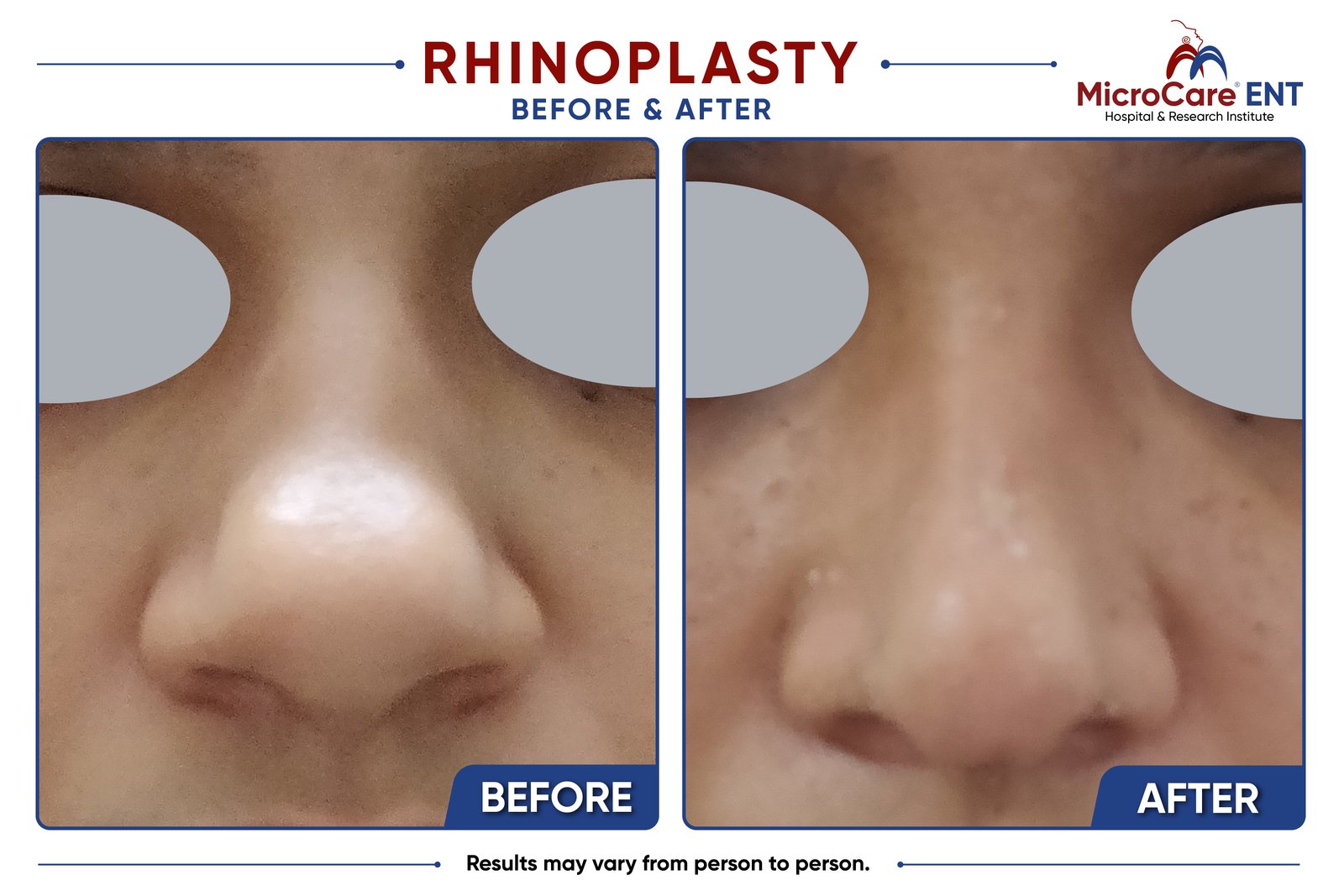
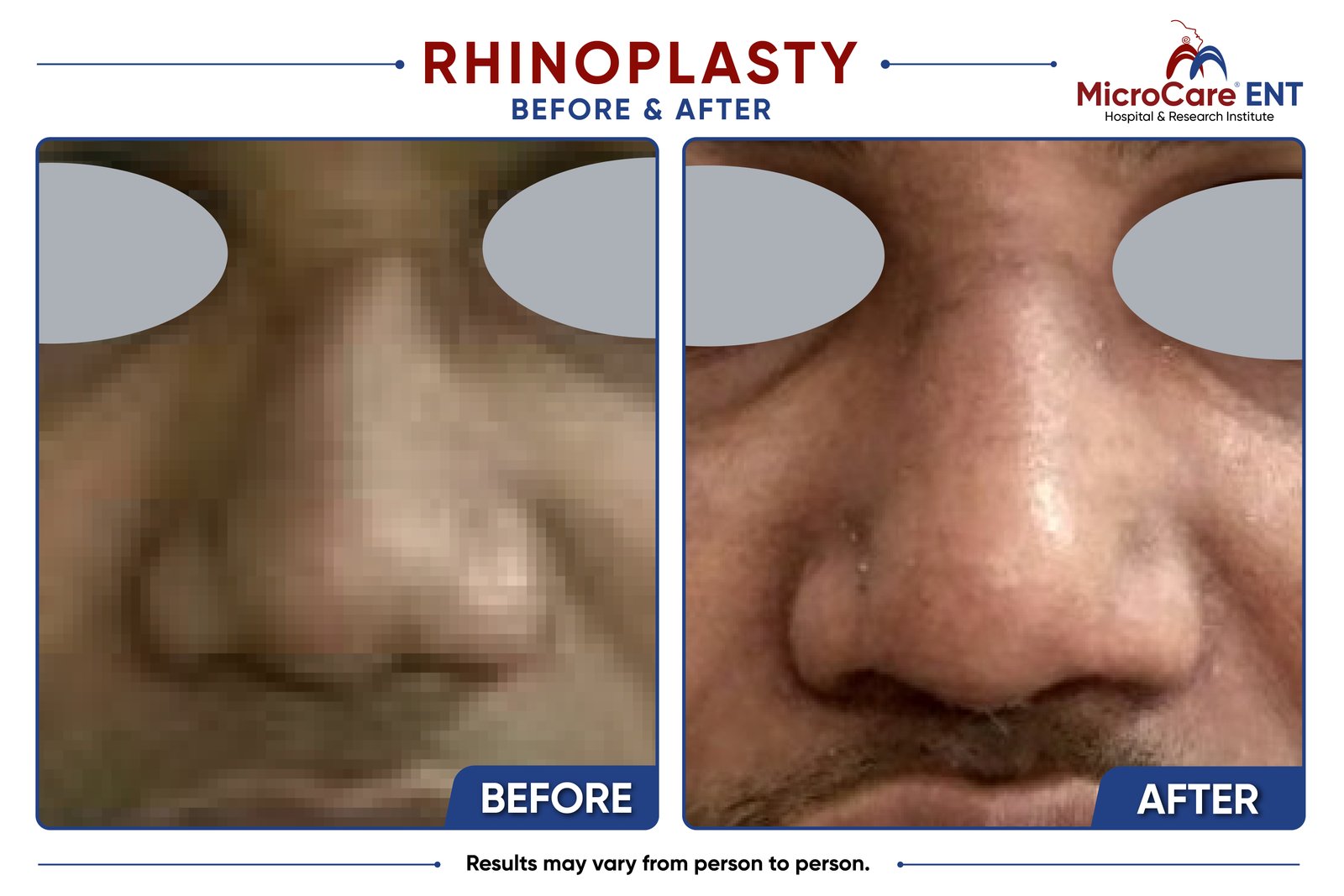
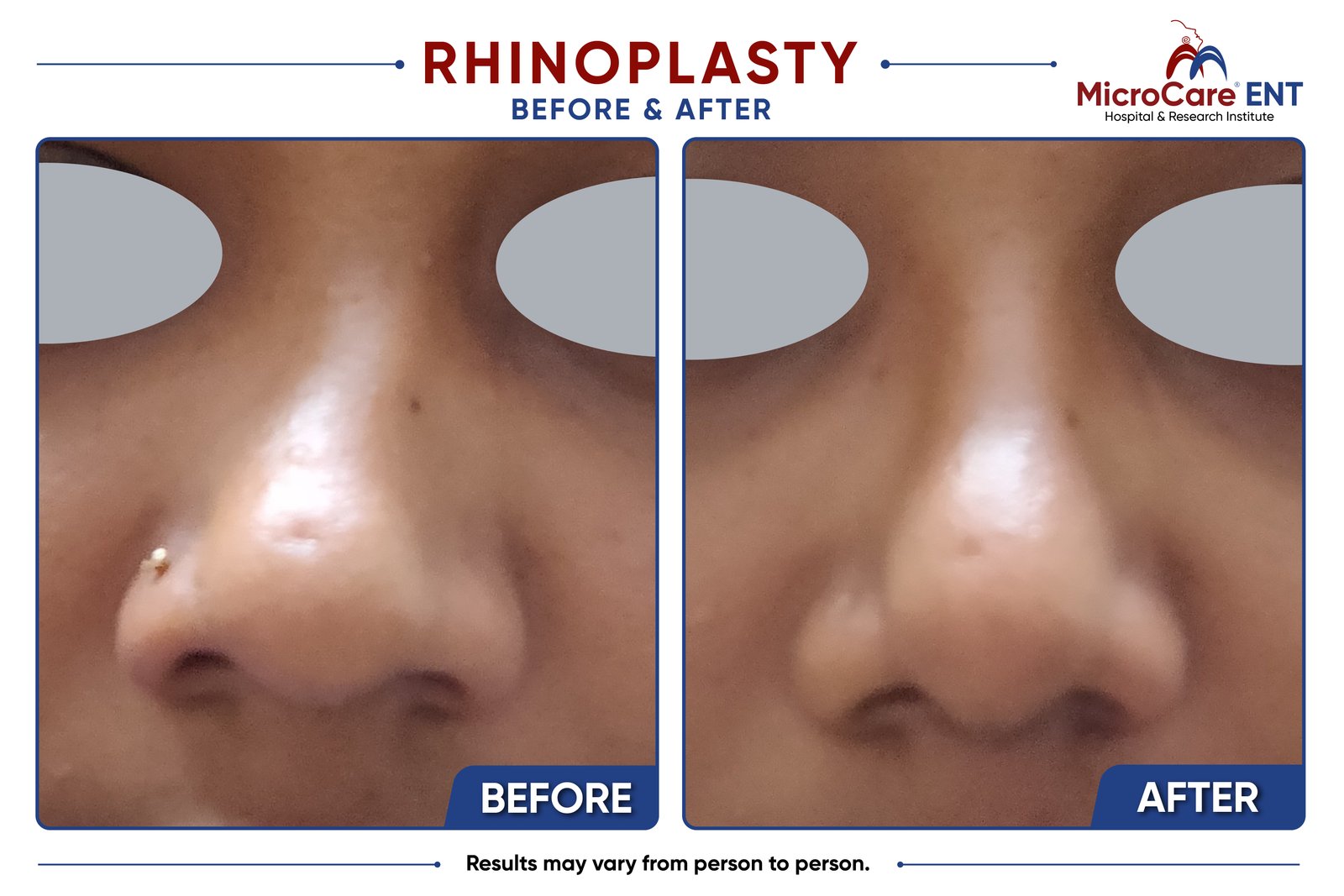
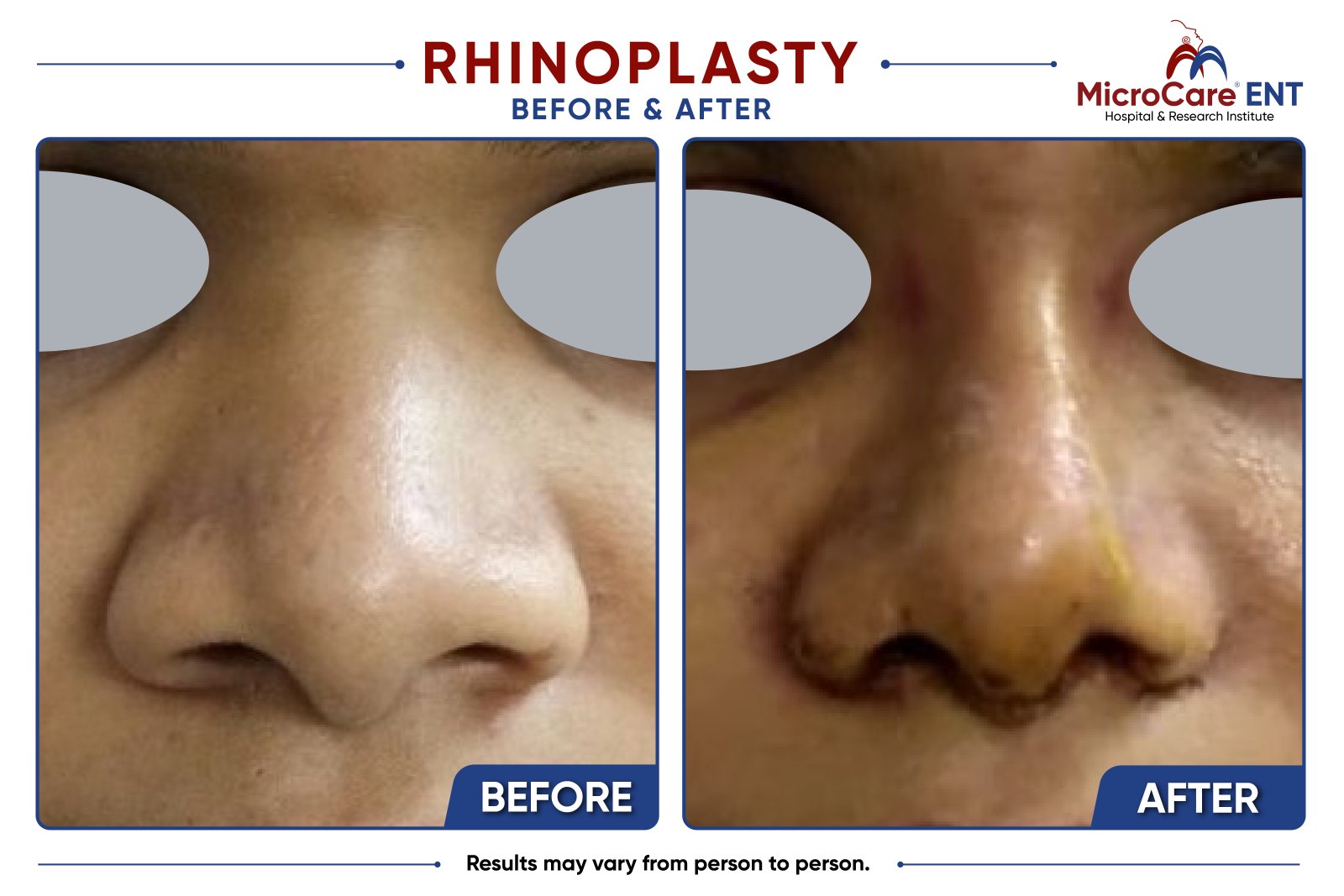
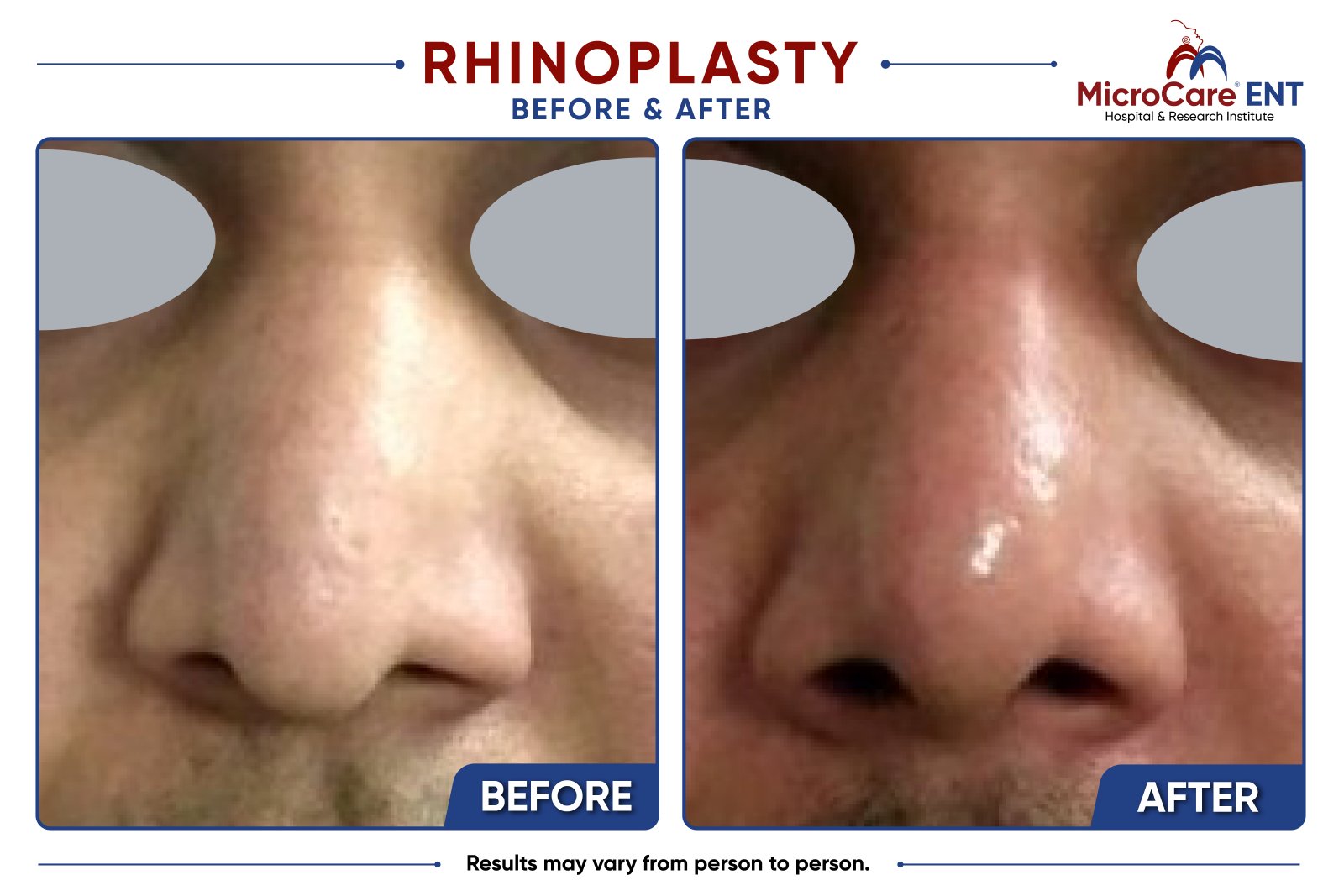
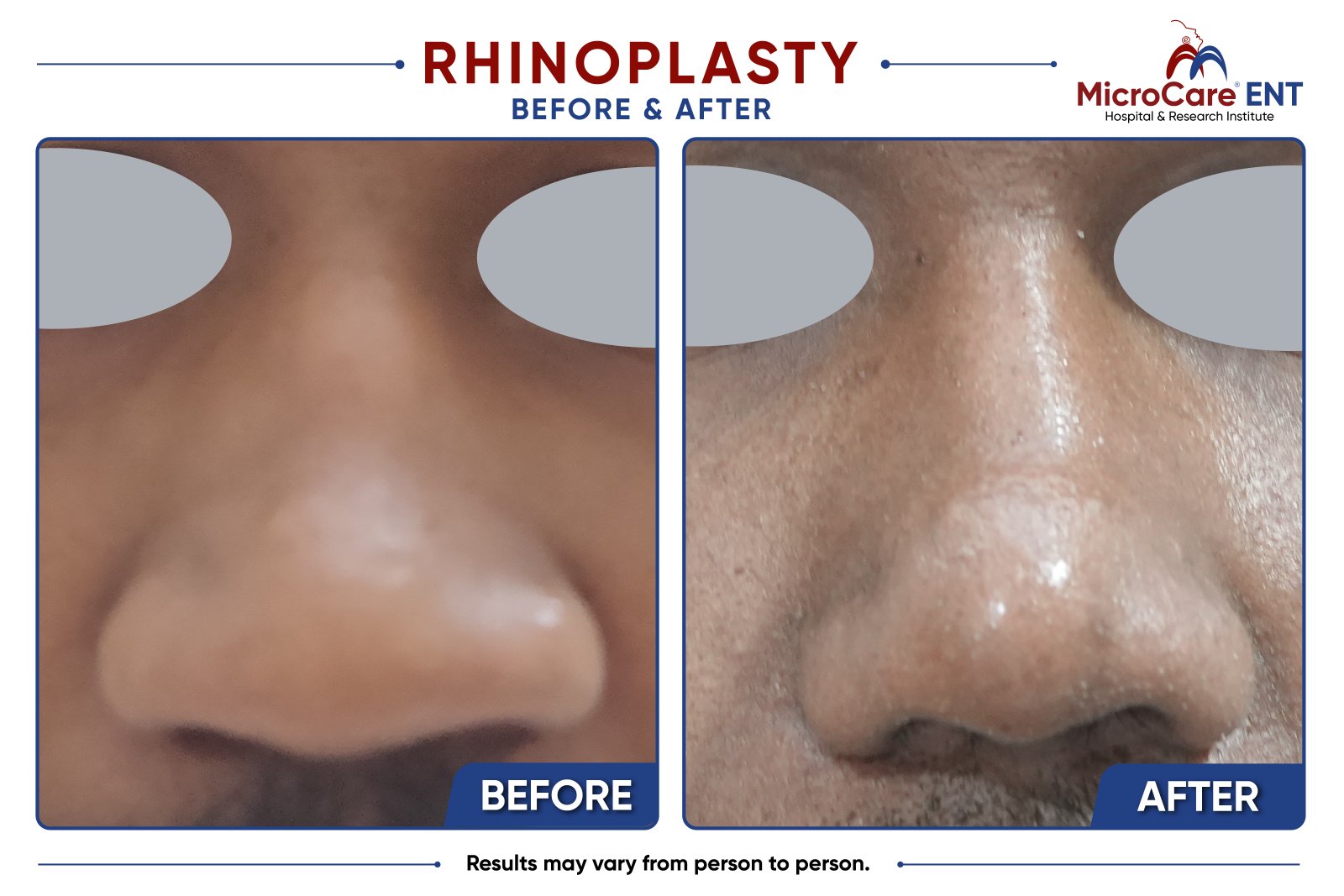
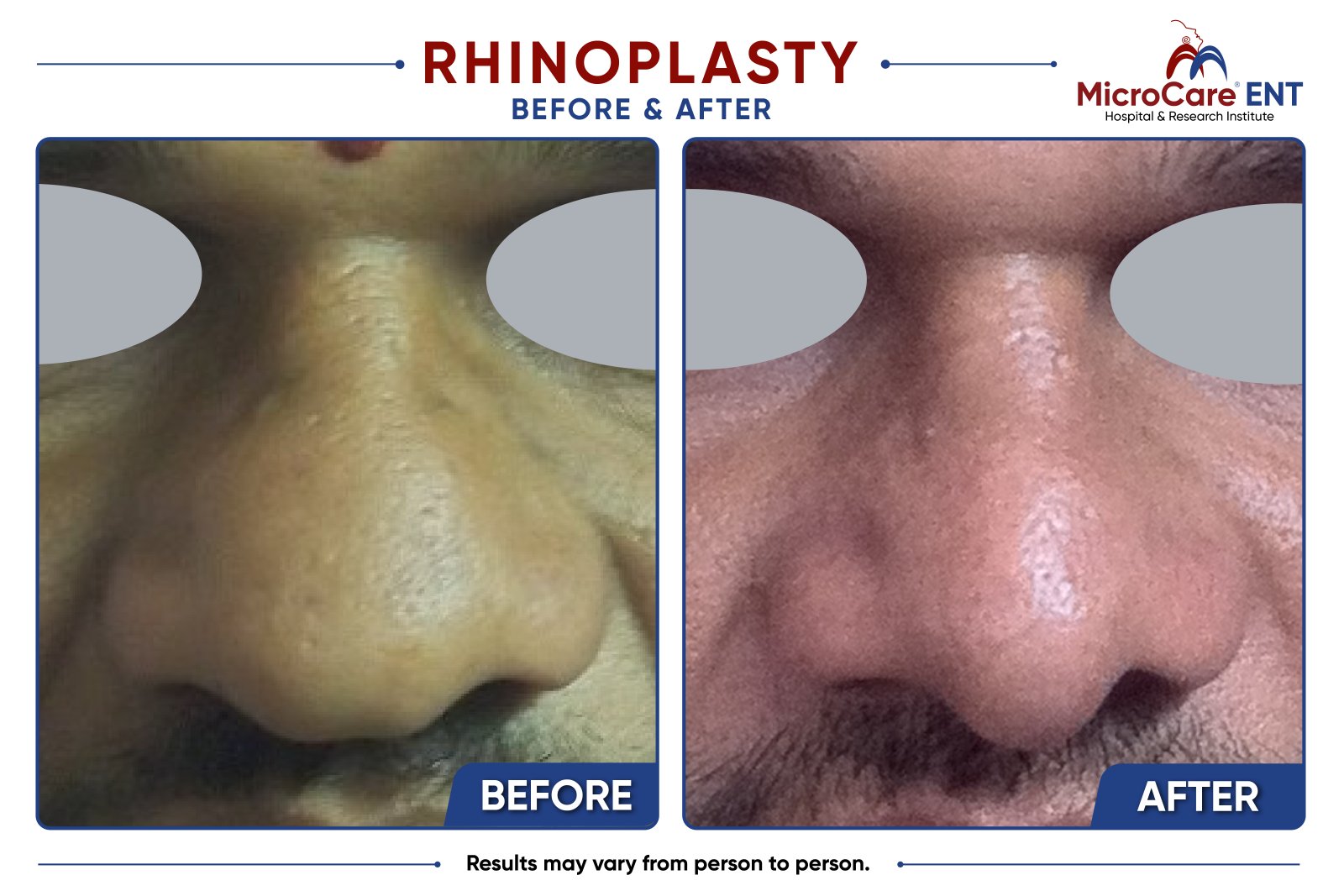
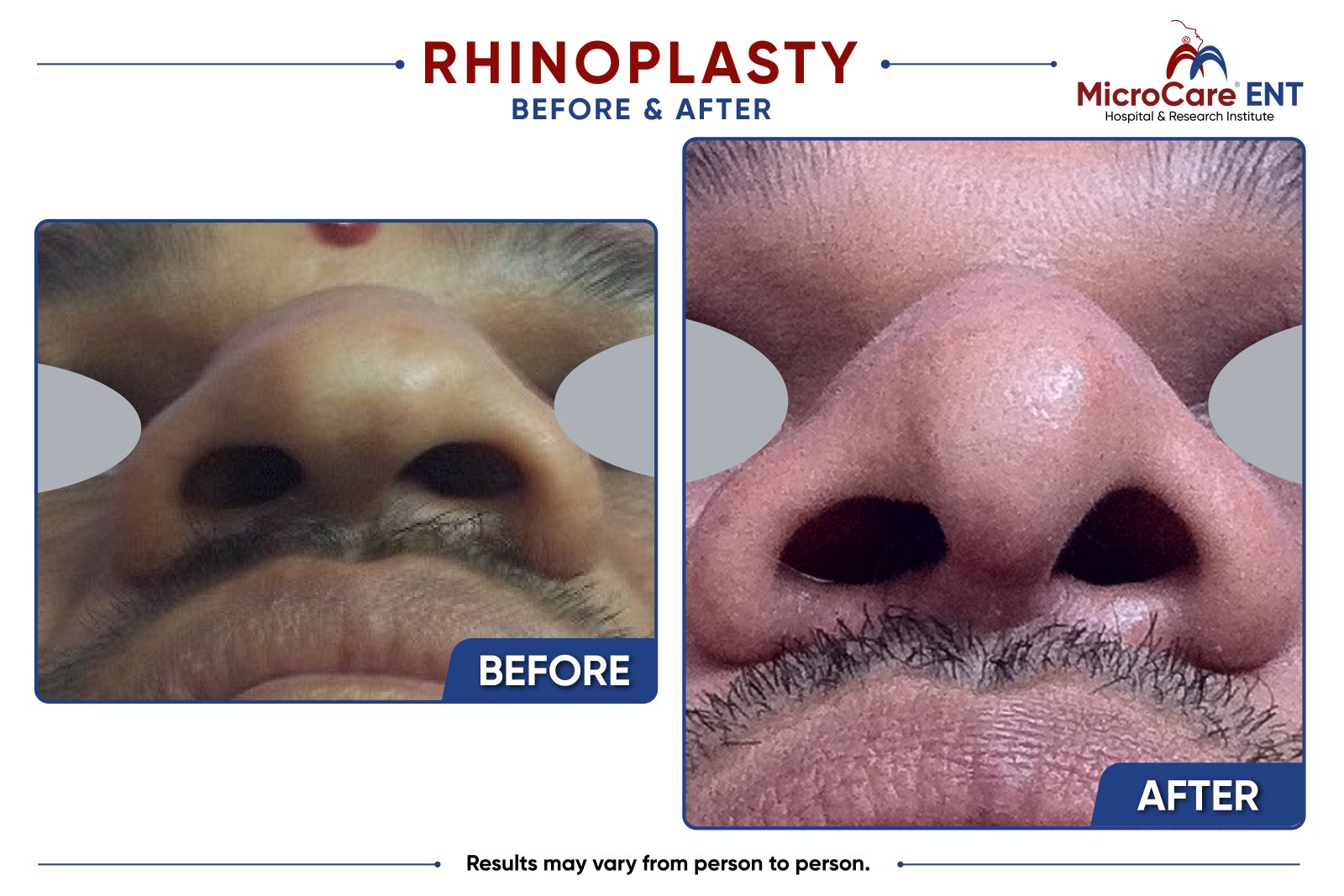
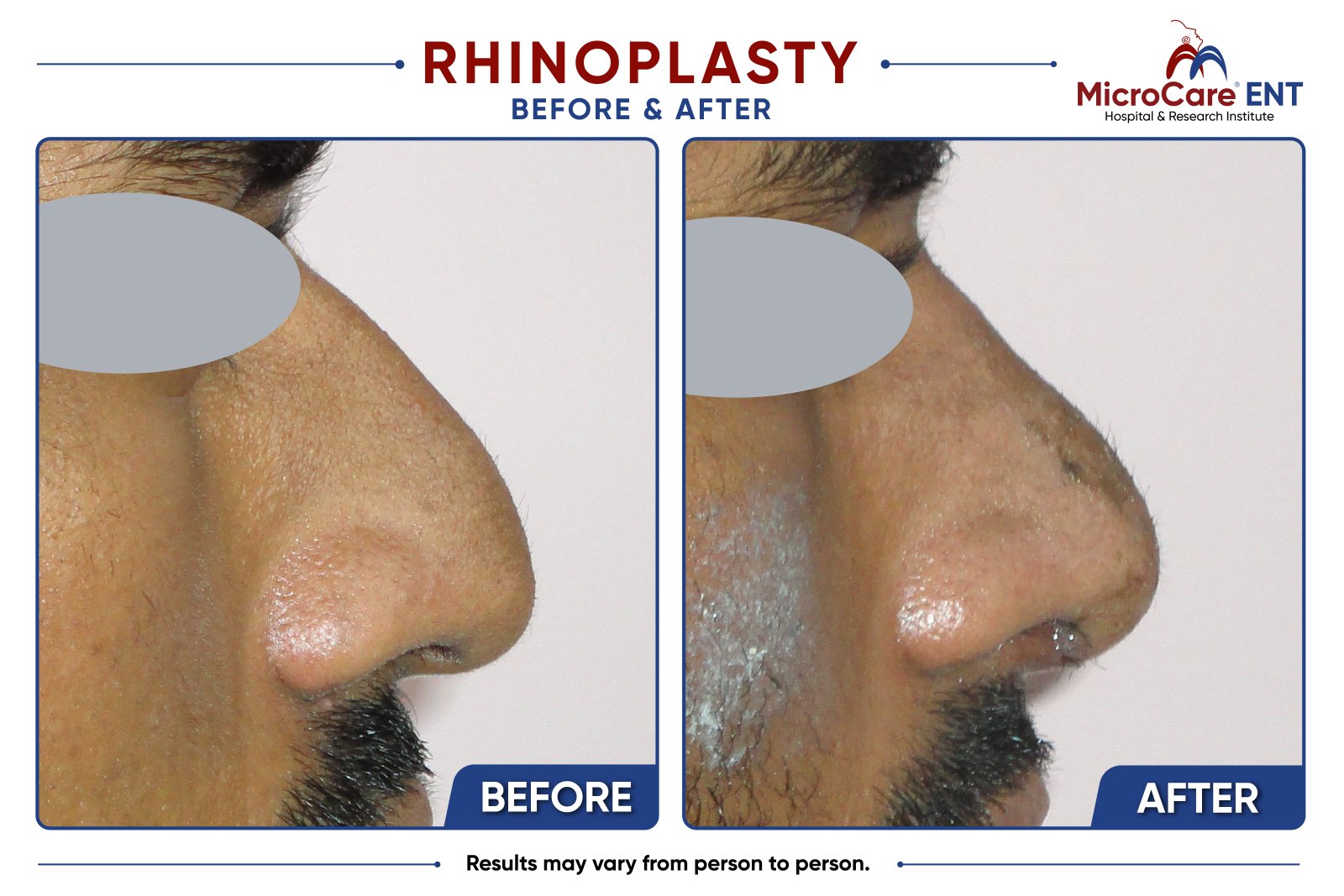
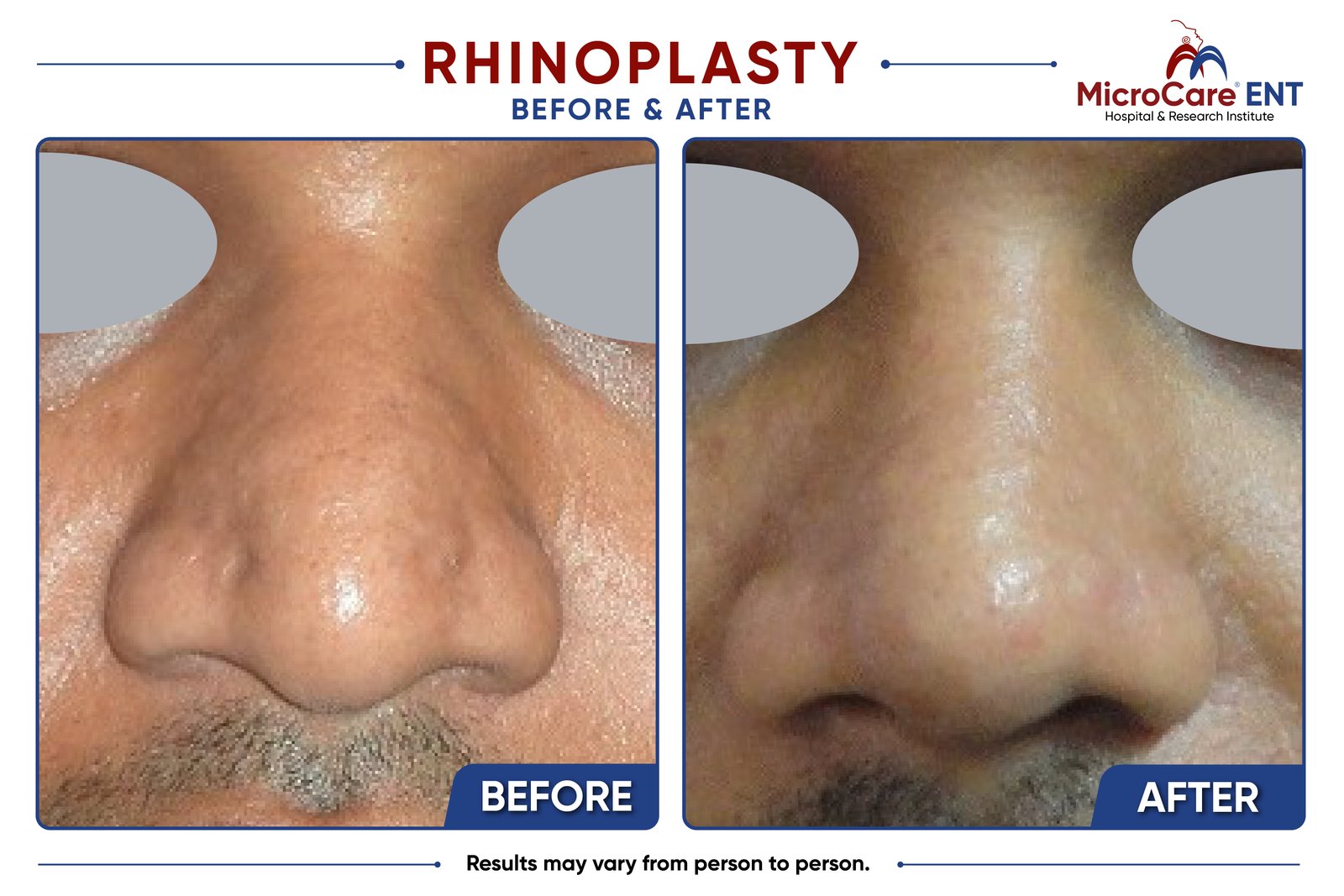
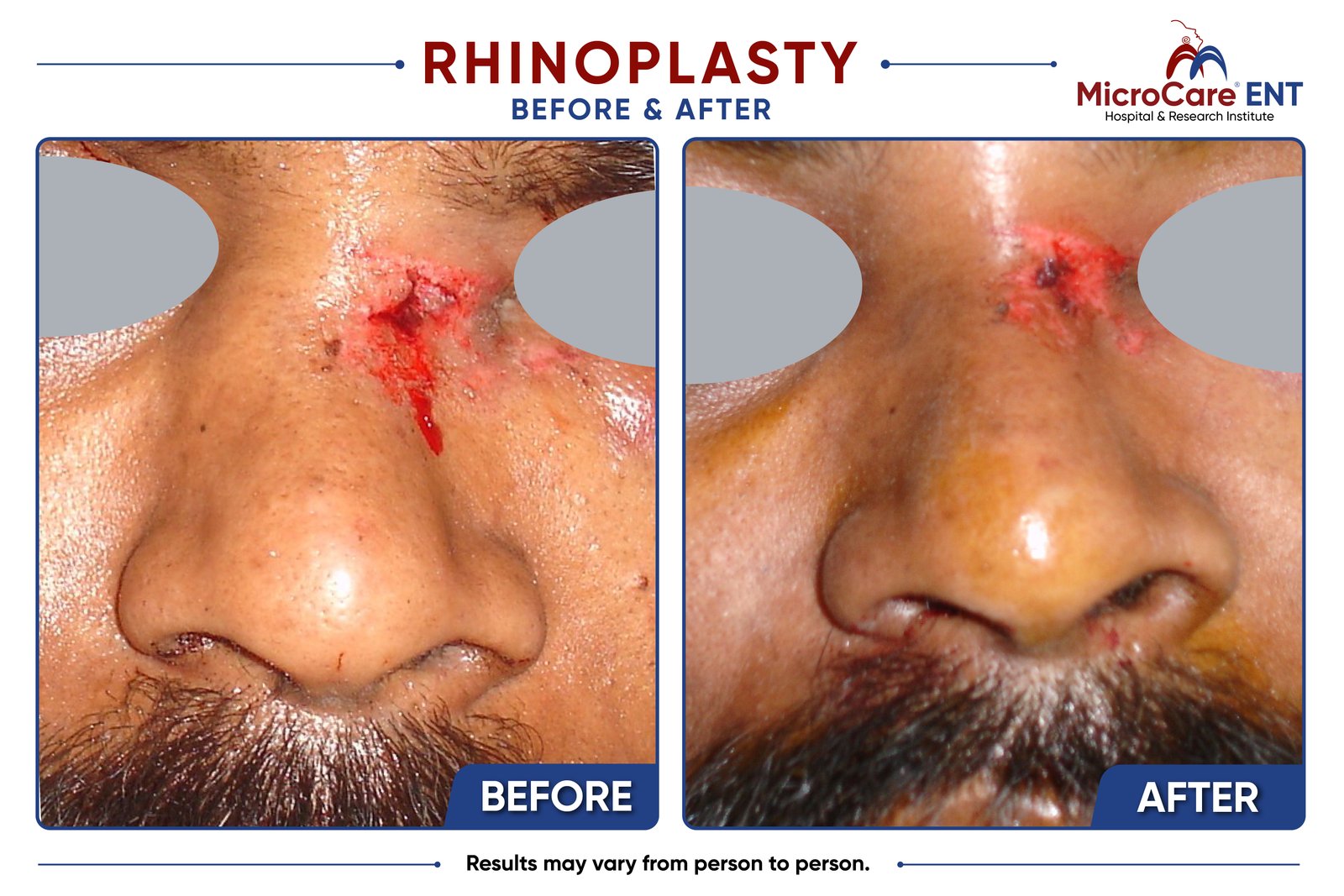
Photographs of patients of MicroCare ENT, shown with their consent. Every nose is different and individual results vary. See all before and after pictures.
Before surgery: assessment and planning
No two noses are the same, so the plan is built from a detailed examination rather than a standard template.
- Endoscopic nasal examinationA thin camera shows the inside of the nose, including deviations at the back of the septum and polyps that cannot be seen from outside.
- Airway assessmentThe nasal valves and turbinates are checked to see what is limiting airflow.
- Facial analysisThe nose is studied in relation to the forehead, lips and chin, including the angle between nose and forehead and between nose and upper lip.
- Imaging when neededA high-resolution CT scan of the sinuses is advised for revision, reconstructive or sinus cases. Standard photographs are taken for planning.
- Agreeing the planYou discuss the approach (open or closed), a safety review of your medical history and fitness for anaesthesia, and what results to expect given your skin thickness and cartilage strength.
The operation, step by step
Rhinoplasty usually takes 2 to 4 hours, depending on what needs to be done.
- AnaesthesiaMost operations are done under general anaesthesia given by a senior consultant anaesthesiologist. Smaller refinements, such as limited tip work, may be done under local anaesthesia with sedation.
- Choosing the approachIn closed rhinoplasty all cuts are inside the nostrils, suited to smaller bridge or tip changes. In open rhinoplasty a small cut across the skin between the nostrils (the columella) gives a full view, used for complex reshaping, revision and airway work.
- ReshapingThe bony bridge is reduced or built up, often with piezoelectric (ultrasonic) instruments that shape bone precisely. The upper and lower cartilages are sculpted to refine the bridge and tip.
- Correcting the airwayA deviated septum is straightened (septoplasty), and the turbinates and nasal valves are treated if they block breathing.
- Closing and supportingInternal stitches dissolve on their own; any outside stitches are very fine. An external splint protects the new shape, and soft internal splints are sometimes used to keep the inside of the nose from sticking together.
Recovery timeline
Healing happens in stages as the tissues settle around the new framework.
- External splint stays on for 7 to 10 days
- Cold compresses for the first 48 hours
- Saline sprays to keep the nose clean
- No strenuous exercise, heavy lifting or glasses on the bridge
- Bruising usually fades in 10 to 14 days
- About 70 to 80 percent of the swelling settles by week six
- Light cardio from weeks 3 to 4, once your surgeon agrees
- Internal stitches dissolve
- Back to desk work and college after 10 to 14 days
- The bridge settles at around 3 to 6 months
- The tip is the last area to settle, especially with thicker skin
- Final result at around 12 months
- Follow-up visits at 3, 6 and 12 months
Safety and risks
Rhinoplasty is a safe and predictable operation when it is done by a qualified specialist. At MicroCare ENT, safety is supported by:
Dedicated anaesthesia team
Senior consultant anaesthesiologists for every operation.
Modular operation theatres
Clean, controlled theatres built for advanced surgery.
Precise instruments
Endoscopes and piezoelectric tools for accurate, gentle work.
Risks to understand
Like any operation, rhinoplasty carries risks. Most are uncommon and minor. They include:
- Swelling that takes months to settle completely, especially at the tip
- Minor bleeding or spotting from the nose in the first few days
- Infection, which is rare; preventive antibiotics are given
- Temporary changes in airflow while the tissues heal and contract
- Temporary numbness of the tip or front teeth
- Slight asymmetry, partly because no face is perfectly symmetrical
- A second, revision operation, needed in about 5 to 10 percent of rhinoplasties worldwide
Your surgeon will discuss which of these apply to you before you decide.
Why an ENT-led approach matters
Surgery that focuses only on appearance can narrow the airway. An ENT surgeon is trained in the anatomy and function of the whole nose, so the plan protects the internal valves and the septum while the outside is reshaped.
Detailed knowledge of nasal anatomy
Training across head and neck anatomy covers the lining, cartilage and bone of the nose.
Airway-first planning
Stability of the septum and internal valves is planned before any change to the shape.
Sinus and allergy care together
Chronic sinusitis, allergic rhinitis and enlarged turbinates can be treated in the same operation.
Experience with complex cases
Cartilage grafts from the septum, ear or rib are used to rebuild support in revision surgery.
The MicroCare ENT approach
- More than 26 years of ENT and rhinoplasty surgery
- Every operation planned as a customised septorhinoplasty, balancing breathing and appearance
- Endoscopic assistance and piezoelectric instruments, which can reduce bruising and swelling
- Honest consultations, transparent pricing and follow-up for up to one year

Prof. Dr. Sriprakash Vinnakota
MS (ENT) · Chief Rhinoplasty Surgeon, Centre for Advanced ENT, Head & Neck Surgery, MicroCare ENT Hospital & Research Institute
More than 26 years in ENT surgery, with rhinoplasty training at Marien Hospital, Stuttgart, under Prof. Gubisch. He is the author of Your Best Nose and operating faculty for RhinoSculpt 2026, a national live rhinoplasty workshop.
Frequently asked questions
Are the results of rhinoplasty permanent?
Yes. Bone and cartilage that are reshaped or removed do not grow back, and cartilage grafts are used where extra support is needed, so the new shape lasts. The nose continues to age naturally with the rest of the face, and a significant injury can still change it.
Will rhinoplasty affect my breathing?
It should not make breathing worse when it is planned by a surgeon who assesses the airway first. When a deviated septum, enlarged turbinates or weak nasal valves are found during the check-up, they can be corrected in the same operation, so many patients breathe better afterwards.
When will I see the final result?
Bruising usually fades within 10 to 14 days and most of the swelling settles by six weeks. The bridge settles at around 3 to 6 months. The tip is the last area to settle, so the final, refined shape is seen at around 12 months, and later in patients with thicker skin.
Is rhinoplasty painful?
The operation is done under anaesthesia, so you feel nothing during it. Afterwards most people describe a blocked, heavy feeling rather than sharp pain, and it is controlled with regular painkillers for the first few days. Piezoelectric instruments also tend to reduce post-operative discomfort.
Will there be a visible scar?
In closed rhinoplasty all cuts are inside the nose. Open rhinoplasty adds a small cut across the skin between the nostrils, which usually heals to a fine line that is hard to see after a few months.
Can I wear glasses after surgery?
Glasses should not rest on the bridge of the nose for 4 to 6 weeks while the bones settle. Your surgeon can suggest frames that rest on the cheeks, taping them to the forehead, or contact lenses for that period.
How long should I take off work?
Most people return to desk work and college after 10 to 14 days, once the splint is off and bruising has faded. Heavy exercise, swimming and contact sports are usually avoided for about six weeks.
What is the right age for rhinoplasty?
Surgery is planned once the nose has finished growing, which is usually around 15 to 16 years in girls and 17 to 18 years in boys. Breathing problems or injuries may sometimes be treated earlier after careful assessment.
More answers in our FAQs and Myths & Facts. For costs, see rhinoplasty cost in Hyderabad.
Talk to our rhinoplasty team
Leave your name and number and we will open WhatsApp with your details filled in. You can also call +91 94949 40725.