
Rebuild the bridge from the inside out.
A low, flat or sunken bridge often means the nose has lost its internal support, and that can affect your breathing too. Our ENT-led team restores the bridge's height and strength with your own cartilage, for a natural profile that breathes better and stays stable.
Medically reviewed by Prof. Dr. Sriprakash Vinnakota, MBBS, MS (ENT, Head & Neck), Chief Rhinoplasty Surgeon, Centre for Advanced ENT, Head & Neck Surgery, MicroCare ENT Hospital & Research Institute.
- Also called
- Saddle nose repair
- Grafts
- Septum, ear or rib
- Breathing
- Valves supported
- Splint removed
- About day 7
- Presentable
- 10 to 14 days
- Final shape
- 6 to 12 months
What does a depressed nose mean?
A depressed nose has a low, flat or sunken bridge. It is often a sign that the cartilage and bone supporting the bridge are weak or have been lost, and it frequently comes with nasal valve collapse and restricted breathing.
A restored bridge
A smoother, stronger and more balanced profile.
Better airflow
Internal support rebuilt to correct collapse or blockage.
Natural balance
Proportions that suit the rest of your face.
Common patterns of a depressed nose
Saddle nose
A dip in the middle of the bridge, often because the septum has weakened.
Post-traumatic depression
A fracture or septal injury that healed with the bridge sunk.
Post-accident nose deformitySoft cartilage
Weak cartilage gives an indented bridge or a drooping tip.
Rebuild, not mask
We restore the structure rather than covering the dip with fillers.
Before you decide, read Prof. Dr. Vinnakota's book Your Best Nose, which answers 100 common rhinoplasty myths.
Why support matters for breathing
When the bridge loses its support, the airway inside can narrow or collapse. You may notice:
- A blocked nose most of the time.
- Mouth breathing and snoring.
- Getting breathless more easily during exercise.
Restoration or camouflage?
Camouflage
- Temporary
- Only limited contouring
- Can migrate or affect the skin
- Do not fix breathing
Structural restoration
- Long-lasting cartilage grafts
- Rebuilds the bridge and tip support
- Supports the nasal valves
- Can straighten the septum at the same time
Who is depressed nose augmentation for?
- A low or flat bridge.
- A visible dip or saddle shape.
- A sunken bridge after an injury.
- A collapsed bridge after earlier rhinoplasty.
- Breathing problems such as blockage or snoring.
Patient results
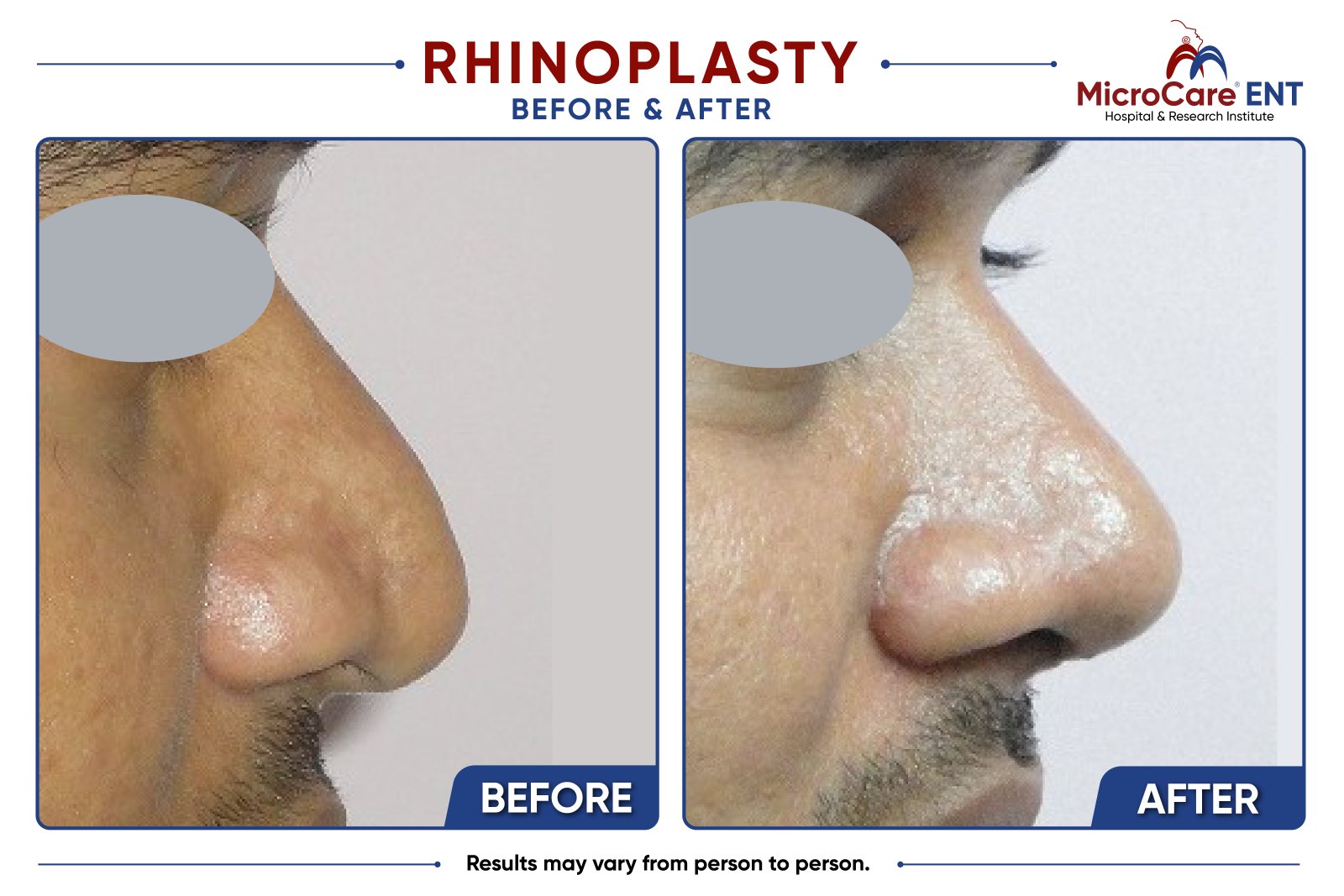
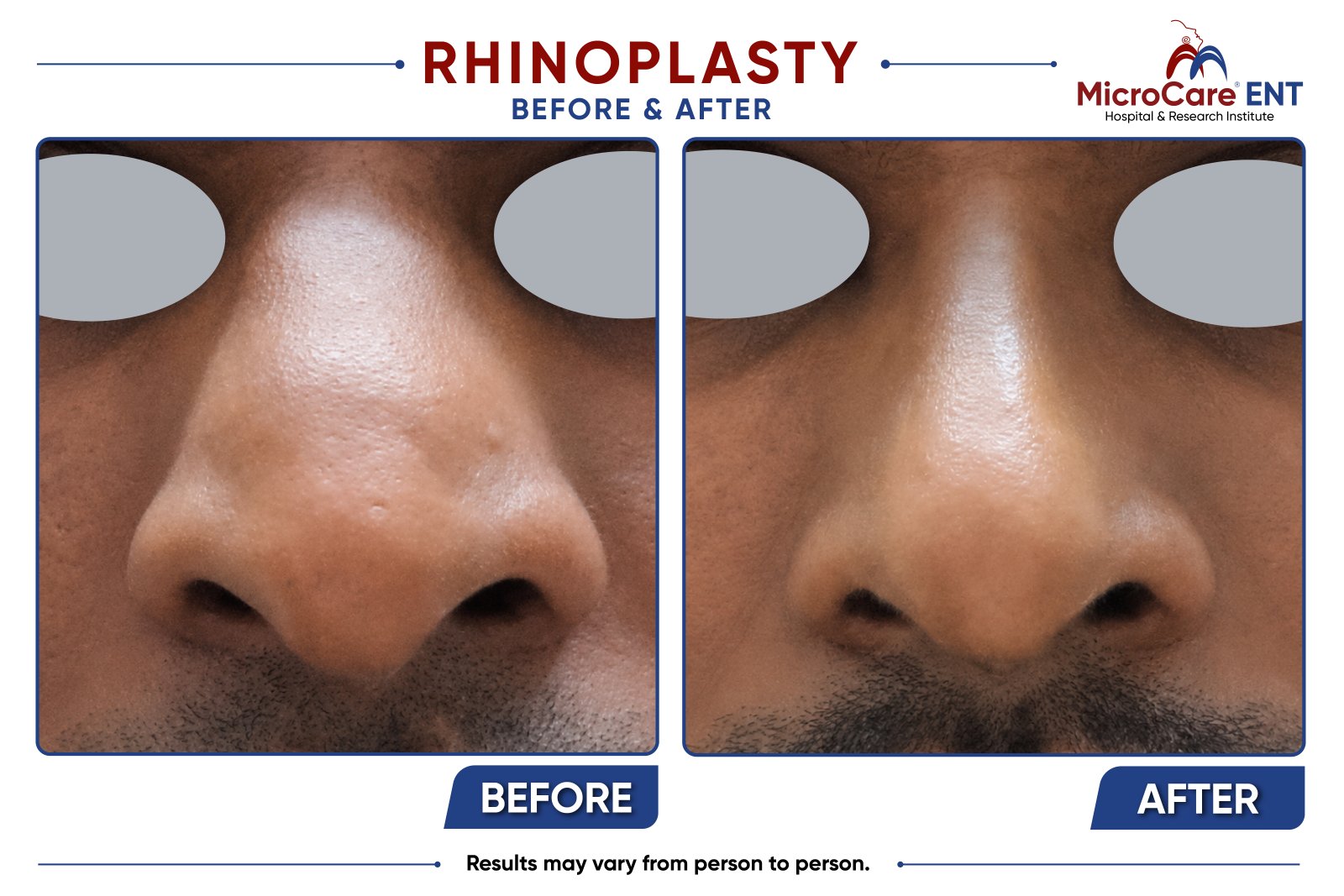
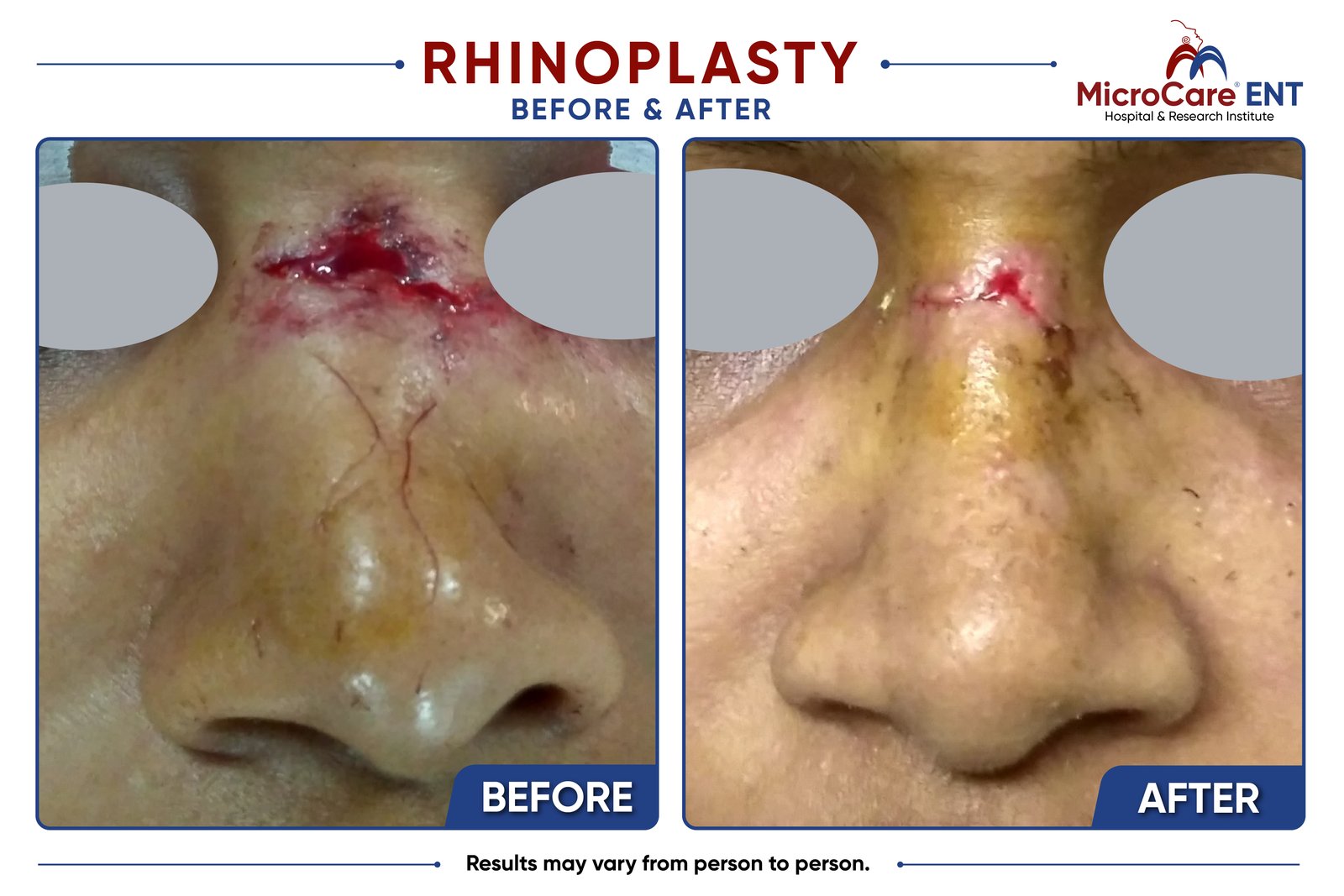
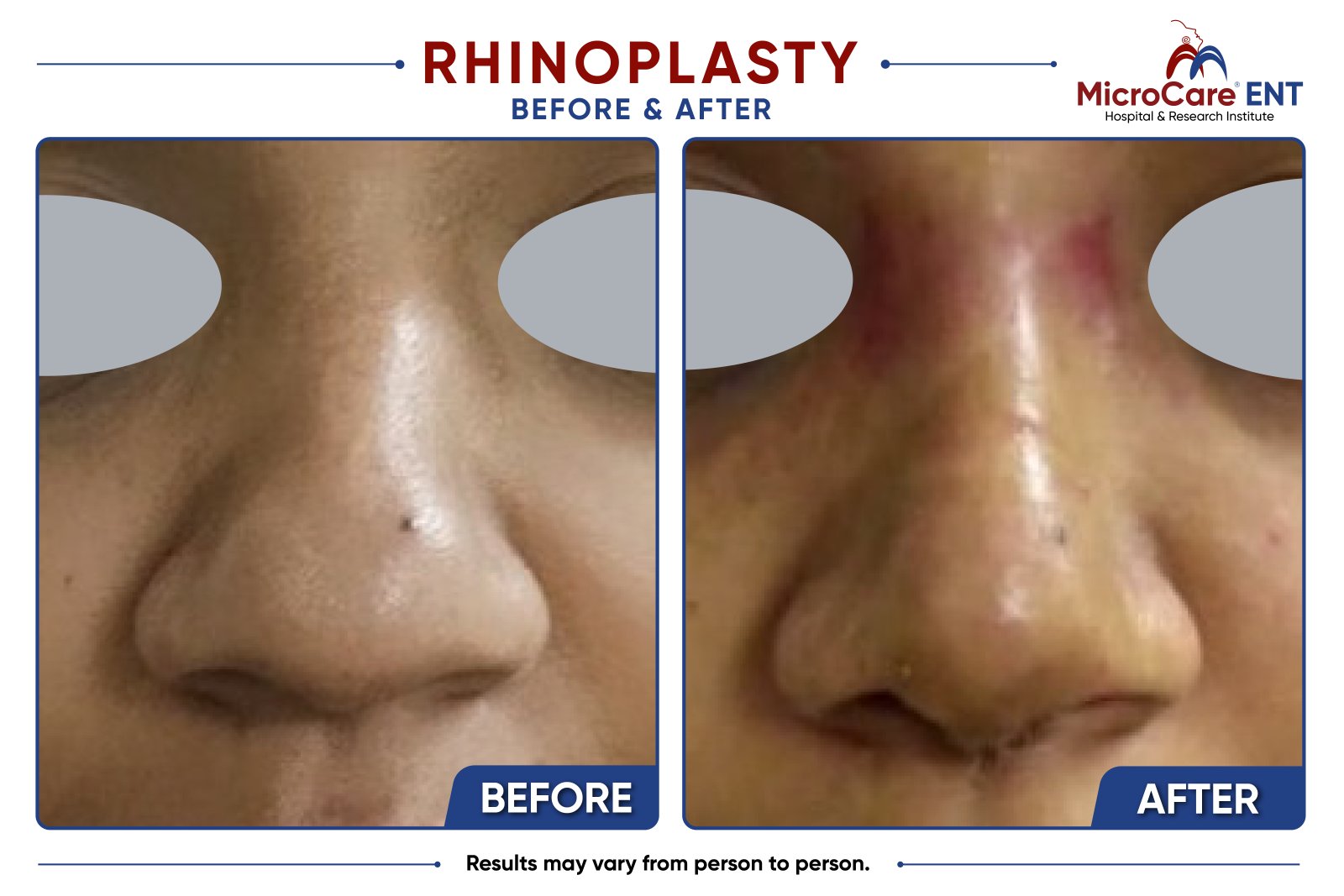
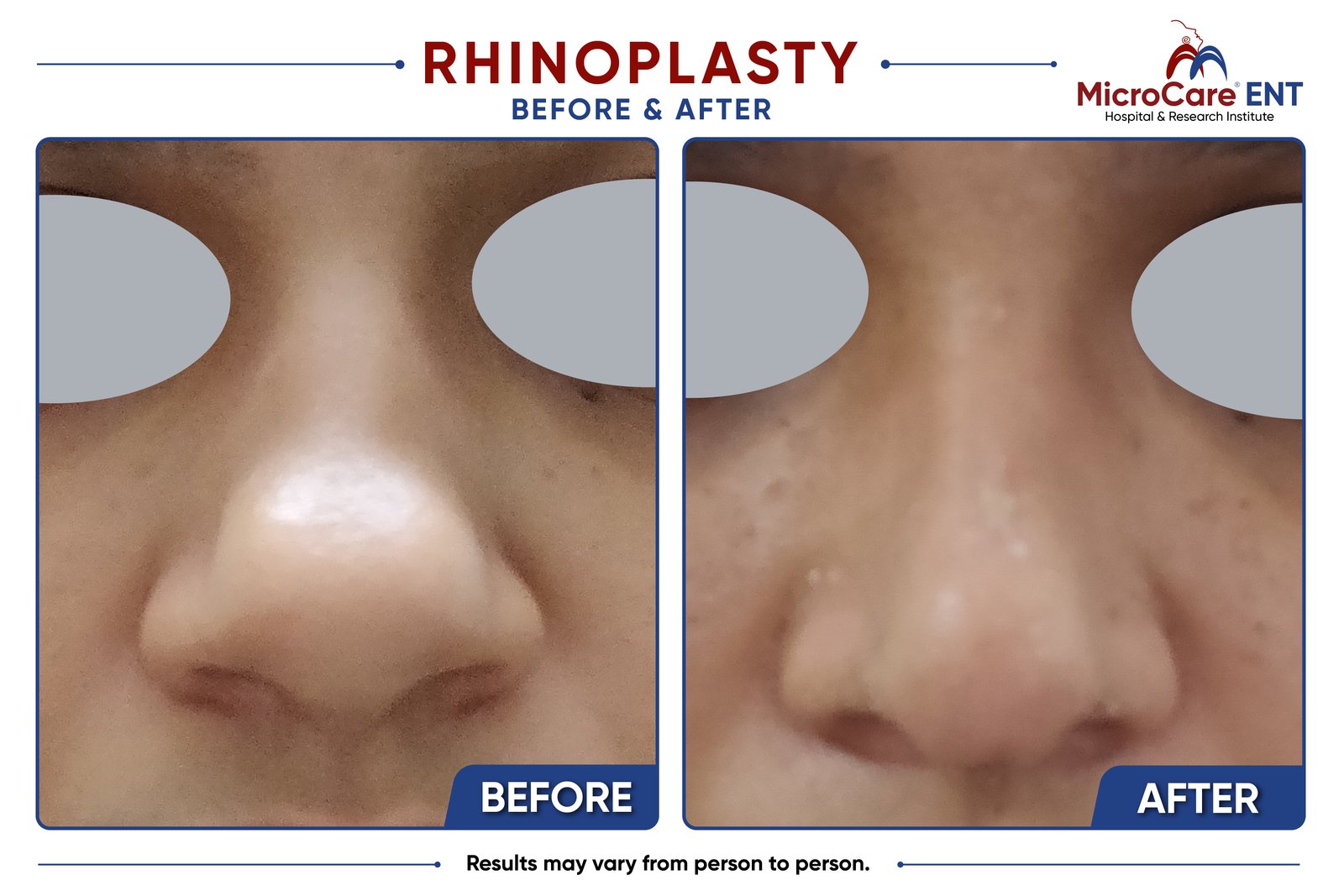
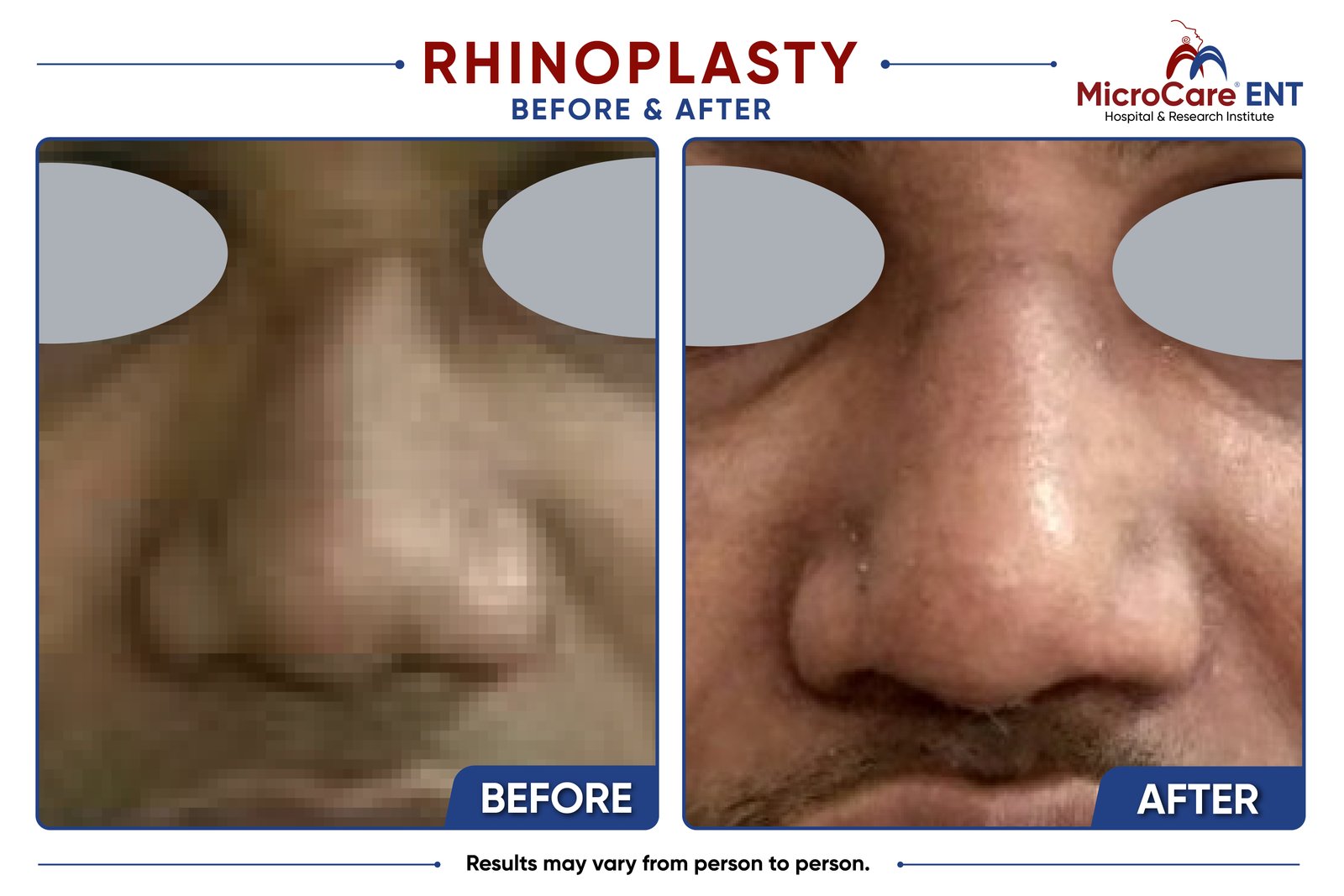
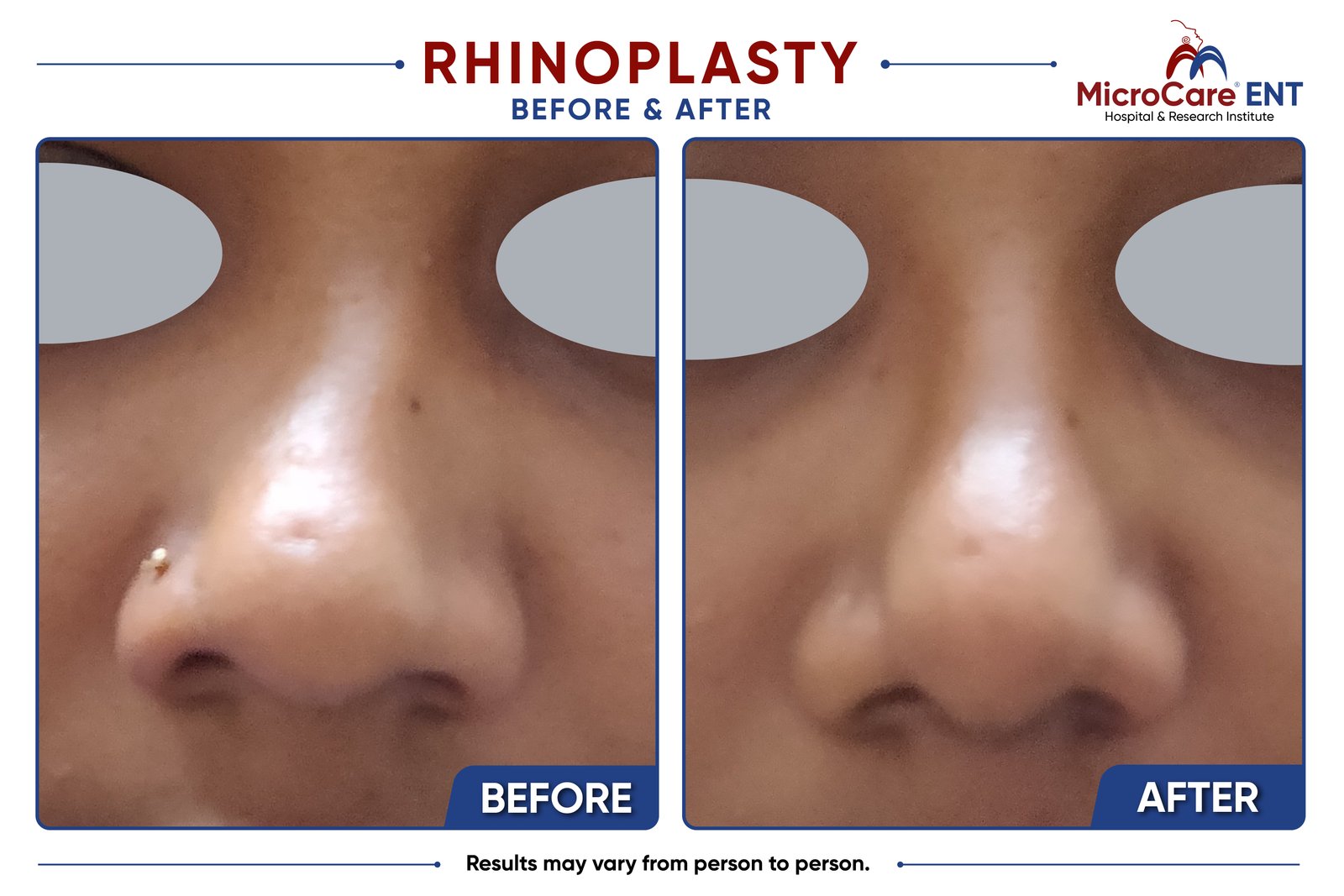
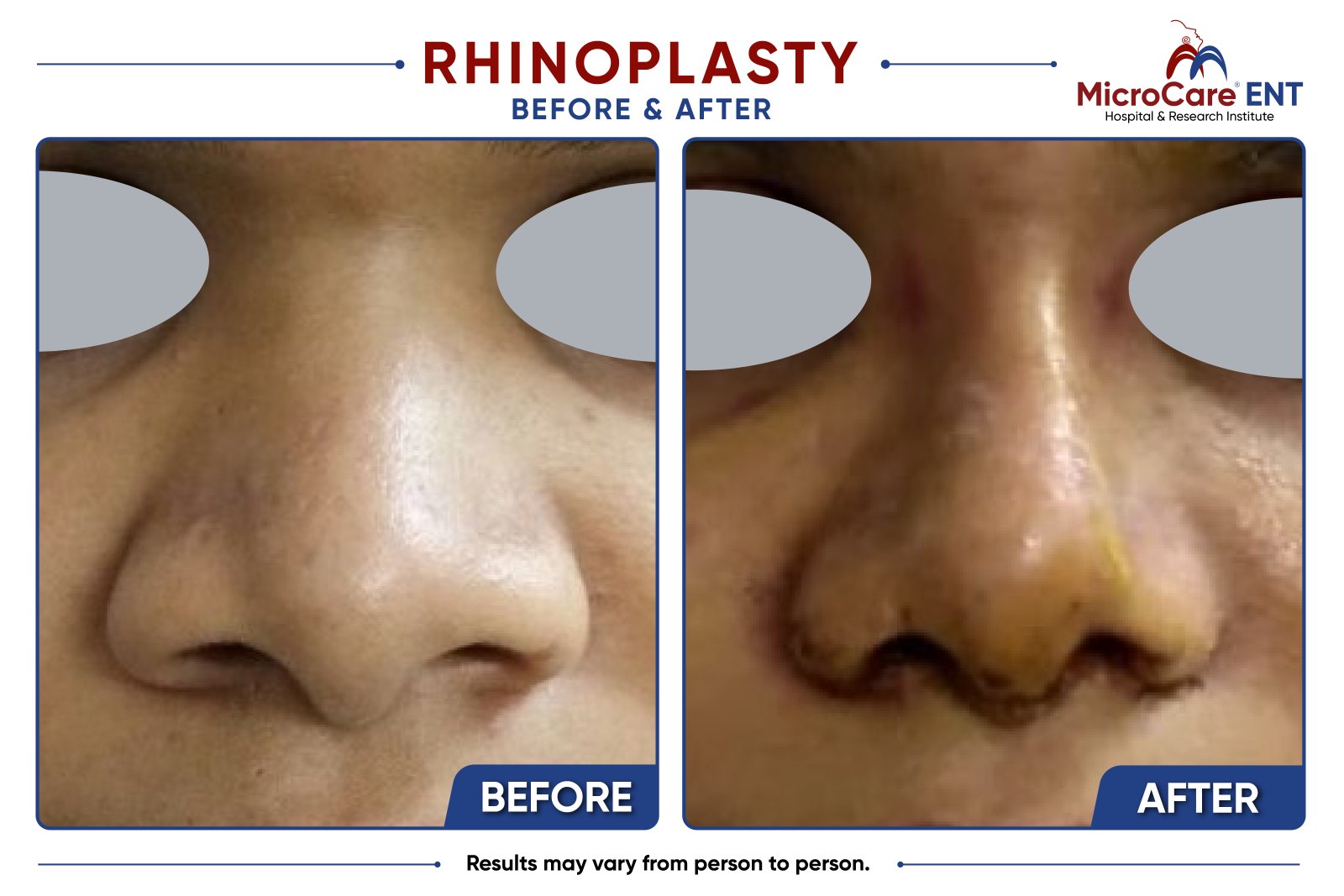
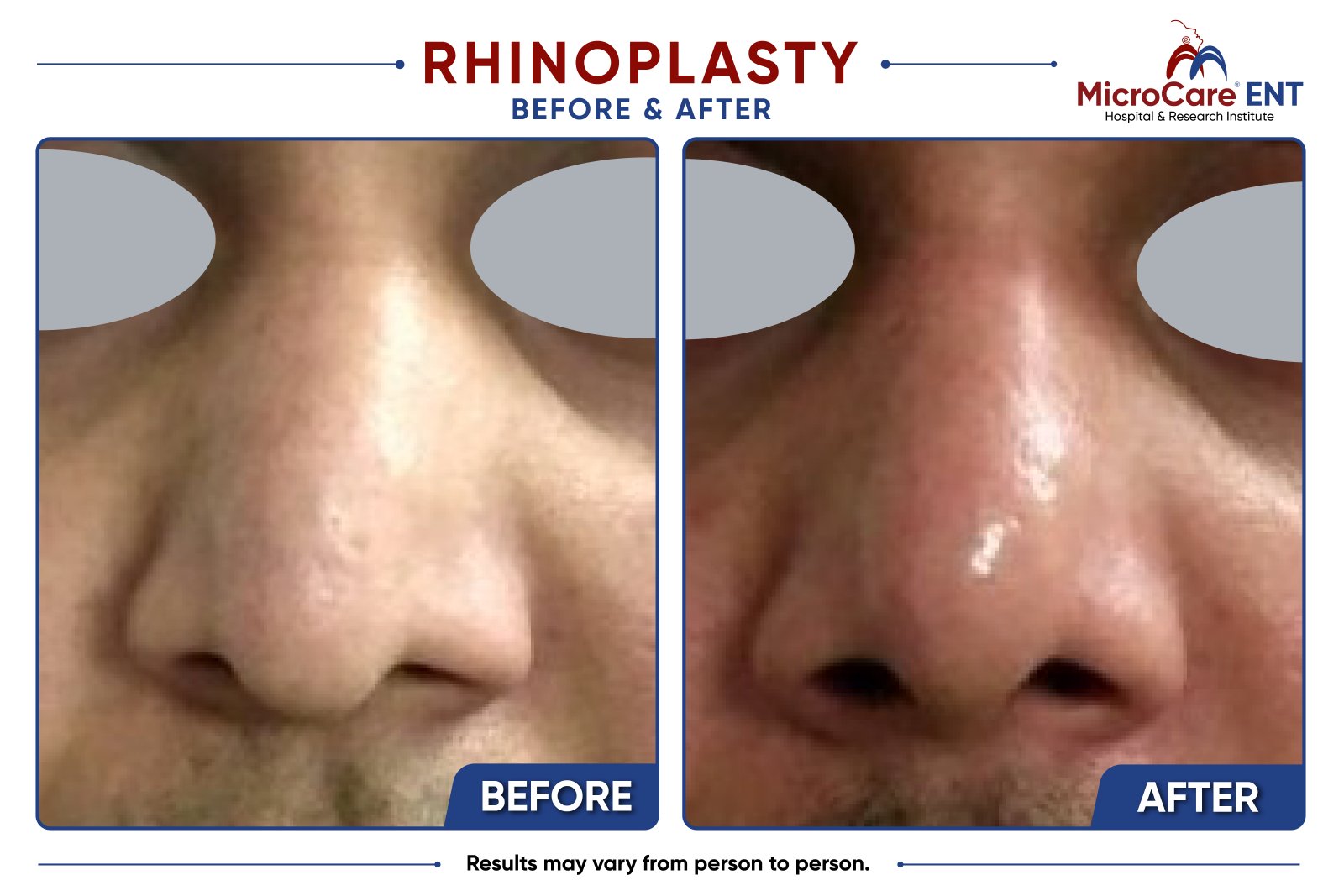
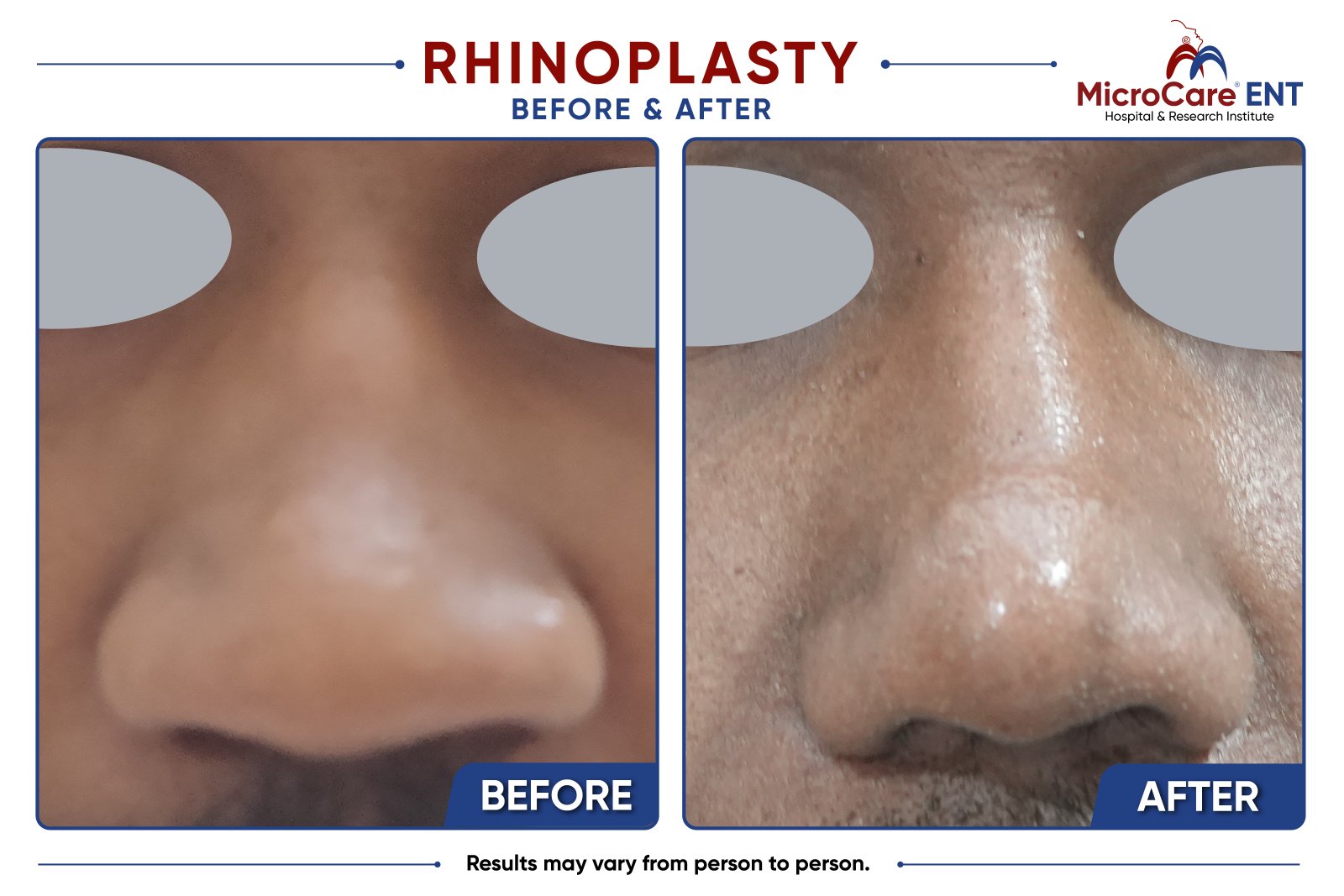
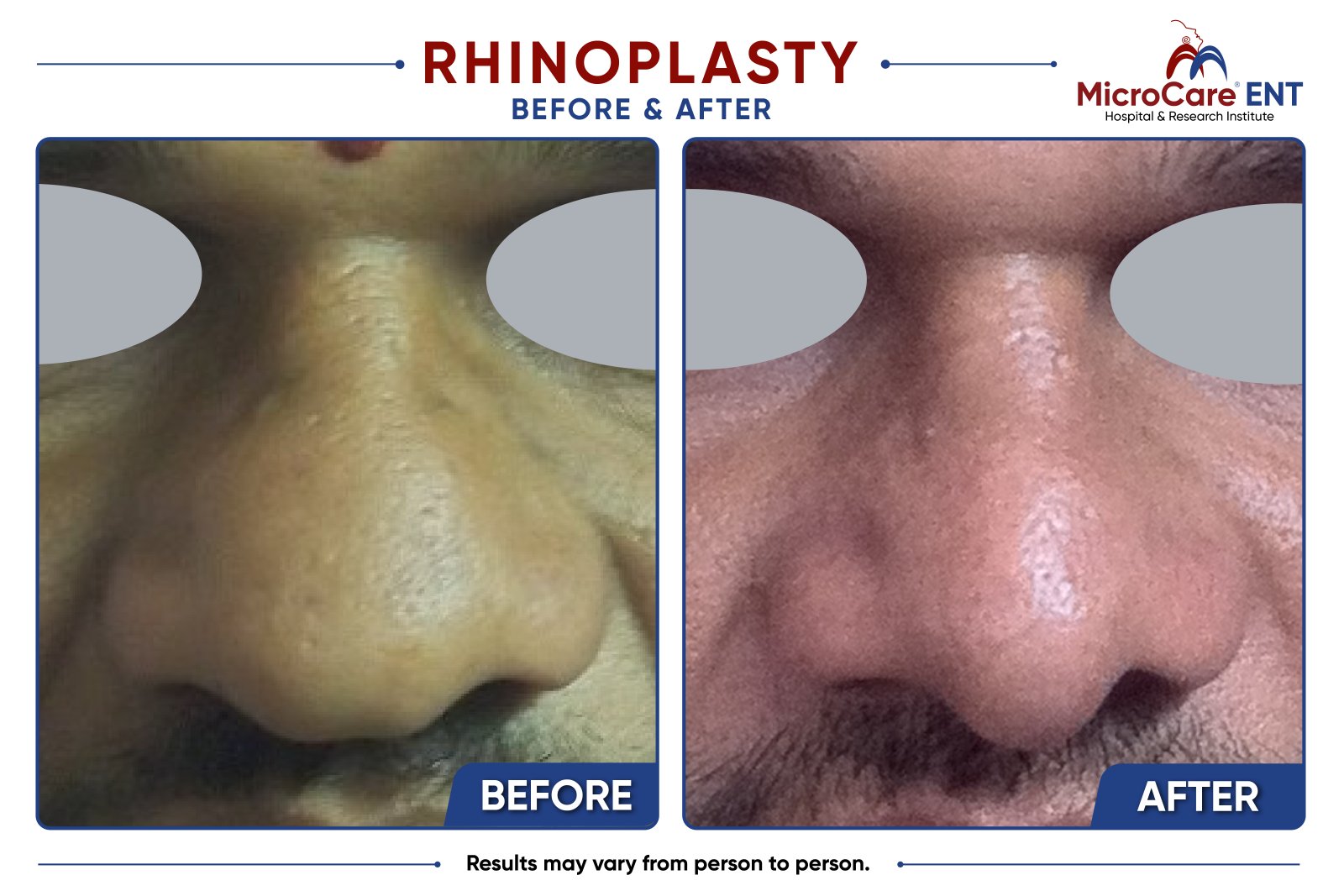
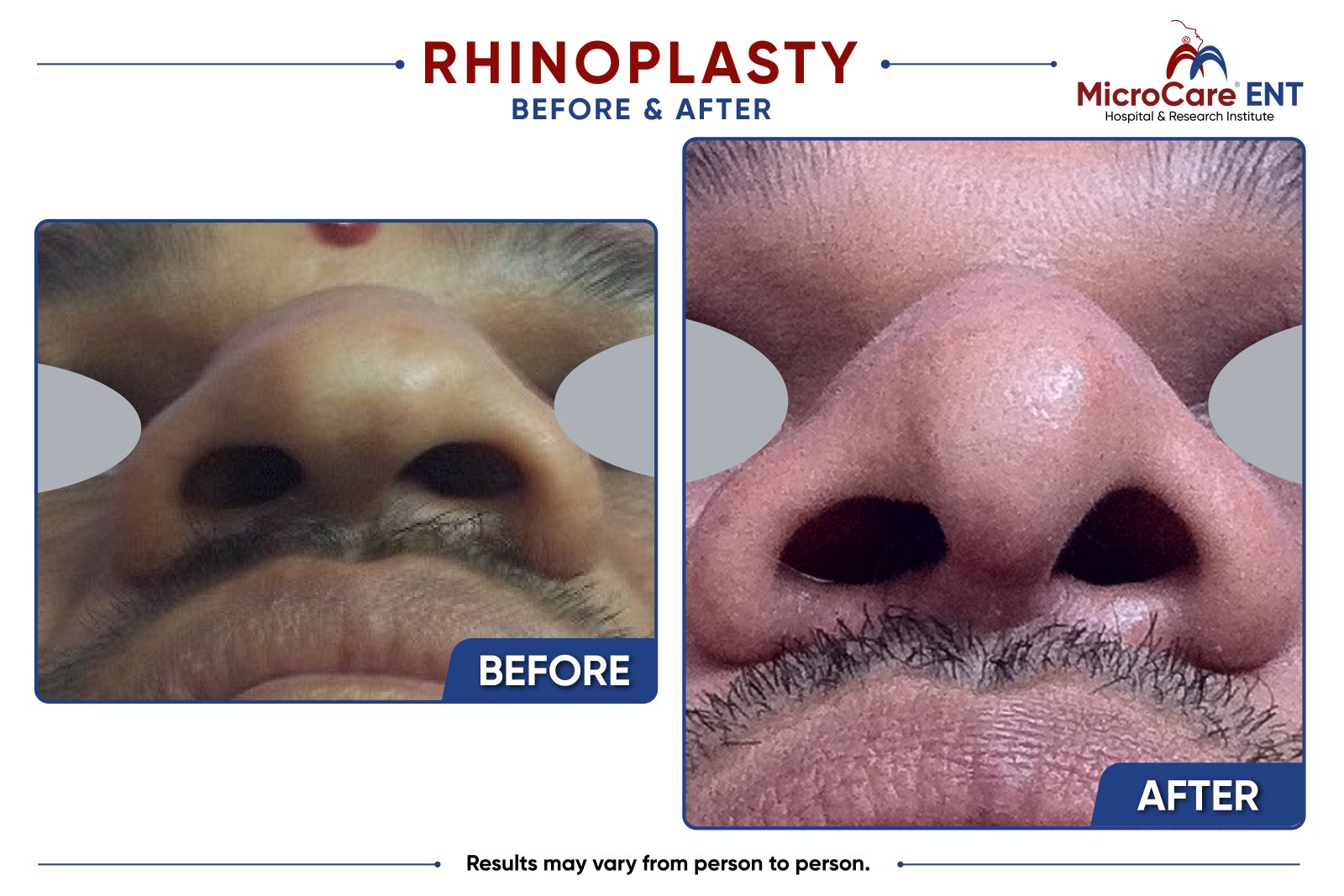
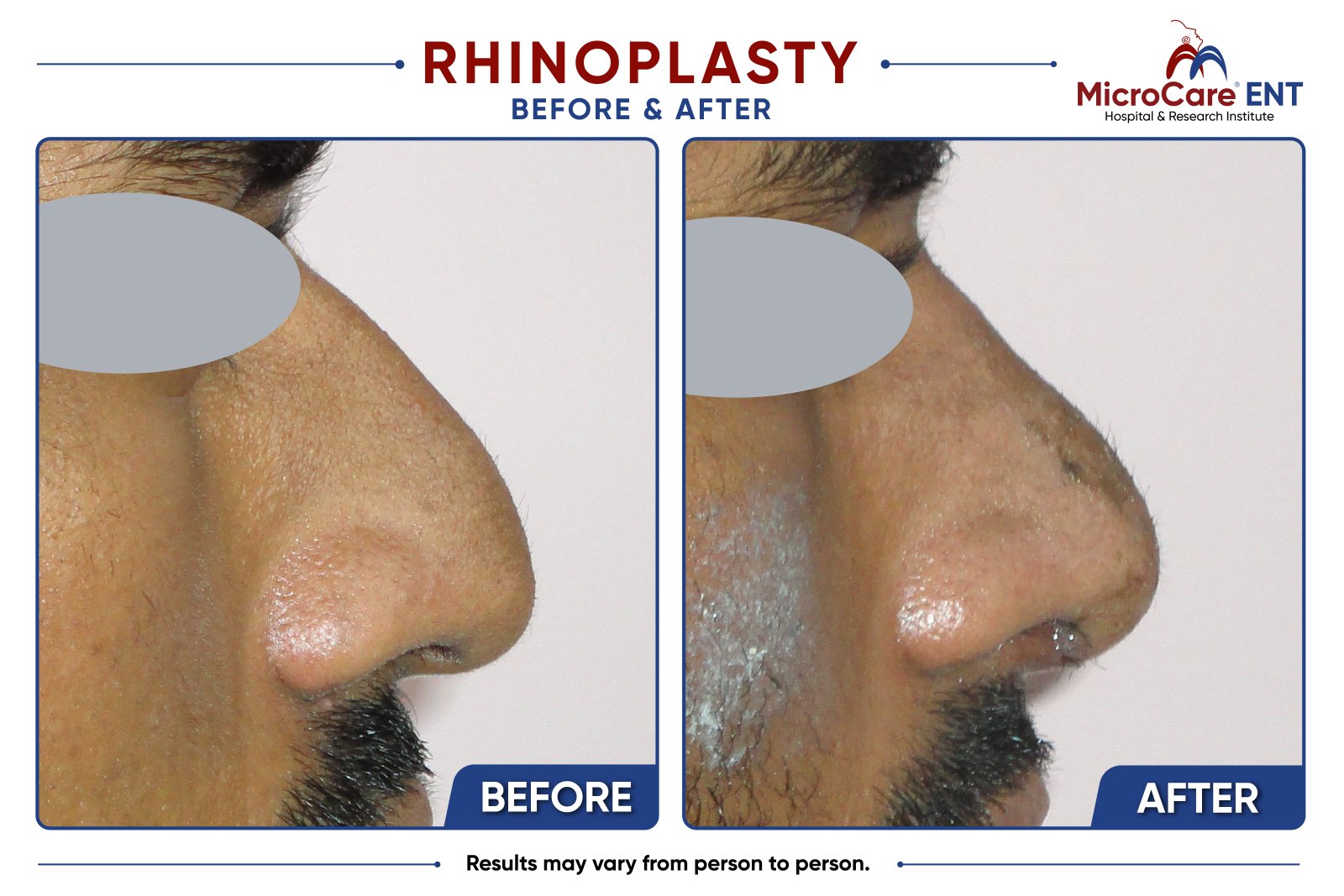
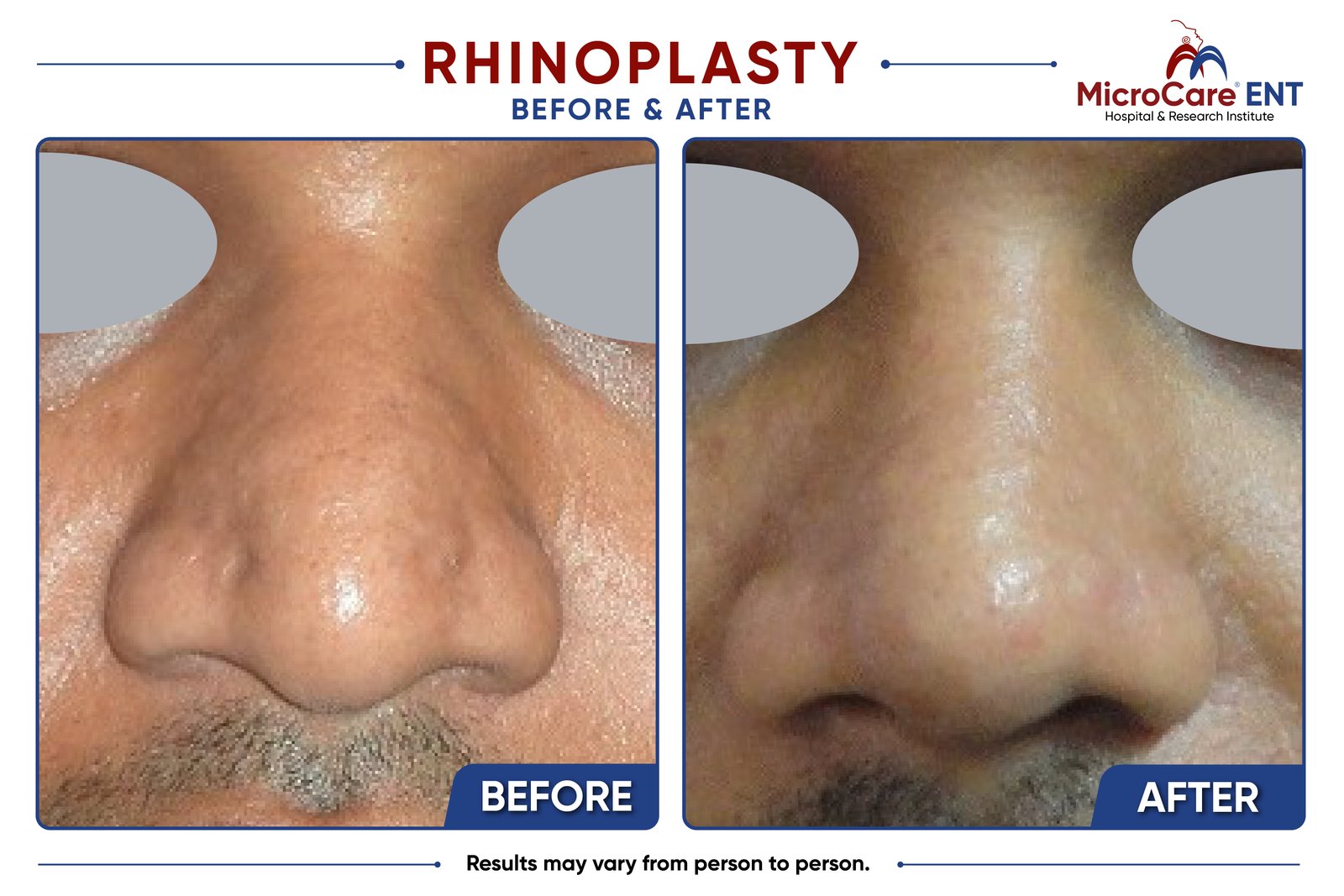
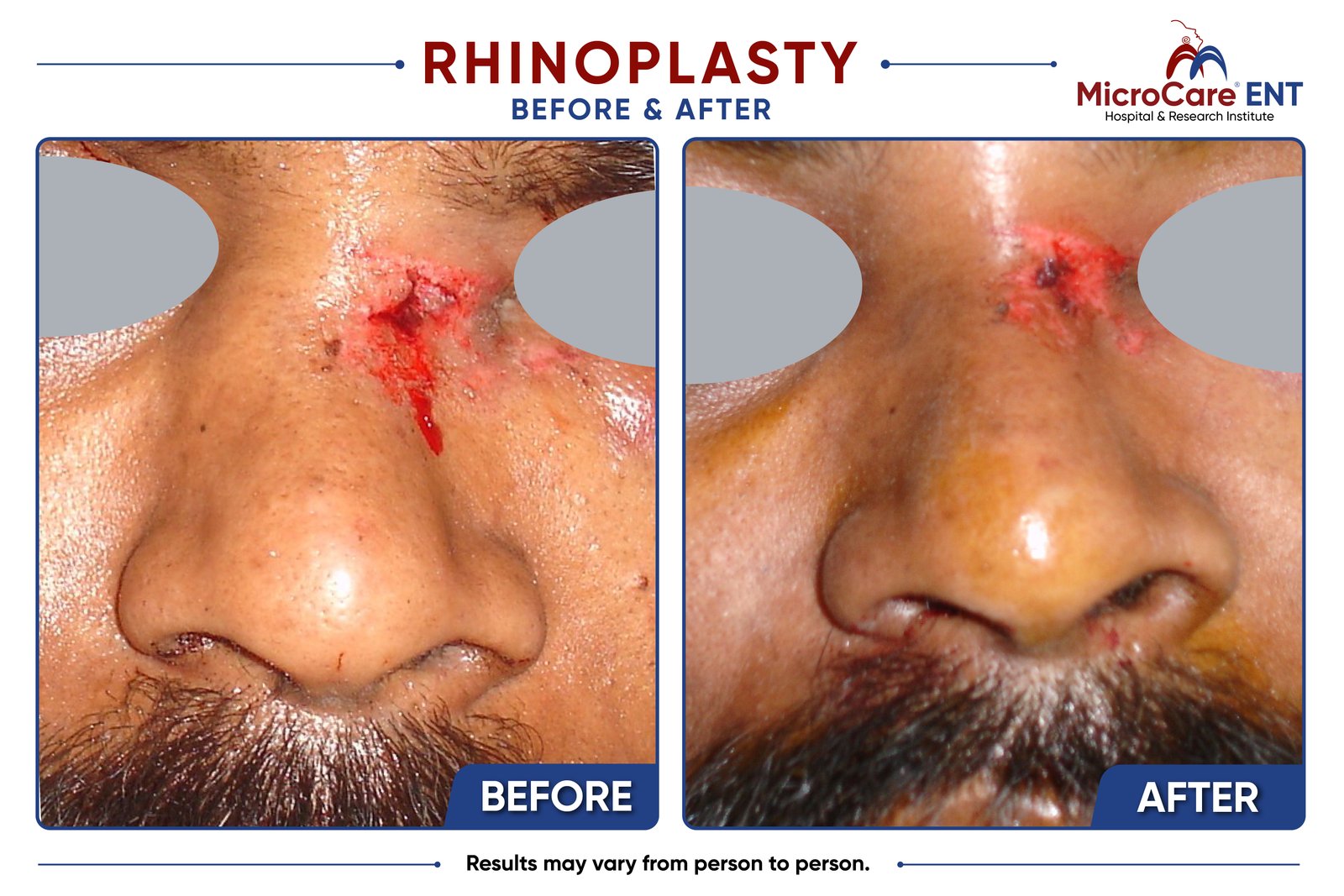
Photographs of patients of MicroCare ENT, shown with their consent. Every nose is different and individual results vary. See all before and after pictures.
How we rebuild the bridge
- Dorsal augmentationThe bridge is raised and smoothed with carefully carved cartilage grafts.
- Tip supportA columellar strut or septal extension graft supports the tip so it does not dip.
- Airway and valve correctionThe side walls are reinforced and the septum straightened so the airway stays open.
Graft materials
Septal, ear or rib cartilage
Your own cartilage is preferred, because it heals in and lasts well. Rib cartilage is used when a lot of support is needed or in revisions.
Diced cartilage in fascia
Finely diced cartilage wrapped in your own tissue gives a smooth bridge, chosen depending on your case and skin.
Hospital theatre
Surgery in a dedicated hospital operation theatre with fine microsurgical instruments and high-definition imaging.
Recovery: what to expect
- An external splint protects the graft
- Splint and stitches removed by day 7
- Presentable by 10 to 14 days
- Visible bruising fades
- Most return to work
- Swelling goes down
- Contours become clearer
- Final definition and stability
Depressed nose augmentation cost in Hyderabad
Your quote depends on:
- How much height the bridge needs.
- Septoplasty or valve correction at the same time.
- A first operation or a revision.
- The graft source: septal, ear or rib cartilage.
Why choose an ENT hospital

Breathing and bridge together
Valve collapse and septal deviation are corrected alongside the bridge.
Full hospital safety
An NABH-accredited hospital with anaesthesia available 24/7, sterile operation theatres and monitoring after surgery.
Structural grafts
Septal, ear or rib grafts to help prevent the bridge collapsing again.
Careful technique
Gentle tissue handling to reduce swelling, and your own cartilage to lower the risk of infection.

Prof. Dr. Sriprakash Vinnakota
MS (ENT, Head & Neck) · Chief Rhinoplasty Surgeon, Centre for Advanced ENT, Head & Neck Surgery, MicroCare ENT Hospital & Research Institute
More than 26 years in ENT surgery, with endoscopic sinus surgery training at the University of Graz, Austria, and rhinoplasty training at Marien Hospital, Stuttgart, under Prof. Dr. Wolfgang Gubisch.
Frequently asked questions
Is depressed nose augmentation permanent?
Rebuilding the bridge with your own cartilage gives a long-lasting correction, unlike fillers, which fade. Swelling takes 6 to 12 months to settle fully. Lasting results depend on well-fixed grafts and support for the valves and septum, and a small number of grafts may need adjustment over time.
Will my nose look too high or artificial?
The bridge height is calculated from your facial angles, and the grafts are hand-carved with tapered edges to suit your skin thickness. Early swelling can make the bridge look higher at first; the final profile settles by 6 to 12 months.
Can augmentation also fix breathing problems?
Yes. Rebuilding the bridge supports the internal valves, and the septum can be straightened in the same operation, increasing the space for airflow. Fillers do not fix breathing and can make a blockage worse. We map your airway with an endoscope first.
What is the downtime?
Expect a feeling like a heavy cold for the first 2 to 3 days. The splint and stitches come off at about day 7, most people look presentable by 10 to 14 days and return to work within 2 to 3 weeks. Light exercise resumes at 3 to 6 weeks, and the final definition appears at 6 to 12 months.
Is it safe in revision cases?
Yes, with careful planning. Because septal cartilage has often been used or lost in earlier surgery, ear or rib cartilage is used. Scar tissue is managed carefully, with endoscopic mapping and full hospital support.
What are the risks?
Swelling, bruising, congestion and temporary numbness are common and settle. Less common risks include a graft shifting, partial absorption or warping of a graft, infection and thinning of the skin over a graft. We explain each of these before surgery.
How much does it cost in Hyderabad?
The cost depends on how much height is needed, the type of graft (rib cartilage for major or revision cases), any breathing surgery done at the same time, and whether it is a first operation or a revision. You receive an itemised quote after your assessment.
Can insurance cover it?
The functional part may be covered with proper documentation: for example septal correction, valve collapse, collapse after injury, or blockage affecting sleep or the sinuses. Purely cosmetic refinement is self-paid.
See also small nose correction, revision rhinoplasty and our FAQs.
Begin with a conversation
Meet Prof. Dr. Sriprakash Vinnakota to talk about your bridge, your breathing and the graft option that suits you. Leave your name and number and we will open WhatsApp with your details filled in, or call +91 94949 40725.