
A smoother profile, without losing your breathing.
A bump on the bridge of the nose is one of the most common reasons people consider rhinoplasty. Hump correction lowers the bone and cartilage that form it, and our ENT-led team supports the airway as it does so, for a straighter, natural profile that still breathes well.
Medically reviewed by Prof. Dr. Sriprakash Vinnakota, MBBS, MS (ENT, Head & Neck), Chief Rhinoplasty Surgeon, Centre for Advanced ENT, Head & Neck Surgery, MicroCare ENT Hospital & Research Institute.
- Hump made of
- Bone and cartilage
- Approach
- Open or closed
- Airway
- Protected with support
- Splint removed
- About day 7
- Desk work
- 7 to 10 days
- Final profile
- 6 to 12 months
What is a nasal hump?
A nasal hump, also called a dorsal hump, is a bump on the bridge of the nose that is most visible from the side. It is usually made of two parts:
Bone
The nasal bones at the top of the bridge can form the upper part of the hump.
Cartilage
The cartilage of the septum and the upper lateral cartilages form the lower part, where the bridge meets the middle of the nose.
Because a hump involves both bone and cartilage, and sits over the airway, correcting it well means reshaping both while keeping the nose supported.
Before you decide, read Prof. Dr. Vinnakota's book Your Best Nose, which answers 100 common rhinoplasty myths.
What causes a nasal hump?
Inherited
Most humps run in families and appear as the nose grows during the teenage years.
Trauma
A broken nose can heal with extra bone or displaced cartilage that forms a bump, sometimes with a crooked bridge.
Post-accident nose deformityRelative hump
Sometimes the bridge looks humped because the tip is low or under-projected. Then the tip, not only the hump, needs attention.
Nose tip correctionIs a hump only cosmetic?
A hump itself does not usually block breathing, but people with a hump often also have a deviated septum, a narrow internal valve or enlarged turbinates. Removing a hump also opens the roof of the nose, which can weaken the middle third if it is not supported.
Who is a good candidate?
- A visible bump on the bridge that bothers you, especially from the side.
- A hump with a drooping tip, which can make the nose look longer or hooked.
- A hump with a crooked bridge or breathing difficulty.
- A bump after an injury.
- A fully grown nose, usually from about 16 for girls and 17 to 18 for boys.
- Good general health and realistic expectations.
Patient results
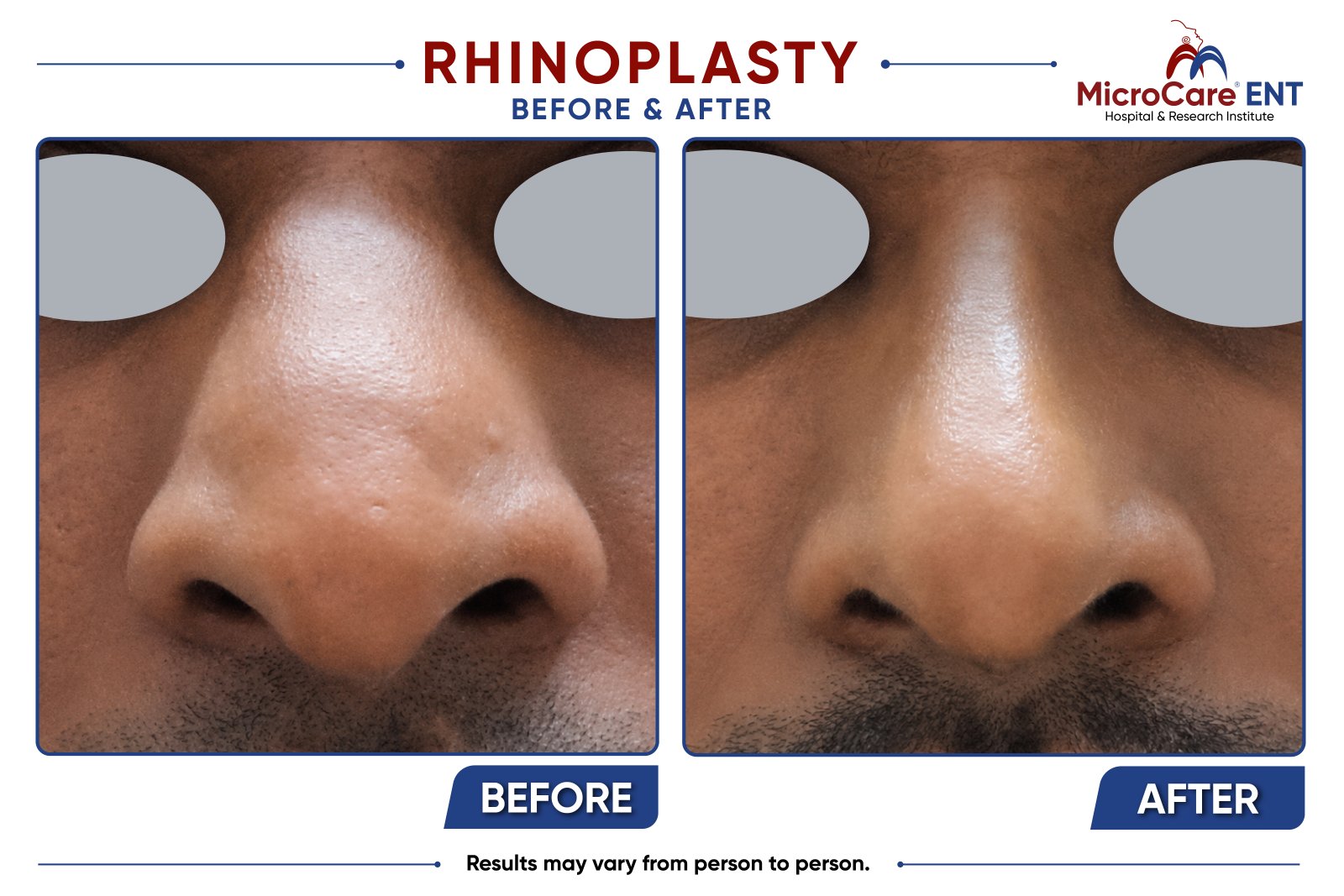
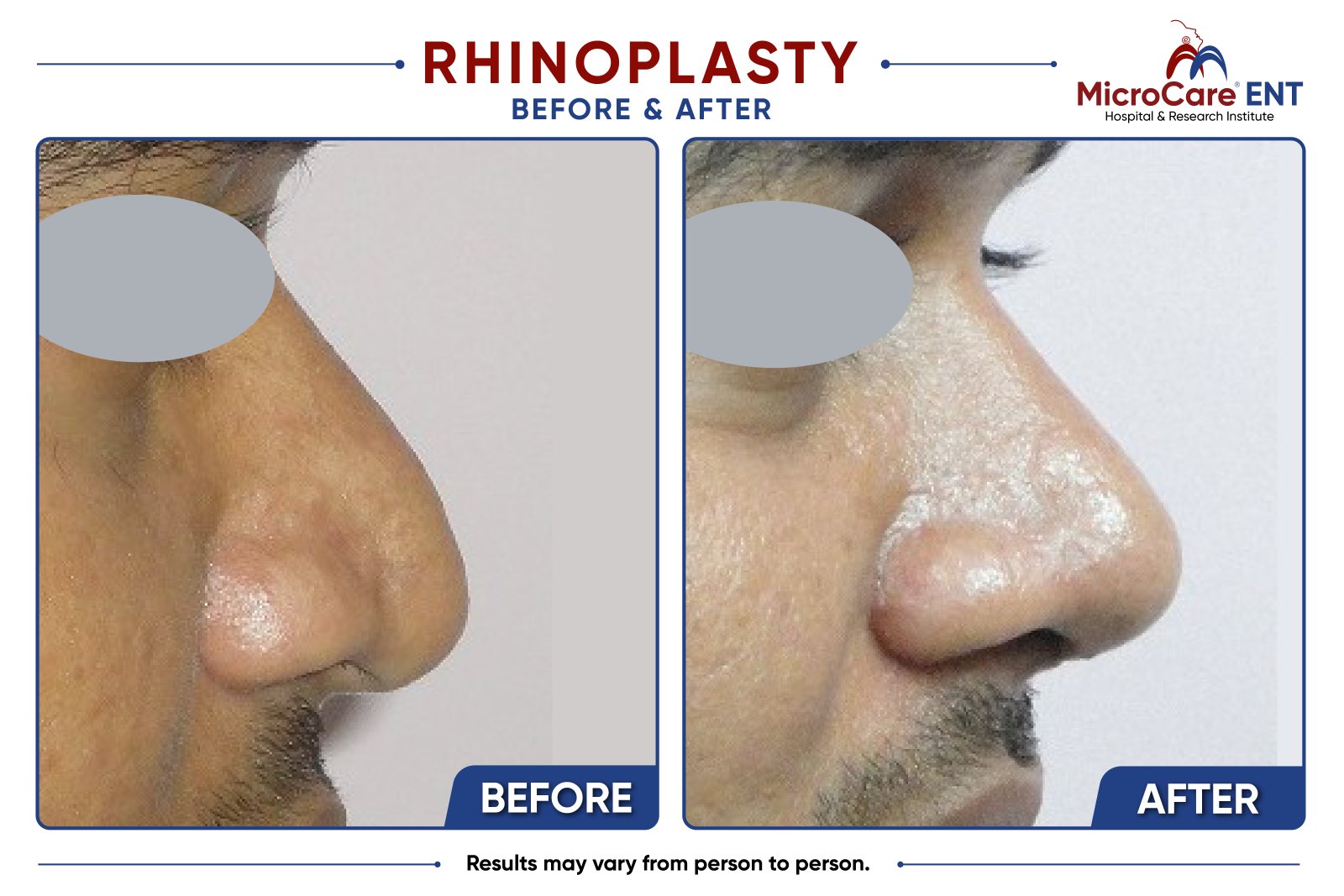
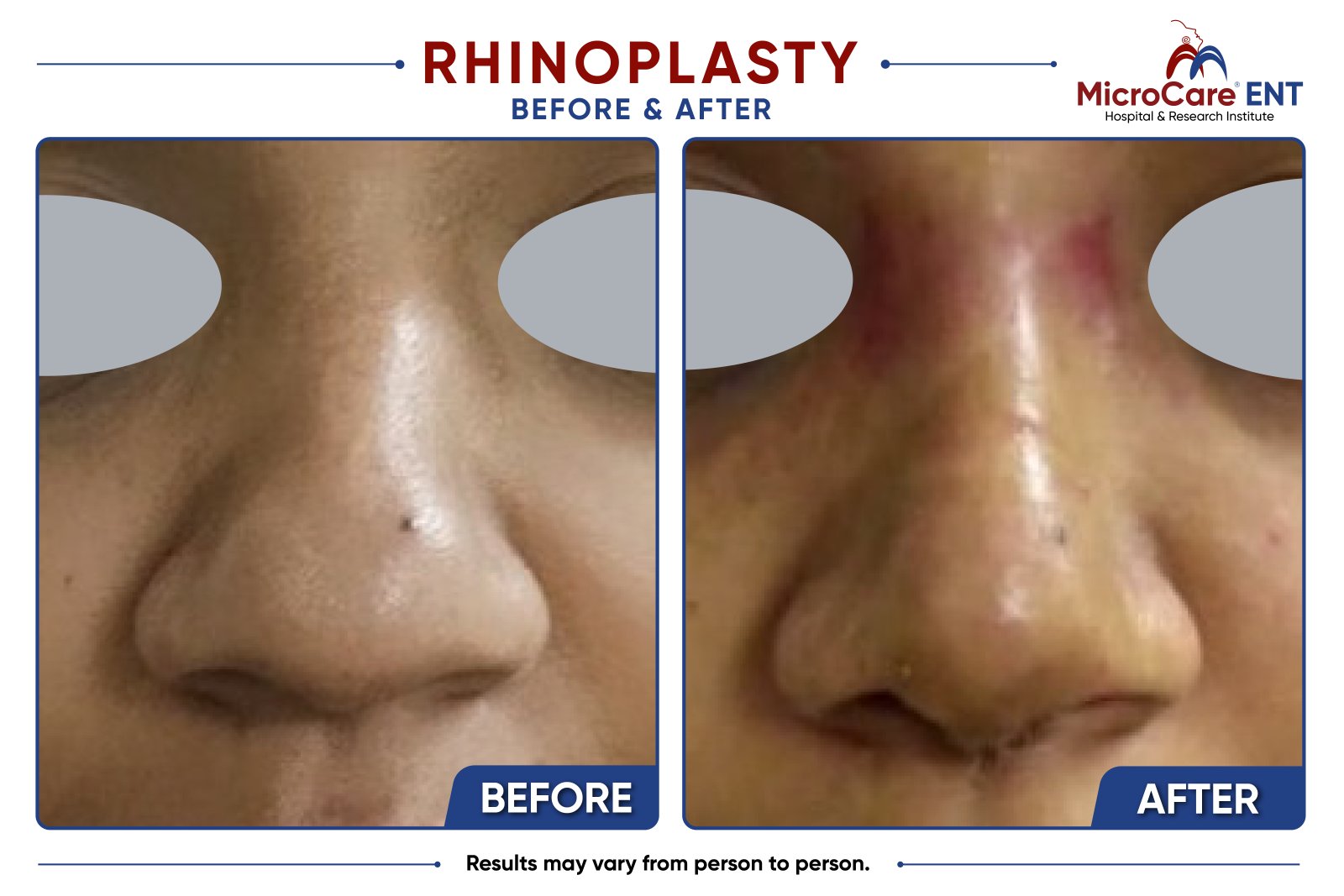
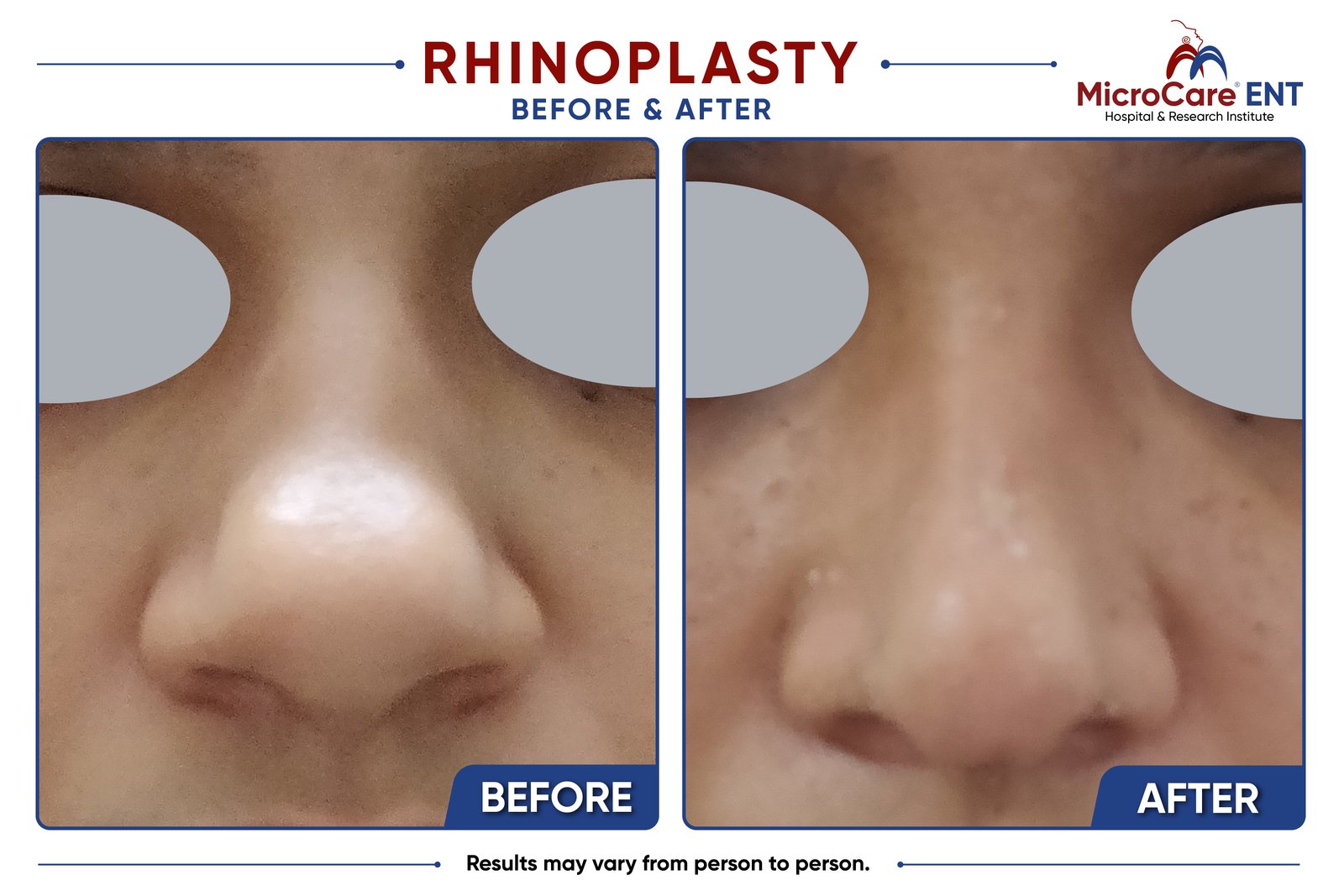
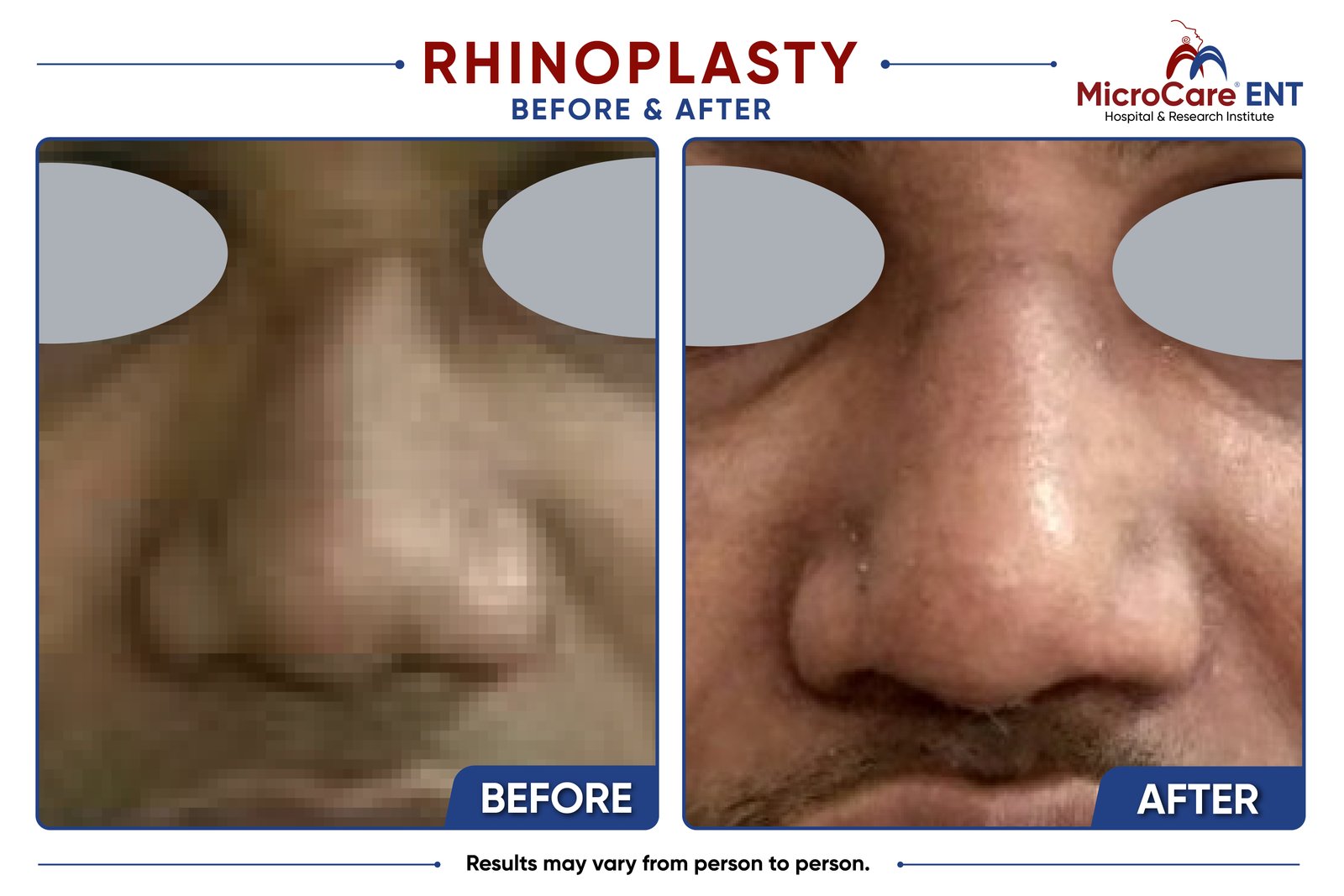
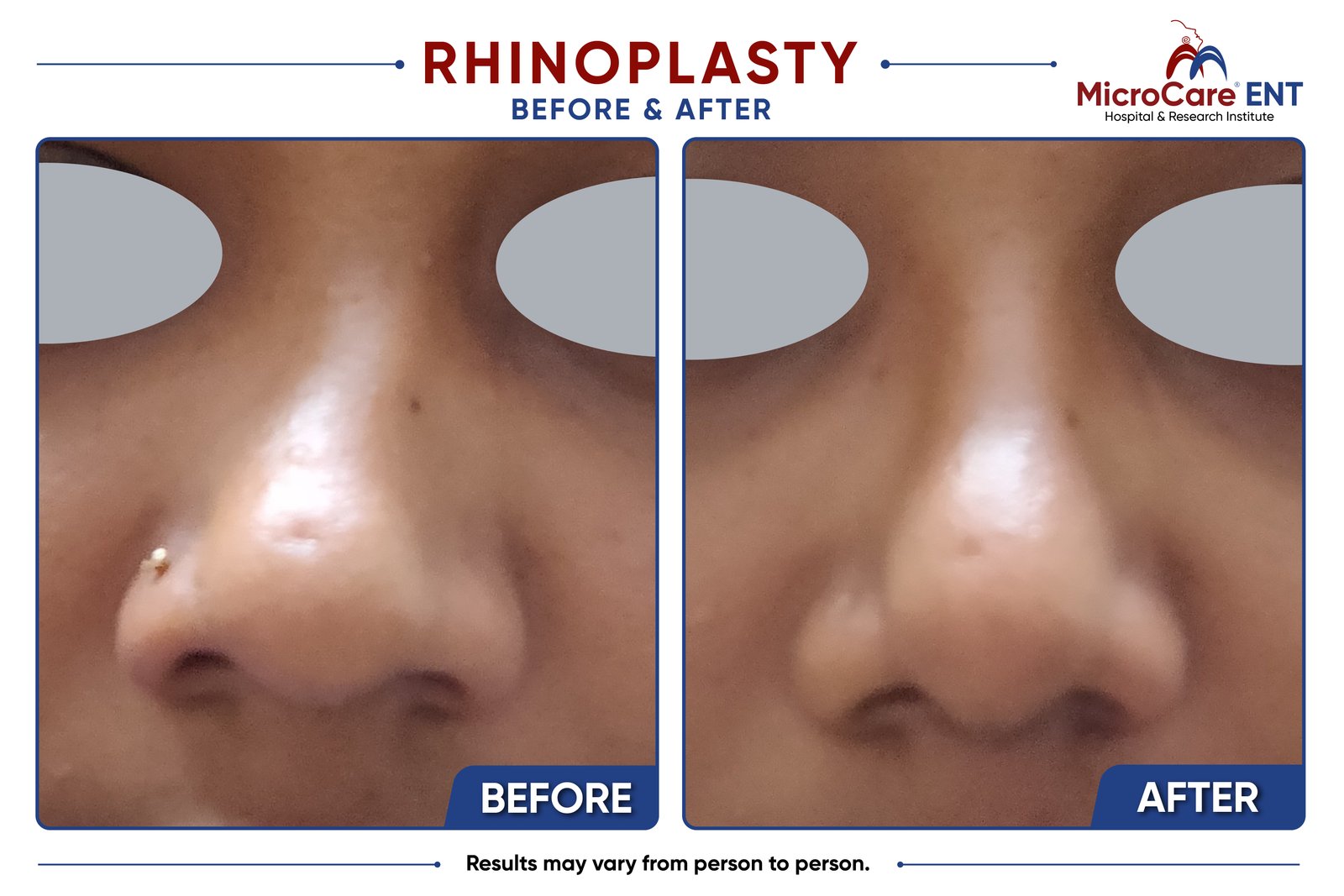
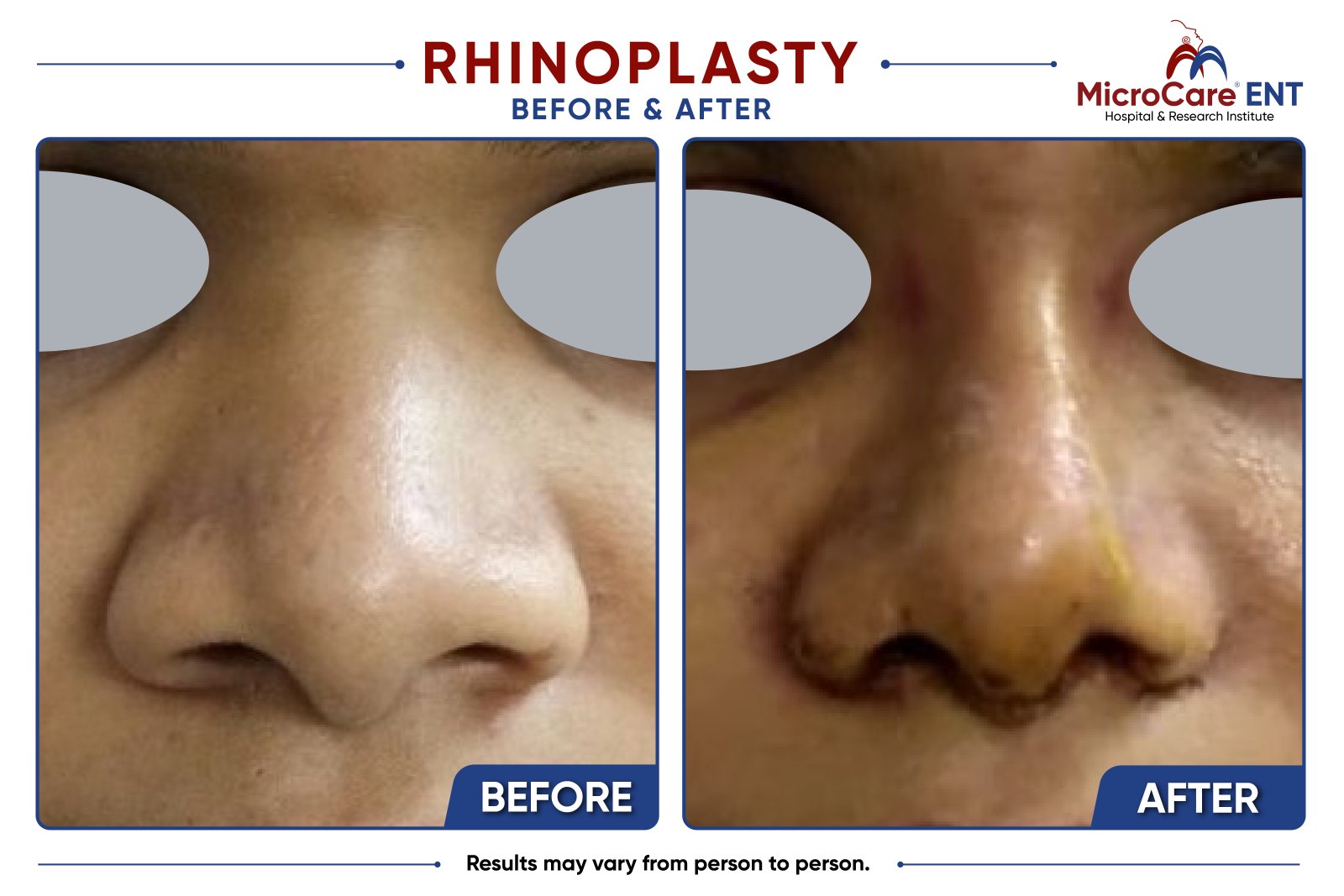
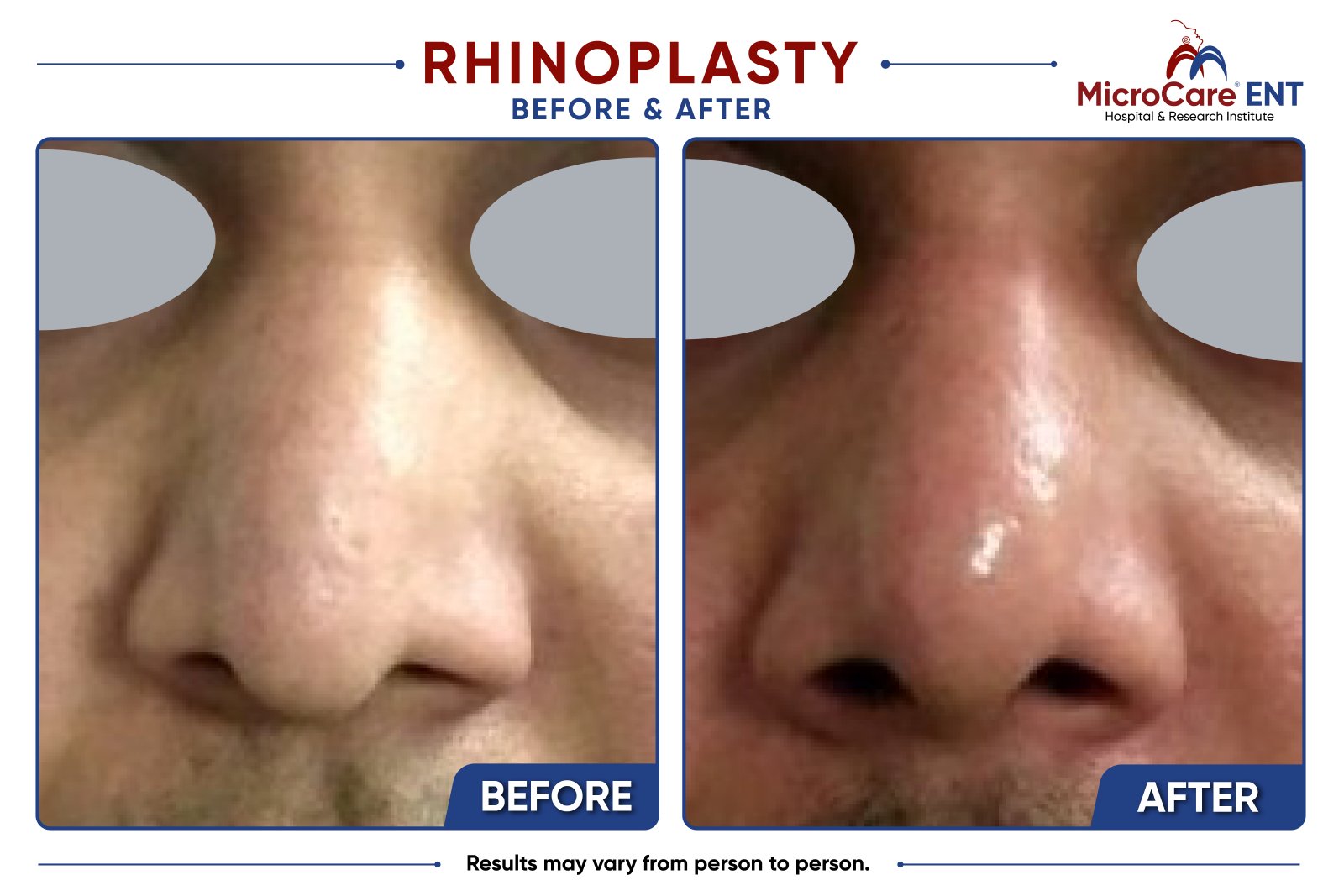
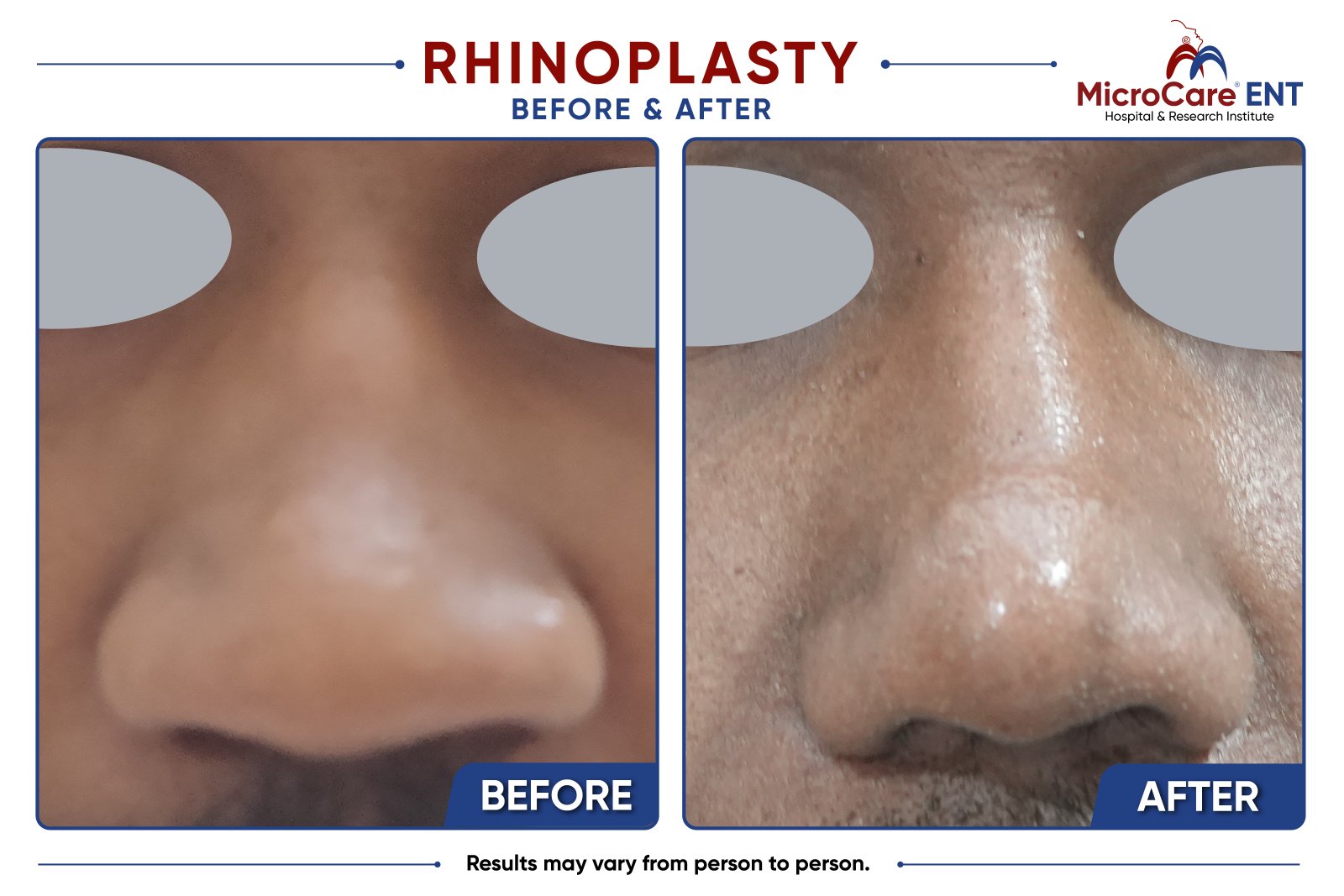
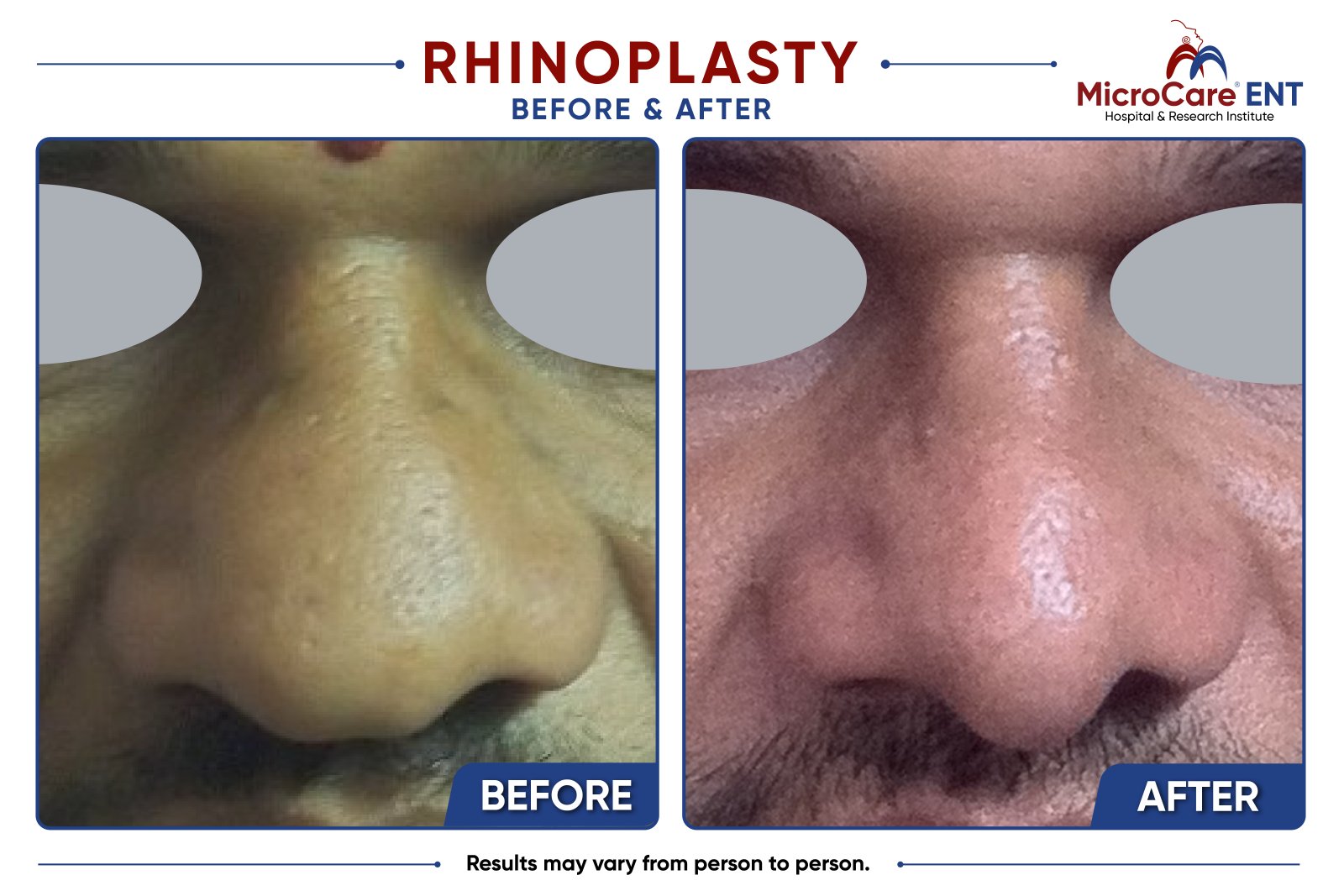
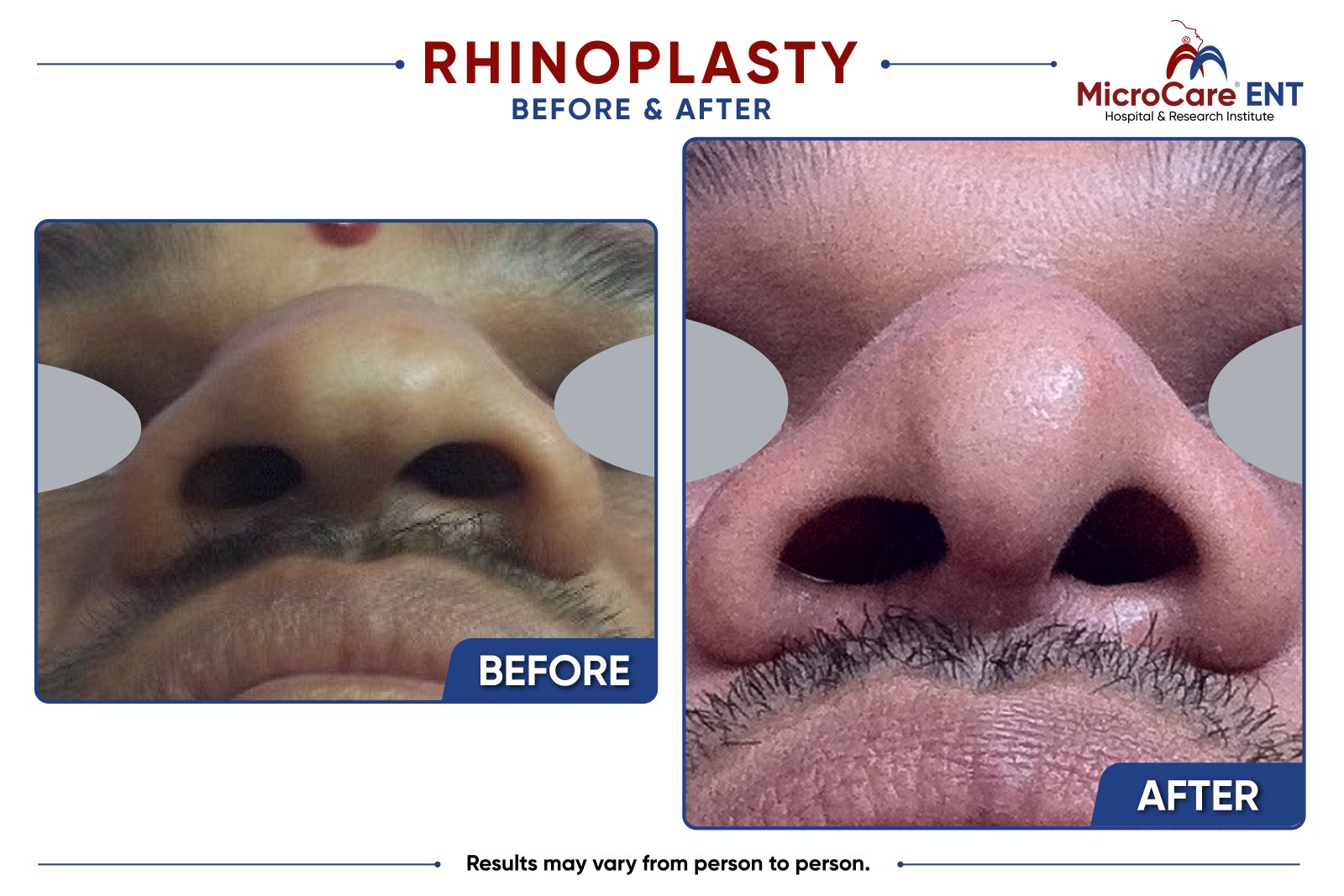
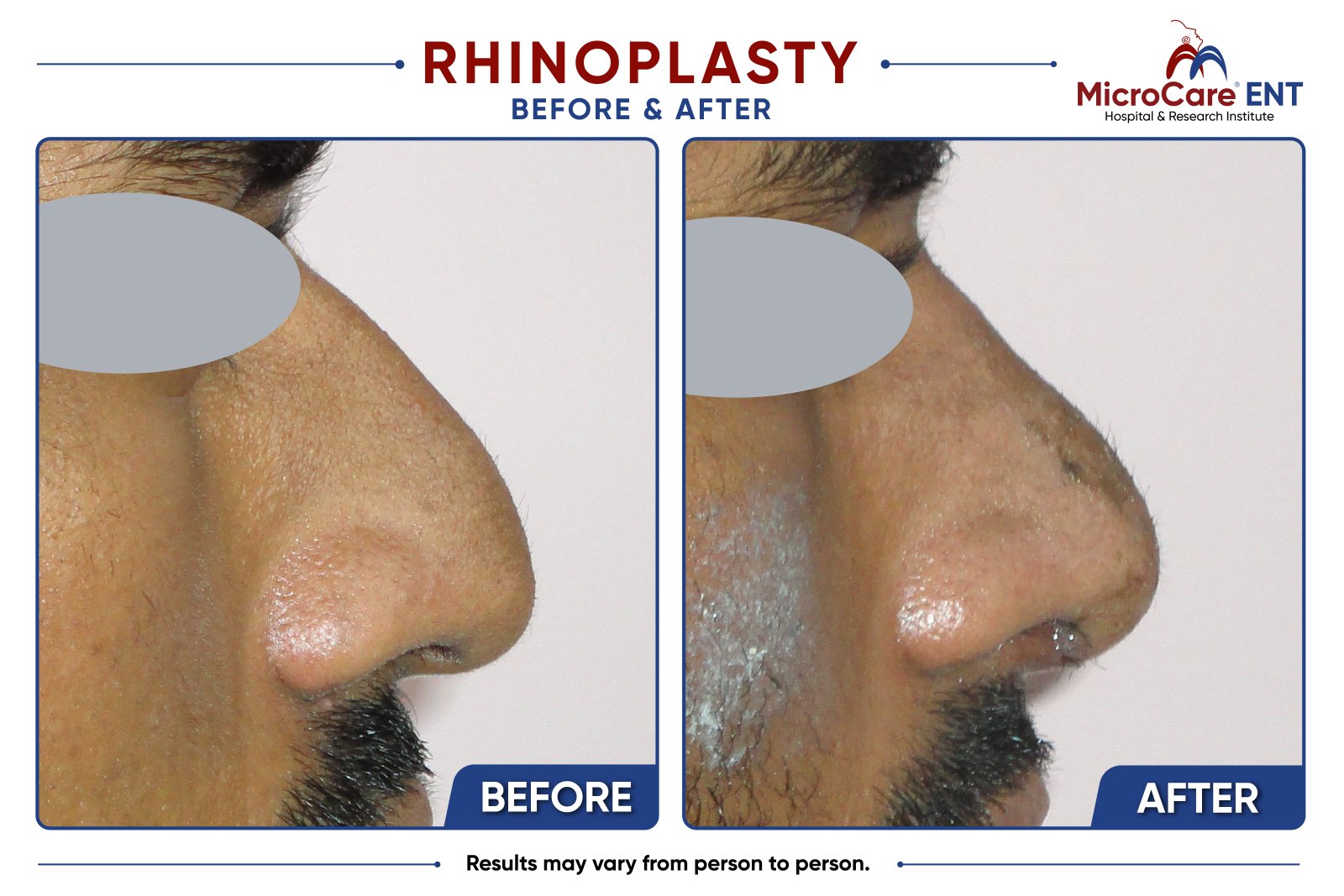
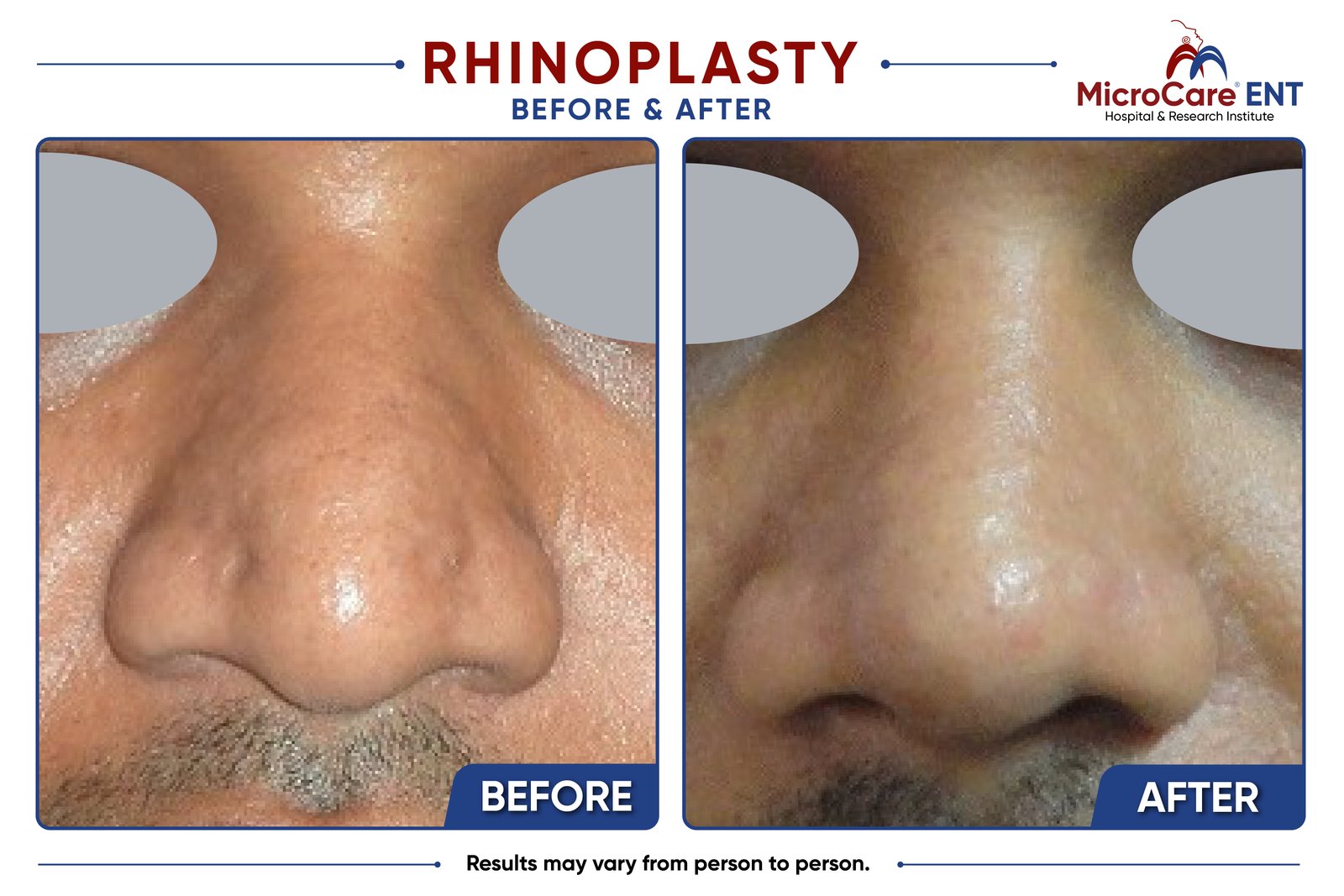
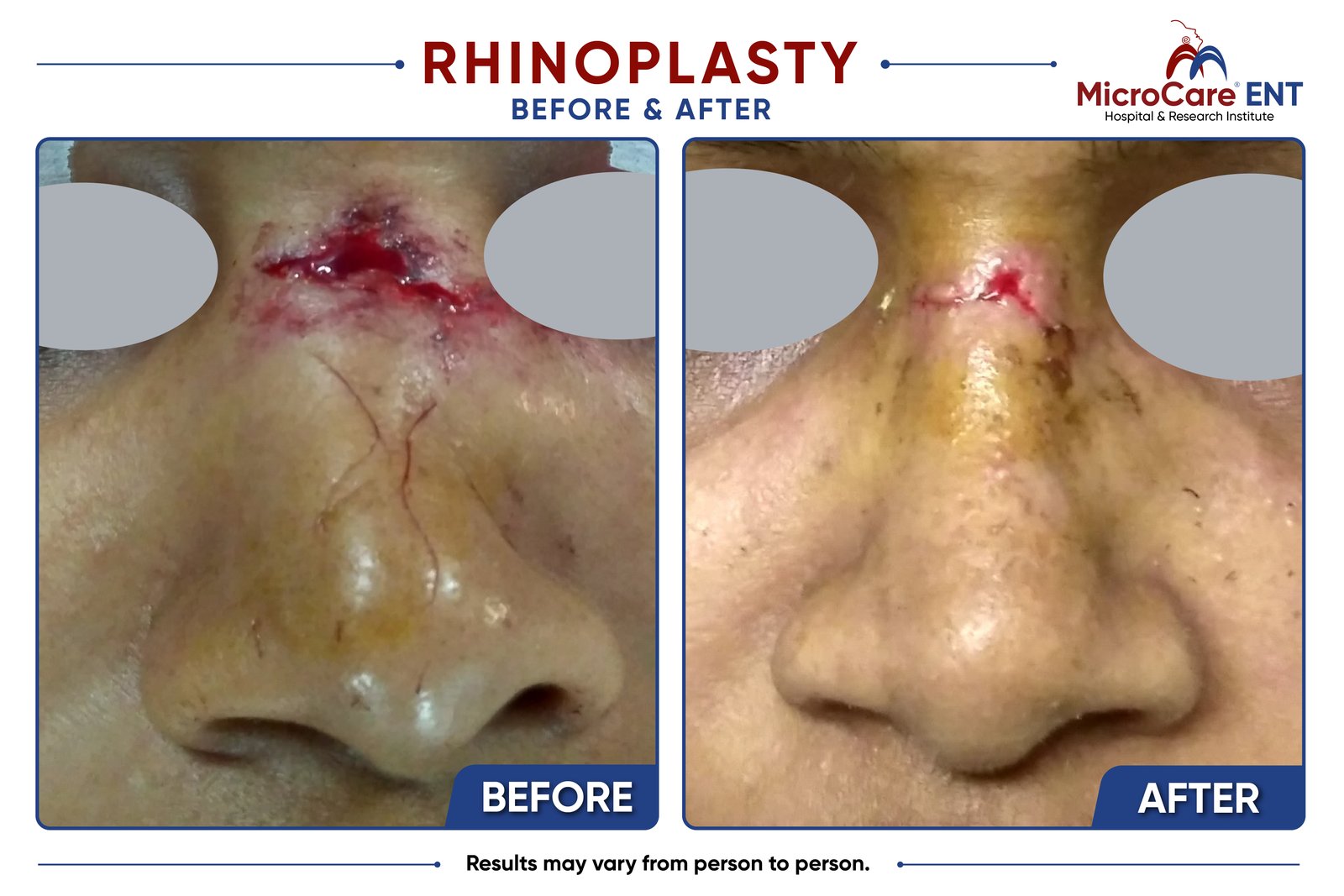
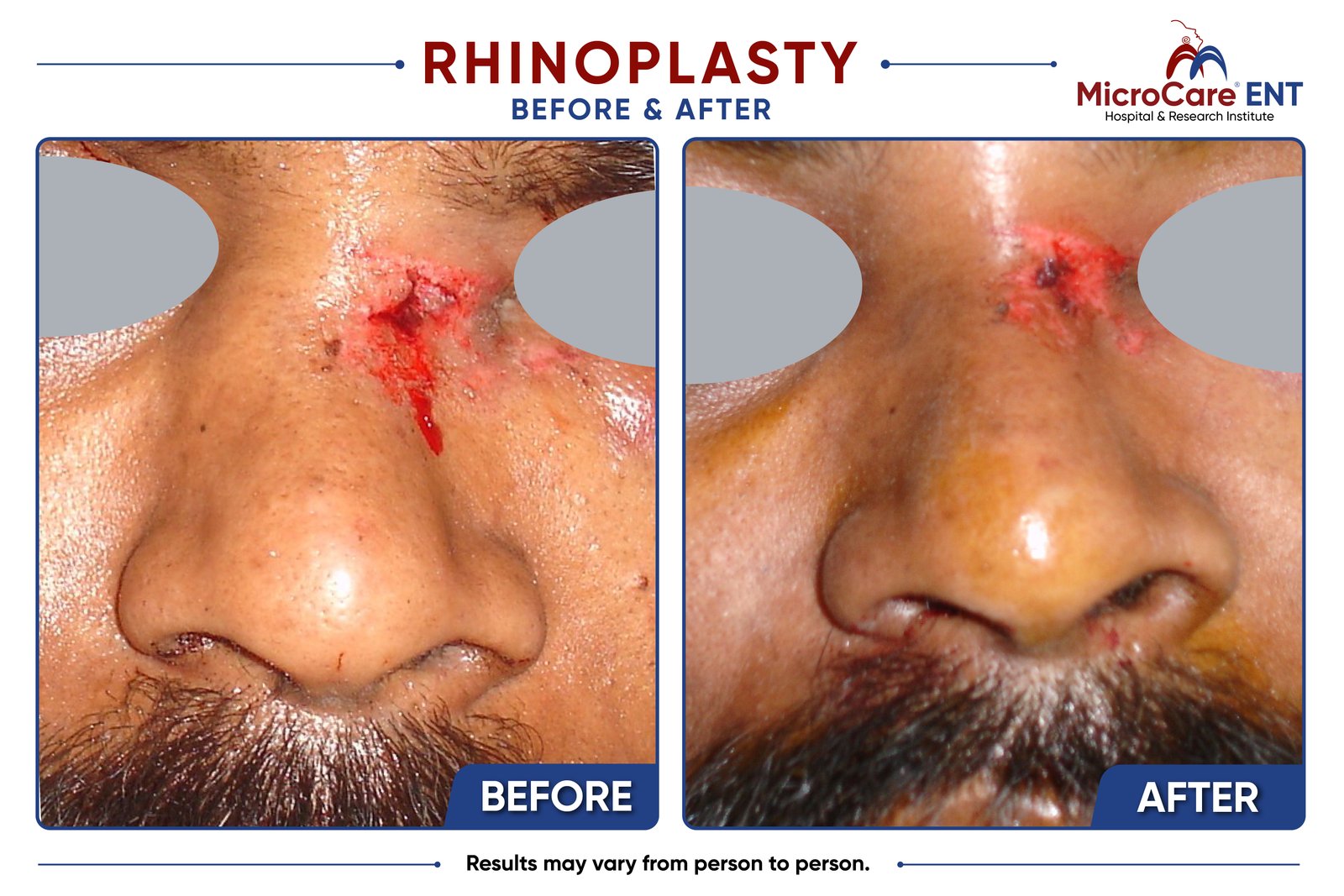
Photographs of patients of MicroCare ENT, shown with their consent. Every nose is different and individual results vary. See all before and after pictures.
How a nasal hump is corrected
The technique is chosen for your nose, but most hump corrections combine these steps:
- Planning the new profilePhotographs and facial analysis set how much to lower the bridge, so it suits your forehead, tip and chin rather than becoming scooped.
- Lowering the cartilageThe cartilage part of the hump is trimmed in small, controlled steps.
- Smoothing the boneThe bony part is rasped down, often with piezoelectric instruments that reshape bone precisely and can reduce bruising.
- Closing the roofWhen a larger hump is removed, small controlled bone cuts (osteotomies) bring the nasal bones together so the bridge is not too wide or flat.
- Supporting the middle thirdSpreader grafts or spreader flaps from your own cartilage keep the internal valve open and the bridge smooth.
- Balancing the tipIf needed, the tip is lifted or refined so the profile looks natural.
Open or closed hump correction?
For simpler humps
All incisions are inside the nose, with no outside scar. It suits a moderate hump when the tip needs little change.
Closed rhinoplastyFor larger or complex humps
A small incision on the columella gives a direct view. It suits large humps, crooked bridges, tip work and revisions.
Open rhinoplastySurgery or fillers?
Injectable fillers, sometimes called non-surgical rhinoplasty, can disguise a small hump by building up the areas above and below it. But the nose is not made smaller, the effect fades over months, and filler in the nose carries rare but serious risks to the blood supply of the skin and eye.
Recovery after hump correction
- A splint protects the bridge
- Swelling and some bruising around the eyes
- Splint removed at about day 7
- Desk work or college from 7 to 10 days
- Most bruising fades by 2 weeks
- Strenuous exercise can resume
- Glasses can rest on the nose again
- The bridge settles into its final line
- Thick skin can take longer
Avoiding the common problems
Removing a hump is not just taking bone away. Our structural approach is designed to avoid:
- A scooped or over-lowered bridge, by planning the new line from your facial proportions.
- A pinched middle third (inverted-V deformity), with spreader grafts or flaps.
- Breathing problems from valve collapse, by supporting the internal valve.
- A wide, flat bridge, by closing the roof with osteotomies when needed.
- A remaining bump or irregularity, by smoothing in small, checked steps.
Nasal hump correction cost in Hyderabad
Your quote depends on:
- The size of the hump and whether osteotomies are needed.
- Open or closed rhinoplasty.
- Tip work or grafts needed at the same time.
- Breathing correction, such as septoplasty.
- A first operation or a revision.
Why choose MicroCare ENT

ENT, head and neck specialists
Led by Prof. Dr. Sriprakash Vinnakota, with more than 26 years of experience, so the airway is protected while the bridge is reshaped.
Structure, not just removal
Spreader grafts or flaps and careful osteotomies keep the bridge smooth and supported.
Precise technology
Piezoelectric instruments for bone and endoscopic assessment of the airway.
Honest, patient-centred care
Realistic advice, itemised quotes and follow-up for up to one year in an NABH-accredited hospital.

Prof. Dr. Sriprakash Vinnakota
MS (ENT, Head & Neck) · Chief Rhinoplasty Surgeon, Centre for Advanced ENT, Head & Neck Surgery, MicroCare ENT Hospital & Research Institute
More than 26 years in ENT surgery, with endoscopic sinus surgery training at the University of Graz, Austria, and rhinoplasty training at Marien Hospital, Stuttgart, under Prof. Dr. Wolfgang Gubisch.
Frequently asked questions
What is a nasal hump made of?
Most humps are part bone and part cartilage. The upper part is formed by the nasal bones, and the lower part by the cartilage of the septum and the upper lateral cartilages. Both parts usually need to be addressed for a smooth result.
Can a hump be removed without changing the rest of my nose?
Sometimes, if the hump is small and everything else is in balance. Often, though, the tip and the width of the bridge also need small adjustments so the nose looks natural from the front and the side after the hump is lowered.
Will hump removal affect my breathing?
It should not, when the airway is protected. Lowering a hump opens the roof of the nose, so we support the middle third with spreader grafts or spreader flaps to keep the internal valve open. If you already have a deviated septum, it can be straightened at the same time.
Is there a scar?
Small humps can often be treated through closed rhinoplasty with all incisions inside the nose. If open rhinoplasty is needed, the small incision on the columella usually fades to a faint line within a few months.
Can fillers hide a hump instead of surgery?
Fillers can disguise a small hump by building up the areas above and below it, but the effect is temporary, the nose is not made smaller and filler in the nose carries rare but serious risks. Surgery is the only permanent way to reduce a hump.
Can the hump come back?
A properly removed hump does not grow back. A small irregularity can sometimes appear as swelling settles, and is usually corrected easily if needed.
When can I go back to work?
Most people return to desk work or college 7 to 10 days after surgery, once the splint is removed. Avoid strenuous exercise for 4 to 6 weeks and glasses resting on the nose for 4 to 6 weeks.
What is the right age for hump correction?
The nose should have finished growing, usually from about 16 years for girls and 17 to 18 years for boys.
See also cosmetic rhinoplasty, open rhinoplasty and our FAQs.
Begin with a conversation
Meet Prof. Dr. Sriprakash Vinnakota to talk about your profile, your breathing and your goals, or send a side-profile photo on WhatsApp for an initial opinion. Leave your name and number and we will open WhatsApp with your details filled in, or call +91 94949 40725.